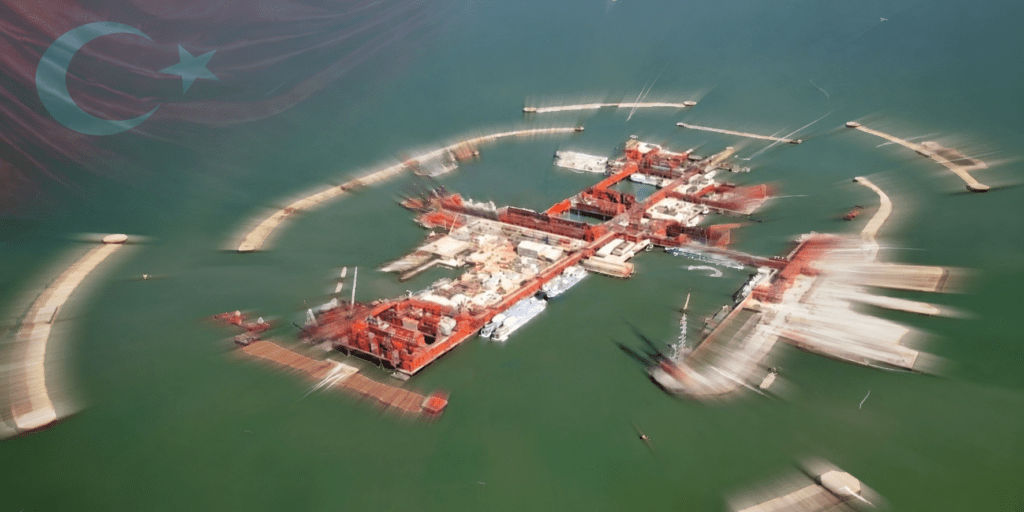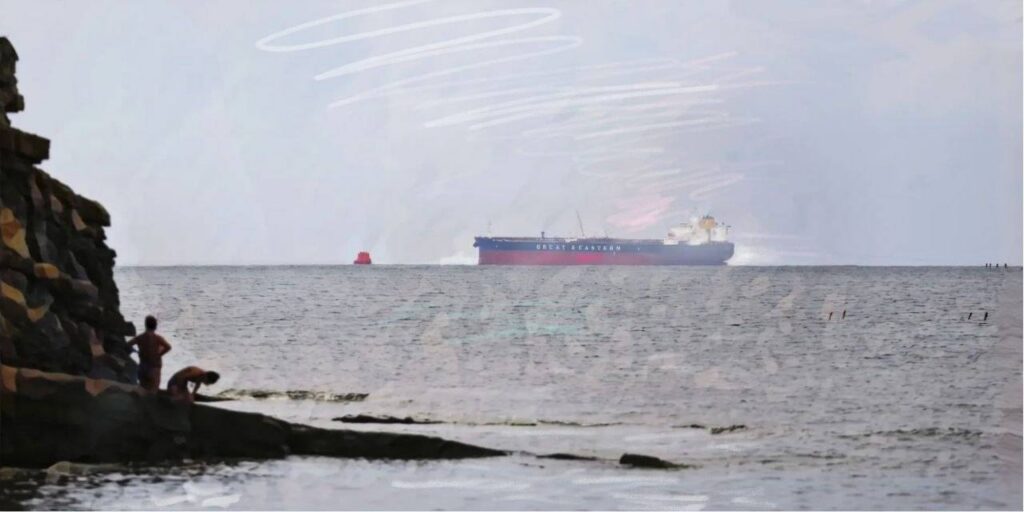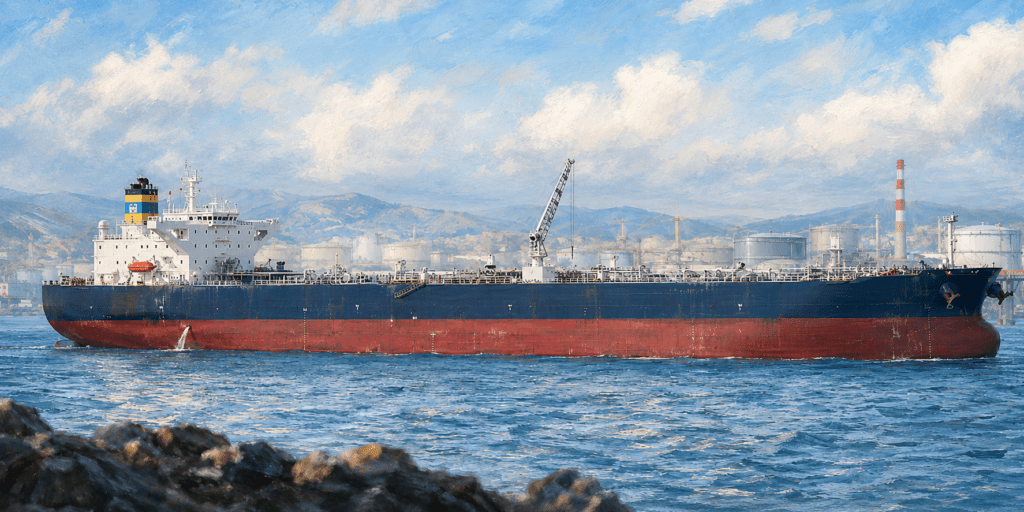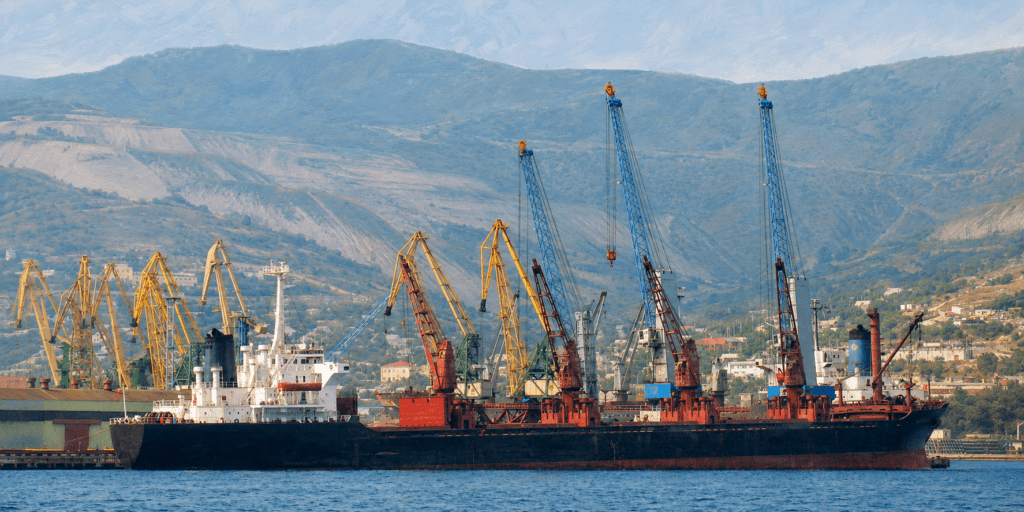
Oil loadings at the Caspian Pipeline Consortium’s Black Sea terminal have been suspended again after a fourth tanker was struck by a drone on July 20. The NELSA was loading at single-point mooring SPM-1 when the drone hit the stern on its starboard side, between the superstructure and engine compartment. A fire broke out on the deck and inside the vessel but was extinguished after several hours.
CPC said 22 crew members were evacuated aboard its tugboats, while the captain and chief officer remained on the tanker. NELSA stayed afloat. No oil spill occurred, and the crude in its cargo tanks did not ignite. Loading had resumed briefly on the evening of July 19 before the latest attack forced another suspension.
Kazakhstan had previously condemned drone attacks on three tankers near the Caspian Pipeline Consortium’s Black Sea terminal on July 17 and 19, two of which were hit while loading Kazakh oil.
The Liberia-flagged ASIA and the Marshall Islands-flagged NISSOS IOS were attacked at single-point moorings SPM-1 and SPM-3 near Novorossiysk. ASIA was loading Tengizchevroil crude. The Marshall Islands-flagged NISSOS IOS was loading oil from Kashagan B.V. and Maten.
A fire broke out on ASIA and was extinguished with CPC emergency support. No crew members, CPC employees, or contractors were injured. Both tankers remained afloat, no oil entered the sea, and the moorings were not damaged. Loading was suspended while specialists assessed the damage.
Following the attack on ASIA, a spokesperson for Chevron, whose Tengizchevroil crude was being loaded onto the vessel, told TCA: “Chevron is aware of reports of an incident involving a vessel loading at Caspian Pipeline Consortium (CPC) facilities near Novorossiysk. All crew are safe, and the vessel remains stable. The vessel has been moved to a safe anchorage, and we are coordinating with the ship operator and relevant authorities. There has been no impact to TCO operations or exports. Further questions regarding CPC operations should be directed to CPC.”
The Kazakh Foreign Ministry described the strikes as an unacceptable infringement on Kazakhstan’s economic interests and a deliberate attempt to disrupt lawful international trade.
“Kazakhstan demands an immediate halt to these attacks,” the ministry stated.
The ministry said an agreed system for sharing information on civilian vessels entering the Black Sea to load CPC oil had been deliberately ignored. It said the failure endangered crews, called for practical security measures, and reserved Kazakhstan’s right to seek full compensation under international law.
Ukraine’s General Staff said its forces struck two tankers in the Black Sea overnight on July 19. It said the vessels were used to transport Russian oil, petroleum products, and fuel for Russia’s armed forces. The post did not name the tankers. CPC said both ships at its terminal were loading oil produced in Kazakhstan and did not publicly identify the attacker.
The July 19 incident followed an attack on Nordic Zenith on July 17. The Suezmax tanker was empty and approaching the terminal when two drones hit it. The crew extinguished a fire. Nearby CPC vessels evacuated 13 crew members, while nine stayed aboard. CPC removed the ship from its loading schedule and said it was unfit to berth. Sources told Reuters that ExxonMobil had chartered the vessel.
CPC called the July 19 attack the fifth act of direct aggression against a civilian facility protected by international law. “An attack on the company’s facility and civilian vessels at the CPC Marine Terminal is also an attack on the interests of the consortium’s member countries,” it said. The consortium has Kazakh and Russian shareholders, alongside U.S. and European energy companies.
The 1,510-kilometre pipeline links western Kazakhstan to a terminal near Novorossiysk. It carries oil from Tengiz, Kashagan, and Karachaganak. The route handles about 80% of Kazakhstan’s oil exports. CPC shipped about 70.5 million tonnes in 2025, with foreign producers accounting for more than 75% of the volume.
The latest strikes extend a series of attacks around the terminal. In January, drones hit Delta Harmony and Matilda while they waited to load Kazakh crude. A November 2025 strike damaged SPM-2 and reduced loading capacity for weeks.
After the November disruption, Kazakhstan rerouted about 300,000 tonnes in December through the KazTransOil system. The routes included Atyrau-Samara, China, and the Baku-Tbilisi-Ceyhan corridor. That was about 0.4% of CPC’s 2025 throughput.
CPC has not announced when loading would resume following the July 20 attack. The repeated suspensions leave Kazakhstan’s main oil export route exposed to further disruption.
This is a developing story and will be updated as more information becomes available.