• KGS/USD = 0.01144 0%
  • KZT/USD = 0.00212 0%
  • TJS/USD = 0.10549 -0.28%
  • UZS/USD = 0.00008 0%
  • TMT/USD = 0.28530 0%
  • KGS/USD = 0.01144 0%
  • KZT/USD = 0.00212 0%
  • TJS/USD = 0.10549 -0.28%
  • UZS/USD = 0.00008 0%
  • TMT/USD = 0.28530 0%
  • KGS/USD = 0.01144 0%
  • KZT/USD = 0.00212 0%
  • TJS/USD = 0.10549 -0.28%
  • UZS/USD = 0.00008 0%
  • TMT/USD = 0.28530 0%
  • KGS/USD = 0.01144 0%
  • KZT/USD = 0.00212 0%
  • TJS/USD = 0.10549 -0.28%
  • UZS/USD = 0.00008 0%
  • TMT/USD = 0.28530 0%
  • KGS/USD = 0.01144 0%
  • KZT/USD = 0.00212 0%
  • TJS/USD = 0.10549 -0.28%
  • UZS/USD = 0.00008 0%
  • TMT/USD = 0.28530 0%
  • KGS/USD = 0.01144 0%
  • KZT/USD = 0.00212 0%
  • TJS/USD = 0.10549 -0.28%
  • UZS/USD = 0.00008 0%
  • TMT/USD = 0.28530 0%
  • KGS/USD = 0.01144 0%
  • KZT/USD = 0.00212 0%
  • TJS/USD = 0.10549 -0.28%
  • UZS/USD = 0.00008 0%
  • TMT/USD = 0.28530 0%
  • KGS/USD = 0.01144 0%
  • KZT/USD = 0.00212 0%
  • TJS/USD = 0.10549 -0.28%
  • UZS/USD = 0.00008 0%
  • TMT/USD = 0.28530 0%

Viewing results 1 - 6 of 213

Kyrgyzstan Returns Four Resorts to Uzbekistan with Additional Conditions Imposed on Kazakhstan

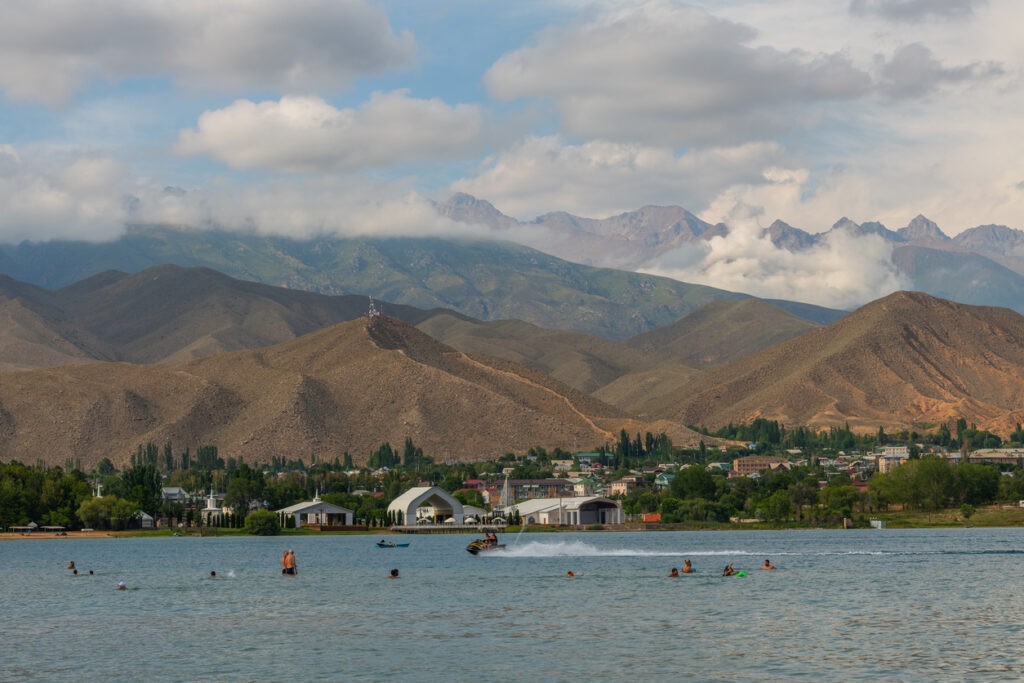
Shavkat Mirziyoyev, President of the Republic of Uzbekistan, has approved an agreement between the governments of Uzbekistan and Kyrgyzstan, to regulate the ownership and continued operation of four spa and recreation centers in the Issyk-Kul region. Kyrgyzstan's transfer of ownership of the four resorts to Uzbekistan determines the authorization for implementing property rights but as cited by one Uzbek publication “The recreational facilities aren’t given, they are returned!” In April 2016, the “Golden Sands of Central Asia” (formerly “Bosteri”), “Rohat-NBU” (formerly “Rakhat”), “Dilorom” (formerly “Enesay”), and the unfinished construction of “Buston", were transferred to the jurisdiction of Kyrgyzstan. Although located on the territory of Kyrgyzstan, the resorts previously belonged to JSC “Tashkent Mechanics Plant,” JSC “National Bank of Foreign Economic Activity,” JSC “Asakabank” and JSC “Uzsanoatkurilishbanki” of Uzbekistan. Back in 2016, the government of the Kyrgyz Republic, under Prime Minister Temir Sariyev, decided to seize recreational facilities from the Republic of Uzbekistan. This led to litigation in international arbitration and the facilities were immediately renamed. In September 2016, the Uzbek owners of resorts applied to the International Center for Settlement of Investment Disputes (ICSID). Uzbekistan considered that the 1992 agreement between the countries of the former Soviet Union, regulating the use of facilities left on the territory of other republics as a result of the collapse of the Union, was violated. According to this document, property belonging to one state but located on the territory of other CIS countries remains the property of its owners. Thus began a long series of arbitration discussions and efforts to settle the matter amicably, leading to the announcement of an agreement between the Kyrgyz government and the Cabinet of Ministers of Uzbekistan in December 2017, whereby the land plots of the resorts would remain the property of Kyrgyzstan whilst other properties would be returned to the ownership of the Uzbek side. After formalizing  property rights,  Uzbekistan would undertake to upgrade boarding houses to a level of three or four stars and ensure their operation throughout the year. The agreement, however, was not signed, and discussions continued. The dispute resolution review was completed in May 2023 in ICSID. Details of the deal remained confidential until Kyrgyzstan's president Sadyr Japarov, announced that the international court had decided that Kyrgyzstan should pay Uzbekistan more than $40 million. Following negotiations, the parties agreed to lease the facilities for investors from Uzbekistan for 49 years. The president then warned," We cannot invest in their renovation in the next 15-20 years because we have many other critical issues. We cannot talk about recreational facilities until we solve them." Whilst Article 2 of the agreement clearly states that the Kyrgyz side transfers the ownership of buildings and structures to the Uzbek side, the  recent agreement does not provide a fixed period for the rental of the recreational facilities. Kazakhstan and Kyrgyzstan have long-standing problems with boarding houses, including those in the former's “University”, “Olympus”, “Samal” and “Kazakhstan”sports and health resorts, in Issyk-Kul. At the end of the 1960s, the USSR declared Issyk-Kul...
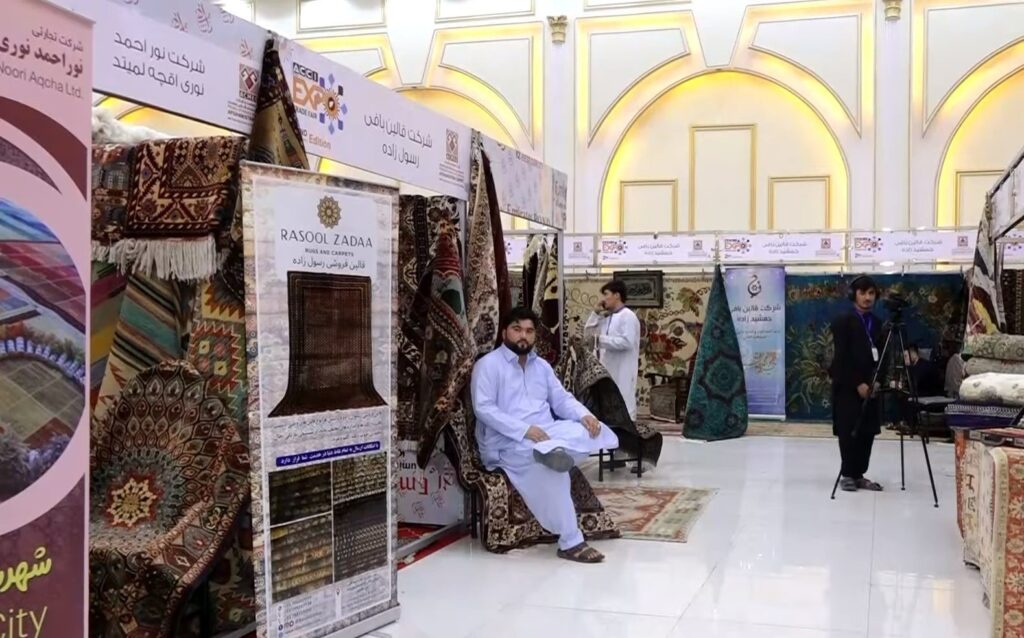
Afghan Businesses to Hold Exhibition in Almaty

An exhibition of Afghan businesses is scheduled to open in Almaty as part of the Kazakhstan-Afghanistan Business Forum, Orda.kz reports. Afghanistan's Ministry of Industry and Trade originally planned to hold the event at the end of August, but the dates were pushed back by two months. The forum, organized by Kazakhstan's Ministry of Commerce, will now be held on October 22 and will be a meeting place for more than 250 Afghan entrepreneurs representing various sectors of the economy. This event continues the regular tradition of Kazakh-Afghan business forums. The last forums were held in August 2023 in Astana, and in Afghanistan in April this year. In December 2023, Kazakhstan removed the Taliban from the list of banned organizations, following UN Security Council resolutions. The decision was part of a broader strategy to strengthen economic and trade ties with Afghanistan, which has become an important partner for Central Asia since the Taliban came to power in 2021. Economic relations between Kazakhstan and Afghanistan continue to develop and are expected to grow to $3 billion through active participation in business forums and the signing of agricultural supply agreements.

Chinese Company to Build Sugar Substitutes Plant in Kazakhstan

Chinese state company CITIC Construction plans to invest more than 1 billion dollars in constructing a plant for deep grain processing in the Almaty region. The agreement was reached during the meeting of the Vice-Minister of Agriculture of the Republic of Kazakhstan, Ermek Kenzhekhanuly, with representatives from the Chinese delegation. The parties discussed the development of Kazakhstan's agro-industrial complex and details of the project to build a production line for deep wheat processing with an annual capacity of 300,000 tons. The enterprise will produce maltose, fructose, crystalline fructose, allulose, crystalline dextrose, sodium gluconate, gluten by-products, and feed. The project will be realized in the Kazbek bi-industrial zone in the Almaty region. CITIC Construction's total investment will be about $1.07 billion, and the total value of its products will be $1.87 billion. More than 2,000 jobs will be created. In mid-July, the Ministry of Agriculture of Kazakhstan signed an agreement with Chinese companies CITIC Construction and Beijing Capital Agro to attract $600 million in investment to develop beef cattle breeding in the country. The funds will be used to establish feedlots, with the partnership expected to involve more than 600 farms and existing feedlots. China is Kazakhstan's leading trading partner. At the end of 2023, agricultural exports from Kazakhstan to China doubled and reached $1 billion. In 2023, the volume of bilateral trade turnover amounted to $41 billion, and Kazakhstan intends to double this figure. In addition, Beijing is one of the leading foreign investors in Kazakhstan, having invested about $25 billion in its economy over the past 15 years.

China Gives 200 Million Yuan Grant Aid to Kyrgyzstan

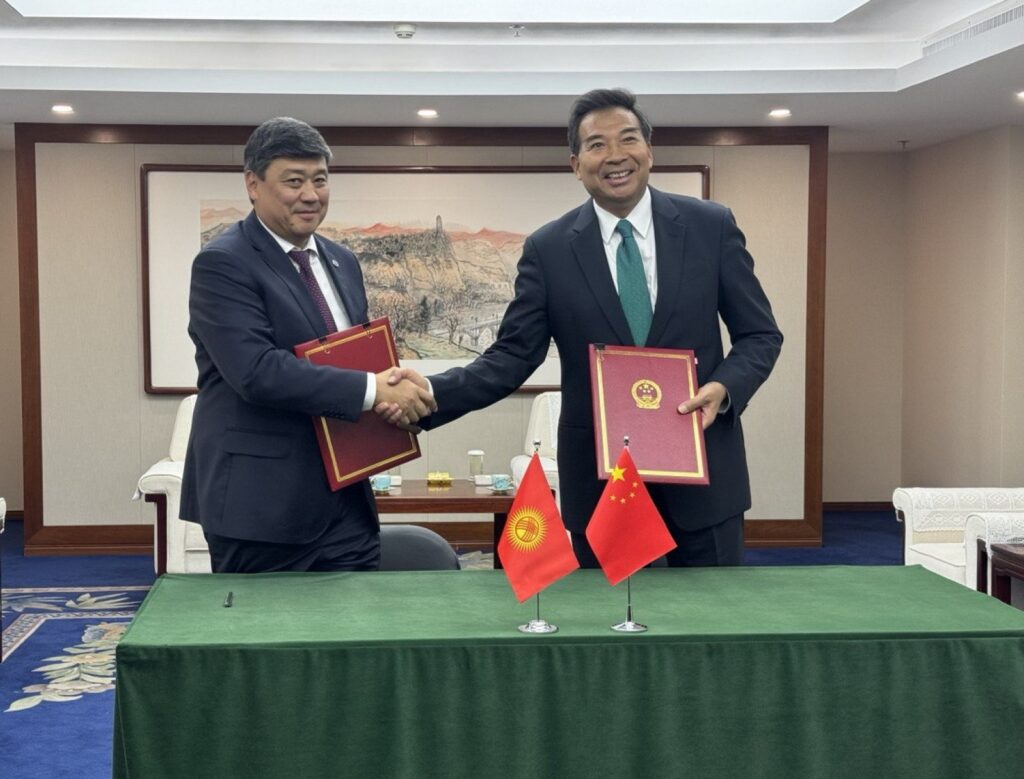
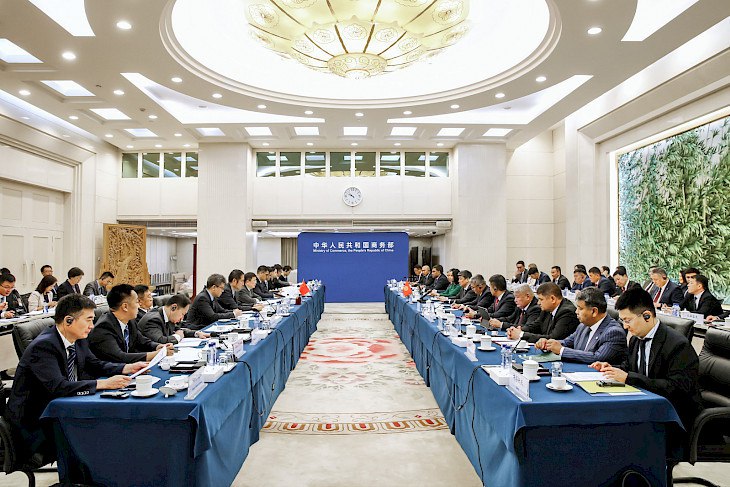
The Kyrgyz Ministry of Economy and Commerce has announced that the Chinese government has allocated grant assistance to Kyrgyzstan totaling 200 million yuan (more than $28 million). The money will be used to finance socially significant projects in priority areas. The grant agreement was signed on September 19 in Beijing, following the Intergovernmental Kyrgyz-Chinese Commission on Trade and Economic Cooperation meeting held the previous day. Deputy Chairman of the Kyrgyz Cabinet of Ministers, Bakyt Torobaev, headed the Kyrgyz delegation at the meeting. On September 18, Torobaev held meetings with the heads of Chinese companies. During a meeting with Zoomlion, a leading Chinese agricultural machinery manufacturer, the sides discussed supplying agricultural machinery and equipment to Kyrgyzstan and the potential opening of a training center for the assembly of agricultural machinery in Kyrgyzstan. Noting Kyrgyzstan’s efforts to expand the export of agricultural products to China, Torobaev said that work is nearing completion on constructing a warehouse near the Irkeshtam checkpoint on the Kyrgyz-Chinese border. This will increase the volume of cargo transportation from Kyrgyzstan and Uzbekistan to China. During a meeting with Jiangnan Delivery (GZ) Food Supply Chain Co., Ltd, a Chinese importer of agricultural products, the parties focused on issues of exchanging experience in the field of e-commerce and a proposal to build a laboratory in Kyrgyzstan that will create opportunities for the unhindered entry of Kyrgyz agricultural products into the Chinese market. According to Chinese statistics, trade turnover between China and Kyrgyzstan amounted to $20 billion in 2023, a 32% increase compared to 2022. Bilateral trade reached almost $11 billion from January to July this year.

Trade Volume Between Kyrgyzstan and China Reaches $11 Billion

Trade turnover between Kyrgyzstan and China for the first seven months of 2024 reached approximately $11 billion, as reported by the Deputy Chairman of the Cabinet of Ministers of Kyrgyzstan, Bakyt Torobayev, in Beijing. Torobayev emphasized that the foundation for successful cooperation was laid during the meetings between Kyrgyz President Sadyr Japarov and Chinese President Xi Jinping. In 2023, the volume of trade turnover between the countries reached $20 billion, 32% more than in 2022. Torobayev also noted that important steps to strengthen cooperation continue. In particular, the project to build a railroad connecting China, Kyrgyzstan, and Uzbekistan is moving forward. Another significant event was the opening of the simplified border crossing point “Bedel” on the Kyrgyz-Chinese border, which indicates the beginning of a new stage in bilateral relations. Cooperation between Kyrgyzstan and China covers trade, energy, and infrastructure spheres. In addition, China is actively investing in hydropower and implementing programs to improve Kyrgyzstan's infrastructure. These projects are expected to contribute to sustainable economic growth.

Rahmon Invites German Chancellor to Cooperate on Rogun HPP

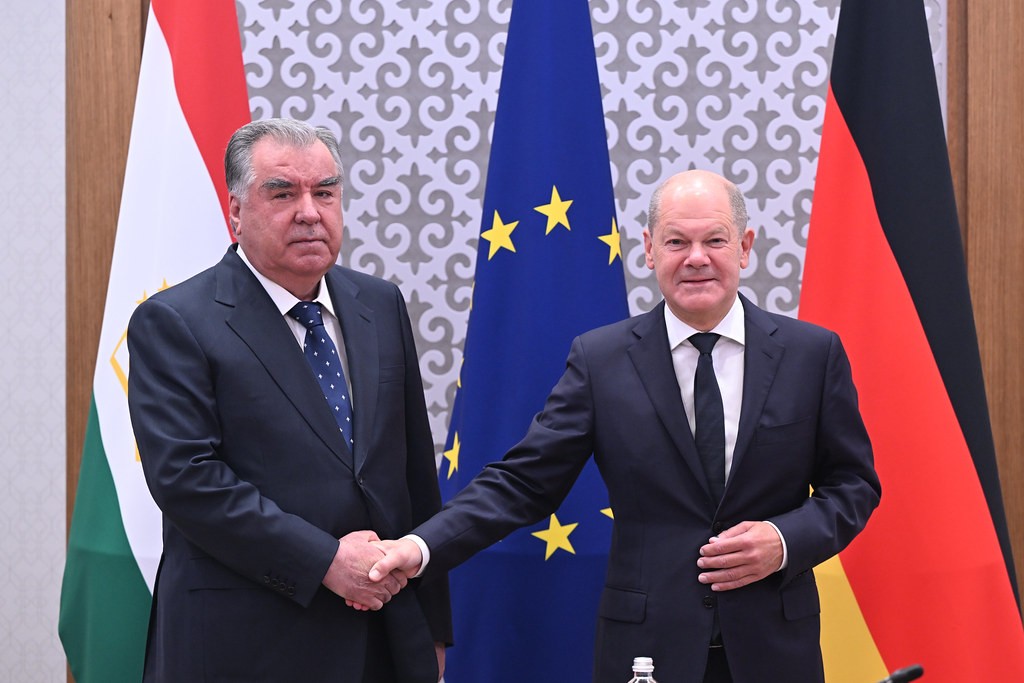
During the summit of Central Asian countries and Germany on September 17 in Astana, Tajik President Emomali Rahmon spoke with German Chancellor Olaf Scholz on expanding Tajikistan’s cooperation with Germany and furthering Germany's business interests in the country. The president noted the significant contribution made by the German Society for International Cooperation and the German Development Bank to Tajikistan's implementation of its national strategies. With regard to future projects, the parties discussed developing effective cooperation in economy and trade, industry, hydropower, solar and wind energy, transport, and agriculture. The two leasers also exchanged views on mining and processing minerals and scarce earth metals, the expansion of bilateral cooperation in industry and agriculture, and the prospects of exporting products from Tajikistan to Germany. Talks also covered global problems related to drinking water, melting glaciers, climate change, and food security. Olaf Scholz confirmed Germany's interest in cooperating with Tajikistan in energy fields, including hydropower and other green energy sources, mining, environmental protection, and security, and emphasized,   “we encourage cooperation with Tajikistan to global German companies." According to the president's press service, Emomali Rahmon recalled Germany’s contribution to the construction of the Tajikistan and Sebzor power plants in Badakhshan and the modernization of the Nurek hydroelectric power plant. Looking ahead, the president expressed confidence that such cooperation could continue on the Rogun power plant. The estimated  cost of completing the construction of the Rogun HPP is $6.4 billion, and when fully operational, about 70% of the electricity produced will be exported to other Central Asian countries. The meeting closed with Rahmon inviting Scholz to come to Tajikistan on an official visit.