• KGS/USD = 0.01144 0%
  • KZT/USD = 0.00198 -0%
  • TJS/USD = 0.10901 0%
  • UZS/USD = 0.00008 0%
  • TMT/USD = 0.28490 0%
  • KGS/USD = 0.01144 0%
  • KZT/USD = 0.00198 -0%
  • TJS/USD = 0.10901 0%
  • UZS/USD = 0.00008 0%
  • TMT/USD = 0.28490 0%
  • KGS/USD = 0.01144 0%
  • KZT/USD = 0.00198 -0%
  • TJS/USD = 0.10901 0%
  • UZS/USD = 0.00008 0%
  • TMT/USD = 0.28490 0%
  • KGS/USD = 0.01144 0%
  • KZT/USD = 0.00198 -0%
  • TJS/USD = 0.10901 0%
  • UZS/USD = 0.00008 0%
  • TMT/USD = 0.28490 0%
  • KGS/USD = 0.01144 0%
  • KZT/USD = 0.00198 -0%
  • TJS/USD = 0.10901 0%
  • UZS/USD = 0.00008 0%
  • TMT/USD = 0.28490 0%
  • KGS/USD = 0.01144 0%
  • KZT/USD = 0.00198 -0%
  • TJS/USD = 0.10901 0%
  • UZS/USD = 0.00008 0%
  • TMT/USD = 0.28490 0%
  • KGS/USD = 0.01144 0%
  • KZT/USD = 0.00198 -0%
  • TJS/USD = 0.10901 0%
  • UZS/USD = 0.00008 0%
  • TMT/USD = 0.28490 0%
  • KGS/USD = 0.01144 0%
  • KZT/USD = 0.00198 -0%
  • TJS/USD = 0.10901 0%
  • UZS/USD = 0.00008 0%
  • TMT/USD = 0.28490 0%
08 December 2025

Viewing results 1 - 6 of 80

Central Asia’s Economy Expands Fourfold Over Two Decades, Outpacing Global Growth Rates

Over the past two decades, the gross domestic product (GDP) of Central Asia has grown fourfold in real terms and sevenfold in nominal terms, according to Evgeny Vinokurov, Deputy Head of the Eurasian Development Bank (EDB). Vinokurov highlighted significant improvements in the region’s economic landscape. Over the same period, population mobility has tripled, and incoming investments have surged by more than 17 times. Vinokurov emphasized that the last two years have underscored Central Asia’s status as an economically attractive and strategically important region. Positioned at the heart of Eurasia, Central Asia boasts strong transport and transit potential, a growing consumer market, and expanding opportunities for investment. Despite external challenges, the region’s economies have displayed remarkable resilience, maintaining steady growth and weathering global shocks effectively. Between 2022 and 2023, Central Asia’s economies grew at an average annual rate of 4.8%, significantly outpacing the global average of 3.4%. This makes the region’s growth rate 1.4 times faster than the global average. Vinokurov projected that Central Asia’s nominal GDP will surpass $500 billion in 2024. Despite these achievements, Central Asia faces complex challenges that require regional collaboration. Key issues include: -- Lack of access to the sea: Geographical isolation limits trade and economic integration. -- Climate and environmental risks: These pose threats to sustainable development. -- Water and energy management: Disjointed policies among countries hinder efficiency and sustainability. Vinokurov stressed the importance of joint efforts to address these challenges. Coordinated development of water and energy resources, renewable energy, and the Eurasian transport framework can yield cost-effective and efficient solutions. Central Asia’s impressive economic growth over the past 20 years reflects its potential as a key economic and transit hub in Eurasia. While the region faces significant challenges, collaborative solutions and investments in infrastructure and sustainability could unlock further growth and prosperity.

China to Transport Lithium-Ion Batteries Along TITR via Kazakhstan

This month marks a significant milestone in Kazakhstan-China transport cooperation with the test shipment of lithium-ion batteries from China via the Trans-Caspian International Transport Route (TITR). This major trade corridor links China to Europe through Kazakhstan and the Caucasus. The decision was announced following a meeting between Kazakhstan’s Minister of Transport Marat Karabayev and China’s Transport Minister Liu Wei in Beijing on December 5. Strengthening TITR Cooperation The two ministers agreed on initiatives to further develop the TITR, including the creation of a permanent working group to facilitate the seamless flow of goods. They also highlighted advancements in the digitization of transport operations. Truckers can now receive permit forms within an hour through a newly implemented digital platform, streamlining international road transportation. The TITR is seeing rapidly growing freight traffic. According to Kazakhstan’s Ministry of Transport, road freight volumes with China have more than doubled annually. Before 2023, Kazakh truckers made approximately 50,000 trips per year. In 2024, this figure is projected to reach 230,000 trips. Expanding Multimodal Transport The meeting also explored the potential for developing cargo transportation via transboundary rivers between the two nations. Both ministers noted a surge in rail and road freight volumes, as well as transit transportation through the Middle Corridor (another name for the TITR). From January to October 2024, rail freight between Kazakhstan and China increased by 13%, reaching 26.6 million tons. Road freight volumes soared by 60% in the third quarter alone, amounting to 1.9 million tons. Meanwhile, cargo transportation from China to Europe via the TITR has experienced explosive growth. In 2024, the volume surpassed 27,000 twenty-foot containers, a 25-fold increase compared to the same period in 2023.

EDB Supports Construction of Strategic Highway in Kyrgyzstan

The Eurasian Development Bank (EDB) has pledged up to $200,000 for a preliminary feasibility study for the Bishkek - Kuntuu - Belogorka - Suusamyr highway. This alternative route aims to connect Kyrgyzstan’s capital, Bishkek, with the southern and western regions of the country. An agreement for technical assistance was signed on December 5 between the EDB and Kyrgyzstan’s Cabinet of Ministers. Strategic Importance The proposed highway is expected to have significant strategic, economic, and social benefits for Kyrgyzstan. Beyond improving transport infrastructure, it will facilitate access to mineral deposits and create new employment opportunities both during construction and operation. Nikolai Podguzov, Chairman of the EDB Management Board, emphasized the project’s importance: “This initiative is part of the Eurasian Transport Framework, a key investment mega-project. It aims to strengthen transport connectivity among Kyrgyzstan’s economic centers while increasing the transit potential of Kyrgyz highways and attracting greater interest in road transportation through Kyrgyzstan from neighboring countries.” Alleviating Traffic and Economic Growth Deputy Minister of Transport and Communications Bekzhan Rysmendeev highlighted the project’s role in addressing existing infrastructure challenges. “The Bishkek—Osh highway, Kyrgyzstan’s main arterial road, currently handles 5,000 to 18,000 vehicles per day and is struggling to accommodate the growing traffic flow,” he explained. The new highway is set to reduce the travel distance by 164 kilometers compared to the existing route, providing an alternative pathway to southern regions and improving access to mining areas. “This public-private partnership project will ease congestion on the Bishkek—Osh route, contribute to economic and social development, and foster international and domestic tourism and trade,” Rysmendeev added. Regional Connectivity As part of the EDB’s broader mission to invest in Eurasia, this project aligns with the bank’s goals of enhancing regional connectivity and economic development. The EDB, a multilateral development institution, includes Armenia, Belarus, Kazakhstan, Kyrgyzstan, Russia, and Tajikistan as its member countries.

S&P Global Ratings Predicts 5.6% Annual Growth for Uzbekistan Through 2027

S&P Global Ratings has reaffirmed Uzbekistan’s long-term sovereign credit rating at BB, forecasting strong economic growth averaging 5.6% annually from 2024 to 2027. This growth will be driven by public investment and private consumption. While rising public and external debt presents some risks, S&P expects fiscal and current account deficits to narrow after peaking in 2023. Economic Projections Uzbekistan’s gross general debt is projected to reach 39% of GDP in 2024, a level considered moderate by global standards. Most of this debt originates from official creditors under concessional terms. The agency’s stable outlook reflects robust growth prospects, balanced against challenges posed by debt accumulation. The country’s economy expanded by 6.6% in the first nine months of 2024, fueled by sectors such as construction, trade, and communications. Investments continue to play a pivotal role, with Uzbekistan maintaining one of the world’s highest investment-to-GDP ratios at 34%. Key investment areas under the “Uzbekistan - 2030” strategy include energy, transport, agriculture, and tourism. Diversification and Energy Goals As part of efforts to diversify energy sources, Uzbekistan is targeting 40% green energy by 2030. Saudi Arabia’s ACWA Power has pledged $7.5 billion in investments for electricity projects. The government is also expanding exports of critical resources such as copper, gold, silver, and uranium to boost revenue streams. Opportunities and Risks Despite challenges such as low GDP per capita and reliance on remittances, Uzbekistan benefits from a young workforce and rising foreign investment. However, risks remain, including potential sanctions on companies linked to Russia and difficulties in creating sufficient jobs. In 2024, remittance inflows - primarily from Russia, along with Germany and South Korea - increased by 35%, providing a significant economic boost. Trade with Russia also grew by 26%, and Uzbekistan signed a two-year gas import contract with Gazprom. Meanwhile, the government is taking steps to mitigate the risks of secondary sanctions stemming from its trade ties with Russia. Broader Context These developments align with Uzbekistan’s long-term economic strategies while highlighting both opportunities and vulnerabilities. S&P’s latest forecasts reaffirm the country’s growth trajectory, supported by strategic investments and economic reforms, yet underscore the importance of managing debt and external risks.

Construction of TAPI Gas Pipeline Begins in Afghanistan

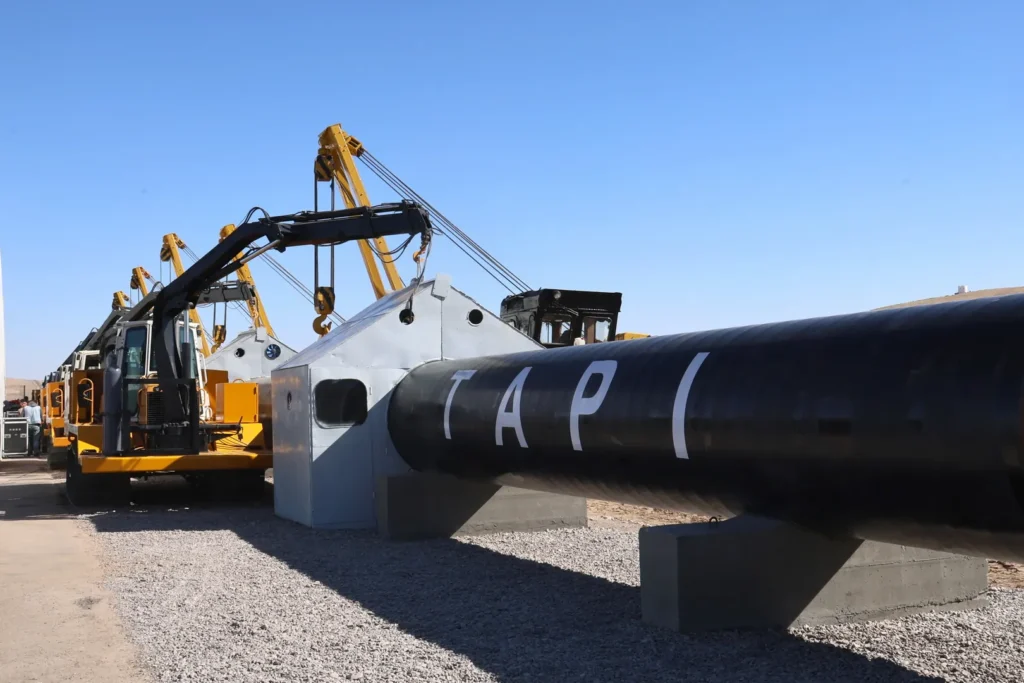
Afghanistan has commenced the practical phase of the Turkmenistan-Afghanistan-Pakistan-India (TAPI) gas pipeline project, one of the region’s most ambitious infrastructure initiatives. Local media report that essential materials and equipment have been delivered to the border areas between Afghanistan and Turkmenistan, enabling work to start on the Afghan section of the pipeline. The TAPI gas pipeline will span 1,814 kilometers, with 774 kilometers crossing Afghanistan. Once operational, the pipeline will transport 33 billion cubic meters of natural gas annually, significantly boosting economic development across the region. Afghanistan is set to receive 5 billion cubic meters of gas each year from the pipeline and create over 12,000 jobs for its citizens. Economists estimate that the project could generate approximately $1 billion annually in revenue for Afghanistan. Discussions around the TAPI pipeline began in the early 2000s, and in 2013, an agreement was signed to form a consortium. The Turkmen state-owned company Turkmengaz holds an 85% stake, while Afghanistan, Pakistan, and India each hold 5% shares. Construction on the Turkmenistan section of the pipeline began in 2015 and has since been completed. Afghanistan is the next country to advance the project, with work on the section from Serhetabat to Herat initiated in September this year.

Uzbekistan Attracts $26 Billion in Foreign Investment in First Ten Months of 2024

On November 27, Uzbek President Shavkat Mirziyoyev chaired a meeting to assess the country's foreign investment performance and set priorities for the coming year. In the first ten months of 2024, Uzbekistan secured over $26 billion in foreign investment—an increase of 1.7 times compared to the previous year. Of this amount, direct investment accounted for $24 billion of the total. These funds enabled the launch of 6,300 enterprises, generated an additional 30 trillion Uzbekistani Sums (UZS) in value, and boosted exports by $305 million. Crucially, 163,000 high-income jobs were created. An additional $8.6 billion in investment is anticipated by the end of the year. Regional and Sectoral Challenges During the meeting, a detailed analysis of investment performance across Uzbek regions and industries revealed that eight districts and cities showed low activity. Furthermore, some sectors experienced declines compared to the previous year. Delays in document preparation and tender processes also hindered the progress of 17 projects funded by international financial institutions. Mirziyoyev emphasized the need for enhanced regional investment initiatives and innovative approaches. He pointed out untapped opportunities, such as funding from the European Bank for Reconstruction and Development (EBRD), which is keen to support private-sector projects amid Uzbekistan’s improved business environment and economic growth. Strategic Focus The president also called on regional leaders to leverage financing opportunities effectively and focus on attracting investments that deliver tangible results. Priority areas include accelerating industrial development, creating jobs, and expanding export potential. Mirziyoyev also instructed officials to evaluate the volume and strategies of international financial institution financing and foreign investment. Each region and sector was tasked with identifying specific projects for 2025, emphasizing public-private partnerships and private investment.