• KGS/USD = 0.01144 0%
  • KZT/USD = 0.00205 0%
  • TJS/USD = 0.10441 0.1%
  • UZS/USD = 0.00008 0%
  • TMT/USD = 0.28490 -0.28%
  • KGS/USD = 0.01144 0%
  • KZT/USD = 0.00205 0%
  • TJS/USD = 0.10441 0.1%
  • UZS/USD = 0.00008 0%
  • TMT/USD = 0.28490 -0.28%
  • KGS/USD = 0.01144 0%
  • KZT/USD = 0.00205 0%
  • TJS/USD = 0.10441 0.1%
  • UZS/USD = 0.00008 0%
  • TMT/USD = 0.28490 -0.28%
  • KGS/USD = 0.01144 0%
  • KZT/USD = 0.00205 0%
  • TJS/USD = 0.10441 0.1%
  • UZS/USD = 0.00008 0%
  • TMT/USD = 0.28490 -0.28%
  • KGS/USD = 0.01144 0%
  • KZT/USD = 0.00205 0%
  • TJS/USD = 0.10441 0.1%
  • UZS/USD = 0.00008 0%
  • TMT/USD = 0.28490 -0.28%
  • KGS/USD = 0.01144 0%
  • KZT/USD = 0.00205 0%
  • TJS/USD = 0.10441 0.1%
  • UZS/USD = 0.00008 0%
  • TMT/USD = 0.28490 -0.28%
  • KGS/USD = 0.01144 0%
  • KZT/USD = 0.00205 0%
  • TJS/USD = 0.10441 0.1%
  • UZS/USD = 0.00008 0%
  • TMT/USD = 0.28490 -0.28%
  • KGS/USD = 0.01144 0%
  • KZT/USD = 0.00205 0%
  • TJS/USD = 0.10441 0.1%
  • UZS/USD = 0.00008 0%
  • TMT/USD = 0.28490 -0.28%

Viewing results 1 - 6 of 18

Uzbekistan Concludes WTO Membership Talks With 18 Countries

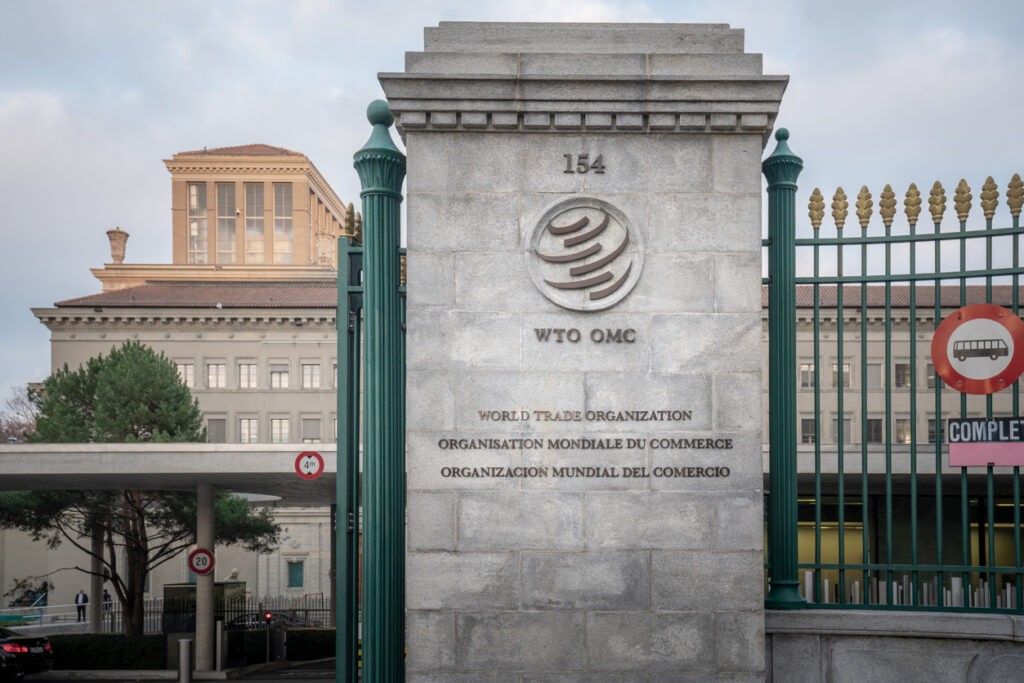
According to a report issued by Azizbek Urunov, President Special Representative on International Trade, Uzbekistan has now completed negotiations on membership of the World Trade Organization (WTO) with 18 countries. Negotiations with Argentina closed on September 13, and protocols on finalizing market access negotiations have been signed with 14 of the 18 member countries, including Brazil and Sri Lanka. Posting on LinkedIn on September 12, Urunov wrote: "In the margins of the WTO Public Forum, we had signing ceremonies with the participation of DPM Jamshid Khodjaev, DDG Xiangchen Zhang, and ex-DDG Alan Wolff. The Uzbek delegation, led by Madam Saida Mirziyoyeva, is participating in the 2024 WTO Public Forum in Geneva." After pursuing its goal for almost 30 years, Uzbekistan seeks further support from the U.S. support to join the World Trade Organization. To date, the U.S. has provided some technical help, and during a recent visit, U.S. Trade Representative Katherine Tai reaffirmed America’s support.  However, to forward progress and strengthen trade ties, Uzbekistan could benefit from greater involvement from such U.S. institutions as the Development Finance Corporation (DFC), Export-Import Bank (EXIM), and the U.S. Trade and Development Agency (USTDA). Following a meeting with Katherine Tai during her visit to Uzbekistan in June, Uzbekistan’s Presidential Assistant, Saida Mirziyoyeva stated,  “We intend to become a full-fledged participant in the international trade system and rely on the support of the United States to accelerate the process of Uzbekistan becoming a member of the WTO." For background, Uzbekistan initiated the process of joining the WTO in 1994 before abandoning it 2005. In 2019, the country strengthened its efforts to become a member of the WTO, and on July 7, 2020, the joint working group was restored.
Economy Minister: 70% of Tajikistan’s Trade is With SCO Countries

The Pakistani capital of Islamabad has hosted the 23rd meeting of the Ministers of the Shanghai Cooperation Organization (SCO) Member States responsible for Foreign Economic and Trade Activities. The Minister of Economic Development and Trade of Tajikistan, Zavqi Zavqizoda, who participated in the meeting, said that the country considers the development of relations within the SCO as one of its foreign policy priorities. “Foreign trade turnover between Tajikistan and the SCO countries demonstrates steady growth, and every year, more than 70% of the republic’s foreign trade is with SCO countries,” Zavqizoda said. He recalled that the SCO accounts for almost half of the world’s population and 27% of global GDP, making the region a massive market with great opportunities. Zavqizoda noted that Tajikistan initiated the economic development strategy for the next five years with the SCO, which was developed and adopted by the organization's member states. He proposed to the participants a plan related to developing and implementing large infrastructure projects and expanding cooperation in digital and green economy, green energy, and e-commerce. It was also noted that wide use of transit opportunities of Tajikistan is envisaged. The Times of Central Asia has reported that Tajikistan seeks to become a central international transit hub. In the next two years, 317 kilometers of international highways will be commissioned in Tajikistan. In the remaining months of 2024, Tajikistan will continue implementing projects for highway reconstruction, with the construction of 32 bridges, five tunnels with a length of 11.2 km, and seven avalanche corridors aiming to turn the country into an international transit route.

Central Asia Seeks Increase in Trade with China

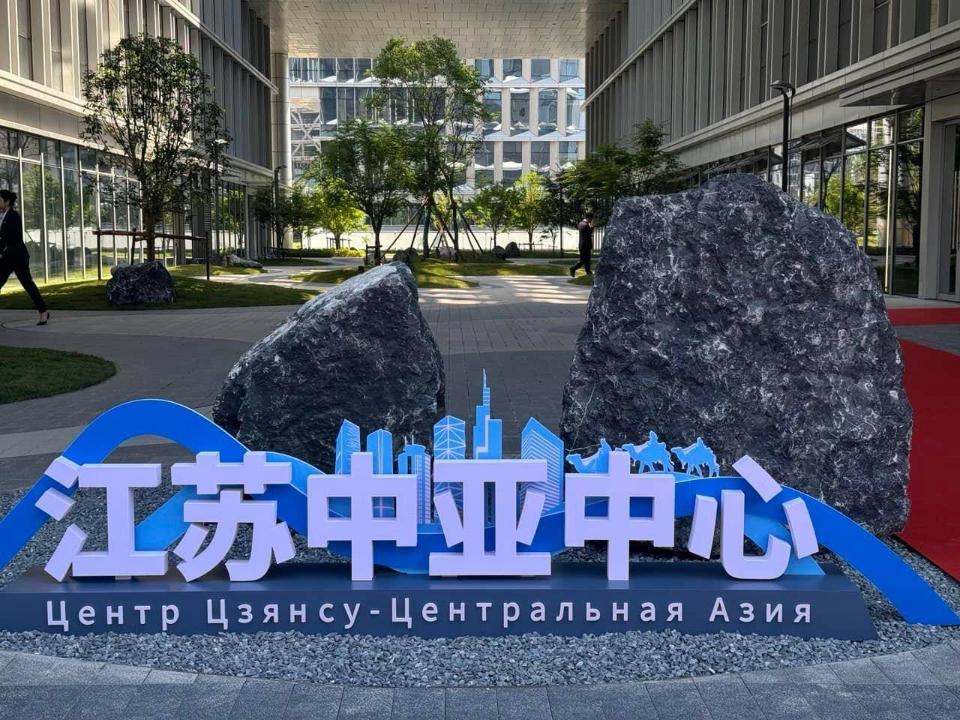
On September 12, the Central Asia-Jiangsu Trade Center, a multifunctional platform showcasing exports from Kazakhstan, Uzbekistan, Tajikistan, and Turkmenistan, opened in Nanjing, the main city of Jiangsu Province in eastern China. According to the Kazakh Ministry of Trade and Integration, the operation of the Center in Jiangsu Province, known for its developed infrastructure, will facilitate access to the huge Chinese market for all five Central Asian countries. Plans are now in place to launch a similar multifunctional center in Kazakhstan’s capital, Astana, to showcase Chinese and Kazakh goods. Official statistics show continued growth of trade turnover between Kazakhstan and China. During the first seven months of this year, bilateral trade increased by 2.8% compared to the same period in 2023,  and amounted to $16.8 billion. Between January and July 2024, trade between Kazakhstan and Jiangsu Province grew by over $1 billion, from $723.3 million to $1.758 billion. As reported by  Kazakh Minister of Trade Arman Shakkaliyev, Jiangsu Province currently imports products, mainly from the industrial and agricultural sectors, worth more than $266 billion annually.

Kyrgyzstan’s Wages Lowest Among EAEU Countries

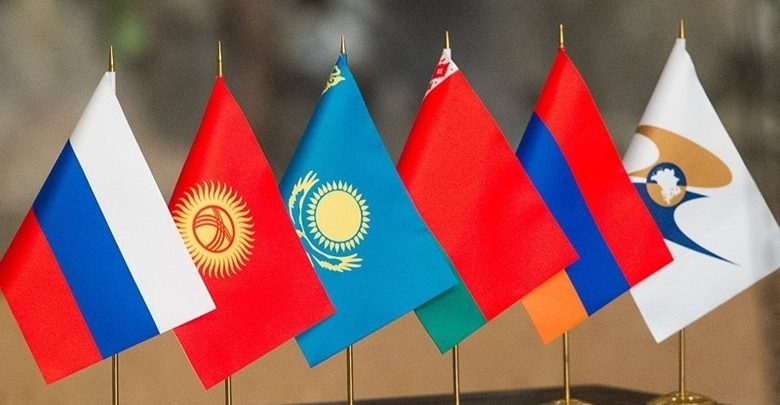
Kyrgyzstan has the lowest average monthly wage among its fellow Eurasian Economic Union (EAEU) members, an economic integration bloc that includes Armenia, Belarus, Kazakhstan, and Russia. According to the Eurasian Economic Commission, the EAEU’s governing body, in January–June 2024, the average monthly nominal wage in Kyrgyzstan was $398, in Belarus $666, in Armenia $704, in Kazakhstan $875, and in Russia $922. Compared to the same period in 2023, wages increased in all EAEU member states with the highest growth recorded in Belarus (113%) and Russia (109.4%). Lower wages in Kyrgyzstan are however, somewhat compensated by the cost of food. In a survey conducted by Kyrgyzstan’s Ministry of Water Resources, Agriculture and Processing Industry, it was found that the price of comparable food products in the country are 13.59% lower than in Kazakhstan and 16.17% lower than in Russia.

Azerbaijan and Uzbekistan Collaborate to Construct Ferries

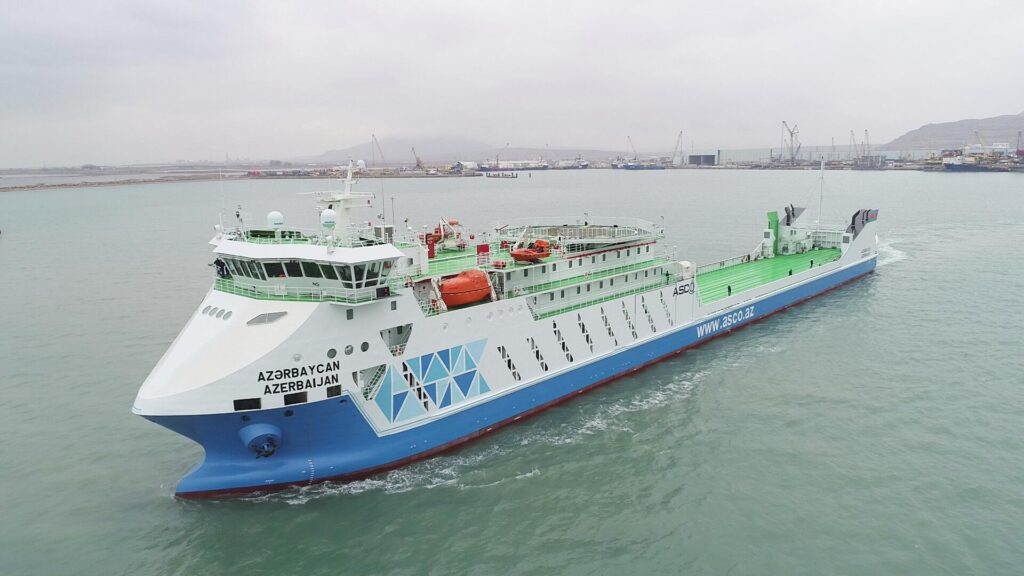
Azerbaijan and Uzbekistan plan to cooperate on the construction of ferries. These ferries will be provided for Uzbekistan's needs, and the project will cost $150 million. Several measures are being suggested to expand the countries' cooperation in the transport and transit sectors. The joint construction of warehouse infrastructure is being mooted, as well as the creation of a joint venture to further develop transportation along the Trans-Caspian route. The Times of Central Asia previously wrote about the Uzbekistan-Azerbaijan business forum that was held in Tashkent on August 22. As a result of the forum, a portfolio of projects worth $2 billion was formed in energy, chemistry, mining, textile, agriculture, urban development, and other areas. Also, on May 1 this year, the energy ministers of Azerbaijan, Kazakhstan, and Uzbekistan met in Tashkent and signed a memorandum of cooperation to connect their countries' energy networks. The initiative's main goal is to study the means of connecting energy systems through a high-voltage cable installed in the Caspian Sea to export green energy from Azerbaijan, Kazakhstan, and Uzbekistan to countries of the European Union.

Optimism Meets Reality at the B5+1 Forum in Almaty

The inaugural B5+1 Forum, a conference dedicated to strengthening business between the five Central Asian republics and the United States, came to a close today in Almaty after a second well received day of panel discussions. The B5+1 Forum was created by the Center for International Private Enterprise (CIPE), which aims to use public-private partnerships to create a better environment for business and trade. The B5+1 platform brings international and local companies together with high-ranking government officials from all six countries, to learn about the difficulties that each side faces, and suggest new ways to attract partners and investment. Following an opening day focused on “Looking within Central Asia”, today’s speakers brought attention to “Central Asia’s place in the world economy”. The morning began with a keynote speech by Eurasian affairs expert S. Frederick Starr, who argued that because the five countries are now members of different trade blocs, the revival of the Central Asian Economic Union could break down their existing barriers to business and trade with the United States. During a morning session on international partnerships, foreign experts brainstormed ways to speed up the Central Asia region’s economic integration with the rest of the world. To an audience of business leaders whose overall mood was optimistic, the EU’s ambassador to Kazakhstan Kestutis Jankauskas and World Bank economist David Knight brought a dose of realism, by explaining that business in Central Asia is not performing as well as in other emerging regions. This, they both said, is because the governments – and business owners – have mostly still not let go of self-defeating ways of approaching markets and investment. The middle session went into more detail about the investment landscape, particularly in terms of IT and fintech. Jennifer Miel, executive director for Kazakhstan for the US Chamber of Commerce, mentioned that all five Central Asian countries have seen healthy increases in foreign direct investment since 2021. This was soon tempered by Anatoly Motkin of the agency StrategEast, who said that to achieve further sustainable growth, the region must unify its legislation and best practices, so that foreign investors can treat it as a single market as much as possible. The Forum’s closing session explored the role of business associations in public-private dialogue. The panel was moderated by Eric Hontz, CIPE’s director for accountable investments, and featured the executive directors of the US Chambers of Commerce in Kyrgyzstan, Tajikistan and Uzbekistan – Aisuluu Sydygalieva, Nilufar Bulbulshoeva and Tatyana Bystrushkina. Discussion centered on best practices and solutions for effective member representation. The B5+1 Forum forms part of CIPE’s program called “Improving the Business Environment in Central Asia” (IBECA). CIPE themselves are affiliated to the US Chamber of Commerce – the catalyst behind the B7 and B20 platforms – and receive funding from the US Department of State. Early indications are that the B5+1 Forum in 2025 will be held in Bishkek, Kyrgyzstan.