• KGS/USD = 0.01143 0%
  • KZT/USD = 0.00207 0%
  • TJS/USD = 0.10465 0.1%
  • UZS/USD = 0.00008 0%
  • TMT/USD = 0.28571 0.28%
  • KGS/USD = 0.01143 0%
  • KZT/USD = 0.00207 0%
  • TJS/USD = 0.10465 0.1%
  • UZS/USD = 0.00008 0%
  • TMT/USD = 0.28571 0.28%
  • KGS/USD = 0.01143 0%
  • KZT/USD = 0.00207 0%
  • TJS/USD = 0.10465 0.1%
  • UZS/USD = 0.00008 0%
  • TMT/USD = 0.28571 0.28%
  • KGS/USD = 0.01143 0%
  • KZT/USD = 0.00207 0%
  • TJS/USD = 0.10465 0.1%
  • UZS/USD = 0.00008 0%
  • TMT/USD = 0.28571 0.28%
  • KGS/USD = 0.01143 0%
  • KZT/USD = 0.00207 0%
  • TJS/USD = 0.10465 0.1%
  • UZS/USD = 0.00008 0%
  • TMT/USD = 0.28571 0.28%
  • KGS/USD = 0.01143 0%
  • KZT/USD = 0.00207 0%
  • TJS/USD = 0.10465 0.1%
  • UZS/USD = 0.00008 0%
  • TMT/USD = 0.28571 0.28%
  • KGS/USD = 0.01143 0%
  • KZT/USD = 0.00207 0%
  • TJS/USD = 0.10465 0.1%
  • UZS/USD = 0.00008 0%
  • TMT/USD = 0.28571 0.28%
  • KGS/USD = 0.01143 0%
  • KZT/USD = 0.00207 0%
  • TJS/USD = 0.10465 0.1%
  • UZS/USD = 0.00008 0%
  • TMT/USD = 0.28571 0.28%

Viewing results 1 - 6 of 29

Tokayev Outlines Economic Reforms and Calls for Revised Energy Contracts

On January 28, Kazakhstan's capital Astana hosted an expanded government meeting led by President Kassym-Jomart Tokayev. The event focused on the country's socio-economic development in 2024, but this year’s discussion carried broader implications, addressing both domestic and international concerns. Addressing Budget Constraints From the outset, Tokayev made it clear that a key issue for his government is the state budget’s financial shortfall. Analyst Gaziz Abishev noted on his Telegram channel that the problem is not just a lack of funds but a long-standing habit - dating back to 2003 - of addressing challenges by simply increasing spending. “There is no longer an oil windfall to revitalize the dry economy as there was 20 years ago,” Abishev wrote. Adding to the uncertainty, Kazakhstan’s oil revenues face potential disruption from Donald Trump’s stated intention to drive down global hydrocarbon prices. Tokayev outlined a range of measures to fill budget gaps, urging his government to take bold, unconventional steps. He called on officials to act in the country’s best interests without fear of pressure from the Anti-Corruption Service or public opinion. He also stressed the importance of depoliticizing economic partnerships, particularly with Russia and China, cautioning against allowing Russophobic or Sinophobic rhetoric to interfere with business deals. “Money must be attracted from abroad, and this is more important than ever. Without investment, we cannot sustain ourselves. Money doesn’t smell, but it disappears. We need to attract investment from all sides - within the law - without falling into populism. The future of the national economy, and to some extent the country as a whole, is at stake,” Abishev commented. Public Reaction to Tax Reforms Although tax reform was only the sixth of eight key points in Tokayev’s speech, it quickly became the most widely discussed issue among the public. Kazakhstan’s value-added tax (VAT) is currently 12%, with a sufficiency threshold of 78 million tenge ($150,937). The government is considering raising the VAT rate to 20% and lowering the sufficiency threshold to 15 million tenge ($29,026). If implemented, nearly all small businesses would become VAT payers, while the increased tax rate is expected to drive inflation. The government maintains that inflation will not exceed 4.5%, but Tokayev’s mention of “belt-tightening” has already led many to expect rising retail prices. To offset the burden on businesses, the government proposes eliminating mandatory employer pension contributions and reducing the social tax. However, Tokayev himself expressed reservations about cutting the social tax, emphasizing that regional governors (akims) need financial incentives. “Think again. I believe it would be wrong to deprive akims of incentives, especially financial ones. After all, the regions are the country. Find a solution. We will meet again to discuss these issues,” he told the government. The tax reforms will also be debated in Parliament, where the lower house is currently reviewing the draft of the new Tax Code. The government will have to negotiate with members of the Majilis and Senate over the VAT rate, sufficiency threshold, and other sensitive issues. Messages to Foreign Partners...
Kazakhstan Plans to End State Regulation of Fuel Prices

Kazakhstan's Ministry of Energy is considering the phased liberalization of gasoline and diesel fuel prices as part of a broader reform aimed at addressing price disparities with neighboring countries and curbing illegal fuel exports. The proposed changes have been outlined in a draft document published on the Open NAP portal. The reform would gradually shift fuel pricing from state regulation to a market-based system. Since May 2024, Kazakhstan has implemented a differentiated pricing mechanism, but the Ministry of Energy acknowledges that state regulation has made Kazakhstan the country with the lowest fuel prices in the region. This disparity has incentivized “gray” fuel exports - illegal cross-border sales - and contributed to domestic shortages of petroleum products. Currently, a liter of AI-92 gasoline in Kazakhstan costs 205 KZT ($0.39), significantly cheaper than in neighboring countries: Russia: 288 KZT ($0.54) Kyrgyzstan: 385 KZT ($0.72) Uzbekistan: 489 KZT ($0.92) The price gap is similarly wide for diesel fuel: Kazakhstan: 295 KZT ($0.56) Russia: 355 KZT ($0.67) Kyrgyzstan: 427 KZT ($0.80) Uzbekistan: 528 KZT ($0.90) Price differences for gasoline range from 40% to 138%, while for diesel fuel the gap is between 20% and 79%. The Ministry of Energy emphasizes that this price liberalization is crucial for addressing the challenges caused by these discrepancies. According to the Ministry, the reform will help: Prevent illegal fuel exports. Ensure the economic viability of oil production projects. Enable expansion of refinery capacity from 18 million to 28 million tons per year. The modernization of the oil refining sector, spurred by market-based pricing, would also create new jobs and provide additional funding for government programs. “Phased liberalization of prices with priority support for socially vulnerable segments of the population is necessary. It will create a sustainable system for supplying the domestic market and ensure economic feasibility,” the Ministry’s explanatory note states. The Ministry has assured the public that the transition to market pricing will be gradual and carefully managed to avoid sharp or sudden price increases. Authorities also promise strengthened oversight of the fuel and lubricants market to ensure uninterrupted supply and compliance with legal standards. Agricultural producers, a key sector reliant on affordable fuel, will retain access to subsidized pricing under transparent mechanisms. Additionally, the government has pledged to implement social support measures to protect low-income and vulnerable populations from the financial impact of rising fuel prices. “Liberalization will ensure predictability of changes and create conditions for modernization of the industry. Social support will be prioritized, and agricultural producers will continue to benefit from structured access to fuel,” the Ministry emphasized. Kazakhstan’s plan to phase out state regulation of fuel prices marks a significant shift in the country’s energy policy. By transitioning to market pricing, the government aims to address long-standing challenges, including illegal exports and underinvestment in refinery modernization, while also ensuring social protections for vulnerable groups. The success of this reform will depend on how effectively the government balances economic modernization with public concerns over rising fuel costs.

Uzbekistan Completes Bilateral WTO Talks with U.S.

Uzbekistan has successfully concluded bilateral negotiations with the United States as part of its efforts to join the World Trade Organization (WTO), according to Azizbek Urunov, Special Representative of the President of Uzbekistan for the WTO. Urunov announced the milestone on his LinkedIn page. “Uzbekistan and the United States signed today, on December 19, 2024, the Protocol on the completion of the bilateral market access negotiations within Uzbekistan’s WTO accession,” Urunov wrote. The protocol was signed by Deputy Prime Minister Jamshid Khodjaev and U.S. Trade Representative Katherine Tai. Urunov described 2024 as a “historic year” for Uzbekistan’s WTO membership process, noting significant progress achieved by the end of the year. Expressing gratitude, Urunov commended the U.S. negotiating team for its constructive engagement and lauded the dedication of Uzbekistan’s negotiators. He emphasized the country’s commitment to finalizing its WTO accession by 2026, under the leadership of President Shavkat Mirziyoyev. In addition to the United States, Uzbekistan has also concluded bilateral negotiations with China, signaling accelerated efforts to meet its WTO membership target.

Kyrgyzstan Unveils Ambitious Growth Plans at People’s Kurultai

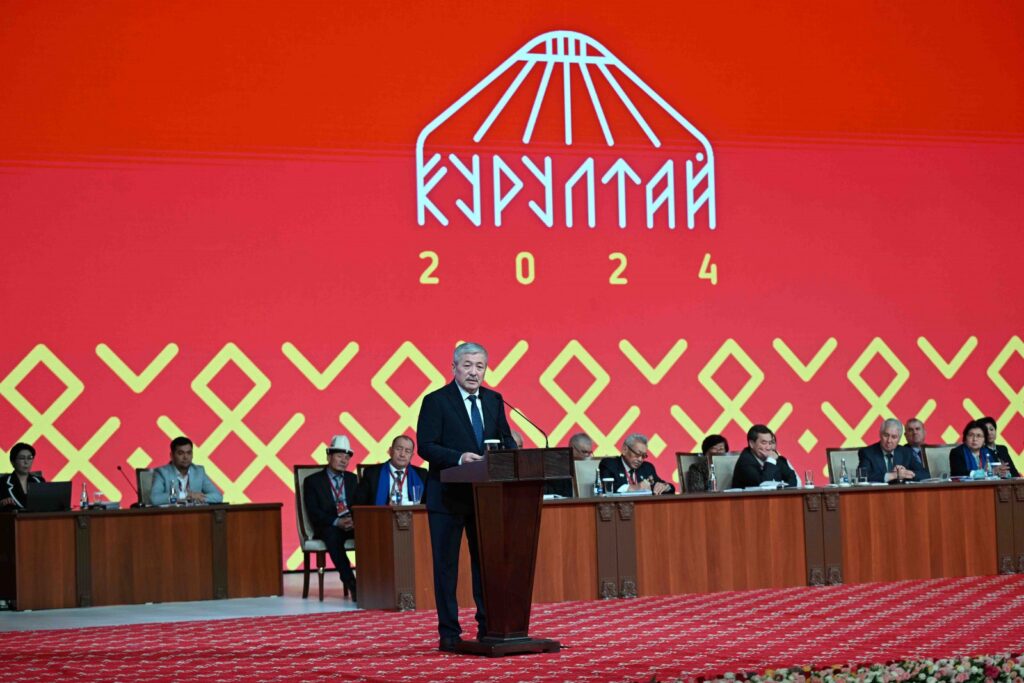
On December 20, Bishkek hosted the third People’s Kurultai (Congress), a platform for direct dialogue between representatives of local communities from across Kyrgyzstan and the country’s top leadership. The event featured opening remarks by President Sadyr Japarov and a detailed address by newly appointed Chairman of the Cabinet of Ministers, Adylbek Kasymaliyev, who outlined the government’s economic priorities and strategic plans for the future. Japarov set the tone for the event by sharing his vision for Kyrgyzstan’s development priorities. He announced that construction of the long-anticipated China-Kyrgyzstan-Uzbekistan railway will commence on December 27. Kasymaliev, in his address, emphasized Kyrgyzstan’s ability to sustain economic momentum, citing the country’s 9% annual GDP growth rate over the past three years. He highlighted key initiatives aimed at transforming Kyrgyzstan’s economic landscape, including: Strategic Infrastructure Projects: Kasymaliyev underscored the significance of the China-Kyrgyzstan-Uzbekistan railway, which is expected to create new economic centers and logistics hubs, effectively positioning Kyrgyzstan as a "land port" in the region. Hydropower and Renewable Energy: As a reliable partner in Central Asia’s hydropower sector, Kyrgyzstan will continue collaborating with Kazakhstan and Uzbekistan on the flagship Kambarata-1 hydroelectric power plant. Kasymaliyev also announced plans to expand solar and wind energy, eliminate state monopolies in the energy sector, and create conditions to attract private investment. Agriculture and Food Security: The government will prioritize agricultural processing to add value to raw products, ensuring food security and bolstering rural economic development. Construction as an Economic Driver: With construction contributing 7.4% of Kyrgyzstan’s GDP - a tenfold increase since 2013 - Kasymaliyev called the industry a vital indicator of economic growth. He noted that construction has significantly improved citizens' well-being over the past three years. Government’s Strategic Goals Kasymaliyev laid out an ambitious roadmap for the Cabinet of Ministers, aiming for the following by 2030: Economic Growth: Maintaining a GDP growth rate of 9% and achieving a GDP of $30 billion. Income Growth: Raising GDP per capita from $2,500 to $4,000. Economic Transition: Shifting from a services-oriented economy to an industrial-agrarian model. Support for Small and Medium Businesses: Increasing their share in GDP from the current 40.5% to 50%. Poverty Reduction: Lowering the poverty rate to 17%. Education Expansion: Ensuring 80% of preschool-age children have access to kindergarten. Kasymaliyev’s address underscored the government’s commitment to comprehensive economic reforms and regional cooperation. His plans reflected an optimistic vision for Kyrgyzstan’s development while addressing key challenges in energy, infrastructure, and social services.

Kazakhstan’s Mining Association Proposes Reforming Mineral Extraction Tax

Aibar Dautov, head of Kazakhstan's Mining Industry Association, has called for reforms to the procedure for calculating the mineral extraction tax (MET) to boost budget revenues from oil and solid minerals. Speaking at the Astana Open Dialogue during discussions on the new tax code, Dautov noted that Kazakhstan currently employs ten different MET rates for crude oil taxation. These rates are determined based on two key factors: the price of oil at the time of sale and the annual production volume at a given field. The current tax structure is divided into the following production thresholds: 5% tax for annual production up to 250,000 tons 7% for 500,000 tons 8% for 1 million tons 9% for 2 million tons 10% for 3 million tons 11% for 4 million tons 12% for 5 million tons 13% for 7 million tons 15% for production up to 10 million tons 18% for production exceeding 10 million tons Dautov criticized this system as unfair to other sectors of the economy. “We believe the criterion of annual production volume should not exist at all. This differentiation has been in place for many years, but for some reason, it hasn’t been removed or acknowledged as a tax benefit. The Ministry of National Economy continues to support its inclusion in the new Tax Code. It’s unclear why this grading still exists—it should be eliminated and considered a relic,” Dautov stated. The complexity is even greater for solid minerals, according to Dautov, as their MET calculation currently involves 38 different tax rates for various types of minerals. The Times of Central Asia previously reported that Kazakhstan's Ministry of Industry and Construction has proposed replacing the current MET system with royalties. Under this system, taxes would be calculated based on the volume of sold products rather than the volume extracted. This change is scheduled to take effect on January 1, 2026, under new subsoil use contracts, while existing contracts will remain taxed under the current rates.

Kyrgyzstan Faces Electricity Deficit of 3.9 Billion Kilowatt-Hours

Kyrgyzstan is grappling with an electricity deficit of 3.9 billion kilowatt-hours as authorities struggle to resolve recurring winter energy shortages despite the construction of new hydroelectric power plants and electricity imports from neighboring countries. President Sadyr Japarov addressed the issue in a recent interview with the state news agency. Japarov acknowledged that the electricity shortfall remains unresolved, attributing it to the growing demand driven by an increasing number of social and infrastructure projects. “Our electricity is cheap. At a production cost of 2.7 Kyrgyz som (KGS) [approximately $0.031] per kilowatt-hour, consumers purchase it for 1.1 KGS. Additionally, under the Family Assistance program, we supply electricity to 69,000 families at a subsidized rate of 0.5 KGS per kilowatt-hour. Moreover, 186,000 consumers in mountainous areas receive electricity at 1.1 KGS without restrictions,” Japarov explained. The president also criticized wasteful electricity consumption in both public and private sectors, citing a lack of awareness and accountability. “Employees and heads of public institutions, schools, and kindergartens irresponsibly leave lights on in workspaces, assuming the state will pay for it. Similarly, street lighting remains on unnecessarily,” Japarov said. For the past 30 years, Kyrgyz citizens have endured periodic electricity blackouts. Japarov urged them to remain patient for another three to four years, assuring that the energy deficit would be resolved with the completion of the Kambarata Hydroelectric Power Plant-1 project, which is expected to stabilize the country's power supply.