• KGS/USD = 0.01144 0%
  • KZT/USD = 0.00191 -0%
  • TJS/USD = 0.10838 0.37%
  • UZS/USD = 0.00008 0%
  • TMT/USD = 0.28571 0.28%
  • KGS/USD = 0.01144 0%
  • KZT/USD = 0.00191 -0%
  • TJS/USD = 0.10838 0.37%
  • UZS/USD = 0.00008 0%
  • TMT/USD = 0.28571 0.28%
  • KGS/USD = 0.01144 0%
  • KZT/USD = 0.00191 -0%
  • TJS/USD = 0.10838 0.37%
  • UZS/USD = 0.00008 0%
  • TMT/USD = 0.28571 0.28%
  • KGS/USD = 0.01144 0%
  • KZT/USD = 0.00191 -0%
  • TJS/USD = 0.10838 0.37%
  • UZS/USD = 0.00008 0%
  • TMT/USD = 0.28571 0.28%
  • KGS/USD = 0.01144 0%
  • KZT/USD = 0.00191 -0%
  • TJS/USD = 0.10838 0.37%
  • UZS/USD = 0.00008 0%
  • TMT/USD = 0.28571 0.28%
  • KGS/USD = 0.01144 0%
  • KZT/USD = 0.00191 -0%
  • TJS/USD = 0.10838 0.37%
  • UZS/USD = 0.00008 0%
  • TMT/USD = 0.28571 0.28%
  • KGS/USD = 0.01144 0%
  • KZT/USD = 0.00191 -0%
  • TJS/USD = 0.10838 0.37%
  • UZS/USD = 0.00008 0%
  • TMT/USD = 0.28571 0.28%
  • KGS/USD = 0.01144 0%
  • KZT/USD = 0.00191 -0%
  • TJS/USD = 0.10838 0.37%
  • UZS/USD = 0.00008 0%
  • TMT/USD = 0.28571 0.28%
11 November 2025

Viewing results 1 - 6 of 5

Kazakhstan Aims to Redefine the Role and Status of Teachers

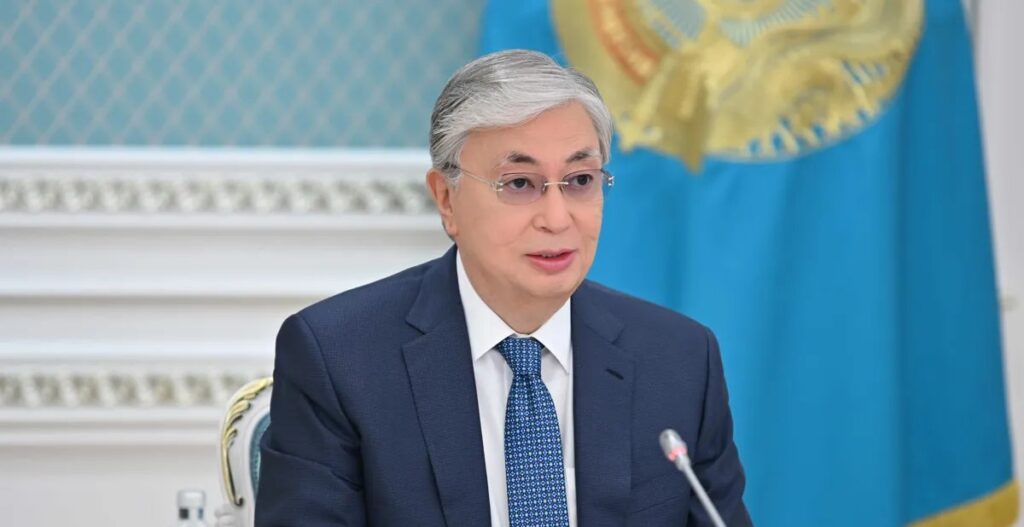
Kazakhstan is preparing sweeping changes to the role of teachers, aiming to significantly strengthen their legal protections and professional autonomy. The proposals, announced at an educators' conference in August, are being described by experts as revolutionary for the country’s education system. Protecting Teachers' Rights President Kassym-Jomart Tokayev participated in the conference and proposed amendments to the Law on the Status of Teachers to shield educators from non-core responsibilities. “The issue of protecting teachers' rights should always be a priority,” said Tokayev. “Teachers must be exempt from tasks unrelated to their primary duties. Unfortunately, local authorities often grossly violate the law in this regard. The Prosecutor’s Office must take strict action against such violations.” In many post-Soviet countries, it has been common for teachers to be assigned duties unrelated to education. In Kazakhstan, for instance, teachers are often tasked with running polling stations during elections or referendums, ensuring voter turnout, cleaning school premises, organizing community celebrations, and more. Tokayev also spoke out against holding teachers accountable for incidents outside school grounds. “It is inappropriate to immediately punish teachers for any accident involving children,” he stated. “If an incident occurs outside school or due to parental negligence, the teacher should not be held responsible.” He referred to a recent case in the Almaty region, where a graduate died in a fight at a private residence. The school’s principal and teachers were dismissed, but the Ministry of Education later intervened on their behalf. Responsibility Within the School While calling for greater protections, Tokayev also emphasized the critical role of teachers within school walls. He urged educators to take active roles in combating social issues such as drug and gambling addiction, domestic violence, bullying, vandalism, and dependency. Teaching has long been one of Kazakhstan’s least attractive professions due to high workloads and low pay. However, since 2019, the education budget has tripled, 1,200 new schools have opened, and teacher salaries have doubled. More than 500,000 teachers now receive performance-based bonuses. Fighting Dependency and Exploitation Kazakh political analyst Marat Shibutov emphasized the importance of ending the exploitation of teachers and addressing broader societal issues such as dependency. “At a meeting with teachers, the president spoke out against parasitism, which has become widespread, especially in rural areas, where social benefits discourage work and promote idleness,” Shibutov said. “Some families even avoid treating disabled children to retain their benefits.” He added that around 60 children had fallen from windows in Astana since the start of the year, yet the blame is often shifted to the state rather than to parents, who bear responsibility for safety at home. “Dependency is more than just a lifestyle, it’s an ideology of aggressive laziness eating away at youth,” he said. On the issue of non-core assignments, Shibutov remarked: “It’s time to get rid of Soviet relics, teachers are not free labor or child supervisors”. A Remedy in Mathematics Political analyst Gaziz Abishev called for deeper educational reforms to address the psychological and cognitive vulnerabilities of young people in the digital age....

Tokayev Urges Equal Education Standards Across Urban and Rural Kazakhstan

Kazakhstan's President Kassym-Jomart Tokayev has called for narrowing the gap in education quality between urban and rural schools and accelerating the integration of digital technologies and artificial intelligence (AI) into the country's education system. Speaking at the annual August Teachers' Conference, Tokayev emphasized that building a modern, inclusive nation requires equal opportunities for all children, regardless of geography. “All children must have equal opportunities. Therefore, an important task is to eliminate inequality in the quality of education in cities and villages,” he stated. Over the past four years, the material and technical infrastructure of more than 4,000 rural schools has been upgraded. Still, Tokayev stressed that this progress must be complemented by digital transformation, including the introduction of AI into the curriculum. “The concepts of ‘progressive nation’ and ‘technological nation’ are synonymous today,” he said, adding that digitalization is central to improving educational outcomes. Currently, over 95% of schools in Kazakhstan are connected to high-speed internet. Tokayev has instructed that this figure reach 100%, potentially through the use of Starlink satellite technology. “This is not just a technical issue, but a principle of social justice,” he added. The president also noted that advanced technologies will support the development of an inclusive education environment, particularly benefiting children with special needs. Several core educational services in Kazakhstan have already been digitized, including school and college admissions, inter-school transfers, and the Bilim service on the eGov mobile platform. However, Tokayev underscored the need to further equip schools with interactive tools and ensure universal access to digital platforms and electronic textbooks. The president placed particular emphasis on early instruction in AI technologies and continuous professional development for teachers. “Teachers must not only know their subject, but also be able to apply new technologies,” he said. As previously reported by The Times of Central Asia, the latest PISA assessment noted improvements in education access across Central Asia but highlighted a decline in academic performance among students in the region.

Kyrgyzstan Eases Licensing Rules to Expand Private School Sector

The Kyrgyz government is taking steps to simplify the licensing process for private schools in response to a growing shortage of student places in the country’s public education system, particularly in urban centers such as Bishkek and Osh. On August 4, Chairman of the Cabinet of Ministers Adylbek Kasymaliyev announced a reform initiative aimed at easing regulatory requirements for licensing private institutions offering primary education. The goal, he stated, is to expand access to quality education and alleviate pressure on the overburdened public school network. Kasymaliyev noted that rapid population growth has led to severe overcrowding in schools in major cities, where students are often taught in three shifts instead of the standard two, negatively affecting learning outcomes. “Addressing the shortage of school places is a key priority for the government,” Kasymaliyev said. While new public schools are under construction, he emphasized that the private sector plays an important role in meeting rising demand. Kyrgyzstan currently has 219 private schools, with 108 located in Bishkek and 54 in Osh. In 2024, 33 licenses were issued to private education providers, and 21 more have been granted since the beginning of 2025. “We see strong interest from the private sector in the education field, particularly in large cities,” Kasymaliyev said. “Creating real opportunities for opening high-quality private schools is one of our tasks.” The reform is part of a broader initiative to improve educational access and quality amid demographic expansion and urbanization. Class sizes in Bishkek far exceed recommended limits, according to educators. “The average class size in Bishkek is 36 to 45 students, while the sanitary norm is up to 35,” a deputy director of a public school in the capital told The Times of Central Asia. “In some popular schools, the number exceeds 50.”

Indian Regulator Flags Concerns About Uzbek University

India’s National Medical Commission (NMC) has issued a warning to Indian students regarding enrollment at the Chirchik branch of Tashkent State Medical University in Uzbekistan, as well as three medical schools in Belize. As reported by The New Indian Express, the NMC cited multiple concerns, including alleged non-compliance with Indian medical education standards, subpar infrastructure, inadequate clinical training, high tuition fees, and instances of student harassment. According to the NMC, all of the institutions in question “did not comply with Indian medical education standards, lacked adequate or functioning campus infrastructure, provided poor quality educational and clinical training, and had instances of harassment of Indian students. Additionally, they reportedly charged excessive fees and refused refunds upon withdrawal from the course.” In response, the Chirchik branch issued an official statement categorically denying the accusations, calling them “unfounded.” The university emphasized that it adheres strictly to academic and clinical guidelines established by Uzbekistan’s Ministry of Health and the World Federation for Medical Education (WFME). Established by presidential decree in July 2023, the branch began full operations in December 2024. It currently enrolls 801 students, including five from India, alongside others from Jordan, Pakistan, and Egypt. The university highlighted its modern facilities, which include fully equipped classrooms, laboratories, simulation centers, and student dormitories. “An open and transparent environment is created for students,” the statement read, underlining a commitment to academic freedom and equal treatment. The Chirchik branch is listed in the World Directory of Medical Schools, jointly maintained by WFME and FAIMER. It offers English-language medical programs and maintains partnerships with several international universities and clinical institutions. “We take the concerns raised by the NMC seriously,” the university stated. “However, we believe these claims are based on information that has not been verified locally and are unfounded.” The university expressed openness to inspections and dialogue with Indian authorities and reassured students and families of its adherence to global academic standards. “We categorically reject attempts to damage our reputation,” the statement concluded.

Kyrgyz Government Defends Russian Language Amid Push for Kyrgyz-Only Policies

Deputy Prime Minister of Kyrgyzstan Edil Baisalov has publicly defended the role of the Russian language in the country’s education system, stating that fluency in Russian should become standard for all schoolchildren. Speaking to journalists in Bishkek, Baisalov rejected recent calls by members of parliament and the National Commission on the State Language to translate all scientific literature into Kyrgyz. He argued that access to educational and methodological materials in Russian and English broadens Kyrgyzstan’s academic and scientific opportunities. “It is important for us that every schoolchild knows Russian. This is necessary not only for internal communication, but also for access to global science, culture, and interaction with the outside world,” Baisalov said. “Of course, we will develop other languages as well, English, Chinese, Arabic, and Turkish. The more languages young people know, the better they will feel in the modern world.” His comments come amid a controversial push by the National Commission on the State Language to mandate Kyrgyz as the sole language of instruction at universities and impose fines on professionals, including civil servants, judges, lawyers, and teachers, who do not know Kyrgyz. A bill to this effect is currently under public review. Melis Murataliyev, head of the Commission, has cited the low level of Kyrgyz proficiency among civil servants as a major issue, pointing to frequent errors in official documents. The Commission claims that 70-80% of Kyrgyzstan’s universities currently use Russian as the primary language of instruction, a situation it argues must change. However, the proposals have drawn widespread criticism from the public and lawmakers. Some members of parliament have urged a more balanced approach. While Murataliyev has proposed revising legislation related to the status of Russian as an official language, Baisalov assured that the government has no intention of doing so.