• KGS/USD = 0.01144 0%
  • KZT/USD = 0.00215 0%
  • TJS/USD = 0.10599 -0.28%
  • UZS/USD = 0.00008 0%
  • TMT/USD = 0.28571 0%
  • KGS/USD = 0.01144 0%
  • KZT/USD = 0.00215 0%
  • TJS/USD = 0.10599 -0.28%
  • UZS/USD = 0.00008 0%
  • TMT/USD = 0.28571 0%
  • KGS/USD = 0.01144 0%
  • KZT/USD = 0.00215 0%
  • TJS/USD = 0.10599 -0.28%
  • UZS/USD = 0.00008 0%
  • TMT/USD = 0.28571 0%
  • KGS/USD = 0.01144 0%
  • KZT/USD = 0.00215 0%
  • TJS/USD = 0.10599 -0.28%
  • UZS/USD = 0.00008 0%
  • TMT/USD = 0.28571 0%
  • KGS/USD = 0.01144 0%
  • KZT/USD = 0.00215 0%
  • TJS/USD = 0.10599 -0.28%
  • UZS/USD = 0.00008 0%
  • TMT/USD = 0.28571 0%
  • KGS/USD = 0.01144 0%
  • KZT/USD = 0.00215 0%
  • TJS/USD = 0.10599 -0.28%
  • UZS/USD = 0.00008 0%
  • TMT/USD = 0.28571 0%
  • KGS/USD = 0.01144 0%
  • KZT/USD = 0.00215 0%
  • TJS/USD = 0.10599 -0.28%
  • UZS/USD = 0.00008 0%
  • TMT/USD = 0.28571 0%
  • KGS/USD = 0.01144 0%
  • KZT/USD = 0.00215 0%
  • TJS/USD = 0.10599 -0.28%
  • UZS/USD = 0.00008 0%
  • TMT/USD = 0.28571 0%

Viewing results 1 - 6 of 52

Kazakhstan’s Power Grid Revamp Secures €267 Million Backing from EBRD and Canada

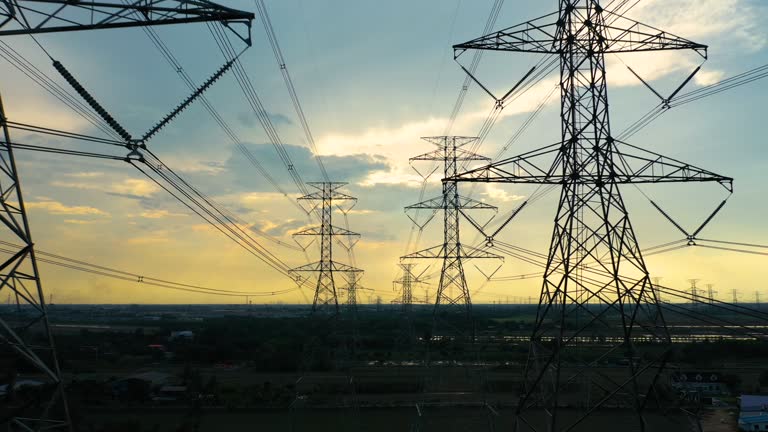
The European Bank for Reconstruction and Development (EBRD) has announced a €267 million financing package for the Kazakhstan Electricity Grid Operating Company (KEGOC) to enhance the reliability of the country’s power supply system. The funding comprises a €252 million EBRD loan and a €15 million concessional loan from the Government of Canada. The financial support will enable KEGOC, which oversees more than 27,800 kilometers of overhead transmission lines, to construct approximately 600 kilometers of 500 kV transmission infrastructure. This will facilitate the integration of the West Kazakhstan Power System into the country’s Unified Power System. The initiative is part of the EBRD’s broader efforts to assist Kazakhstan in implementing its long-term decarbonization strategy, aimed at achieving carbon neutrality in the power sector by 2060. It will improve the electricity supply for residents in western Kazakhstan and enable the integration of up to 12 GW of renewable energy capacity nationwide by 2030. Currently, Kazakhstan’s power grid is divided into three separate systems. While the EBRD connected the northern and southern grids in 2004, the West Kazakhstan Power System remains isolated. The project includes the construction of the 500 kV Karabatan-Ulke power line along the Atyrau-Aktobe motorway, the 500 kV Karabatan substation, and the expansion of the switchyards at the Karabatan (220 kV) and Ulke (500 kV) substations. These upgrades will strengthen domestic interconnections and enhance power supply reliability in western Kazakhstan. In addition to infrastructure improvements, the project is expected to reduce annual CO2 emissions by over 200,000 tons. It is supported by grant funding from the Government of Japan. The EBRD will also provide KEGOC with technical assistance, including piloting digital technologies within the grid, bolstering the system’s resilience to potential cyberattacks, and introducing gender-responsive training programs.

On the Threshold of Cold Weather, Kyrgyz People Stockpile Coal

Kyrgyz authorities have extended a temporary ban on coal exports outside the Eurasian Economic Union (EAEU) customs territory. The decree, signed by the head of the Cabinet of Ministers, Akylbek Japarov, aims to prevent a sharp rise in coal prices amid growing demand and to mitigate potential public unrest caused by fuel shortages. The ban, which will remain in effect for six months, excludes coal exported by the state enterprise Kyrgyzkomur. This coal is sold to neighboring Uzbekistan. The Kyrgyz Ministry of Economy and Commerce has been tasked with notifying the World Trade Organization of this decision. As temperatures drop, coal outlets across Kyrgyzstan are experiencing a rush of purchases by residents anxious to prepare for the cold weather. This surge in demand has caused coal prices to rise. To address the issue, the Antimonopoly Service has begun conducting regular inspections of retail outlets to identify sellers inflating prices. “We visit trading outlets undercover and identify sellers who artificially increase prices. Citizens also report violations via our hotline. According to the law, individuals can be fined 3,000 KGS (around $35), and companies can face fines of up to 13,000 KGS (approximately $150),” explained Taalaibek Kenzheshev, a leading specialist in the Antimonopoly Regulation Service's department, during an interview with The Times of Central Asia. In response to rising prices, the government has opened state-run coal outlets to sell fuel directly to consumers without intermediaries, ensuring more affordable pricing. “At private markets, sellers often cheat by selling coal in bags with insufficient weight. State-run outlets sell coal by weight, making it more reliable and cost-effective,” shared Sanzhar Orozbekov, a resident of Chui Oblast, with The Times of Central Asia. The Antimonopoly Regulation Service has set maximum coal prices in each region, depending on logistics complexity and the distance from coal mines. The highest coal prices are in Karakol, located east of the Issyk-Kul region, while the cheapest coal is found in southern Kyrgyzstan. However, even in the south, prices are influenced by coal exports to Uzbekistan. Imported Kazakh coal remains popular among Kyrgyz residents despite its higher cost. Known for burning more efficiently and producing greater heat, it is a preferred choice for some. However, the government intends to phase out the use of Kazakh coal at the Bishkek combined heat and Power Plant (CHPP), planning instead to rely entirely on domestic coal sources. According to the Kyrgyz Ministry of Energy, the country will need 2.6 million tons of coal for the upcoming autumn-winter season, half of which is required by households. The Ministry has assessed preparations for winter as adequate and has assured citizens that there will be no power outages this year.

Kyrgyzstan’s Largest Hydropower Plant Boosts Generating Capacity

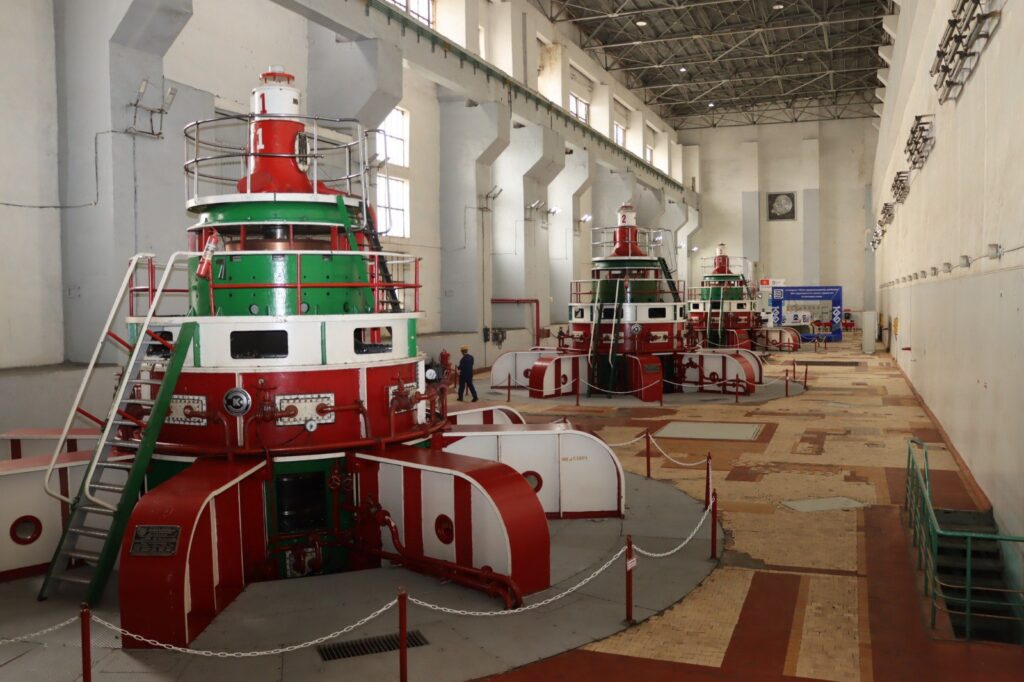
On November 19, Kyrgyzstan launched the modernized hydroelectric generating unit No. 1 at the Toktogul Hydroelectric Power Plant (HPP), the country’s largest power facility. Located on the Naryn River, the Toktogul HPP generates approximately 40% of Kyrgyzstan’s electricity. The modernization of hydroelectric unit No. 1 began in March 2024 and has increased its generating capacity by 60 MW. Prior to this upgrade, the Toktogul HPP had a total capacity of 1,200 MW, with each of its four units producing 300 MW. Two units had already been upgraded in previous phases, collectively adding 120 MW to the plant's total capacity. The reconstruction of the fourth and final hydroelectric unit is scheduled for 2025. Once the modernization project is complete, Toktogul HPP will gain an additional 240 MW of generating capacity, extending its service life by 25–30 years. The $210 million rehabilitation project is funded by a $110 million loan from the Asian Development Bank (ADB) and $100 million from the Eurasian Fund for Stabilization and Development (EFSD). With a total volume of 19.5 billion cubic meters, the Toktogul HPP reservoir plays a dual role in meeting Kyrgyzstan's energy demands and providing essential irrigation water to Kazakhstan and Uzbekistan. During the winter, increased water releases are used to generate electricity for Kyrgyzstan, while summer releases support irrigation for southern Kazakhstan’s dry regions. As of November 19, 2024, the Toktogul reservoir contained 12.991 billion cubic meters of water, compared to 11.694 billion cubic meters on the same date in 2023. The reservoir currently receives 246 cubic meters of water per second and releases 488 cubic meters per second. Despite this year’s higher water levels, Kyrgyzstan continues to face electricity shortages, according to Energy Minister Taalaibek Ibrayev. Toktogul HPP's modernization and efficient management of water resources remain critical to addressing these challenges and ensuring regional energy and water security.

Saudi Arabia to Build Electricity Storage Systems in Uzbekistan

Saudi company ACWA Power has signed an agreement with Uzbekistan to construct electricity storage systems with a total capacity of 2,000 MWh. The agreement was formalized during the COP-29 climate conference in Baku, Azerbaijan. Under the agreement, ACWA Power will collaborate with Uzbekistan’s Ministry of Energy to develop energy storage systems across the country. The implementation will be based on a comprehensive analysis of the national grid’s condition. The project will begin with feasibility studies to determine the most suitable regions for phased deployment. The initiative is estimated to cost $1.1 billion and is expected to create over 1,000 jobs during its lifetime. Uzbekistan has ambitious plans to expand its energy storage capacity to 4.2 GW by 2030. The first energy storage system in the country is slated for launch in early 2025 in the Fergana region. Deputy Energy Minister Umid Mamadaminov recently noted that Uzbekistan needs to build 10 GW of backup capacity by 2030 to support the integration of renewable energy sources. He emphasized that the country’s minimum reserve should equal 50% of its solar and wind power capacity.

Uzbekistan Aims to Export 10-15 Billion kWh of Electricity to Europe by 2030

Uzbekistan plans to export 10-15 billion kWh of electricity abroad by 2030, according to Deputy Minister of Energy Umid Mamadaminov, who discussed the initiative in an interview on November 6 during the “Days of European Economy in Uzbekistan” forum. “In 2030, electricity demand is projected to be around 120-125 billion kWh. Our generation capacity will reach approximately 135 billion kWh. Once the necessary infrastructure is ready, we’ll be able to export electricity to Europe,” Mamadaminov explained. At a meeting in Astana in August, Uzbekistan outlined plans to start exporting surplus electricity to Europe by 2030. Energy Minister Jurabek Mirzamahmudov noted that if the joint project with Kazakhstan and Azerbaijan to lay a cable under the Caspian Sea is successful, Uzbekistan will be able to transmit excess energy to Europe. Mirzamahmudov said that renewable energy capacity would exceed 4 GW by the end of this year and is expected to reach over 20 GW by 2030, with 2-5 GW available for export. In the summer, Uzbekistan, Kazakhstan, and Azerbaijan agreed on a draft strategic partnership to develop and transmit green energy. The agreement includes terms for a preliminary feasibility study, which is being developed by the Italian company CESI. “We selected CESI to handle the project’s feasibility study,” Mamadaminov stated. “The study will take about a year and a half to complete, with an expected finish date by the end of 2025. Following this, construction will begin based on the study. The project requires around 2,500 km of HVDC (high-voltage direct current) cable, which will be costly—exceeding $2 billion.” Mamadaminov added that the electricity price will be market-driven but is expected to start at around 4-5 cents per kilowatt.

Central Asia to Develop a Unified Platform for Electricity Trade

Uzbekistan's Deputy Minister for Energy Umid Mamadaminov announced at the European Economic Days in Tashkent on November 6 that a unified platform for electricity trade is being developed in Central Asia. Mamadaminov said that Uzbekistan is developing this platform with the support of the World Bank and other partners. “Infrastructure is very important for integrating renewable energy sources such as wind and solar, and many countries face this problem. We need at least 5,000 km of power lines, including 500 kV and 200 kV high-voltage lines and substations,” Mamadaminov said. At least 2,000 km of power lines should be built in the next two years. “We have already signed contracts to install more than 2,000 MW of energy storage systems with a total capacity of more than 400 MW, as each is a two-cycle network. We will have at least 4,000 MW of basic capacity in the next two years. This helps to respond to fluctuations in solar energy production quickly,” the deputy minister said. According to Mamadaminov, automation is the main problem in integrating renewable energy sources into the electric grid because the system cannot be controlled without it. In addition, this year, reforms to modernize and regulate energy consumption, including a new plan developed by the Cabinet of Ministers, were implemented in Uzbekistan. Uzbekistan’s energy system, especially electricity generation, relies heavily on fossil fuels. However, the country aims to produce 25% of its electricity from renewable sources by 2030. Uzbekistan plans to focus on solar energy while using wind, biomass, and hydro sources to achieve this goal. The government is working to attract investors to build 8 GW of solar and wind power and increase hydroelectric capacity to 1.935 GW by 2030. Biogas production from biomass and organic waste will also be developed.