• KGS/USD = 0.01144 0%
  • KZT/USD = 0.00213 0%
  • TJS/USD = 0.10607 0.57%
  • UZS/USD = 0.00008 0%
  • TMT/USD = 0.28530 0%
  • KGS/USD = 0.01144 0%
  • KZT/USD = 0.00213 0%
  • TJS/USD = 0.10607 0.57%
  • UZS/USD = 0.00008 0%
  • TMT/USD = 0.28530 0%
  • KGS/USD = 0.01144 0%
  • KZT/USD = 0.00213 0%
  • TJS/USD = 0.10607 0.57%
  • UZS/USD = 0.00008 0%
  • TMT/USD = 0.28530 0%
  • KGS/USD = 0.01144 0%
  • KZT/USD = 0.00213 0%
  • TJS/USD = 0.10607 0.57%
  • UZS/USD = 0.00008 0%
  • TMT/USD = 0.28530 0%
  • KGS/USD = 0.01144 0%
  • KZT/USD = 0.00213 0%
  • TJS/USD = 0.10607 0.57%
  • UZS/USD = 0.00008 0%
  • TMT/USD = 0.28530 0%
  • KGS/USD = 0.01144 0%
  • KZT/USD = 0.00213 0%
  • TJS/USD = 0.10607 0.57%
  • UZS/USD = 0.00008 0%
  • TMT/USD = 0.28530 0%
  • KGS/USD = 0.01144 0%
  • KZT/USD = 0.00213 0%
  • TJS/USD = 0.10607 0.57%
  • UZS/USD = 0.00008 0%
  • TMT/USD = 0.28530 0%
  • KGS/USD = 0.01144 0%
  • KZT/USD = 0.00213 0%
  • TJS/USD = 0.10607 0.57%
  • UZS/USD = 0.00008 0%
  • TMT/USD = 0.28530 0%

Viewing results 1 - 6 of 102

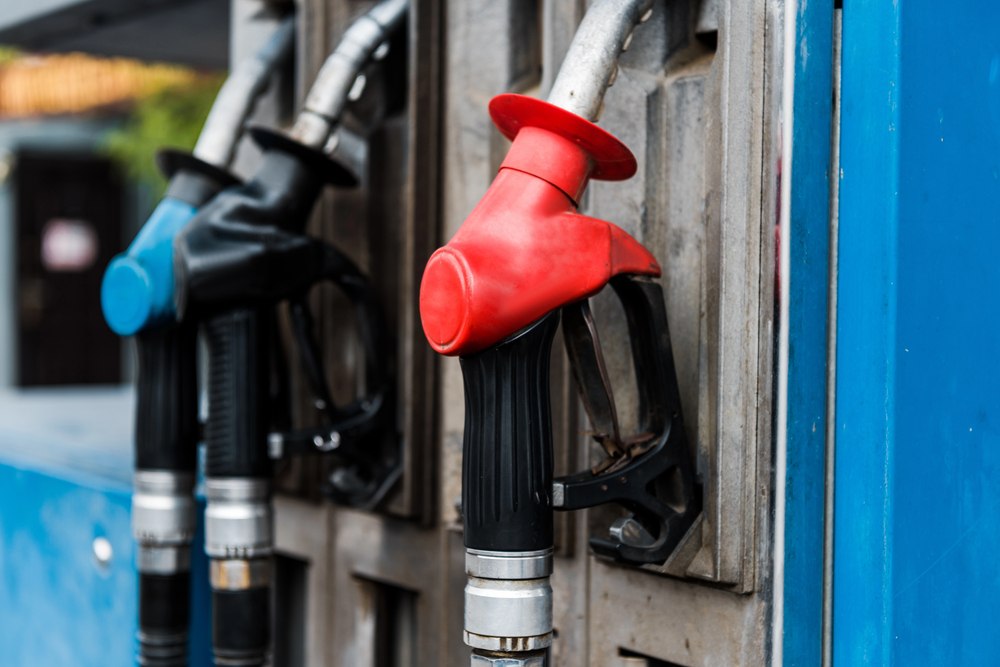
Russia’s Gasoline Export Ban: Limited Shock, Broader Lessons for Central Asia

Russia’s decision to prolong restrictions on gasoline exports has raised concerns in energy markets, but for Central Asia, the immediate fallout appears limited. The true significance lies in what the move reveals about structural dependencies, the role of the Eurasian Economic Union (EAEU), and the region’s long-term push to diversify energy supplies. Moscow Extends Ban On September 2, Russian officials confirmed that the government may prolong its gasoline export ban for oil producers into October, extending measures first introduced in late summer. Deputy head of the Federal Antimonopoly Service, Vitaly Korolev, told state media that the authorities were weighing a one-month extension beyond the current deadline of September 30. As reported by Reuters, the aim is to stabilize domestic fuel supplies following refinery outages and a seasonal spike in demand. Ukrainian drone strikes have also damaged key refineries, reducing Russia’s production capacity by an estimated 10–17%. The ban affects a relatively small share of Russia’s overall fuel output but highlights the state’s readiness to intervene in energy markets. Previous restrictions in 2023 and 2024 temporarily halted shipments to stabilize domestic prices. The latest decision reflects similar concerns: tightening inventories, growing demand from the agricultural sector, and pressure to prevent inflation ahead of winter. While Moscow insists the measure is temporary, traders and governments across post-Soviet space are watching closely. Russia remains one of the world’s largest fuel exporters, and even marginal policy changes can cause significant ripples. Fuel Security in Central Asia For Central Asia, the impact of the ban will be blunted by exemptions. As members of the EAEU, both Kazakhstan and Kyrgyzstan continue to import Russian gasoline without interruption. Kazakhstan’s Ministry of Energy issued a statement stressing that the country is self-sufficient, pointing to its refineries in Pavlodar, Shymkent, and Atyrau. “For countries that have signed the relevant intergovernmental agreement… these restrictions do not apply,” Minister of Energy, Yerlan Akkenzhenov, stated. Kyrgyzstan is highly dependent on Russian imports. However, according to Kyrgyzstan’s Ministry of Energy, the 1.6 million tons of fuel the country consumes annually, 93% of which is imported from Russia under intergovernmental agreements, will remain unaffected by the export ban. Since mid-summer, gasoline and diesel prices have climbed, driven by rising global oil benchmarks and repair work at several Russian refineries. Talks are already in progress to set revised supply volumes for 2026. Non-EAEU states face a different challenge. Uzbekistan sources fuel through state-brokered contracts with Russian companies, ensuring stability for now, but smaller private importers outside of these deals have reported difficulties accessing volumes. Late last year, the Chairman of Uzbekistan’s Central Bank warned that the country’s growing reliance on Russian fuel imports could increase vulnerability to supply shocks, which may translate into limited competition and rising prices. Tajikistan remains heavily dependent on Russian fuel through bilateral import agreements, and its virtually non-existent refining capacity makes it highly susceptible to external price fluctuations, a vulnerability underscored by seasonal diesel shortages and repeated spikes in domestic fuel prices. Turkmenistan, meanwhile, continues subsidizing its energy sector heavily:...

Kazakhstan’s Rare Earth Exports Under Political Spotlight as Strategic Role Grows

Kazakhstan’s rare earth metal exports are once again under scrutiny. On September 3, the leader of the Ak Zhol party in Kazakhstan’s parliament, Azat Peruashev, renewed his call for tighter control over rare earth exports. Peruashev formally urged the Minister of Industry and Construction, Ersaiyn Nagaspayev, to investigate and improve oversight after concerns that state control over ore shipments is increasingly being delegated to private labs without adequate verification. Peruashev’s statement raised the alarm about the possible undervaluation of exports and the concealment of valuable trace metals, a practice that could deprive the state of critical revenues at a time of growing global demand for rare earth elements. “According to the law on precious metals and stones, the state authority is responsible for control over the import and export of ores and concentrates. But based on the official response from the Ministry of Industry, it appears that state control has effectively been delegated to laboratories hired by the subsoil users themselves. The government agency does not verify the accuracy of its data and limits itself to just receiving the documents,” Peruashev said. The appeal marks the latest development in a controversy that first surfaced earlier this year. On March 7, The Times of Central Asia reported that Peruashev had submitted a formal parliamentary inquiry to Kazakhstan’s Anti-Corruption Service and the Ministry of Industry. That inquiry cited allegations from a former Kazakhmys lab assistant who claimed ore and concentrate exports were leaving the country without undergoing proper chemical analysis. According to the complaint, this practice allowed exporters to underreport the presence of rare earth and precious metals, artificially lowering shipment valuations to the benefit of powerful business interests. Kazakhmys rejected suggestions of intentional wrongdoing, stressing that any rare metals recovered during processing were incidental and directed to the state enterprise Zhezkazganredmet. The company added that it welcomed greater state scrutiny and dialogue. Peruashev’s renewed demand, however, indicates that concerns remain unresolved, particularly around whether the government has sufficient oversight to prevent leakage or mismanagement in an industry viewed as of increasing strategic and economic importance. A Geological Windfall This renewed debate comes as Kazakhstan’s rare earth sector enjoys unprecedented global attention. In April, TCA reported the discovery of a massive new deposit in the Karagandy region, unofficially dubbed “Zhana Kazakhstan,” estimated at 20 million metric tons of ore containing neodymium, cerium, lanthanum, and yttrium. Officials said average concentrations reached 700 grams per ton, a figure that, if validated, would position Kazakhstan among the world’s top three in rare earth deposits. In total, the government has identified 38 new mineral deposits, including 3.7 million tons of copper and nickel and 19 tons of gold. These discoveries are part of an ambitious exploration program that aims to expand mapped geological territory to 2.2 million square kilometers by 2026. For policymakers, the figures highlight both an opportunity and a dilemma: how to harness world-class reserves without falling into the trap of export dependence. At Home and Abroad International interest in Kazakhstan’s deposits is on...

Outdated Infrastructure Threatens Central Asia’s Energy Security

Central Asia’s natural gas sector is facing mounting pressure as population growth and rising consumption outpace production, SpecialEurasia reports. The region’s population now exceeds 70 million, with annual growth rates surpassing 2% in many republics. Kazakhstan, Uzbekistan, and Turkmenistan together account for more than 95% of Central Asia’s gas reserves. Combined, they hold approximately 3.5 trillion cubic meters (tcm) of proven reserves. Turkmenistan alone possesses an estimated 17 tcm, giving it the world’s fourth-largest proven gas reserves outside the Middle East and Russia. Despite these substantial reserves, aging infrastructure and insufficient investment continue to hamper production capacity. Kazakhstan produces around 59 billion cubic meters (bcm) of gas annually, Uzbekistan 45 bcm, and Turkmenistan 81 bcm. However, surging domestic demand has outstripped supply, compelling Kazakhstan and Uzbekistan to import gas from Russia, a dependency that dates back to the 1990s but is becoming increasingly fraught amid current geopolitical tensions. Much of the region’s pipeline infrastructure remains from the Soviet era and lacks the capacity to meet contemporary needs, according to SpecialEurasia. Turkmenistan remains heavily reliant on a single pipeline route to Russia, while Kazakhstan and Uzbekistan depend on Russian energy giants Gazprom and Rosneft for imports and infrastructure maintenance. Efforts to diversify export routes beyond Russia have encountered difficulties due to limited infrastructure and geopolitical uncertainty. China has emerged as a dominant player in the region, funding pipeline and transportation projects through the Belt and Road Initiative. These investments have enhanced connectivity with Chinese markets but have also increased Central Asia’s economic dependence on Beijing. Meanwhile, the European Union has advocated for green energy and digitization, though its financial commitments remain modest compared to those of Russia and China. Iran is positioning itself as a potential transit corridor, offering Central Asia access to seaports. However, international sanctions and persistent geopolitical tensions continue to limit broader cooperation. Russia’s invasion of Ukraine has further strained Moscow’s regional relationships, diminishing its capacity to provide the kind of support it once did. Central Asian governments now face the challenge of maintaining a strategic balance among Russia, China, and Western powers to ensure both economic resilience and political autonomy. SpecialEurasia concludes that without substantial investment in infrastructure, greater economic diversification, and a more balanced approach to foreign partnerships, Central Asia will remain vulnerable despite its abundant natural gas resources.

The Turkic States Are Quietly Building a Geoeconomic Power Base

The Organization of Turkic States (OTS) has spent the past years assembling itself not through declarations or summit communiqués, but through shared transport and logistics, harmonized customs procedures, and coordinated capital flows. What began in 2009 as the Turkic Council, a lightly institutional and rhetorically cohesive forum for shared identity, has evolved, following its 2021 transformation into the OTS, into a logistical and regulatory organism. Its under-the-radar evolution has been systematized through agreed documents, deployed capital, and materialized infrastructure. The OTS has entered a phase of procedural coordination and structural intent. Its cooperation is now practical, strategic, and functionally embedded. This evolution has not followed a single arc, nor has it merely responded to outside pressures. Instead, it has progressed through an uneven sequence of internal adjustments, sometimes slow and technical, sometimes accelerated by external jolts such as the recent disruption in Azerbaijani–Russian relations. But such jolts only intensified a trajectory already underway. Member states had been converging long before this most recent bilateral crisis by aligning their policies, testing instruments, and developing the practical grammar of multilateral coordination. The current phase of renewed cooperation is not a reactive surge but a prepared transition that expresses an underlying structural shift in Eurasian geoeconomics at large. Digital Infrastructure and Networked Cooperation If there is a single domain where institutional convergence becomes immediately visible, this would be digital logistics. Once-fractured national processes — disjointed customs systems, mismatched permits, bureaucratic duplication — have begun to fold into a shared administrative architecture (including eTIR, eCMR, and ePermit) structured by international conventions that have been adapted to fit the particular alignments now emerging in the Turkic sphere. These procedures are no longer pilot projects but live systems. They digitize paperwork, synchronize border procedures, and build the kind of operational rhythms that trade corridors need in order to function. Negotiations continue, meanwhile, on a Free Trade in Services Agreement, targeted not at deregulation but at harmonization, viz., the alignment of technical and professional standards across a disparate set of economies. Kazakhstan and Azerbaijan, for example, are already piloting a Simplified Customs Corridor. Its eventual integration with the multimodal Uzbekistan–Türkiye axis is not a matter of if, but of how soon. Official observer states to the OTS are also beginning to move, with Hungary being the clearest case. Its $100 million injection into the Turkic Investment Fund made headlines, but the real story is downstream: Hungarian infrastructure now receives Azerbaijani gas via Türkiye. That is not diplomacy; that is energy dependence, structurally routed. Turkmenistan, long the holdout, has started to engage, first through planning meetings and now through signed agreements. Its ports, once idle in regional plans, are being fitted into the wider Caspian logistics network. The Turkish Republic of Northern Cyprus (TRNC), formally recognized only by Türkiye, is also a functional participant through educational exchanges, shared language, and soft institutions. Reciprocal Trade and Development The shift underway is as much geographic as it is institutional. Central Asia is no longer on the margins of the OTS...

Kazakhstan, Italy, and the Battle for Europe’s Energy Future

ASTANA - Central Asia is no longer on the periphery of global events, but a place where major countries come together with their ideas, money, and projects. In a turbulent and highly uncertain geopolitical environment, global powers are seeking to establish their presence in this strategic, energy-rich region. Italy is no exception. Italian Prime Minister Giorgia Meloni was initially scheduled to visit Kazakhstan in late April, but in light of Pope Francis' passing her trip to Astana was canceled. Coincidently or not, she came to the Kazakh capital on May 30 to attend the Astana International Forum (AIF) – a two-day event that saw the attendance of political, business, and thought leaders who gathered under an expanded agenda that included climate change, energy security, and sustainability. Meloni’s visit to Kazakhstan is part of her Central Asian tour; she previously visited Uzbekistan, where she met with the country’s President Shavkat Mirziyoyev. In Astana, she not only spoke at the AIF, emphasizing that the “Astana International Forum has become increasingly important in dialogue worldwide,” but also took part in the first-ever Central Asia–Italy summit. “Italy was the first Nation in the EU to decide to invest in relations with Central Asia and its individual member Nations, launching a permanent format in order to share ideas,” Meloni said at the AIF, emphasizing that the EU–Central Asia Summit, held in April in Samarkand, “elevated the relations between the region and the European Union to a strategic partnership.” In this relationship, Kazakhstan seems to play a crucial role. Italy is the largest Central Asian economy’s number one trading partner in Europe. According to Kazakhstan’s Ministry of Trade and Integration, trade turnover between Kazakhstan and Italy in 2024 amounted to $19.9 billion, which is 24% higher compared to the previous year ($16.1 billion). Oil is undoubtedly Kazakhstan’s main export to Italy, although critics argue that the third-most populous EU member is merely a transit country, as large amounts of Kazakh oil ultimately reach other European countries. “If we really want to shape the future, we must have the courage to look beyond our geographical boundaries and pave new paths. I am thinking of the energy sector, where our cooperation can help make a difference, and I am also referring to critical raw materials, where our collaboration aims to generate shared benefits and mutual opportunities,” Meloni stressed. Kazakhstan is one of the richest countries in the world in terms of natural resources. This makes it a nation of significant interest to Italy – with whom Astana signed a Strategic Partnership Agreement back in 2009 – as well as to other European states. But from the Kazakh perspective, it is important that this cooperation be mutually beneficial. Astana is seeking to avoid being seen merely as a source of raw materials and expects its partners to offer tangible benefits in return. That is why Kazakhstan’s President Tokayev has pushed forcefully for the renegotiation of oil agreements with foreign energy companies operating in the country. For Astana, it is...

Tokayev Moves to Reclaim Kazakhstan’s Energy Future

In January 2025, Kazakhstan’s President Kassym-Jomart Tokayev instructed the government to seek revisions to the nation’s production-sharing agreements (PSAs). The first known result of that directive has now surfaced, with the International Consortium of Investigative Journalists (ICIJ) publishing a report regarding a confidential interim ruling in an arbitration case. According to this information, Kazakhstan is pursuing a $160 billion claim against the North Caspian Operating Company (NCOC), the consortium managing the Kashagan oil field. The ruling states that after royalty payments, NCOC receives 98% of remaining revenue from Kashagan’s output. The document concerns a narrower environmental dispute, but the 98% figure alters the landscape. The contract in question dates to the 1990s, when Kazakhstan — newly independent, fiscally constrained, and eager for technical expertise — entered into deals that prioritized attracting investment over securing long-term national benefit. The government now argues that those historical constraints no longer apply, while the revenue-sharing terms remain effectively frozen in place. Rather than seek unilateral redress or executive override, Tokayev’s administration has turned to arbitration. The venue, the Permanent Court of Arbitration in The Hague, and the legal framing mark a continuation of Kazakhstan’s methodical approach to reasserting national interests in its domestic political economy. This latest move cannot be understood as an isolated decision. It reflects a trajectory of state behavior extending back three decades. In the early 1990s, when Chevron’s bid for Tengiz was effectively imposed as a condition for U.S. bilateral assistance, Kazakhstan lacked both the leverage and the institutional competence to resist — a dynamic I analyzed in detail at the time. Chevron’s refusal to direct more than a token amount of investment to social infrastructure nearly sank the agreement. A similar dynamic surrounded the financing and structuring of the Caspian Pipeline Consortium (CPC). Kazakhstan’s attempts to assert greater influence were often thwarted, not least by the asymmetry of legal expertise and negotiating experience. That imbalance began to shift by the early 2000s. The creation of KazMunaiGas (KMG) in 2002 consolidated the state's participation in the energy sector and enabled its strategic action to become more coordinated. By 2003, Kazakhstan was insisting on conformity with international accounting standards at Tengiz, not only to ensure transparency but also to block attempts by foreign operators to defer investment obligations. Environmental enforcement became more assertive as well, with fines imposed on Tengizchevroil for massive open-air sulfur storage, a practice that had long provoked public concern. The Kashagan field, discovered in the late 1990s and described as the largest oil find since Alaska’s Prudhoe Bay in 1968, became the focal point of these tensions. From the outset, Kazakhstan’s participation in the consortium was marginal. A restructuring of the consortium in the early 2000s brought KMG back in, but cost overruns and delays continued. By 2007, the government had suspended work at Kashagan, citing both ecological violations and spiraling expenditures, in a sequence of events I traced contemporaneously during the legislative and consortium restructuring that followed. Amendments to the Law on the Subsurface followed, granting...