• KGS/USD = 0.01144 0%
  • KZT/USD = 0.00205 0%
  • TJS/USD = 0.10785 0.09%
  • UZS/USD = 0.00008 0%
  • TMT/USD = 0.28571 0.28%
  • KGS/USD = 0.01144 0%
  • KZT/USD = 0.00205 0%
  • TJS/USD = 0.10785 0.09%
  • UZS/USD = 0.00008 0%
  • TMT/USD = 0.28571 0.28%
  • KGS/USD = 0.01144 0%
  • KZT/USD = 0.00205 0%
  • TJS/USD = 0.10785 0.09%
  • UZS/USD = 0.00008 0%
  • TMT/USD = 0.28571 0.28%
  • KGS/USD = 0.01144 0%
  • KZT/USD = 0.00205 0%
  • TJS/USD = 0.10785 0.09%
  • UZS/USD = 0.00008 0%
  • TMT/USD = 0.28571 0.28%
  • KGS/USD = 0.01144 0%
  • KZT/USD = 0.00205 0%
  • TJS/USD = 0.10785 0.09%
  • UZS/USD = 0.00008 0%
  • TMT/USD = 0.28571 0.28%
  • KGS/USD = 0.01144 0%
  • KZT/USD = 0.00205 0%
  • TJS/USD = 0.10785 0.09%
  • UZS/USD = 0.00008 0%
  • TMT/USD = 0.28571 0.28%
  • KGS/USD = 0.01144 0%
  • KZT/USD = 0.00205 0%
  • TJS/USD = 0.10785 0.09%
  • UZS/USD = 0.00008 0%
  • TMT/USD = 0.28571 0.28%
  • KGS/USD = 0.01144 0%
  • KZT/USD = 0.00205 0%
  • TJS/USD = 0.10785 0.09%
  • UZS/USD = 0.00008 0%
  • TMT/USD = 0.28571 0.28%

Viewing results 1 - 6 of 60

Only Half of Kazakhstan’s CO2 Emissions are Subject to State Regulation

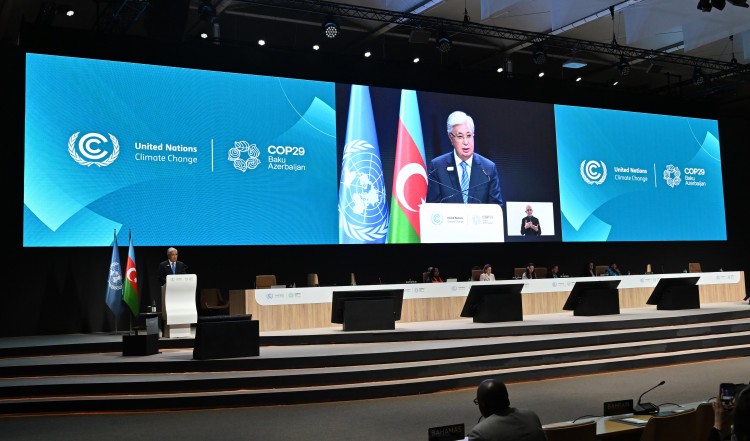
Environmentalists say that Kazakhstan's quota system for greenhouse gas emissions covers only half of the country's emissions. This means that the state only has real leverage over large industrial polluters. Experts say that the state needs to pay further attention in the near future to emissions in three sectors: agriculture, forestry, and waste management systems. These sectors currently remain virtually uncontrolled in terms of environmental emissions. Kazakhstan ratified the UN Framework Convention on Climate Change in 1995 and, in 2016, presented its plan to the world community for transitioning to a green economy and achieving carbon neutrality. The carbon neutrality strategy envisages a 15% reduction in the 1990 level of emissions by 2030 (from 386.3 to 328.4 million tons of CO2) and achieving a net zero balance of greenhouse gases by 2060. The country has implemented a quota system for greenhouse gas emissions, and any industrial facility with emissions exceeding 20,000 tons of carbon dioxide per year is subject to quotas. However, those “polluters” whose activities result in emissions of 10 to 20 thousand tons of CO2 are subject to regulation and must report to the state for their emissions, but they are not subject to quotas. Finally, economic entities that do not even reach 10,000 tons of emissions are not obliged to notify the state about the environmental damage they cause. As a result, the state can regulate only half of emissions. Aigul Malikova, coordinator of the Central Asia Regional Environmental Network in Kazakhstan, explained to The Times of Central Asia: “In 2021, according to the national inventory, the actual volume of emissions across Kazakhstan amounted to 340 million tons, and quotas, including even additional ones, were issued for only 176 million, which means that only half of all greenhouse gas emissions fall under regulation, and in fact, we can affect only half of all emissions now. The situation is aggravated by the fact that in 2021, Kazakhstan produced one-third more emissions than the quotas granted; in 2022, this excess was 3%; that is, even regulated enterprises emit more than they are allowed under the quotas.” Malikova also noted there is no data for 2023. Still, it is already clear that the government needs to control not only major industrial polluters but also other sectors of the economy that need to be more accountable in terms of emissions regulation to achieve carbon neutrality. However, assessing their contribution to total emissions is difficult since they are not even legally required to submit reports. Paradoxically, such sectors include agriculture and forestry, which by definition should be environmentally “clean,” as well as the waste management system and housing and communal services. “For these three sectors - agriculture and forestry, waste management and housing, and communal services - data on greenhouse gas emissions could not be assessed at all. In the national reporting, this data is absent in the context of regions. In the reporting of the carbon cadastre, this data is also absent, and because they are not subject to quotas, no...

Storm Washes Dead Seals Ashore on Kazakhstan’s Caspian Coast

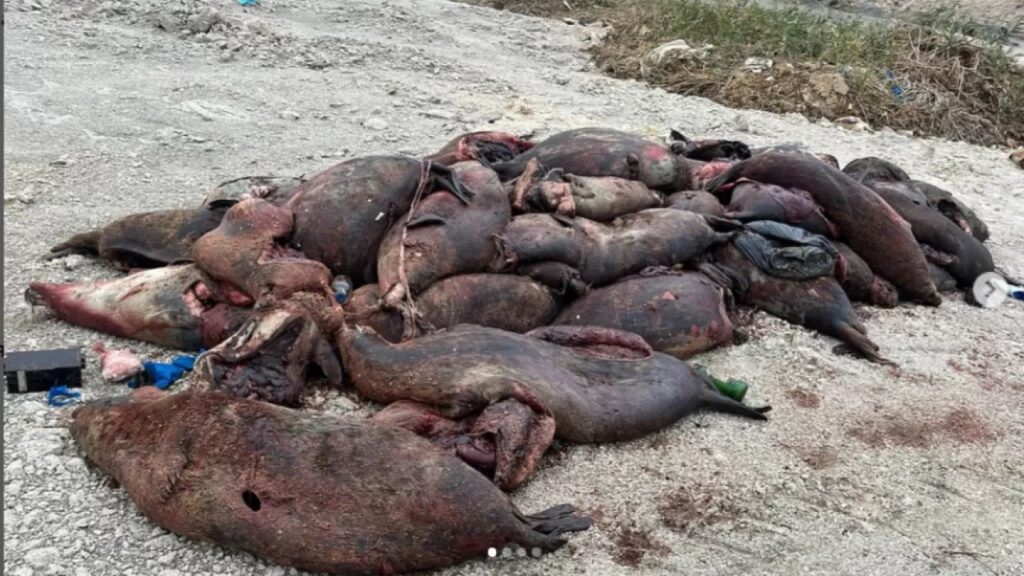
Seals have died in mass numbers on the coast of the Caspian Sea in the Mangistau region, according to Azamat Sarsenbayev, a blogger from Aktau. “In the area of Bautino, in Tupkaragan district, after recent storms, hundreds of red-listed seal carcasses were brought ashore; scientists have now counted 151 seal carcasses. According to scientists who are now studying seals in this area (who found the carcasses), some of the dead seals have mechanical injuries on their bodies,” he said. The Akimat of Mangistau region noted that the dead seals were thrown ashore due to north-western and western winds, which caused them to be carried to the coast. The bodies of the animals are in a stage of significant decomposition. Local authorities said the carcasses will be sent for examination to determine the possible causes of the animals' deaths. Samples taken from the 151 seals have been sent to the Institute of Hydrobiology and Ecology, where specialists will conduct toxicological, histological, and virological analyses to determine the exact causes of death. According to the Akimat, the first 51 carcasses were found on October 24, and on October 25 and 26, another 100 bodies of dead seals were found on the same coast. Mass deaths of seals have been repeatedly recorded on the Caspian Sea coast. In December 2022, more than 2,500 carcasses were found in Russia's Dagestan. Studies have shown that the cause of death could be methane emissions, forming gassy areas of air above the water in doldrums, which causes suffocation in animals. In December 2023, similar incidents were recorded on the coast of Dagestan, where waves carried away about 130 seal carcasses, some of which may have been brought by currents from other regions of the Caspian Sea. Regular incidents, including the death of animals in fishing nets and water pollution, hurt the numbers of the Caspian seal, which is listed in the Red Book of endangered species.

Afghanistan to Boost Oil Production in the Amu Darya Basin

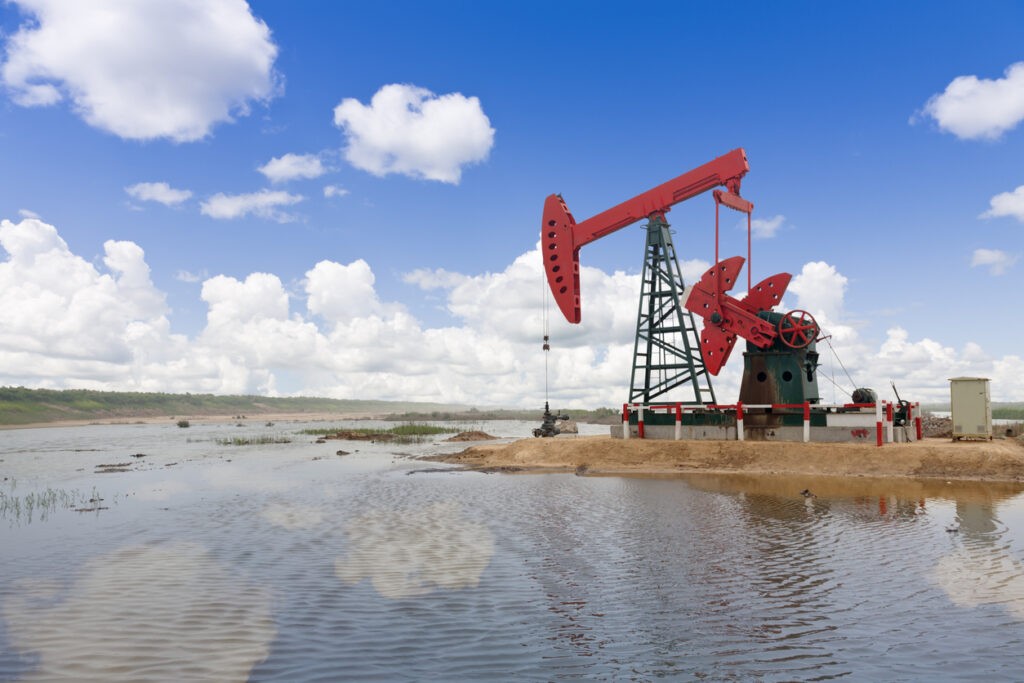
Afghanistan plans to launch 25 new oil wells in the Amu Darya basin, increasing daily oil production to 3,000 tons. Hamdullah Fitrat, the deputy spokesman of the Islamic Emirate of Afghanistan, shared that there are currently 24 active wells in this field, from which 1,300 tons of oil are extracted daily. According to Fitrat: "The Ministry of Mines and Petroleum plans to activate 25 more wells by the end of this year, of which 18 will be newly drilled, two will be exploratory wells, and five will be rehabilitated.” Economic experts stress that officials should carefully plan new well drilling and attract investors to process the extracted oil. Economic expert Abdul Zahoor Madaber stated that Afghanistan has abundant natural resources but lacks modern machinery to process them, and cooperation with other countries is needed to import this equipment. Mohammad Asif Stanekzai, another economic expert, added: “The production and processing of natural resources can create job opportunities and have a positive impact on reducing inflation in Afghanistan.” According to the Ministry of Mines and Petroleum, only 10% of Afghanistan’s oil needs are currently met from domestic production. The Amu Darya is a vital river for Central Asian countries. While 72-73% of its water originates in Tajikistan, the majority is used by neighboring countries. In April of this year, the countries of Central Asia distributed Amu Darya and Syrdarya water for the summer of 2024. Under the agreed quota, the draw on water from the Amu Darya watershed will be 56 billion cubic meters for the year, with about 40 billion cubic meters used in the April-to-October growing season. As stated in the Interstate Commission for Water Coordination (ICWC) agreement, Uzbekistan will receive 16 billion cubic meters, Turkmenistan will receive 15.5 billion cubic meters, and Tajikistan will receive 6.9 billion cubic meters. The ICWC claims that the total number of irrigated lands in Central Asian countries is 4.3 million hectares in Uzbekistan, 2.5 million hectares in Kazakhstan, 1.9 million hectares in Turkmenistan, 1 million hectares in Kyrgyzstan, and 680,000 hectares in Tajikistan.

Rogun HPP Faces Criticism for Violating World Bank Standards

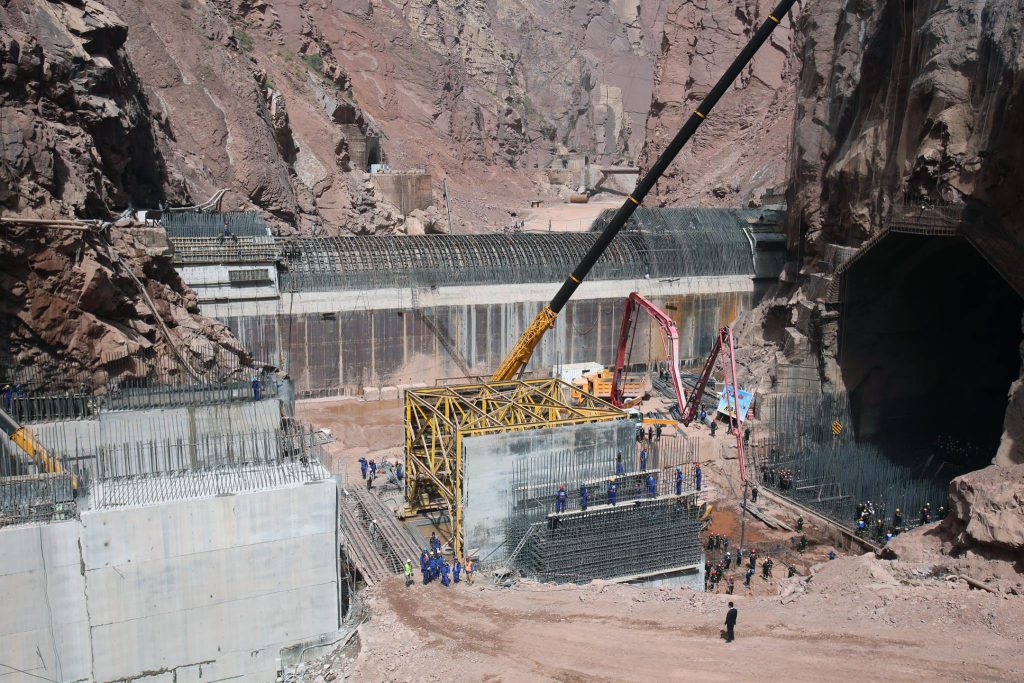
The international environmental coalition Rivers without Boundaries has released a report titled “Rogun Hydroelectric Power Plant Project: Non-Compliance Report with World Bank Requirements.” Outlining how the Rogun HPP in Tajikistan fails to meet the World Bank’s environmental and social standards, the report highlights violations in six key areas: environmental assessment, biodiversity protection, resource efficiency, dam safety, public participation, and forced displacement. It also highlights non-compliance with the bank’s policies on financing investment projects. The report’s authors point out that the situation worsened as a result of the World Bank taking responsibility for developing environmental and social safeguards for the Rogun HPP project on behalf of all financiers, including major banks like the AIIB, ADB, and EIB. In accepting this move, these institutions have effectively treated the World Bank's standards as their own. Therefore, if these standards are violated, the standards of other financial institutions are also breached. “We are convinced that the presented version of the Rogun HPP project does not comply with the social and environmental principles of the World Bank and should not be financed by international development banks in its current form,” said Evgeny Simonov, coordinator of the international environmental coalition 'Rivers Without Borders.' “Due to non-compliance with banking standards and procedures, the project includes many ineffective and risky elements that could lead to serious environmental and social damage during its implementation.” The report was created under the international Rogun Alert initiative, which represents environmental organizations worldwide. Last week, it was sent to all international development banks involved in the Rogun project. On October 23, an open letter signed by 124 public organizations, including Rivers Without Borders, highlighting the risks of financing large dam projects, including Rogun, will be presented to the World Bank management. According to the source, urgent international public consultations on the environmental and social impact of the construction of the Rogun HPP on the basin countries are planned for October 28 of this year.

200 Million Cubic Meters of Water Directed to the Aral Sea

In 2024, agrarians from the Kyzylorda region of Kazakhstan introduced water-saving technologies on 55,000 hectares of rice fields, saving over 200 million cubic meters of water. These saved resources were directed to the Aral Sea, helping to improve its water levels. During this year's irrigation season, about a billion cubic meters of water were delivered to the Northern Aral, three times more than last year. Since the beginning of the year, the volume of water sent to the sea has reached 2 billion cubic meters, and the total water in the sea has reached 22 billion cubic meters. Kazakhstan's Minister of Water Resources and Irrigation, Nurzhan Nurzhigitov, emphasized that this result was made possible not only by effective water diplomacy with neighboring Central Asian countries but also by actively using water-saving technologies. To encourage their use, the government has increased subsidies to farmers. In 2024, subsidies rose from 50% to 80%, and in the next three years, will be brought to 85% for small-scale farms using efficient irrigation methods. These measures aim to further restore the Aral Sea's water level, which is one of the region's leading environmental objectives. Successes in water conservation demonstrates that innovative technologies can be crucial for addressing perennial water scarcity and ecosystem restoration. Water diplomacy in Central Asia plays a crucial role in solving the problem of water level reduction in the Aral Sea. Uzbekistan is actively cooperating with Kazakhstan, Tajikistan, and Kyrgyzstan on the rational use of water resources in the Amu Darya and Syr Darya river basins. One critical steps was the signing of an agreement on the exchange of electricity between the countries, which has allowed the volume of water used for irrigation to be regulated, and improved the state of the region's ecosystem. In addition, Kazakhstan and Uzbekistan are actively introducing water-saving technologies to optimize water consumption in agriculture, which is freeing up resources to replenish the Aral Sea. These measures have helped to increase water inflow to the Northern Aral Sea in recent years, maintaining its level and improving conditions for local ecosystems.

Thousands of Red-listed Birds Released in Uzbekistan

In Uzbekistan's Karakalpakstan, 2,680 Wigglers (Chlamydotis macqueenii), have been released in the wild. The rare birds, on the verge of extinction and listed in the Red Data Book of Uzbekistan and the International Union for Conservation of Nature, were released on October 11 on the Ustyurt Plain in the Kungrad District. Authorities are now planning the annual release of 2,000 and 3,000 birds to support the population and promote the recovery of one of the rarest bird species in Central Asia. The Wiggler, a member of the bustard family, is so-called on account of the way it darts from side to side. Males grow to a length of 65-75 cm and weigh between 1.8 and 3.2 kg, while females are slightly smaller at 55-65 cm and 1.2-1.7 kg, respectively. Their upper plumage is sand-coloured, and white below, with a distinctive gray crest and elongated white feathers with black tips on the sides. During the mating season, the bird shows off its decorative feathers by raising its collar and making an “hrrrr” sound.