• KZT/USD = 0.00215
  • TJS/USD = 0.10800
  • UZS/USD = 0.00008
  • TMT/USD = 0.29850
  • KZT/USD = 0.00215
  • TJS/USD = 0.10800
  • UZS/USD = 0.00008
  • TMT/USD = 0.29850
  • KZT/USD = 0.00215
  • TJS/USD = 0.10800
  • UZS/USD = 0.00008
  • TMT/USD = 0.29850
  • KZT/USD = 0.00215
  • TJS/USD = 0.10800
  • UZS/USD = 0.00008
  • TMT/USD = 0.29850
  • KZT/USD = 0.00215
  • TJS/USD = 0.10800
  • UZS/USD = 0.00008
  • TMT/USD = 0.29850
  • KZT/USD = 0.00215
  • TJS/USD = 0.10800
  • UZS/USD = 0.00008
  • TMT/USD = 0.29850
  • KZT/USD = 0.00215
  • TJS/USD = 0.10800
  • UZS/USD = 0.00008
  • TMT/USD = 0.29850
  • KZT/USD = 0.00215
  • TJS/USD = 0.10800
  • UZS/USD = 0.00008
  • TMT/USD = 0.29850
15 August 2026

Viewing results 1 - 6 of 69

EDB Begins Pre-Feasibility Study for Hydropower Plant Cascade in Kyrgyzstan

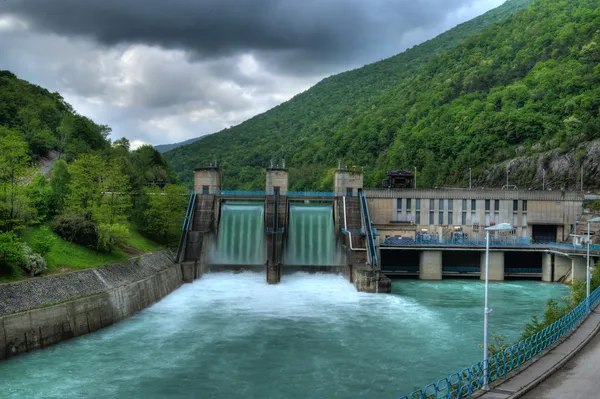
The Eurasian Development Bank (EDB) and Kyrgyzstan’s Ministry of Economy and Commerce have signed a technical assistance agreement to initiate a pre-feasibility study for the Hydropower Plant (HPP) Cascade Project. The announcement was made on March 26 and marks a significant step forward in the development of one of Kyrgyzstan’s most ambitious energy infrastructure projects. This agreement builds on the existing partnership between the EDB and the Ministry, established under a Memorandum of Cooperation signed in December 2024. Scope of the Study Under the agreement, the EDB will finance the pre-feasibility study, which will include: Estimating preliminary capital expenditures Developing key technical solutions Assessing environmental and social impacts Outlining state support measures needed for project implementation The study will be carried out in collaboration with the Ministry and a designated consulting firm. Strategic Importance of the Suusamyr-Kokomeren Cascade The planned hydropower cascade will be situated on the Kokomeren River and consist of three power plants with a combined installed capacity of 1,305 MW. The project is expected to significantly enhance Kyrgyzstan’s electricity generation capacity, help meet growing domestic energy demands, and contribute to reducing greenhouse gas emissions. Hydropower is a cornerstone of Kyrgyzstan’s renewable energy strategy, and the Suusamyr-Kokomeren project is envisioned as a key driver of energy security and regional development. Regional and International Cooperation The EDB is a multilateral development institution comprising six member states: Armenia, Belarus, Kazakhstan, Kyrgyzstan, Russia, and Tajikistan. It finances regional development projects that foster economic integration across Eurasia. It is worth noting that in early 2024, Kyrgyzstan’s Ministry of Energy signed memorandums of understanding with China National Electric Engineering Co. Ltd. These agreements include cooperation on the construction of both the Suusamyr-Kokomeren HPP Cascade and the Kara-Kechin thermal power plant. Together, these initiatives underscore Kyrgyzstan’s strategic push to diversify its energy portfolio and strengthen infrastructure through international partnerships and sustainable energy investments.

EDB to Invest in Kazakhstan’s Energy Projects and Polyethylene Plant Construction

The Eurasian Development Bank (EDB) will continue financing strategic energy, transport, and industrial projects in Kazakhstan, with a focus on digital technologies and innovation, according to Nikolai Podguzov, Chairman of the EDB Management Board. Podguzov made the announcement during a meeting with Kazakhstan's Prime Minister Olzhas Bektenov on February 26. The EDB is a multilateral development bank that supports economic and infrastructure projects in its six member states: Armenia, Belarus, Kazakhstan, Kyrgyzstan, Russia, and Tajikistan. According to Podguzov, in 2025, the EDB plans to invest in socially significant projects in Kazakhstan, including: Expansion and modernization of combined heat and power plants in the country’s central and eastern regions. Construction of a polyethylene plant. Development of the 545 MW Altyn Dala solar power plant. In 2024, the EDB allocated nearly $1.4 billion to projects in Kazakhstan, bringing its total investment in the country over the past three years to $3.6 billion. This reflects Kazakhstan’s prominent share in the EDB’s investment portfolio. Bektenov reaffirmed Kazakhstan’s interest in deepening cooperation with the EDB, particularly in the energy and utilities sectors. “The Eurasian Development Bank is an important partner for Kazakhstan. Last year, the bank’s investment in our economy grew by nearly 40%, and its loan portfolio in Kazakhstan increased to 63.4% of the bank’s total loan portfolio. We are interested in expanding our cooperation on mutually beneficial terms and unlocking new opportunities in both traditional and emerging areas,” the prime minister stated.

Report Addresses Cross-Border Challenges in Irtysh River Basin

The Eurasian Development Bank (EDB) has released a report titled “The Irtysh River Basin: Transboundary Challenges and Practical Solutions”, analyzing the water resources of the transboundary Irtysh River basin, shared by China, Kazakhstan, and Russia. The report highlights growing water demand in all three countries and proposes practical solutions to address cross-border challenges. Strategic Importance of the Irtysh River The Irtysh River, the world’s longest transboundary tributary, stretches 4,248 km and, together with the Ob River, forms Russia’s longest waterway, the second longest in Asia and the seventh longest globally. Flowing from China through Kazakhstan into Russia, the river is crucial for all three countries, necessitating strategic cooperation in its management. [caption id="attachment_29111" align="aligncenter" width="1950"] The Irtysh River Basin; image: eabr.org[/caption] Key Challenges in Each Country China In China, the upper Irtysh River is essential for the Xinjiang Uygur Autonomous Region (XUAR), where the population has surged from 15.2 million in 1990 to 25.87 million in 2022. Rapid regional development has made water stress a pressing issue. Research forecasts that annual water withdrawals from the Irtysh could more than triple, from the current 1.5 - 2.0 km³ to 7 km³, out of an average natural flow of 8.3 km³. Kazakhstan In Kazakhstan, the Irtysh and its tributaries support 30% of the population and contribute 45% of the country’s total agricultural output. The Irtysh HPP Cascade accounts for 10% of Kazakhstan’s electricity generation and 80% of its hydropower capacity. Increased water withdrawals by China pose significant risks to Kazakhstan’s water security. Russia For Russia, upstream water policies in China and Kazakhstan are major concerns. Excessive Chinese withdrawals could reduce Kazakhstan’s downstream flow, impacting Omsk and the surrounding Omsk Municipal District. Changes in water availability and quality over the next decade present serious socio-economic challenges for the region. Key Recommendations from the Report The EDB report outlines four major recommendations for managing transboundary water challenges: Expanding Bilateral and Trilateral Cooperation The report urges stronger water agreements between Kazakhstan and Russia, as well as between Kazakhstan and China, incorporating international water management principles. Recommended cooperation areas include: Ensuring international navigation on the Irtysh-Ob River system Controlling water pollution Regulating safe water usage Improving efficiency during floods, droughts, and low-water periods This groundwork would help establish a future trilateral water management agreement between the three countries. Strengthening Water Management Infrastructure The report calls for soft infrastructure development, such as: Creating an interstate river flow monitoring system with open data access Developing joint training programs for water management specialists Expanding interdisciplinary water research involving experts from all three nations Coordinating Hydraulic Infrastructure Operations The report stresses the importance of joint management of existing and future hydropower plants, dams, reservoirs, and irrigation canals to ensure stable water supplies without harming other nations' resources. Priority projects include: Shulbinsk HPP (Phase 2) in Kazakhstan Semipalatinsk HPP in Kazakhstan Modernization of the Satpayev Irtysh-Karaganda Canal in Kazakhstan Construction of the Krasnogorsk hydro-system near Omsk, Russia Developing a Multimodal Transport Corridor The report proposes a multimodal transport corridor linking Russia,...

Central Asia Receives Half of Eurasian Investments from China, Turkey, Iran, and Gulf States

The Eurasian Development Bank (EDB) has released a new study analyzing mutual direct investment (MDI) flows across the Eurasian region. The report examines investment trends between 13 Eurasian countries - Armenia, Azerbaijan, Belarus, Georgia, Kazakhstan, Kyrgyzstan, Moldova, Mongolia, Russia, Tajikistan, Turkmenistan, Ukraine, and Uzbekistan - and external partners, including China, Turkey, Iran, and the Gulf states, from 2016 to the first half of 2024. Key Findings on Investment Trends According to the EDB, total MDI stock in the region reached $90.4 billion by mid-2024, reflecting a 6.4% increase from 2023. China remains the largest investor in the Eurasian region, holding an MDI stock of $58.6 billion at the end of H1 2024, accounting for 64.8% of the total. Other major investors include: Turkey - $12.3 billion (13.6%) United Arab Emirates (UAE) - $12.2 billion (13.5%) Iran - $3.2 billion (3.5%) Saudi Arabia - $2.3 billion (2.5%) Qatar - $1.6 billion (1.8%) Among these, Iran showed the highest investment growth, doubling its investments since 2016, with 90% directed toward Azerbaijan. Turkey demonstrated broad sectoral diversification, while Saudi Arabia and Qatar emerged as new investors, making their first investments in 2021 and 2024, respectively. Investment Distribution in Eurasia The largest investment recipients in the Eurasian region include: Russia - $23.5 billion (26%) Turkmenistan - $17.5 billion (12.5%) Kazakhstan - $15.5 billion (11.1%) Mongolia - $10.3 billion (7.4%) Uzbekistan - $8.8 billion (6.3%) Central Asia received 51% of all investments from China, Turkey, Iran, and the Gulf states, totaling $46.2 billion, an increase of 25% since 2022. Outbound Investment from Eurasia The report also highlights outbound investments from the Eurasian region, which totaled $49.4 billion, doubling since 2016. Turkey received 80% of these investments, with a significant portion originating from Russia. Sectoral Trends: Energy, Manufacturing, and Greenfield Investments China continues to expand its investments in energy and manufacturing, although its traditional focus on extractive industries has declined. As of mid-2024, Chinese investment in mining and resource extraction stood at $36.2 billion, comprising 61.7% of its total investments in Eurasia. Other notable sectoral trends include: Energy sector - Chinese investment grew 2.1-fold in 18 months to $4.1 billion, with 85% directed toward Uzbekistan. Manufacturing sector - Investment increased 8% to $11.8 billion, with most projects concentrated in Central Asia. The Gulf states are also expanding their investments in the region: The UAE invested $12.2 billion, with 90% of its projects in Central Asia. Saudi Arabia increased investments from $300 million in 2021 to $2.3 billion in 2024, primarily in Uzbekistan’s power sector. Qatar made its first major investment in Kazakhstan in 2024, committing $1.6 billion to the telecom sector. Rise of Greenfield Investments Greenfield projects - new businesses and infrastructure developments - remain the dominant form of MDI, totaling $57 billion, nearly double the 2016 level. These projects now account for 63% of total investments, driven by the economic growth of Central Asia and increasing investor interest in energy, manufacturing, and extractive industries.

Uzbekistan Set to Join the Eurasian Development Bank in 2025

Uzbekistan is set to complete the procedures for joining the Eurasian Development Bank (EDB) by early 2025. The announcement was made during an expanded meeting of the Supreme Eurasian Economic Council (EAEC). Uzbekistan has held observer status in the Eurasian Economic Union (EAEU) since 2020, and is preparing to deepen its engagement in regional economic projects. The country is already participating in several sectoral programs between the EAEU member states. These programs focus on areas such as the digitalization of trade, cargo transportation, e-commerce development, and combating climate change. The Eurasian Development Bank was founded in 2006 by Russia and Kazakhstan. Its current members are Armenia, Belarus, Kyrgyzstan, and Tajikistan. The EDB's primary mission is to promote economic growth and strengthen integration among its member states by financing major investment projects across various sectors. As of June 30, 2024, the EDB's investment portfolio stood at USD 4.8 billion, comprising 78 projects throughout the member states. The Bank prioritizes projects with integration effects, including cross-country infrastructure development, enhanced trade and economic ties, and the creation of common markets. It also supports "green" financing initiatives to promote sustainable development and environmental safety across the region. Experts view Uzbekistan's plans to join the EDB as a strategic move to bolster its economic cooperation with neighboring countries. Membership in the Bank would provide Tashkent with access to new financial opportunities, facilitating the implementation of joint initiatives and strengthening its role in regional economic integration.

Work in the EAEU App Expands to Uzbekistan to Support Migrant Workers

The “Work in the EAEU” mobile app, developed by the Eurasian Development Bank’s (EDB) Fund for Digital Initiatives, has officially launched services for migrant workers in Uzbekistan, the EDB has announced. With this launch, the app now operates in Uzbekistan, a country that is neither a member of the Eurasian Economic Union (EAEU) - which includes Armenia, Belarus, Kazakhstan, Kyrgyzstan, and Russia - nor an EDB member state. The expansion highlights the app’s broader regional ambitions. Initially launched in June 2022, the “Work in the EAEU” app was designed to support the free movement of labor within EAEU member states. The service has since expanded to include Tajikistan in September 2024, and now Uzbekistan. Services for Migrant Workers The app provides a wide range of services tailored for individuals seeking employment in Uzbekistan. Key features include: Job search tools and the ability to apply for vacancies. Assistance in applying to government authorities for personal identification numbers or registration cards. Access to tax services, information on work permits, and visa requirements, including types of visas and IT visas. Support in finding accommodation and purchasing air or railway tickets. Comprehensive legal and regulatory information on employment in Uzbekistan. The app is intended to simplify employment processes for migrant workers and enhance their access to essential services through a single platform. Migration Trends in the Region For decades, hundreds of thousands of citizens from former Soviet republics have migrated within the region in search of better job opportunities. Central Asian countries, including Uzbekistan, have historically supplied significant numbers of labor migrants to Russia. However, recent geopolitical shifts have altered migration patterns. Following Russia’s invasion of Ukraine and the partial mobilization in September 2022, thousands of Russian citizens fled their country, with many relocating to Central Asia. This reverse migration underscores the increasing importance of tools like the “Work in the EAEU” app, which facilitates mobility and employment across borders. The launch of the “Work in the EAEU” app in Uzbekistan represents a step forward in easing cross-border employment processes in the region. As migration patterns continue to evolve, such digital initiatives will play a crucial role in supporting both labor migrants and host countries.