• KZT/USD = 0.00216
  • TJS/USD = 0.10800
  • UZS/USD = 0.00008
  • TMT/USD = 0.29760
  • KZT/USD = 0.00216
  • TJS/USD = 0.10800
  • UZS/USD = 0.00008
  • TMT/USD = 0.29760
  • KZT/USD = 0.00216
  • TJS/USD = 0.10800
  • UZS/USD = 0.00008
  • TMT/USD = 0.29760
  • KZT/USD = 0.00216
  • TJS/USD = 0.10800
  • UZS/USD = 0.00008
  • TMT/USD = 0.29760
  • KZT/USD = 0.00216
  • TJS/USD = 0.10800
  • UZS/USD = 0.00008
  • TMT/USD = 0.29760
  • KZT/USD = 0.00216
  • TJS/USD = 0.10800
  • UZS/USD = 0.00008
  • TMT/USD = 0.29760
  • KZT/USD = 0.00216
  • TJS/USD = 0.10800
  • UZS/USD = 0.00008
  • TMT/USD = 0.29760
  • KZT/USD = 0.00216
  • TJS/USD = 0.10800
  • UZS/USD = 0.00008
  • TMT/USD = 0.29760
18 August 2026

Viewing results 1 - 6 of 307

Uzbekistan and U.S. to Strengthen Cooperation on Critical Minerals

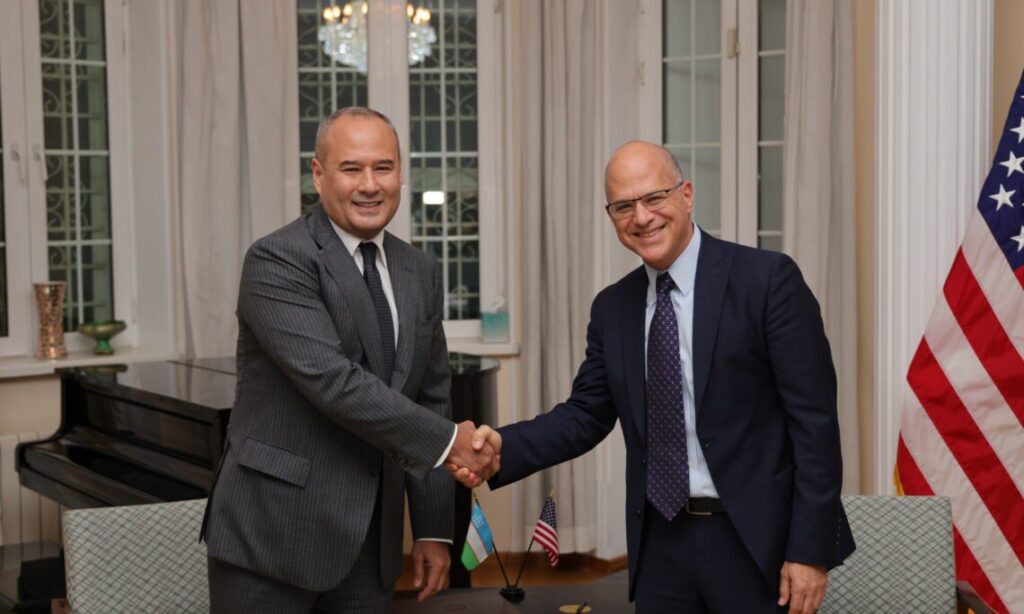
On September 16, the U.S. Ambassador to Uzbekistan, Jonathan Henick, and Uzbekistan’s First Deputy Minister of Geology, Omonullo Nasritdinkhodjaev, signed a Memorandum of Understanding to strengthen cooperation on critical minerals. As reported by the U.S. Embassy in Uzbekistan, the signing took place ahead of the Uzbek government’s participation in MINExpo INTERNATIONAL, the mining industry’s largest global event, which will take place from September 24 to 26 in Las Vegas. At the C5+1 summit in New York in September 2023, U.S. President Joe Biden, Uzbek President Shavkat Mirziyoyev, and the leaders of Kazakhstan, Kyrgyzstan, Tajikistan, and Turkmenistan announced their intention to launch a Critical Minerals Dialogue. The Uzbek-U.S. Memorandum signifies the intention of the United States and Uzbekistan to advance this effort, strengthen economic cooperation, and catalyze investment that advances the clean energy transition while protecting Central Asia’s unique ecosystems. As critical minerals and rare earth elements are essential for clean energy and other technologies, and play an increasingly important role in the economies of both countries, the Embassy said that the United States is actively working to encourage private sector investment in Uzbekistan’s mining sector. It added that the memorandum further reflects both nations’ shared goal of ensuring high environmental, labor, and governance standards in the global mining sector. Ambassador Henick commented: “The United States and Uzbekistan must cooperate to have resilient, secure supply chains supporting the future energy landscape. This memorandum demonstrates our commitment to diversifying global mineral supply chains and expanding our bilateral trade relationship. We are delighted to mark another milestone in our expanding Strategic Partnership with Uzbekistan.” In April 2024, Uzbekistan and the European Union signed a Memorandum of Understanding launching a strategic partnership on critical raw materials (CRMs). Uzbekistan has the second-largest reserves of CRMs in Central Asia (after Kazakhstan), with significant deposits of copper, molybdenum, and gold. The country's mining strategy aligns with its ambitions to increase CRM processing of CRMs for domestic and international industries, particularly in automotive and consumer electronics.
Turkmenistan and EU Launch Ambitious Green Development Project for 2024-2028

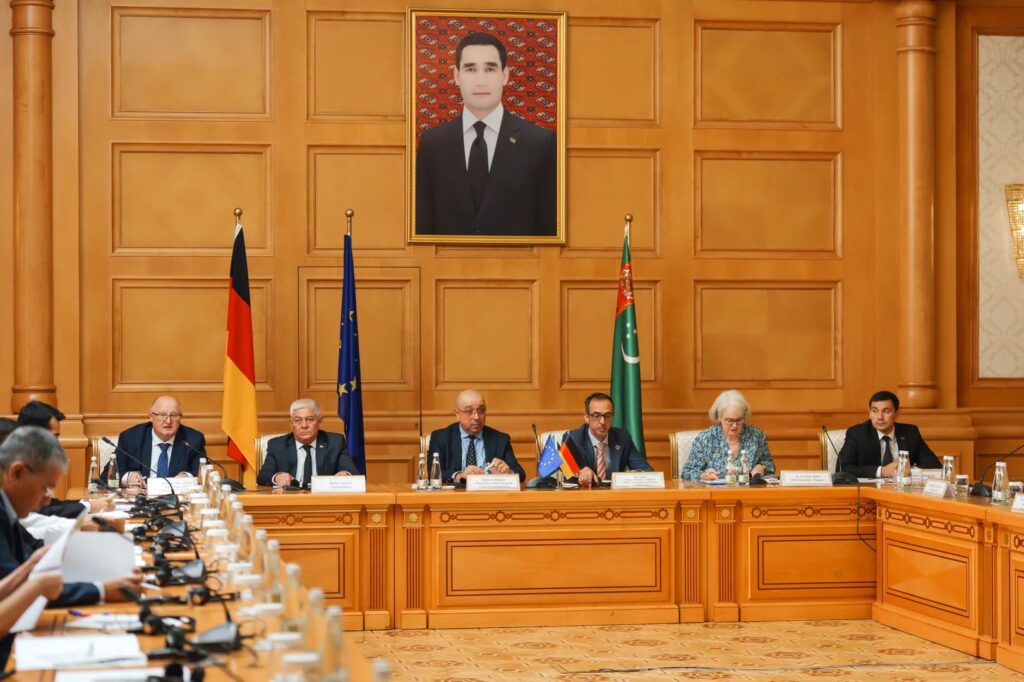
The European Union and Turkmenistan have officially launched a new project entitled “EU for Turkmenistan's Green Development: Policy Dialogue and Climate Action 2024-2028.” The project, funded by the EU and the German Ministry of Foreign Affairs, aims to support environmentally sustainable development in Turkmenistan using best practices and EU standards. The initiative will implement measures to promote renewable energy and energy efficiency, including reducing methane and greenhouse gas emissions. The project was launched in May 2024 following the signing of a Memorandum of Understanding and Cooperation between the Ministry of Energy of Turkmenistan, the State Concern Turkmengaz, and the German organization GIZ. This coincided with the 30th anniversary of diplomatic relations between the EU and Turkmenistan. The document emphasizes the importance of further cooperation in energy and climate policy. According to project manager Karolina Milov, the key focus will be creating an effective dialog between the EU and Turkmenistan's state structures to promote green energy. Strengthening the capacity of state institutions to develop climate change adaptation measures is also planned. The project includes two pilot areas that will demonstrate adaptation measures in renewable energy, methane emissions monitoring, and other environmental initiatives. These collaborative efforts are expected to mitigate the effects of climate change, both regionally and globally. Turkmenistan is actively developing green energy and technology initiatives. In recent years, the country has started launching several renewable energy projects. One of the key projects is constructing the country's first 10 MW hybrid wind-solar power plant in the Balkan province, creating a sustainable energy system for remote areas. Also, in 2022, an agreement was reached with Masdar from the UAE to build the country's first large-scale solar power plant with a capacity of 100 MW. In 2023, the government of Turkmenistan contracted a Turkish company to build a 1,574 MW power plant.

Kazakhstan’s Longest Road Tunnel Opens on Western Europe – Western China Transport Corridor

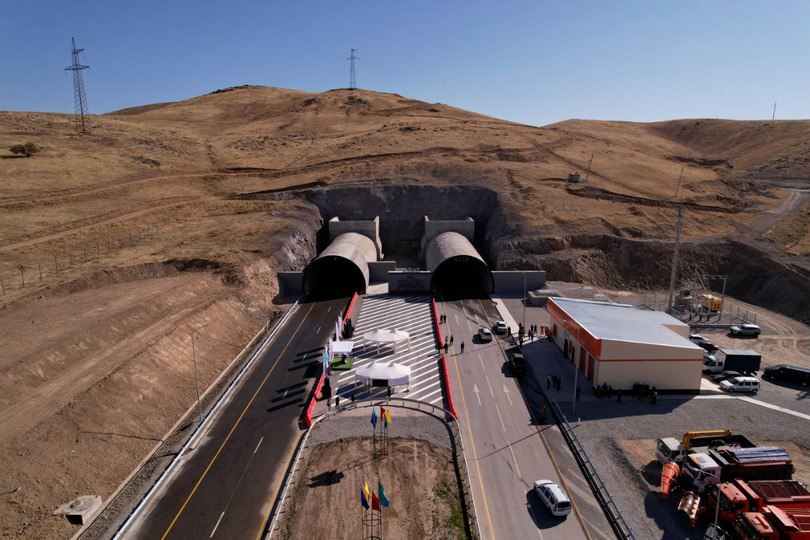
On September 12, a new tunnel was opened at the Shakpak Baba pass in Kazakhstan’s southern Turkestan region. As the Kazakh Ministry of Transport reported, it is the longest automobile tunnel in Kazakhstan. The two-lane tunnel is 840 meters long, 11 meters wide, and 8 meters high. Control centers on both sides of the tunnel monitor lighting, ventilation, and traffic lights. The tunnel's opening will facilitate traveling and cargo transportation during winter. At the tunnel's opening ceremony, Kazakhstan’s Deputy Minister of Transport Satzhan Ablaliyev stated: "The opening of this tunnel is an important event for Kazakhstan's transport infrastructure. It will not only improve the region's year-round transport accessibility but will also significantly increase traffic safety in this difficult section. The tunnel will prevent drivers from being trapped in the snow on the Shakpak Baba pass in winter. In addition, the main traffic flow will now be redirected to bypass the village of Shakpak Baba, increasing safety in the village." The tunnel is part of the Kazakh section of the international road transport corridor Western Europe-Western China. With a total length of 8,445 km, the corridor runs 2,233 km through Russia, 2,787 km through Kazakhstan, and 3,425 km through China. In July, Kazakh Minister of Transport Marat Karabayev announced that in 2024, Kazakhstan planned to repair and construct 12,000 kilometers of road.

Uzbekistan and Bulgaria to Increase Middle Corridor Freight Transport

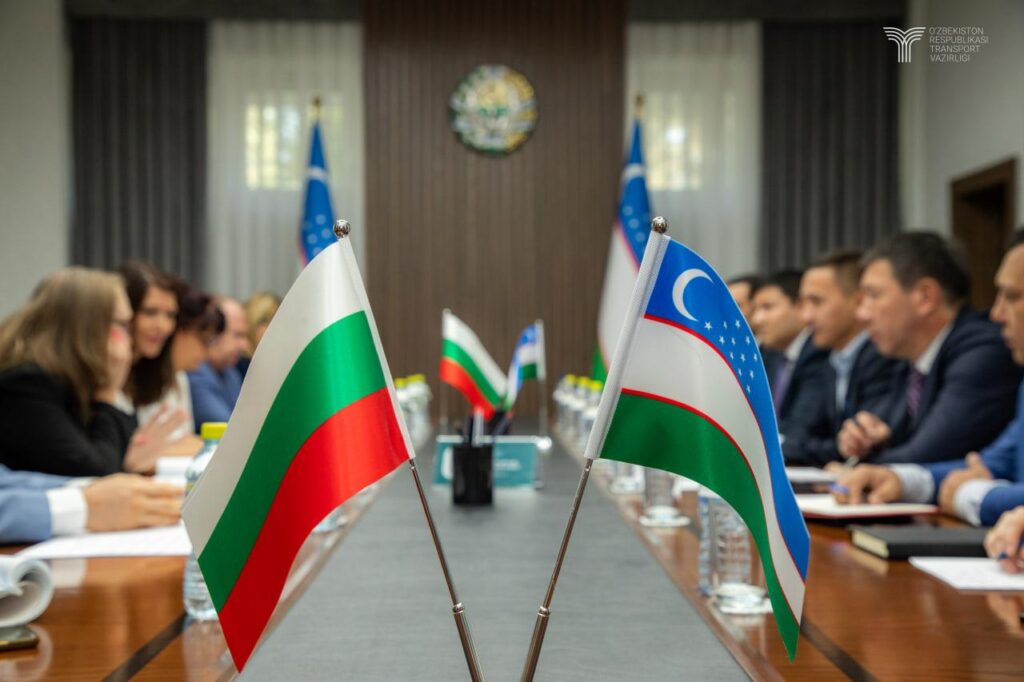
On 3-4 September, the Uzbek-Bulgarian Commission on International Road Transport met in Tashkent to discuss expanding bilateral cooperation in international freight transport by road and creating more favorable conditions for national carriers from both countries. As reported by the Uzbek Ministry of Transport, the agenda focused on increasing the volume of freight traffic to EU countries via Bulgaria, using the Trans-Caspian International Transport Route (TITR), also known as the Middle Corridor, which connects China and Europe via Central Asia and the Caucasus. After the meeting, the parties exchanged additional permit forms for trucks entering their countries for the remainder of 2024, and agreed to increase the issue of mutual permit forms 15-fold in 2025. The Uzbek Ministry added that to enhance cargo transportation to EU countries, an agreement had been made with Romania to waive the requirement of permits from April 1, 2024.

Kazakh-German Business Council Meets to Expand Economic Cooperation

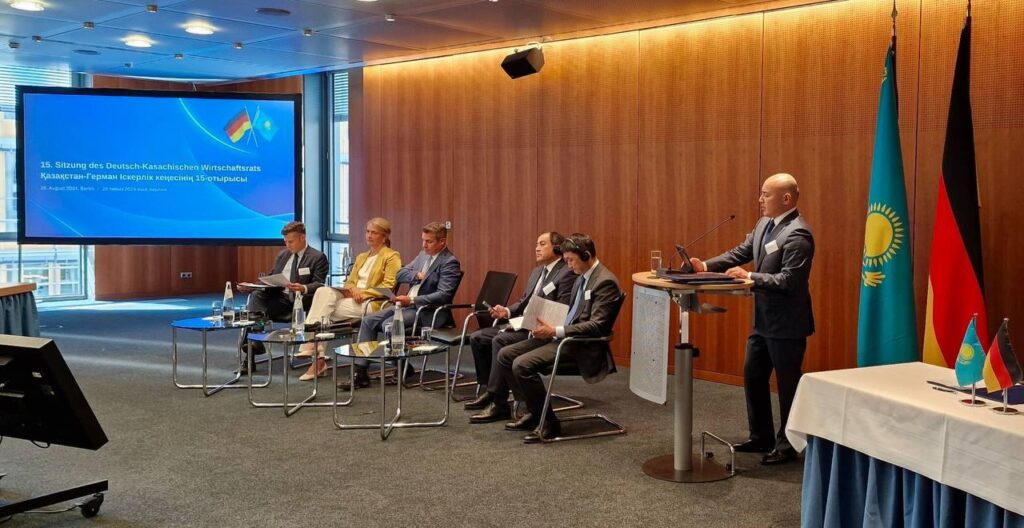
The 15th meeting of the Kazakh-German Business Council for Strategic Cooperation, co-chaired by First Deputy Prime Minister of Kazakhstan Roman Sklyar and Director of the Eastern Committee of the German Economy Michael Harms, was held in Berlin on August 28. The meeting gathered Kazakh government and business representatives and heads of leading German companies such as Siemens, Svevind Energy, CT Agro, CLAAS KGaA, Flight Design General Aviation, Deutsche Bahn, KfW Banken Gruppe, and Deutsche Bank. The co-chairs emphasized that the event was taking place ahead of Federal Chancellor of Germany Olaf Scholz's visit to Kazakhstan in September. The meeting focused on expanding Kazakh-German trade and economic cooperation, attracting investments, and implementing joint projects in the agro-industrial sector and processing industry. It was noted that Germany is Kazakhstan's largest trading partner in the European Union, and that Kazakhstan is among Germany's top 50 foreign trade partners. The lion's share of German investments in Kazakhstan go to the country’s non-raw materials sector — the processing industry, chemical industry, production of building materials, transport, and agro-industrial sector. Speaking on the sidelines of the event, Kazakhstan Deputy Minister of Foreign Affairs Alibek Kuantyrov urged further to intensify cooperation between the Kazakh and German business communities. Noting the critical role of German companies in Kazakhstan’s industrialization, Kuantyrov stated that German companies are implementing 66 projects in Kazakhstan for a total of $54 billion, creating about 15,000 jobs. Kuantyrov added that since 2005, German companies have invested about $7.8 billion in Kazakhstan’s economy, with a significant increase in the past year, reaching $770 million. He expressed confidence that the upcoming visit of Scholz to Kazakhstan will bring bilateral relations to a new level and give an additional impetus to strengthening existing and creating new economic ties. Kuantyrov emphasized the significance of cooperation in the context of the Trans-Caspian International Transport Route (TITR), also known as the Middle Corridor. He noted that cargo traffic through the Middle Corridor to Germany and the EU has increased almost threefold since the beginning of 2022 — to 1.5 million tons and 2.6 million tons, respectively, during the first seven months of this year, adding that the potential of TITR is estimated at 10 million tons of cargo a year. In this regard, Kuantyrov invited German partners to participate in developing Kazakhstan’s Caspian Sea ports of Aktau and Kuryk.

Kazakhstan Delivers Oil to Europe via Russia

Kazakhstan has begun supplying oil to Europe via the Druzhba oil pipeline system through Russia. The first oil shipments have already arrived in Germany, where amid current geopolitical challenges, it has become an important part of the country's energy security . Acting through its Kazakh subsidiary Agip Caspian Sea, the Italian company Eni, has shipped the first 20,000 tons of oil as part of a test delivery via the Atyrau-Samara route, with further transportation via the Druzhba pipeline. Kazakhstan now plans to deliver up to 1.2 million tons of oil to Germany via this system this year, following an agreement with the Russian side, to ensure uninterrupted supplies to Europe despite the sanctions restrictions on Russian oil. Historically, the pipeline has been one of the largest routes for Russian oil supplies to Europe, but its use has undergone significant changes in recent years due to sanctions. Faced with these changes, Kazakhstan's proposals to increase oil supplies through this route, could not only play a key role in ensuring energy stability in the region but also demonstrate the country's strategic importance as a major player in the global oil market and its ability to adapt to changes in global energy policy.