• KZT/USD = 0.00216
  • TJS/USD = 0.10800
  • UZS/USD = 0.00008
  • TMT/USD = 0.29760
  • KZT/USD = 0.00216
  • TJS/USD = 0.10800
  • UZS/USD = 0.00008
  • TMT/USD = 0.29760
  • KZT/USD = 0.00216
  • TJS/USD = 0.10800
  • UZS/USD = 0.00008
  • TMT/USD = 0.29760
  • KZT/USD = 0.00216
  • TJS/USD = 0.10800
  • UZS/USD = 0.00008
  • TMT/USD = 0.29760
  • KZT/USD = 0.00216
  • TJS/USD = 0.10800
  • UZS/USD = 0.00008
  • TMT/USD = 0.29760
  • KZT/USD = 0.00216
  • TJS/USD = 0.10800
  • UZS/USD = 0.00008
  • TMT/USD = 0.29760
  • KZT/USD = 0.00216
  • TJS/USD = 0.10800
  • UZS/USD = 0.00008
  • TMT/USD = 0.29760
  • KZT/USD = 0.00216
  • TJS/USD = 0.10800
  • UZS/USD = 0.00008
  • TMT/USD = 0.29760
18 August 2026

Viewing results 1 - 6 of 307

Uzbekistan Plans to Export Electricity to Europe by 2030

The first meeting of energy ministers was held as part of the sixth consultative meeting of the leaders of the Central Asian nations. At the meeting in Astana, Uzbekistan announced that it could begin exporting excess electricity to Europe by 2030. According to the Minister of Energy of Uzbekistan, Jorabek Mirzamahmudov, if the tripartite project of Kazakhstan, Uzbekistan and Azerbaijan on the transmission of the cable along the bottom of the Caspian Sea is successfully implemented, Uzbekistan will be able to transfer excess electricity. “By the end of this year, we will increase the total energy capacity obtained from renewable energy sources to the level of more than 4 GW. By 2030, this indicator will exceed 20 GW, of which 2–5 GW of energy will be exported to Europe,” the minister said. According to Mirzamahmudov, the exact volume of exports will depend on the electricity transmission system's capacity and European buyers' needs. Mirzamahmudov also stated that Uzbekistan’s electricity would pass through Kazakhstan through the unified energy system of Central Asia, through the Caspian Sea to Azerbaijan, from there to Georgia, and then through the Black Sea to Romania, Hungary, and Bulgaria. Following Uzbekistan's development strategy, the total generation capacity will be increased by 2.4 times (44.9 GW) by 2030. At the same time, the share of renewable energy sources will be increased to 40%. For this purpose, solar and wind energy production projects with a total capacity of 18.8 GW (8.6 GW solar, 10.2 GW wind) will be implemented.

Poland Asks Turkmenistan to Open a Consulate in Warsaw

Poland has asked Turkmenistan to consider opening a consulate in Warsaw. The country's minister of external affairs, Rashid Meredov, announced this at a government meeting on July 5. Turkmenistan will send an official delegation to Poland in the fourth quarter of 2024 to study the possibility of opening a consulate. Turkmenistan and Poland have also formed a working group on economic cooperation and plan to organize an exhibition of the Museum of Turkmenistan's exhibits in Poland in 2025. The number of Turkmen immigrants in Poland has increased dramatically in recent years. In 2022, Turkey, the most popular destination for Turkmen labor migration, introduced a visa regime at the request of the Turkmen side. The report stated: “The decline of the Turkish economy and the devaluation of the lira also played an important role. Migrants began to look for other options, including Poland. The request to open a consulate is probably related to this, but Rashid Meredov did not mention it in his report. The government of Turkmenistan wants to curb labor migration with bureaucratic obstacles.” Meredov also announced the expansion of cooperation with other Eastern European countries that are members of the European Union: Hungary, the Czech Republic, Romania, and Slovakia.

Tajikistan and Switzerland Strengthen Cooperation in Banking

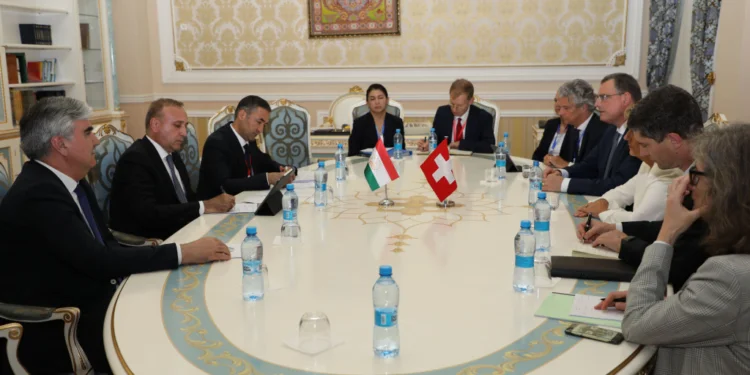
A meeting between representatives of the economic bloc of Tajikistan and Switzerland was held at the International Monetary Fund and the World Bank's Constituency Group conference. As reported by Avesta.tj. , the Tajik delegation was headed by First Deputy Prime Minister Hokim Holikzoda, and the Swiss side, by Federal Minister of Finance Karin Keller-Zutter and Chairman of the Swiss National Bank Thomas Jordaan. Both sides expressed satisfaction with their now long-term cooperation. Over the past 25 years, the Swiss National Bank has significantly contributed to Tajikistan's development of essential aspects of its banking system, including managing international resources, monetary policy, and operational risk management. Focused on further cooperation, the agenda included attracting Swiss finance and modern technologies to develop other vital sectors of Tajikistan's economy.

Kyrgyzstan and EU Strengthen Economic Cooperation

During his working visit to Brussels, Kyrgyz President Sadyr Japarov held talks with Valdis Dombrovskis, the Executive Vice President of the European Commission. The main topics of discussion were deepening trade and economic cooperation, attracting investment, realizing joint projects in mining and the green economy, introducing digital technologies, and developing human resources. Dombrovskis emphasized the importance of strengthening partnerships between Kyrgyzstan and the European Union. He noted that signing the Enhanced Partnership and Cooperation Agreement opens new opportunities for realizing mutually beneficial trade and economic projects. He also expressed the EU's readiness to deepen economic cooperation and interest in participating in significant energy and infrastructure projects, such as the Kambarata HPP-1 and the China-Kyrgyzstan-Uzbekistan railroad, emphasizing their financial potential. Sadyr Japarov thanked the EU for its support and for signing the new Agreement on Enhanced Partnership and Cooperation, expressing his confidence that it would strengthen the agreements reached and create a modern legal basis for future bilateral interaction. The President noted that Kyrgyzstan provides significant opportunities for trade and investment due to its geographical location and transit potential. Japarov also emphasized the country's commitment to the green agenda, stating its intention to reduce greenhouse gas emissions by 44% by 2030 and achieve carbon neutrality by 2050. As part of the initiative to develop a green economy, Japarov proposed exchanging foreign debt for green projects, thus improving the global environmental situation. Projects on water management and the introduction of environmentally friendly technologies in Kyrgyzstan's mining industry were also discussed.

The Government of Tajikistan and FLSmidth to Cooperate in Mining

Sherali Kabir, Minister of Industry and New Technologies of Tajikistan, and Peter Flanagan, representative of the transnational company FLSmidth have signed a memorandum of cooperation in the mining sector. FLSmidth is one of the world's leading mining equipment suppliers. During their meeting, the parties exchanged views on priority areas of cooperation in the mining sector and the development of joint projects in the mining industry and under the memorandum, will form a working group to instigate plans. It was noted that 93% of Tajikistan's territory is occupied by mountains possessing essential breakthrough minerals, including lithium, copper, antimony, and others.

Alternative Transport Routes in Kazakhstan: Potential and Current Opportunities

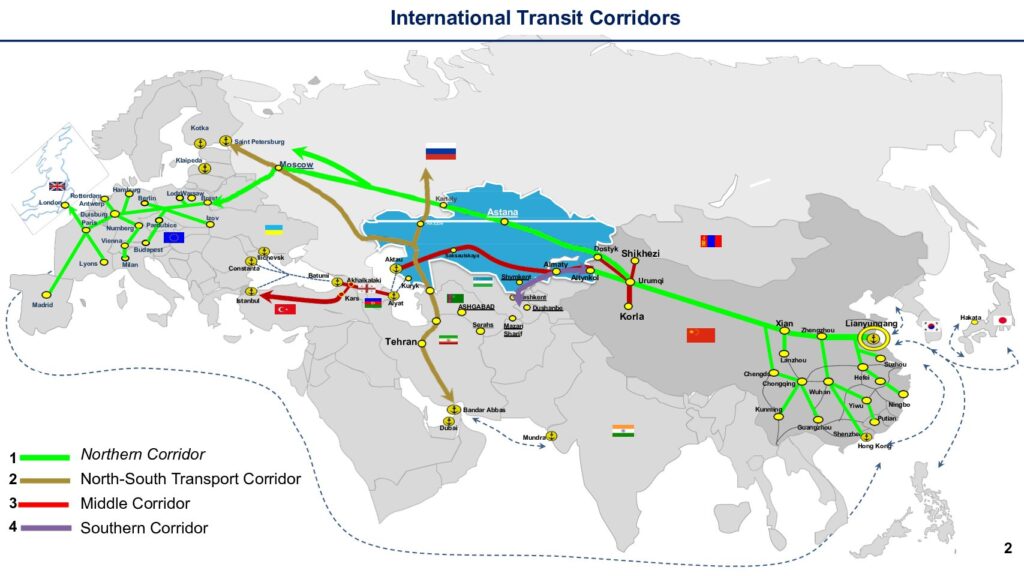
Kazakhstan's President Kassym-Jomart Tokayev has ordered alternative transportation and shipping routes to be drawn up and supply routes to be diversified. Amid ongoing geopolitical shifts, routes passing through Kazakhstan's territory are already seeing relatively high freight flows. Still, to develop them, further measures are needed to enhance international logistics cooperation and increase efficiency along the entire length of the transport corridors. The country's deputy minister for transport Maksat Kaliakparov kindly agreed to answer some questions from The Times of Central Asia. TCA:  Not so long ago, Kazakhstan Temir Zholy (KTZ) announced the launch of a project to create a digital corridor as part of the Trans-Caspian International Transport Route (TITR) with the company Global DTC Pte Ltd. What countries are to be integrated into this project? Can a similar digital trade corridor be considered for the International North-South Transport Corridor (INSTC)? MK: As you know, on August 16, 2022, KZT and the Singaporean company PSA concluded a memorandum according to which one of the identified areas for cooperation is developing a digital trading corridor (DTC). Towards this, a multimodal DTC has been developed. Using this platform, three container trains were sent on the route from Xi'an (China) to Absheron (Azerbaijan) as a test run. Integration with the railway systems of Kazakhstan and Azerbaijan has been carried out. Currently, the process of integration with Georgian systems is underway. Overall, the DTC platform allows for: entering into online contracts with freight forwarding companies; seeing and receiving transportation tariffs from logistics companies; tracking the location of containers along all routes; getting customs status based on transit declarations when crossing borders along the route, etc. This year, it is also planning to launch the commercial operation of a container tracking service in Kazakhstan, Azerbaijan, and Georgia, and it is also planning to be integrated with a Chinese logistics operator. In addition, the Tez Customs platform has been developed. It is part of DTC, created to automate the customs clearance process of railway transit freight on the route China-Kazakhstan-Central Asia/Europe. Tez Customs allows for: automating the process of customs transit clearance at the Kazakhstan-China border; reducing the time of customs procedures (from 4-8 hours to 30 minutes); tracking the status of transit declarations and freight until final departure from the territory of Kazakhstan. Meanwhile, a similar DTC for the INSTC is being considered within the cooperation framework with the UAE company Abu Dhabi Ports. TCA: As part of the development of the INSTC, the railway administrations of Kazakhstan, Russia, and Turkmenistan are planning to create a joint venture (JV). Tell us about the plans for how it is to be formed. How will shares in the JV be allocated between the countries? MK: Yes, indeed, for the further development of the eastern branch of the INSTC, the participating countries are working to create an equal-term JV between KTZ Express, Russian Railways Logistics, and the Transport and Logistics Center of Turkmenistan. Today, the railway administrations of Russia, Kazakhstan, Turkmenistan, and Iran are creating a favorable tariff...