
• KGS/USD = 0.01144 0%
  • KZT/USD = 0.00203 0%
  • TJS/USD = 0.10685 -0.19%
  • UZS/USD = 0.00008 0%
  • TMT/USD = 0.28530 0%
  • KGS/USD = 0.01144 0%
  • KZT/USD = 0.00203 0%
  • TJS/USD = 0.10685 -0.19%
  • UZS/USD = 0.00008 0%
  • TMT/USD = 0.28530 0%
  • KGS/USD = 0.01144 0%
  • KZT/USD = 0.00203 0%
  • TJS/USD = 0.10685 -0.19%
  • UZS/USD = 0.00008 0%
  • TMT/USD = 0.28530 0%
  • KGS/USD = 0.01144 0%
  • KZT/USD = 0.00203 0%
  • TJS/USD = 0.10685 -0.19%
  • UZS/USD = 0.00008 0%
  • TMT/USD = 0.28530 0%
  • KGS/USD = 0.01144 0%
  • KZT/USD = 0.00203 0%
  • TJS/USD = 0.10685 -0.19%
  • UZS/USD = 0.00008 0%
  • TMT/USD = 0.28530 0%
  • KGS/USD = 0.01144 0%
  • KZT/USD = 0.00203 0%
  • TJS/USD = 0.10685 -0.19%
  • UZS/USD = 0.00008 0%
  • TMT/USD = 0.28530 0%
  • KGS/USD = 0.01144 0%
  • KZT/USD = 0.00203 0%
  • TJS/USD = 0.10685 -0.19%
  • UZS/USD = 0.00008 0%
  • TMT/USD = 0.28530 0%
  • KGS/USD = 0.01144 0%
  • KZT/USD = 0.00203 0%
  • TJS/USD = 0.10685 -0.19%
  • UZS/USD = 0.00008 0%
  • TMT/USD = 0.28530 0%
09 February 2026

Viewing results 1 - 6 of 7

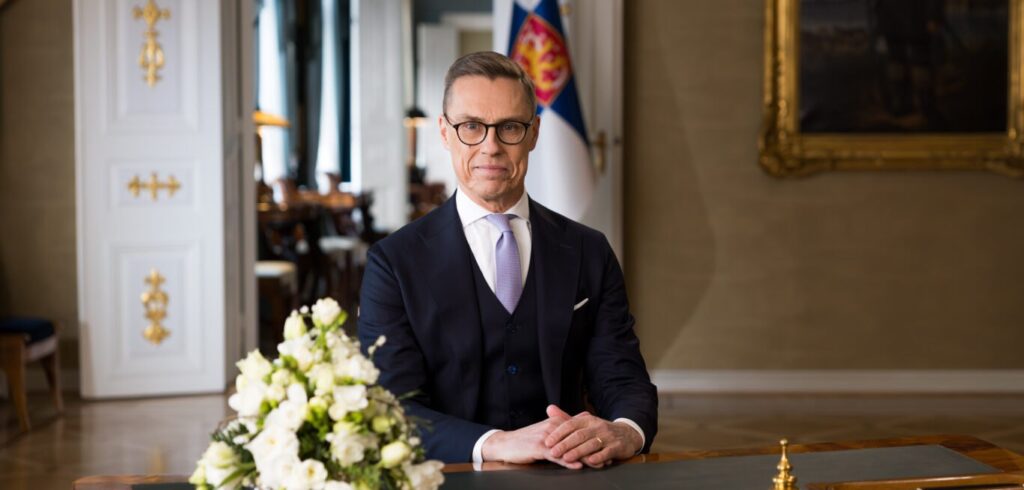
Finland’s President Stubb Warns Russia’s Imperial Thinking Poses Risks for Central Asia

Russia’s imperial worldview may pose a greater long-term risk to Central Asia and the South Caucasus than to NATO member states, Finnish President Alexander Stubb said in an interview with The Washington Post, highlighting concerns that continue to resonate across the post-Soviet space. Speaking with columnist David Ignatius, Stubb referenced Finland’s long and complex history with its eastern neighbor, noting that expansionist thinking remains deeply rooted in Russian political culture. “I think the DNA of Russia is still expansion and imperialism,” he said, arguing that President Vladimir Putin views the collapse of the Soviet Union as a historical injustice. While much of the Western debate centers on potential threats to NATO countries such as the Baltic states, Finland, or Poland, Stubb suggested that more vulnerable regions lie elsewhere. “I think the more worrying aspect for others is the Central Asian countries, the Southern Caucasus and others,” he said, pointing to what he described as a top-down political system driven by the ideology of Russkiy mir, or the “Russian world.” Stubb also spoke about his personal interactions with Russian officials, including Putin and Foreign Minister Sergei Lavrov, stressing that meaningful political dialogue remains unlikely while the war in Ukraine continues. As previously reported by The Times of Central Asia, Russian television host Vladimir Solovyov sparked backlash after suggesting that Moscow could conduct “special military operations” in Central Asia and Armenia. The remarks were widely condemned by Uzbek scholars, journalists, and analysts as destabilizing and provocative. More recently, Russian ultranationalist Alexander Dugin, often described as an ideologue of the “Russian world”, publicly questioned the sovereignty of several former Soviet republics, including Uzbekistan, Kazakhstan, Tajikistan, and Kyrgyzstan. A video of his comments circulated widely online, drawing sharp criticism across the region. Russia’s Foreign Ministry later sought to distance the Kremlin from such statements. Spokesperson Maria Zakharova stated that Solovyov’s remarks did not reflect official policy and reaffirmed that Moscow’s relationships with Central Asian countries are based on partnership and respect for sovereignty.

Kazakhstan Explores Uranium Supply Deal with Finland

During Finnish President Alexander Stubb’s official visit to Kazakhstan, the two countries took a step toward deepening cooperation in the peaceful use of nuclear energy. In Astana, a memorandum of understanding was signed between Kazakhstan’s Atomic Energy Agency and Finland’s Radiation and Nuclear Safety Authority (STUK), laying the groundwork for potential uranium supplies to Finland. According to Almasadam Satkaliev, head of the Kazakh agency, the agreement establishes a legal framework for future deliveries of Kazakh uranium to Finnish nuclear power plants. “The possibility of supplying Kazakh uranium to Finnish nuclear power plants is currently under discussion,” Satkaliev told reporters. “We’ve made such offers before, and the Finnish side has shown serious interest. This visit is an opportunity to move toward practical negotiations on supply volumes.” The memorandum also includes provisions for sharing expertise and experience in the nuclear energy sector. Satkaliev praised Finland’s regulatory framework, describing it as a model recognized by the International Atomic Energy Agency (IAEA). “We have agreed to exchange knowledge and jointly review legislation to align our standards with international best practices,” he said. Kazakhstan, the world’s largest uranium producer, is also advancing its own nuclear power ambitions. The country plans to commission its first nuclear power plant by 2035. In 2024, a nationwide referendum showed over 71% support for nuclear energy development. As a result, the government selected Russia’s Rosatom to construct the first plant near the village of Ulken on the shores of Lake Balkhash. Two additional nuclear projects are planned in cooperation with China’s state-owned China National Nuclear Corporation (CNNC). Satkaliev said CNNC is currently assessing potential sites in the Almaty and Zhambyl regions. “A memorandum has been signed to study Chinese participation. Specific decisions will follow once site surveys are complete,” he explained. Despite its plans to develop domestic nuclear capacity, Kazakhstan remains committed to expanding uranium exports. In 2024, the state-owned company Kazatomprom sold 16,600 tons of uranium, generating a record $3.3 billion in revenue and capturing 21% of global market share. In the first half of 2025, the company sold 7,625 tons, down 2% from the same period the previous year. Kazakhstan currently exports uranium to China, Canada, the U.S., Switzerland, France, India, the Czech Republic, and Bulgaria. China remains the largest customer, accounting for approximately 60% of total shipments. In summer 2025, Kazatomprom signed a memorandum with Slovenské elektrárne (SEAS), Slovakia’s largest energy producer, potentially expanding its export geography even further.

Kazakhstan and Finland to Collaborate on Rail Transportation

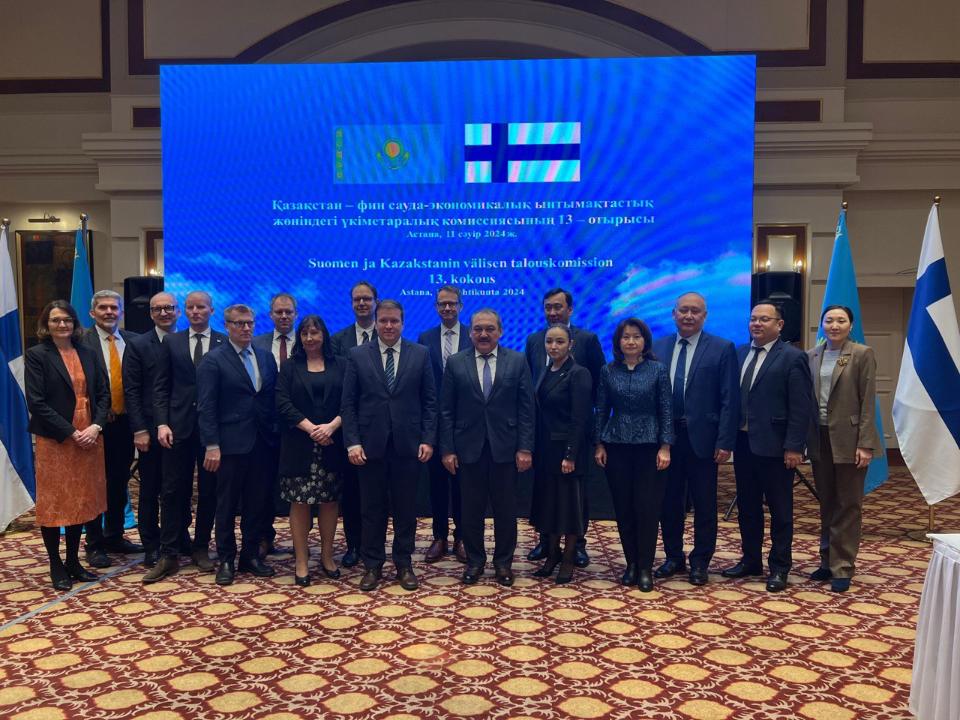
KTZ Express JSC (a subsidiary of Kazakhstan’s national railways company Kazakhstan Temir Zholy) and Finnish Nurminen Logistics Services Oy, have signed a Memorandum of Cooperation for container transportation from China to Finland along the Trans-Caspian International Transport Route (TITR) through the Kazakhstan. At a meeting of the Kazakh-Finnish intergovernmental commission on April 11 in Astana, Deputy Minister of Transport of Kazakhstan Maksat Kaliakparov emphasized the strategic importance of cooperation and development of transit opportunities between the two countries regarding trade between China and Southeast Asian countries and the European Union: “Kazakhstan is the main link in the TITR, or the Middle Corridor, and has already shown potential as an alternative to East – West routes. This is evidenced by an 86% increase in cargo transhipment through the seaports of Aktau and Kuryk, the volume of which rose to 2.8 million tons. The TITR is a ‘green-light’ corridor. Today, the cargo transit time has been reduced from 23 to 14-18 days, including 5 days in Kazakhstan. In 2023, the volume of cargo transportation along the TITR increased by 65%.” To illustrate the potential for cargo transportation between Kazakhstan and the EU, Kaliakparov reported a steady rise in the transportation of cargo through Kazakhstan along the China-Finland-China route. Compared to the previous year, in 2023, the volume of cargo transported by rail increased by 25% (4.3 million tons), and by road, by 14% (7.3 million tons).
