• KZT/USD = 0.00213
  • TJS/USD = 0.10800
  • UZS/USD = 0.00008
  • TMT/USD = 0.29850
  • KZT/USD = 0.00213
  • TJS/USD = 0.10800
  • UZS/USD = 0.00008
  • TMT/USD = 0.29850
  • KZT/USD = 0.00213
  • TJS/USD = 0.10800
  • UZS/USD = 0.00008
  • TMT/USD = 0.29850
  • KZT/USD = 0.00213
  • TJS/USD = 0.10800
  • UZS/USD = 0.00008
  • TMT/USD = 0.29850
  • KZT/USD = 0.00213
  • TJS/USD = 0.10800
  • UZS/USD = 0.00008
  • TMT/USD = 0.29850
  • KZT/USD = 0.00213
  • TJS/USD = 0.10800
  • UZS/USD = 0.00008
  • TMT/USD = 0.29850
  • KZT/USD = 0.00213
  • TJS/USD = 0.10800
  • UZS/USD = 0.00008
  • TMT/USD = 0.29850
  • KZT/USD = 0.00213
  • TJS/USD = 0.10800
  • UZS/USD = 0.00008
  • TMT/USD = 0.29850

Viewing results 1 - 6 of 4

Kazakhstan and China Launch IBI Digital Economy Hub in Almaty

Kazakhstan and China have opened the IBI Digital Economy Hub in Almaty, establishing a new platform aimed at expanding bilateral cooperation in digital trade, investment, industrial development, and cross-border logistics. According to Kazakhstan’s Ministry of Trade and Integration,the new hub is designed to serve as a focal point for cooperation in the digital economy, e-commerce, trade, investment, industrial collaboration, and transport and logistics between the two countries. The opening ceremony was attended by Vice Minister of Trade and Integration Aidar Abildabekov, along with representatives of government agencies from Kazakhstan and China, development institutions, national companies, financial organizations, and private businesses. Officials said the platform would help companies from both countries develop joint investment projects and connect with international partners. It is also intended to expand digital commerce and online services while improving cross-border supply chains. The hub will support industrial cooperation and transport and logistics projects. It will also help companies deploy technology and localize production, with better access to markets in both countries. A central component of the initiative is the development of a large high-tech industrial park, which is expected to be built in phases over the next five to eight years. Potential locations include the Zhambyl, Almaty, and Karaganda regions, as well as the Khorgos International Centre for Boundary Cooperation on the Kazakhstan-China border. Infrastructure investment in the project is estimated at $2 billion. Once fully operational, the industrial park is expected to generate more than $10 billion in annual economic activity, while the joint venture managing the project is projected to earn more than $1 billion in annual revenue. Between five and ten major industrial and manufacturing companies are expected to become anchor tenants. Speaking at the launch, Abildabekov pointed to record growth in bilateral trade. “Trade between Kazakhstan and China reached a record $48.7 billion in 2025. During the first five months of 2026, bilateral trade totaled $22 billion, up 27% year-on-year. Our task now is not only to increase trade volumes but also to improve their quality through digitalization, industrial cooperation, and the creation of modern production and logistics chains,” he said. Abildabekov described the IBI headquarters as an important addition to the digital infrastructure supporting international trade and investment. "We see this project not simply as an expansion of Chinese business in Kazakhstan, but as a contribution to the development of the country's digital ecosystem. The new platform will become an effective center for cooperation between government, business, and the expert community, helping implement joint projects and introduce advanced digital solutions," he added. China remains one of Kazakhstan’s largest trading and investment partners. According to the Ministry of Trade and Integration, Chinese foreign direct investment reached a record $2.826 billion in 2025, while cumulative Chinese investment in Kazakhstan since 1993 has exceeded $30.7 billion. The hub adds a commercial element to Kazakhstan’s technology ties with China. As previously reported by The Times of Central Asia, President Kassym-Jomart Tokayev offered Astana as the venue for the first meeting of the World AI Cooperation Organization...

Kazakhstan Seeking to Turn Transit Routes Into Investment Growth, Vice Minister Says

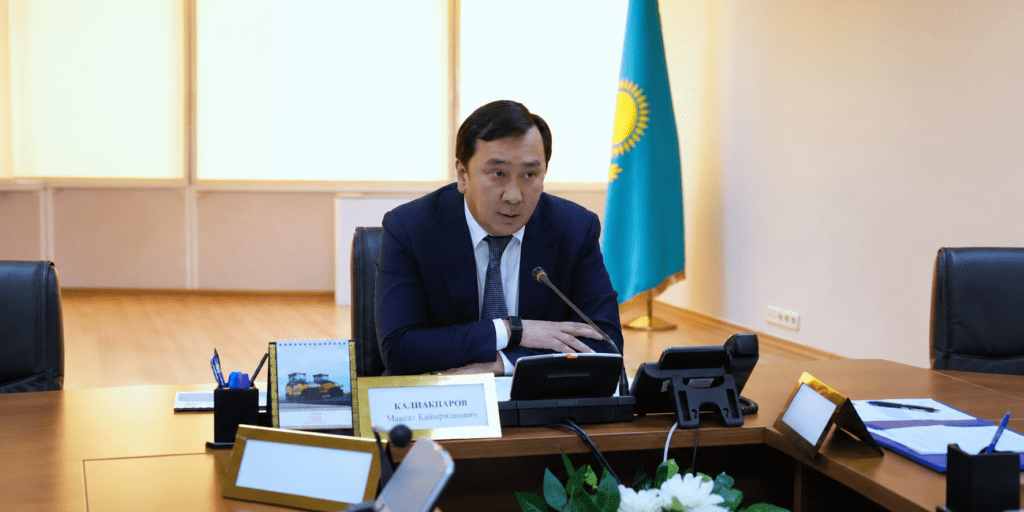
The development of transport and logistics has become one of the main priorities of Kazakhstan's economic policy as the country seeks to turn its position between China, Russia, the Caspian Sea, and Europe into long-term growth. Government transport data show the broader transport and warehousing sector grew in January-May 2026, although rail freight and cargo turnover remained under pressure. Large-scale rail, road, port, warehouse, and digital projects now sit at the center of that effort. The sector requires tens of billions of dollars in investment, while the reshaping of Eurasian supply chains since 2022 has raised the importance of the Middle Corridor and Caspian-linked routes. Can Kazakhstan attract the capital needed to implement large-scale infrastructure projects? How will changing investment priorities affect regional development? And how could new investment reshape the country's transport market? The Times of Central Asia discussed these questions with Maksat Kaliakparov, vice minister of transport of the Republic of Kazakhstan. TCA: How would you assess the current investment attractiveness of Kazakhstan's transport sector? How much foreign investment has the industry attracted recently? Maksat Kaliakparov: The investment attractiveness of the sector is high and continues to strengthen. In 2025 alone, gross foreign direct investment into Kazakhstan's economy reached $20.5 billion, an increase of 14.4% compared with the previous year. Investment is increasingly flowing into transport and logistics alongside manufacturing, digital infrastructure, and the financial sector. The transportation and warehousing sector was among the country's fastest-growing industries in January-May 2026, expanding by 8.4%. Investor interest is also reflected in the fact that, in 2025, Kazakhstan signed 88 commercial agreements worth more than $69.5 billion with partners from China, the UAE, the United States, and European countries. A significant share of these funds will be directed toward transport and logistics projects. More broadly, Kazakhstan's investment policy framework includes a target of increasing annual foreign direct investment inflows to $25.5 billion while raising investment in fixed capital to 25.1% of GDP. TCA: Which segments of the industry are currently attracting the greatest investor interest: railways, highways, aviation, ports, warehousing, or digital logistics? Which areas will require the largest investments in the coming years? Maksat Kaliakparov: Investor interest is spread across several major segments. Railways remain a key priority. Kazakhstan is implementing modernization and new construction projects, including the recently commissioned Dostyk-Moyynty railway section, as well as the Darbaza-Maktaaral and Moyynty-Kyzylzhar lines. By 2030, the country plans to build or modernize approximately 5,000 kilometers of railway infrastructure. Maritime and port logistics are also attracting substantial investment. Expansion is underway at the ports of Aktau and Kuryk, while a new container hub in Aktau is being built with the participation of China's Lianyungang Port Group. The project is expected to increase capacity to 240,000 TEU by the end of 2026. Road infrastructure has secured a landmark private investment through the Car Park Transformer roadside service network. Warehouse and multimodal logistics continue to develop, including through Kazakhstan's terminal at Georgia's Port of Poti. Digitalization is another important area. In particular, the pilot Smart...

Kyrgyzstan Reports 34% Growth in Foreign Direct Investment in First Quarter of 2026

Kyrgyzstan attracted $386.7 million in foreign direct investment in the first quarter of 2026, up 34% from $288.2 million during the same period last year, according to the latest data from the National Investment Agency under the President of the Kyrgyz Republic. The strongest inflow was recorded in the financial and insurance sector, which drew $93.6 million, followed by the manufacturing sector with $90.1 million. Investment in wholesale and retail trade rose to $64.5 million, while foreign direct investment in information and communications increased by 75% year-on-year to $46.9 million. The sharpest increase came in the professional, scientific, and technical activities sector, where investment jumped from just $1.8 million in the first quarter of 2025 to $49.5 million in the same period this year. By region, the capital, Bishkek, accounted for the largest share of total foreign direct investment, attracting $115.8 million, or 30% of the total. Talas Region ranked second with $80.3 million, representing 20.7% of total inflows, followed by Naryn Region with $69.7 million, Chui Region with $68.6 million, and Jalal-Abad Region with $43.3 million. The latest figures continue an upward trend. In 2025, Kyrgyzstan’s total foreign direct investment reached $1.31 billion, up 27.3% from more than $1 billion in 2024, according to official data. The government has been actively promoting investment in manufacturing, infrastructure, energy, and logistics as part of broader efforts to strengthen long-term capital inflows and regional development.

Kazakhstan’s Pax Silica Accession Bodes Well for Foreign Investment

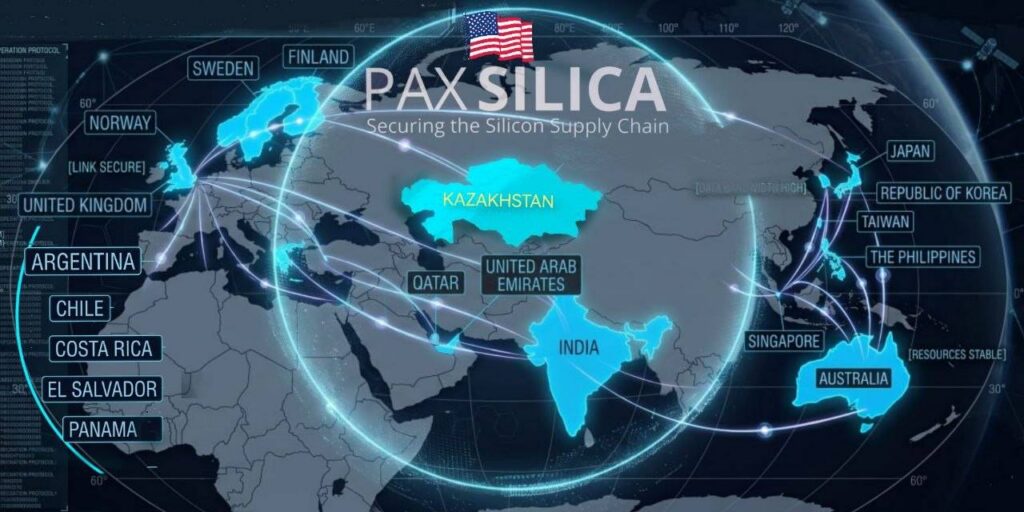
Kazakhstan’s accession to Pax Silica is more than a diplomatic ribbon-cutting. It is an investment signal. By joining an initiative supported by the United States and built around trusted supply chains for the new artificial intelligence economy, Kazakhstan has placed itself inside one of the most important emerging conversations in global industry about who will supply the minerals, energy, computing infrastructure, data centers, talent and manufacturing capacity behind the AI boom. Kazakhstan’s official readout was explicit about that ambition. Pax Silica, it said, brings partner countries together around artificial intelligence, critical minerals, semiconductors, data centers, energy infrastructure, high-tech manufacturing, research and talent development. Kazakhstan became the first country from its region to join, with Deputy Prime Minister and Minister of Artificial Intelligence and Digital Development Zhaslan Madiyev signing the accession declaration and the AI Opportunity Partnership statement in Washington on June 25. “Behind every AI solution are energy, critical minerals, computing capacity, data centers, semiconductors, engineering talent, and secure supply chains,” Madiyev said. Pax Silica is a supply-chain coalition whereby each participant brings a piece of the AI industrial base such as chips, energy, minerals, capital, cloud infrastructure, advanced manufacturing, regulatory alignment or technical talent. Reuters has described the initiative as a U.S.-led effort to secure the supply chains behind artificial intelligence, from energy and critical minerals to high-end manufacturing and AI models. Kazakhstan’s inclusion demonstrates that the country is being viewed as a potentially significant node in the physical infrastructure of the AI economy. Why Kazakhstan Fits the Pax Silica Map Kazakhstan has existing relevance in the AI supply chain as well as the capability to expand that role. That helps explain why Kazakhstan, rather than another regional state, became the first Central Asian node to plug into Pax Silica’s trusted supply-chain architecture. The U.S. International Trade Administration says Kazakhstan has substantial reserves of rare earth elements, copper, lithium, tungsten, tantalum and other materials essential for modern technologies and the energy transition. It also notes that the country’s policy focus is shifting from raw-material exports toward value-added processing and downstream production. With regard to the energy feedstock needed to power AI data centers, Kazakhstan has been the world’s leading uranium producer since 2009 and produced about 40% of global output in 2025. Nuclear energy is returning to the strategic conversation as governments and companies look for firm, low-carbon electricity. Kazakhstan also has a proven record as a resource partner for the U.S. and the West. U.S. energy majors helped build Kazakhstan’s modern oil sector, with Chevron beginning production from a $48 billion expansion of the Tengiz oilfield in 2025. In aerospace, Kazakhstan’s Ust-Kamenogorsk Titanium and Magnesium Plant supplies major global manufacturers, including Boeing and Airbus, and officials say titanium from Kazakhstan accounts for roughly one-fifth of the global aerospace titanium market. A New Layer in U.S.-Kazakhstan Alignment Pax Silica also follows a warming trend in U.S.-Kazakhstan relations under the Trump administration. Tokayev has already framed Kazakhstan as an active participant in several U.S.-backed initiatives, including the Abraham Accords, the...