• KGS/USD = 0.01143 0%
  • KZT/USD = 0.00216 0%
  • TJS/USD = 0.10633 -0.28%
  • UZS/USD = 0.00008 0%
  • TMT/USD = 0.28571 0%
  • KGS/USD = 0.01143 0%
  • KZT/USD = 0.00216 0%
  • TJS/USD = 0.10633 -0.28%
  • UZS/USD = 0.00008 0%
  • TMT/USD = 0.28571 0%
  • KGS/USD = 0.01143 0%
  • KZT/USD = 0.00216 0%
  • TJS/USD = 0.10633 -0.28%
  • UZS/USD = 0.00008 0%
  • TMT/USD = 0.28571 0%
  • KGS/USD = 0.01143 0%
  • KZT/USD = 0.00216 0%
  • TJS/USD = 0.10633 -0.28%
  • UZS/USD = 0.00008 0%
  • TMT/USD = 0.28571 0%
  • KGS/USD = 0.01143 0%
  • KZT/USD = 0.00216 0%
  • TJS/USD = 0.10633 -0.28%
  • UZS/USD = 0.00008 0%
  • TMT/USD = 0.28571 0%
  • KGS/USD = 0.01143 0%
  • KZT/USD = 0.00216 0%
  • TJS/USD = 0.10633 -0.28%
  • UZS/USD = 0.00008 0%
  • TMT/USD = 0.28571 0%
  • KGS/USD = 0.01143 0%
  • KZT/USD = 0.00216 0%
  • TJS/USD = 0.10633 -0.28%
  • UZS/USD = 0.00008 0%
  • TMT/USD = 0.28571 0%
  • KGS/USD = 0.01143 0%
  • KZT/USD = 0.00216 0%
  • TJS/USD = 0.10633 -0.28%
  • UZS/USD = 0.00008 0%
  • TMT/USD = 0.28571 0%

Viewing results 1 - 6 of 7

Russian TV Comments on Central Asia Trigger Strong Reaction from Uzbek Analysts

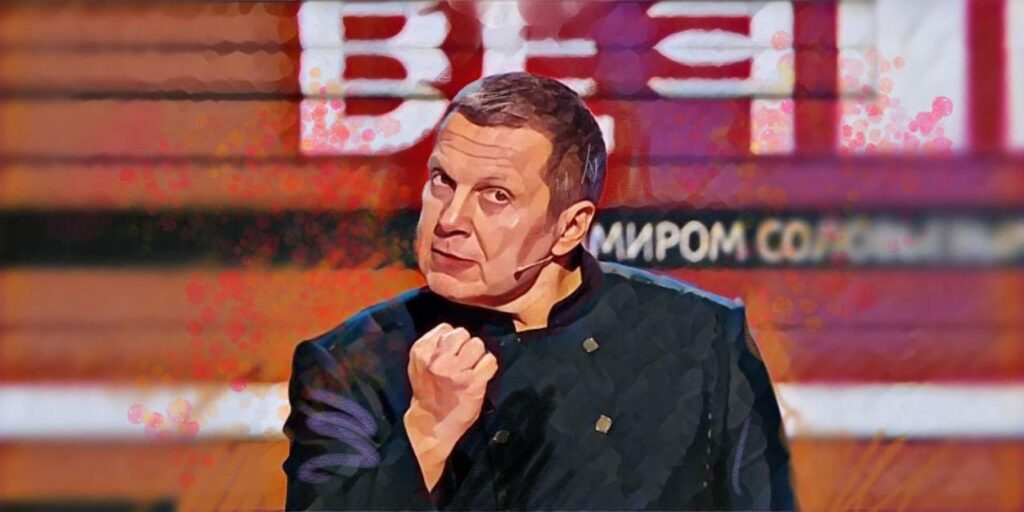
A recent broadcast on Russia’s state television channel Russia-1 has sparked strong backlash in Central Asia after inflammatory remarks aired on the political talk show Evening with Vladimir Solovyov questioned the independence and foreign policy choices of post-Soviet countries in Central Asia and the South Caucasus. The controversy began when political analyst Sergey Mikheyev, who served as a representative for President Vladimir Putin during Russia’s 2024 election campaign, criticized Moscow’s approach toward former Soviet republics, calling it “ineffective” and overly generous. “Our policy toward the post-Soviet space was not very effective,” Mikheyev said. “The situation where Russia owes everyone and no one owes Russia anything is a dead end. We solve many of their problems, labor migration, assistance, many other things and yet we are always the ones who must give.” He added, “We spoiled them. We spoiled them too much. We will not tolerate this anymore.” Program host Solovyov supported the tone of Mikheyev’s remarks, adding: “If I am forced to speak about you like this, then think about what you are doing wrong.” The broadcast quickly spread across social media platforms in Central Asia, prompting swift reactions from regional analysts, particularly in Uzbekistan, who criticized the rhetoric as imperial and patronizing. Uzbek political scientist and university professor Sherzodkhon Qudratkhodja called the discussion an emotional outburst rooted in nostalgia for a lost empire. “They spoke like sentinels, bitterly offended by the entire former Soviet Union,” he wrote on social media. He added that Mikheyev’s phrase “we spoiled them” infantilized independent states, framing them as unruly children rather than equal partners. “The logic is simple: if you don’t obey, you’re ‘nervous.’ If you want independence, you’re ‘spoiled.’ Their favorite phrase is that others ‘must know their place,’” Qudratkhodja wrote. He also rejected the idea that Central Asian countries are exploiting Russia or living at its expense. “No one is blackmailing anyone. No one owes us anything, and we owe no one anything,” he stated, emphasizing Uzbekistan’s commitment to “equal rights and mutual respect in international relations.” Another Uzbek analyst, G‘ayratxo‘ja Saydaliyev, argued that Mikheyev’s comments reflect a broader worldview within segments of the Russian political elite. “This is an open expression of a geopolitical mindset where Central Asia is not seen as a partner, but as a subordinate,” he wrote. “Independent foreign policy is treated not only as ingratitude but as illegitimate.” Saydaliyev noted Mikheyev’s additional remarks on Iran and Turkey, interpreting them as evidence of growing Russian anxiety over shifting alliances. He argued that Moscow views Iran as a counterbalance to the U.S. and Turkey, and fears that losing influence over Tehran could further weaken Russia’s position, potentially prompting it to exert more pressure on post-Soviet neighbors. Turkey’s rising role in Central Asia and the concept of a “Turkic world” were also framed by Mikheyev as a geopolitical threat. Saydaliyev concluded that deeper regional ties with Ankara are being viewed in Moscow not as legitimate foreign policy, but as a challenge to Russian dominance. “The biggest challenge for Central...

Russian Philosopher Sparks Outrage by Questioning Sovereignty of Former Soviet States

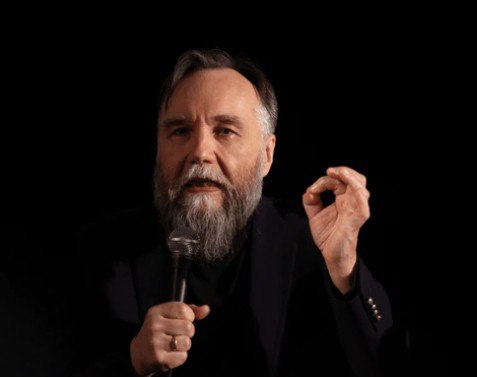
A fresh wave of controversy has erupted in Central Asia after Russian philosopher and political theorist Alexander Dugin publicly questioned the sovereignty of several post-Soviet states, including Uzbekistan. A video fragment of Dugin’s recent remarks circulated widely online, prompting strong backlash from regional analysts and commentators. In the recording, Alexander Dugin, founder of the International Eurasian Movement and often described as the ideologue of the so-called “Russian world,” said that national sovereignty should no longer apply to former Soviet republics. He specifically named Armenia, Georgia, Azerbaijan, Kazakhstan, Uzbekistan, Tajikistan, and Kyrgyzstan as states that, in his view, should not exist independently under any future political order. “Nothing sovereign can exist in this new model. That’s it. Sovereignty is over. National states are a thing of the past. This is garbage,” Dugin said, adding that “it is impossible to agree with the existence of a sovereign Uzbekistan.” Backlash from Uzbek Analysts Dugin’s remarks prompted immediate criticism in Uzbekistan. Journalist Ilyos Safarov described the comments as part of a broader ideological pattern rather than an isolated statement. “Yesterday it was Solovyov calling for a ‘special military operation’ in Central Asia. Today it is Dugin denying our sovereignty,” Safarov said. “This shows that post-imperial thinking is still alive in certain Russian political circles.” He warned that ignoring such rhetoric could further embolden these narratives. “Silence is often interpreted not as diplomacy, but as weakness. If these ideas are left unanswered, they begin to look acceptable to a wider audience,” Safarov said, noting that even unofficial figures can influence public discourse and political attitudes in Russia. Zavqibek Mahmudov, an associate professor at the Abdulla Avloniy National Institute of Pedagogical Excellence, echoed these concerns. He argued that ideological declarations, even from non-state actors, can translate into real-world political agendas. “History shows that radical political projects often begin with philosophical justifications,” Mahmudov said. He criticized Dugin’s rhetoric as part of a political chauvinism that categorizes countries as either "real" or "artificial." “When the existence of an entire nation is questioned, this is no longer academic debate, it is a direct challenge to international law and the principle of sovereign equality.” Mahmudov called for a coordinated legal and diplomatic response from all the countries mentioned in Dugin’s remarks. “A collective stance would be far more effective than individual national responses,” he noted. Official Distancing from Moscow The controversy follows recent remarks by Russian television host Vladimir Solovyov, who had floated the possibility of military action in Central Asia. That incident prompted a response from Russia’s Foreign Ministry. On January 16, ministry spokesperson Maria Zakharova stated that Solovyov’s views did not represent official Russian policy and reaffirmed that Moscow’s relationships with Central Asian countries are grounded in “partnership and respect for sovereignty.” Despite this distancing, analysts caution that repeated rhetorical assaults on Central Asian sovereignty, whether from state actors or affiliated intellectuals, may reflect deeper ideological currents that could have lasting consequences for regional stability.

 Victory Day Payments for WWII Veterans in Former Soviet Republics

To mark the 79th anniversary of the Second World War Victory, celebrated in former Soviet republics on 9 May, Kazakhstan's 50,100 WWII veterans and contributors each received at least 1.5 million tenge ($3,500). According to Kazakhstan’s Ministry of Labour and Social Protection of the Population, Victory Day awards differed from region to region. Qualified residents in Akmola received 3 million tenge, in Aktobe, over 2 million tenge, and in Abay, Almaty, Karaganda, and Pavlodar as well as the cities of Astana and Almaty, 2 million tenge. Records of 1 May, show that 148 WW2 veterans currently reside in Kazakhstan. The country is also home to 50,012 others who played important roles in winning the war, including 70 residents of besieged Leningrad; 149 prisoners of German concentration camps; 2,314 spouses of those killed and disabled in battle ; 2 widows of soldiers who died or went missing, and 47,477 people who manned the home front. During WWII, over 1.2 million Kazakhs were called to the Soviet-German front. Fighting in over 20 infantry divisions, fifty percent died or went missing in combat. In Kyrgyzstan, 41 surviving war veterans will each receive 100 thousand soms (almost $1,130) from the President’s Fund. In Russia, veterans will receive a single federal payment of 10 thousand rubles (about $109), and those based in Moscow, an additional 10 -25 thousand rubles. Victory Day payments to veterans in Belarus are around $1,226 per head, and in Azerbaijan, $1,200.