The 8th European Political Community summit in Yerevan highlighted deepening geopolitical fault lines while signaling that some post-Soviet countries, notably Azerbaijan and Armenia, are gradually shifting their geopolitical orientation away from Moscow. It is a realignment that Central Asian states are watching with increasing interest.
On May 4, attention across post-Soviet space, from Russia and Belarus to Central Asia and the South Caucasus, turned toward Yerevan. Armenia, still a member of the Commonwealth of Independent States and the Eurasian Economic Union and formally tied to the Collective Security Treaty Organization despite freezing its participation, hosted Europe’s political leadership.
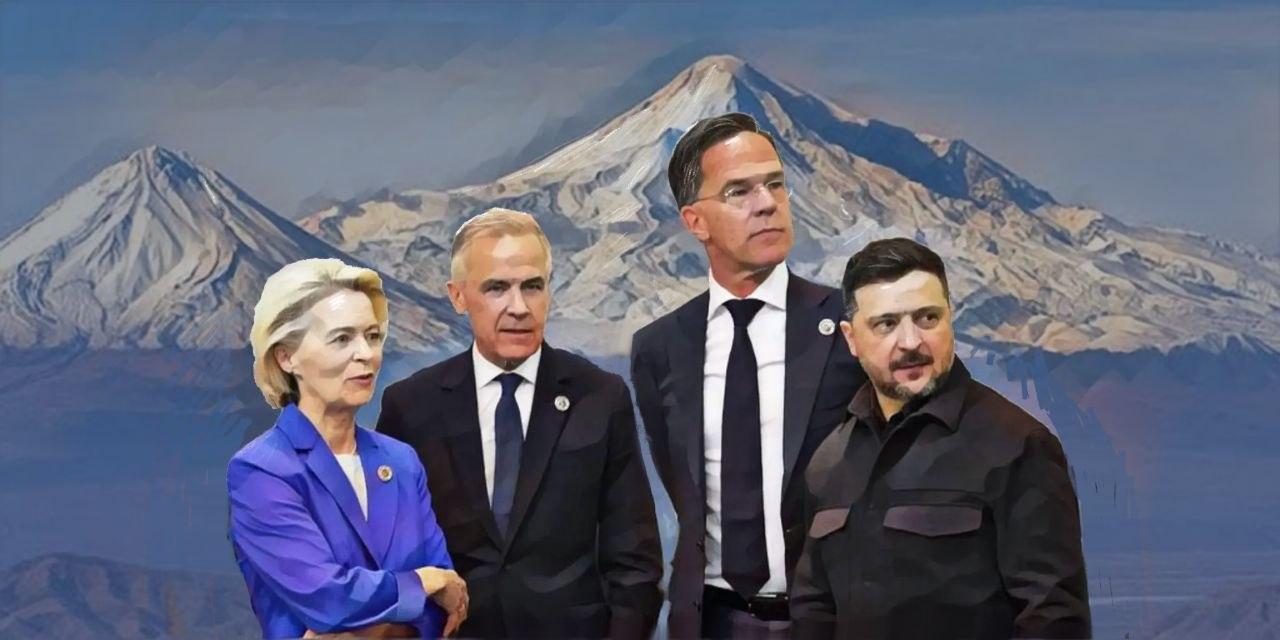
Among those attending were French President Emmanuel Macron, NATO Secretary General Mark Rutte, European Commission President Ursula von der Leyen, European Council President António Costa, and prime ministers including Donald Tusk, Keir Starmer, and Petteri Orpo. Azerbaijani President Ilham Aliyev participated via video link.
No Central Asian leaders attended the summit. Even so, the gathering carried a message for the region. Armenia hosted Europe’s political leadership while remaining tied to Moscow-led structures, including the CIS and the Eurasian Economic Union. For Central Asian governments pursuing their own multi-vector policies, the summit showed how a post-Soviet state can widen its diplomatic options without a clean break from Russia.
The parallel is not exact, but it is visible. Kazakhstan and Kyrgyzstan remain in the Eurasian Economic Union, while Kazakhstan, Kyrgyzstan, and Tajikistan remain in the CSTO. All five Central Asian states maintain working ties with Moscow, while expanding contacts with the EU, Turkey, China, and the Gulf, part of a wider effort to diversify foreign policy options through closer engagement with Europe and other outside powers.
Turkey was represented by Vice President Cevdet Yılmaz, the highest-level Turkish official to visit Armenia since then-President Abdullah Gül in 2008.
Turkey and Azerbaijan largely positioned themselves as counterweights to the dominant European framing, marking one of the summit’s key geopolitical divides. Aliyev adopted a confrontational tone, announcing a suspension of relations with the Parliamentary Assembly of the Council of Europe and the European Parliament.
“Instead of addressing fundamental problems of some member states, such as xenophobia, Islamophobia, antisemitism, migration, competitiveness, and homelessness, the European Parliament targets Azerbaijan, spreading slander and lies,” Aliyev said. “And the reason is that Azerbaijan restored its territorial integrity and sovereignty, put an end to separatism, and brought war criminals to justice.”
In response, António Costa sought to soften tensions, emphasizing the summit’s historical significance as the first of its kind held in the South Caucasus and highlighting Aliyev’s participation as a symbol of peace efforts in the region.
Cevdet Yilmaz focused on bilateral diplomacy, meeting Romanian President Nicușor Dan to discuss trade, regional issues, and global challenges.
He also held talks with Armenian Prime Minister Nikol Pashinyan, the summit’s host. The two sides signed a memorandum of understanding on the joint restoration of the historic Ani Bridge, located on the border between the two countries and dating back to the 11th century.
Yilmaz suggested that Armenia would benefit from closer alignment with Turkey and Azerbaijan, citing regional stability and economic integration.
“This is one of the most strategically important regions in the world. Historically, it has always been a transit region. We believe that with the establishment of peace and normalization of the situation in the South Caucasus, all residents of the region will benefit first and foremost. Azerbaijan, Armenia, and Turkey—all these countries will benefit,” he said.
European leaders used the summit to highlight other geopolitical tensions. Russian President Vladimir Putin and Belarusian President Alexander Lukashenko were again framed as adversaries.
Ukrainian President Volodymyr Zelenskyy, invited to the summit, warned that the coming months would be decisive.
“This summer will be the moment when Putin decides what to do next. We must push him toward diplomacy and not agree to sanctions relief,” Zelenskyy said.
Belarusian opposition leader Sviatlana Tsikhanouskaya was also invited, underscoring Europe’s stance toward Minsk.
Another focus of discussion was U.S. President Donald Trump, particularly his recent statements on tariffs on EU cars and plans to significantly reduce U.S. troop numbers in Germany.
“This has been discussed for a long time, but the timing of this announcement was certainly unexpected,” EU foreign policy chief Kaja Kallas said, adding that it underscored the need to strengthen Europe’s role within NATO.
Macron described the summit as part of a broader “European awakening” driven by developments in Ukraine and Moldova, and included Armenia in this process.
“Let’s be honest: eight years ago, no one would have come here. Eight years ago, this country was considered a de facto Russian satellite at the negotiating table,” he said.
Despite criticism, Macron’s remarks pointed to a longer-term shift in Armenia’s geopolitical trajectory, one that has been developing over the past decade.
Notably, the presence of Russian military bases in Armenia did not prevent the summit from taking place, nor did it hinder Zelenskyy’s participation.
The Yerevan summit thus underscored a broader geopolitical realignment. For Central Asia, the signal was not that Armenia offers a model to copy, but that Europe is becoming more willing to engage with post-Soviet states seeking wider diplomatic space beyond Moscow.