Fuel prices in Kazakhstan are expected to rise significantly, according to Kazakh energy analysts. Although the country remains a major oil exporter and plans to expand its refining capacity, analysts warn that these measures alone will not resolve the structural problems behind rising fuel costs. Some Kazakh energy analysts have already described 2026 as “the final year of cheap gasoline” before Kazakhstan becomes more closely integrated into the Eurasian Economic Union’s common oil and petroleum products market.
The situation is further complicated by the conflict in the Middle East, which has added volatility to global oil markets. For Kazakhstan, however, the deeper problem is domestic: low-regulated prices, refinery constraints, gray-market exports, and the rising cost of crude. Higher fuel prices also carry particular political sensitivity. The unrest that shook the country in January 2022 was triggered by a sharp increase in liquefied petroleum gas prices. Any new surge in gasoline or diesel costs could ripple through the economy, accelerating inflation and increasing social tensions.
A Politically Explosive Commodity
Kazakhstan’s leadership learned the political risks of fuel pricing during the January 2022 crisis, when protests erupted in the western city of Zhanaozen after liquefied petroleum gas prices rose sharply.
Although the government quickly intervened and blamed unscrupulous suppliers, the protests rapidly escalated into nationwide unrest. Over several days, 238 people were killed, government buildings and security facilities were seized in multiple cities, and the country faced its worst political crisis since independence.
In response, the authorities imposed a 180-day moratorium on fuel price increases, with some restrictions lasting even longer.
Even then, it was clear that artificially suppressing fuel prices required substantial state subsidies, while the cost of oil extraction continued to rise.
The “Last Year” of Cheap Fuel?
Earlier this year, Kazakhstan’s Ministry of Energy warned that domestic fuel prices would need to gradually move closer to those in Russia by the end of 2026.
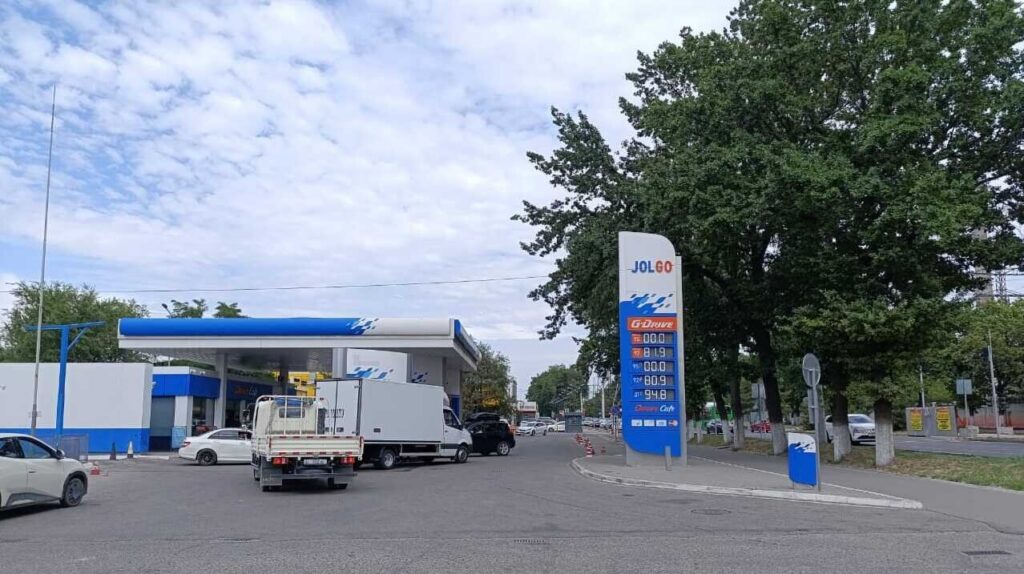
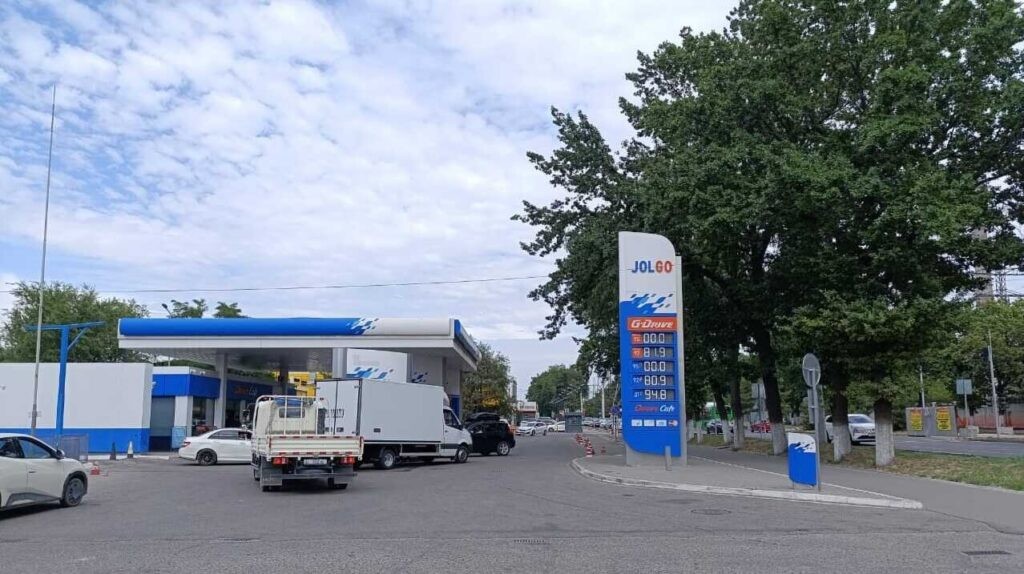
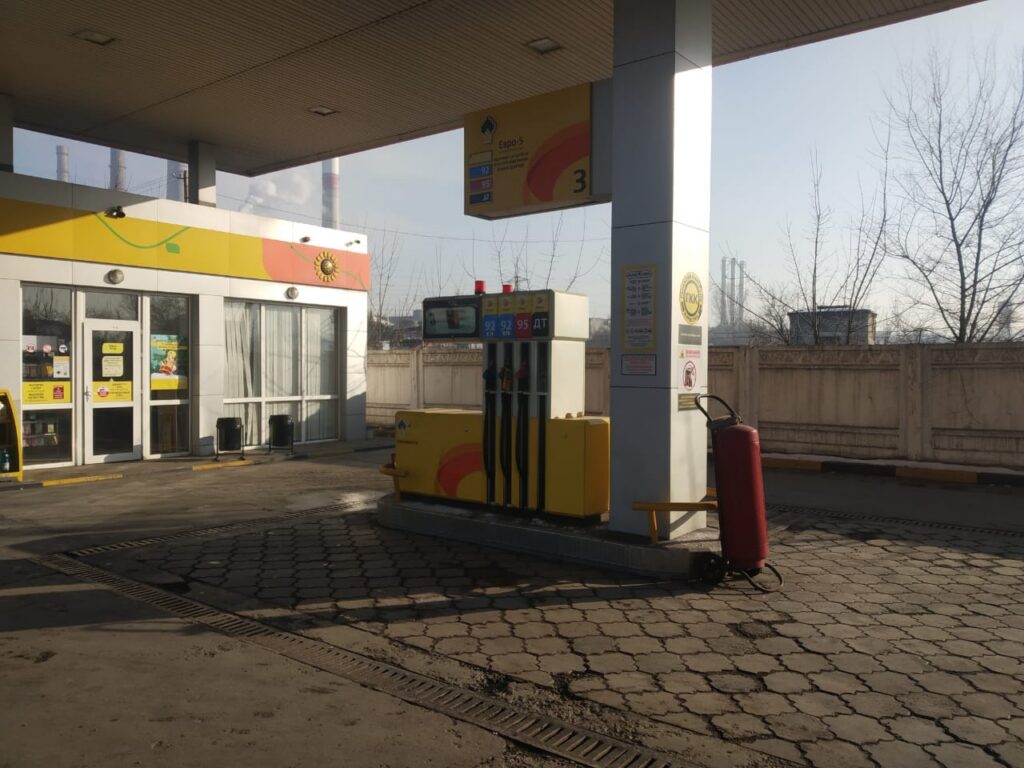
Officials linked the expected price convergence to the planned launch of the EAEU’s common oil and petroleum products market on January 1, 2027. At current exchange rates, gasoline prices at Kazakh filling stations remain roughly half those in Russia. A similar price gap exists with Kyrgyzstan, encouraging the unofficial export of cheap Kazakh fuel to neighboring countries. In practice, that means Kazakhstan faces pressure from both sides: raising prices risks public anger, while keeping them low encourages fuel to leave the country unofficially.
The Energy Ministry insists that future price increases will not amount to “shock therapy” for consumers. Officials say the transition toward a common EAEU fuel market will occur gradually through legislative harmonization rather than through an immediate equalization of prices across member states.
At the same time, the authorities acknowledge that the large price gap with neighboring countries creates strong incentives for gray-market exports of subsidized fuel, increasing the risk of artificial shortages inside Kazakhstan.
According to the ministry, the current low-price environment also limits investment in the sector. Significant funding is needed to expand the Shymkent, Atyrau and Pavlodar refineries and, eventually, to build a fourth refinery.
Seasonal and Regional Pressures
One immediate factor behind current fuel price pressure is the annual spring sowing campaign. In 2026, Kazakhstan allocated 402,000 tons of diesel fuel for agricultural producers. Deliveries are scheduled from February 1 to June 30, while the Energy and Agriculture Ministries have tightened oversight of diesel distribution to farmers.
In April, Russia introduced restrictions on gasoline exports, with the measures set to remain in effect through July 31. The Russian authorities justified this decision by citing the need to stabilize the domestic fuel market and respond to higher global oil prices caused by tensions in the Middle East.
Kazakhstan still relies on Russian fuel arrangements in some areas, while several other Central Asian countries are more directly dependent on Russian supplies. Russia has reportedly preserved duty-free fuel quotas for Kazakhstan in 2026. Similar arrangements exist with Kyrgyzstan, whose officials have also said that Russia continues to guarantee fuel supplies despite the difficult international environment.
Nevertheless, seasonal agricultural demand and Russian export restrictions routinely contribute to fuel shortages and price spikes across parts of Central Asia.
Aging Oil Fields and Rising Costs
Another structural factor behind future fuel price growth is declining production at Kazakhstan’s mature oil fields, according to energy expert Askar Ismailov.
Ismailov argues that Kazakhstan’s refineries increasingly face the prospect of insufficient domestic crude supplies. Production at many long-developed fields has been gradually declining for years.
According to his estimates, by 2030, Kazakhstan’s existing refining capacity may be underused because of a shortage of feedstock. The only way to compensate would be to rely more heavily on oil from giant projects such as Tengiz and Kashagan.
The problem, Ismailov says, is that oil from those fields would likely need to be sold to domestic refineries at prices much closer to global market levels. Crude oil on Kazakhstan’s domestic market currently costs roughly $20-25 per barrel, compared with global prices of about $100-110 per barrel. If refineries are forced to process more expensive crude, fuel prices would inevitably rise sharply.
He also warned that billions of dollars spent modernizing Kazakhstan’s refineries could ultimately prove ineffective if there is not enough affordable crude available for processing. Ismailov pointed to Azerbaijan as an example where large investments in refinery modernization did not produce the expected results.
The Fourth Refinery Debate
In February, President Kassym-Jomart Tokayev instructed the government to begin preparations for the construction of a fourth oil refinery. He noted that although Kazakhstan produces around 100 million tons of oil annually, it refines only about 18 million tons domestically.
As a result, despite being a major oil producer, Kazakhstan continues to experience periodic diesel shortages and remains dependent on imported aviation fuel.
The proposed fourth refinery would have a planned capacity of 10 million tons a year and could cost as much as $15 billion, including infrastructure investments. The authorities are considering crude supplies from Kashagan and Tengiz, although the plant’s location has not yet been finalized.
Oil market analyst Nurlan Zhumagulov agrees that Kazakhstan’s unusually low fuel prices encourage illegal exports to Kyrgyzstan and Tajikistan. However, he argues that such a large refinery project would itself require higher fuel prices to attract investors.
According to Zhumagulov, a giant refinery may not be economically justified. Instead, Kazakhstan should focus on developing smaller refineries with capacities of 1 million to 2 million tons a year. As an example, he points to Georgia’s Kulevi refinery, which was built for approximately $700 million and has a capacity of 1.2 million tons.
Ultimately, analysts say much will depend on international developments. Tensions in the Middle East are currently driving oil prices upward, but markets could reverse course if the geopolitical situation stabilizes.