• KGS/USD = 0.01143 0%
  • KZT/USD = 0.00201 0%
  • TJS/USD = 0.10510 -0.28%
  • UZS/USD = 0.00008 0%
  • TMT/USD = 0.28575 0%
  • KGS/USD = 0.01143 0%
  • KZT/USD = 0.00201 0%
  • TJS/USD = 0.10510 -0.28%
  • UZS/USD = 0.00008 0%
  • TMT/USD = 0.28575 0%
  • KGS/USD = 0.01143 0%
  • KZT/USD = 0.00201 0%
  • TJS/USD = 0.10510 -0.28%
  • UZS/USD = 0.00008 0%
  • TMT/USD = 0.28575 0%
  • KGS/USD = 0.01143 0%
  • KZT/USD = 0.00201 0%
  • TJS/USD = 0.10510 -0.28%
  • UZS/USD = 0.00008 0%
  • TMT/USD = 0.28575 0%
  • KGS/USD = 0.01143 0%
  • KZT/USD = 0.00201 0%
  • TJS/USD = 0.10510 -0.28%
  • UZS/USD = 0.00008 0%
  • TMT/USD = 0.28575 0%
  • KGS/USD = 0.01143 0%
  • KZT/USD = 0.00201 0%
  • TJS/USD = 0.10510 -0.28%
  • UZS/USD = 0.00008 0%
  • TMT/USD = 0.28575 0%
  • KGS/USD = 0.01143 0%
  • KZT/USD = 0.00201 0%
  • TJS/USD = 0.10510 -0.28%
  • UZS/USD = 0.00008 0%
  • TMT/USD = 0.28575 0%
  • KGS/USD = 0.01143 0%
  • KZT/USD = 0.00201 0%
  • TJS/USD = 0.10510 -0.28%
  • UZS/USD = 0.00008 0%
  • TMT/USD = 0.28575 0%

Viewing results 1 - 6 of 15

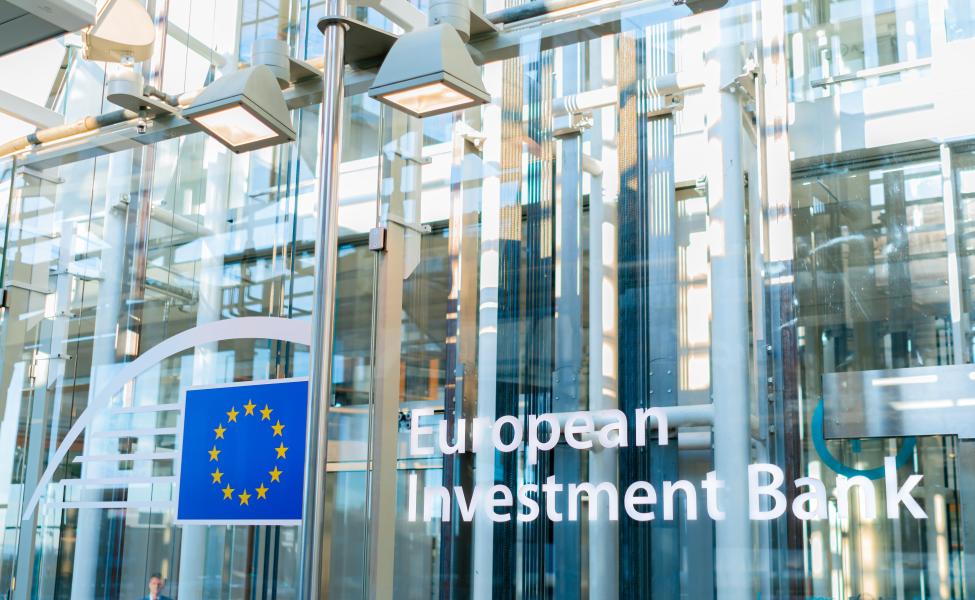
European Investment Bank Commits €365 Million to Environmental Projects in Central Asia

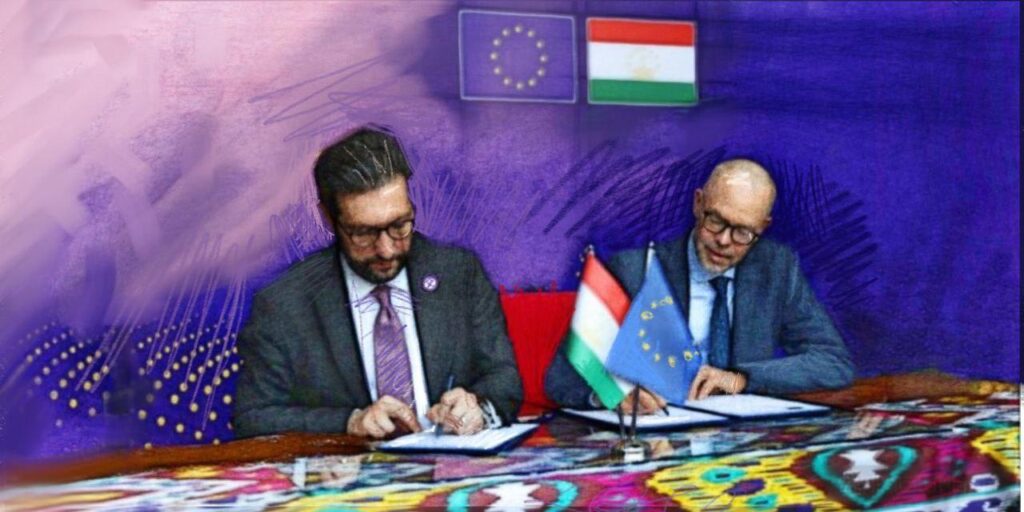
At the first EU-Central Asia Summit, held in Samarkand, Uzbekistan, on April 4, European Investment Bank (EIB) Vice-President Kyriacos Kakouris signed four memorandums of understanding with partners in Kyrgyzstan, Tajikistan, and Uzbekistan. The agreements will direct €365 million in funding and are expected to unlock up to €1 billion in investment for sustainable transport, water management, and climate resilience initiatives across the region. The EIB is the long-term lending institution of the European Union. These agreements support the EU’s Global Gateway strategy, which aims to boost private sector development, improve transport and logistics infrastructure, and strengthen water management and environmental sustainability throughout Central Asia. In Kyrgyzstan, the EIB will provide €50 million through the Kyrgyzstan State Development Bank to support infrastructure investments via the National Promotional Bank. Tajikistan will receive €100 million to develop sustainable transport infrastructure along the Trans-Caspian Transport Corridor. In Uzbekistan, €175 million will be allocated to the Uzbekistan Water Implementation Center for water management and environmental sustainability projects, particularly under the Aral Sea Project, in collaboration with the French Development Agency (AFD). Additionally, Uzbekistan’s JSCB Microcredit bank will receive €40 million to bolster private sector development and to enable local financing for projects that contribute to sustainable transport and logistics connectivity. During the summit, Kakouris also signed a Host Country Agreement with Uzbekistan, establishing an EIB Regional Representation in the country to enhance the Bank’s presence in Central Asia. The EIB further announced the launch of negotiations for a framework agreement with Turkmenistan, signaling plans to begin operations there. “These agreements underscore the European Union and Central Asia’s shared commitment to deepening mutually beneficial cooperation,” said Kakouris. “As the EU’s bank, the EIB will continue playing a pivotal role in strengthening economic ties, promoting sustainability and private sector development, and enhancing infrastructure across the region. The memorandums of understanding pave the way for future financing in the transport and water sectors. Moreover, the Host Country Agreement with Uzbekistan and the launch of negotiations with Turkmenistan mark important milestones for the EU’s growing engagement in Central Asia.”

Uzbekistan Launches $153 Million Forest Restoration Project with World Bank Support

Uzbekistan, in collaboration with the World Bank, has launched a major initiative to restore forests and rehabilitate degraded lands across the country. The Uzbekistan Resilient Landscapes Restoration Project (RESILAND) was officially announced during the Samarkand Climate Forum on April 5. The World Bank will provide $153 million in funding, consisting of a combination of low-interest loans and grants. This initiative forms part of a broader regional strategy aimed at combating land degradation and enhancing climate resilience throughout Central Asia. RESILAND will initially target six provinces: Samarkand, Surkhandarya, Syrdarya, Jizzakh, Namangan, and Kashkadarya. Its objectives include forest restoration, improved land management, and the creation of new jobs through afforestation and nature-based business ventures. Uzbekistan’s Minister of Ecology, Aziz Abdukhakimov, emphasized that the project will play a critical role in helping the country achieve its goal of expanding forested areas to 6.1 million hectares by 2030. “The project will also support food systems, infrastructure, and nature tourism,” he said. Currently, only 10.6% of Uzbekistan’s territory is forested. In recent years, the government has intensified efforts to increase forest cover, particularly on the desiccated seabed of the Aral Sea. Tatiana Proskuryakova, World Bank Regional Director for Central Asia, welcomed the initiative, noting, “The World Bank values the opportunity to support the government of Uzbekistan in its efforts to restore degraded lands.” As part of the project, Uzbekistan plans to rehabilitate forests on 176,000 hectares, improve pasture conditions, combat soil erosion in mountainous regions, and develop agroforestry and industrial forest sectors. An additional 5,000 hectares will be allocated for the cultivation of medicinal plants. RESILAND will also provide support for small and medium-sized enterprises, offer training for local farmers, and promote eco-tourism in protected areas. The initiative includes plans to improve the infrastructure of the Forestry Agency and to launch Uzbekistan’s first National Forest Inventory. A new partnership between the Forestry Agency and the Green University near Tashkent will further use grant funding to advance forestry education and research. The project is part of the wider RESILAND CA+ program, which encompasses similar initiatives in Kazakhstan, Kyrgyzstan, Tajikistan, and Turkmenistan.

Future of Radio Free Europe Uncertain as U.S. Agency Weighs Support

The agreement between Radio Free Europe/Radio Liberty (RFE/RL) and the U.S. Agency for Global Media (USAGM) may be renewed, following recent developments that could secure the broadcaster’s future. On March 26, USAGM officials indicated that the agency would continue disbursing funds allocated by Congress for fiscal year 2025. This follows a ruling by Judge Royce Lamberth of the U.S. District Court for the District of Columbia, who granted RFE/RL’s request for a temporary restraining order against the termination of its federal grant. At stake is $77 million in funding designated for RFE/RL, which operates under a grant to a nonprofit organization. The court order was issued to prevent the broadcaster’s potential shutdown, which Judge Lamberth described as unlawful under current terms. “This is an encouraging sign for the media corporation's operations,” said RFE/RL President Steven Capus. “RFE/RL's operations will be able to continue as Congress intended. We await official confirmation from USAGM that grant funding will be promptly resumed.” In parallel, ten European Union countries issued a joint statement backing a Czech-led initiative to support RFE/RL. The statement expressed readiness to cover the broadcaster’s operating costs should U.S. funding not be reinstated. Despite the apparent reprieve, USAGM abruptly cut off satellite broadcasts of Radio Liberty on April 3. The move affected Russian-language programming of the “Present Time” TV channel, which targets audiences in Russia, Ukraine, Central Asia, and Eastern Europe. The Times of Central Asia spoke with Asem Tokayeva, a veteran journalist formerly based in RFE/RL’s Central Asia bureau. In the interview, Tokayeva shed light on internal challenges within the organization and the broader implications for freedom of the press in the region.

Kazakhstan Senate Approves Ban on Budget Funding for Foreign Athletes

The Senate, Kazakhstan’s upper house of parliament, has passed amendments to the Law on Physical Culture and Sports that ban the use of state funds to finance foreign athletes, commonly known as "legionnaires." The bill is now awaiting President Kassym-Jomart Tokayev’s signature to become law. Ending State Support and Introducing Salary Caps Kazakhstan’s efforts to reduce foreign dominance in national sports date back to 2020. Initial measures included capping the number of foreign players allowed on the field in football and hockey, as well as restricting their funding through state budgets. However, according to Vice-Minister of Tourism and Sports Serik Zharasbayev, these regulations, embedded in competition rules and government resolutions, have not been consistently enforced at the regional level. The new legislation aims to enshrine these restrictions in law. “Regarding the financing of legionnaires: the bill prescribes a prohibition on funding these individuals from the state budget and quasi-governmental sector. However, funding from extra-budgetary sources, such as sponsorships, remains permissible,” Zharasbayev explained. The law will also empower the Ministry of Tourism and Sports to set financial limits for clubs in football, hockey, and other team sports. “This legislation will allow us to define how much each club is eligible to receive from the budget and to cap salaries of football and hockey players accordingly,” the Vice-Minister said. He added that the savings would be redirected to support grassroots youth sports, although he could not specify the projected amount. Budget Caps for Sports Clubs While specific funding limits have yet to be determined, Zharasbayev noted that the combined annual allocation from national and regional budgets is about 400 billion KZT (approximately $797 million). Currently, football and hockey clubs may receive up to 1.2 billion KZT (around $2.4 million) annually, while other sports, such as basketball and volleyball, are capped at 450 million KZT ($897,000). “For the 14 clubs in the Kazakhstan Premier League, a cumulative 30 billion KZT was allocated in 2024. It’s within this sum that we aim to identify potential savings,” Zharasbayev said. He reported that 325 foreign players competed in Kazakhstan’s three professional football divisions last year. Some have since obtained Kazakhstani citizenship, making them eligible for state funding. The new law, however, will apply only to future contracts. “Existing contracts will remain in effect until their expiration, as the law is not retroactive. Still, we have advised clubs not to sign new contracts with foreign players starting in 2025,” Zharasbayev stated. He also emphasized the need to regulate domestic athletes’ salaries, citing “unreasonably high payments” as a growing concern. A separate legal act is in development to address the issue. Scandals Within the Football Federation The legislation comes amid ongoing investigations into financial misconduct under the previous leadership of the Kazakhstan Football Federation. The Prosecutor General’s Office reported violations amounting to 3 billion KZT (nearly $6 million), including unjustified bonuses, misused funds for infrastructure, questionable player transactions, and embezzlement related to athlete meals. Specifically, over 300 million KZT ($597,000) in unwarranted bonuses were issued, and more than...

EU Pledges Steady Support for Tajikistan Ahead of Historic Central Asia Summit

The European Union will maintain its current level of assistance to Tajikistan despite the recent suspension of U.S. funding through USAID, EU Ambassador to Tajikistan Raimundas Karoblis has confirmed. He emphasized that European and American aid programs operate independently and that EU support will remain unaffected. “Aid from the EU will continue and will not be reduced,” Karoblis stated. He added that the EU's assistance framework for Tajikistan is already set through 2027 and cannot be revised before then. Discussions about increased support may take place after that period.   EU and Central Asia: Toward a Historic Summit On March 27, Ashgabat will host the 20th meeting of foreign ministers from the European Union and Central Asia. The key objective of this gathering is to prepare for the first-ever EU-Central Asia Summit, scheduled for April 3-4 in Samarkand. The summit will bring together the President of the European Council, the head of the European Commission, and the leaders of all five Central Asian states. According to the EU Delegation in Tajikistan, the summit will mark a new milestone in EU-Central Asia relations, reflecting the EU’s deepening political engagement with the region. Financial Assistance and Strategic Priorities Between 2021 and 2027, the EU has committed more than €550 million in aid to Central Asia, with €142 million allocated to Tajikistan. The focus areas include building an inclusive green economy, investing in human capital, and ensuring sustainable management of natural resources. Under its Global Gateway initiative, the EU is working to develop smart and sustainable connectivity across transport, digital infrastructure, energy, and education. A key initiative is the Trans-Caspian Transport Corridor, to which the EU has allocated more than €88 million. Other efforts target enhanced digital and energy integration in the region. In the strategic domain of critical raw materials, the EU has earmarked €16 million to support local value chains and promote sustainable investments. Additionally, through the European Fund for Sustainable Development Plus (EFSD+), €30 million in guarantees have been allocated for renewable energy and raw material extraction projects. Security, Education, and Youth Engagement The EU plays an active role in regional security initiatives. Its BOMCA program supports border management and the fight against transnational crime, while the CADAP program focuses on drug use prevention. In Tajikistan specifically, the EU, in partnership with the OSCE, is implementing a project to strengthen the capacity of border guards along the Tajik-Afghan frontier. The EU also contributes to counter-terrorism efforts and collaborates with the government on related initiatives. Education and youth empowerment are additional EU priorities. From 2013 to 2027, €95 million has been directed toward reforming Tajikistan’s education sector. The Erasmus+ program received €73 million for 2021-2027, enabling students from Central Asia to study at European universities. Youth employment is also being addressed through the €10 million DARYA program, and the recently launched €4.5 million Regional Civil Society Fund (as of September 2024) is aimed at strengthening civic engagement. Karoblis reaffirmed the EU’s long-term commitment to Tajikistan, noting that assistance will remain consistent,...

Kazakhstan Investigates Recipients of USAID Funding

Following the cancellation of USAID funding, the Kazakhstani government and parliament are scrutinizing the recipients of U.S. financial assistance. The issue has sparked significant public debate and online discussions. Deputies Demand Explanations On March 10, the U.S. administration announced the cancellation of 83% of USAID programs. Secretary of State Marco Rubio stated: “After a six-week review, we are officially canceling 83% of USAID programs. The 5,200 contracts now canceled spent tens of billions of dollars in ways that did not serve (and in some cases even harmed) the core national interests of the United States.” Earlier, on March 5, deputies from the People's Party of Kazakhstan (PPK) formally requested that the Minister of National Economy and the Minister of Justice conduct an audit of foreign funding for non-governmental organizations (NGOs). Lawmakers called for transparency regarding project financing, allocated amounts, and fund usage. According to the deputies, some USAID-funded programs contradicted traditional Kazakhstani values, particularly those related to LGBT rights and feminist movements. Reports indicate that members of the parliamentary majority faction, Amanat, also supported the request. Government Investigation Underway The government's position remained unclear until March 12, when Respublika newspaper reported that Deputy Prime Minister and Minister of National Economy Serik Jumangarin had responded to the Mazhilis on behalf of the Cabinet of Ministers. Respublika is associated with Mukhtar Ablyazov, a fugitive oligarch sentenced in absentia to a lengthy prison term in Kazakhstan. According to the report, 28 long-term USAID programs were active in Kazakhstan under bilateral agreements in 2024. In total, USAID allocated $26.5 million for projects implemented in the country between 2023 and 2024. These initiatives covered sectors such as the economy, energy, healthcare, civil society, and media. Some projects extended beyond Kazakhstan, impacting other Central Asian nations. Among the NGOs operating under USAID programs in 2024-2025 were: Public Foundation "Desenta" NGO "Kadyr-Kasiyet" Representative Office of Eurasia Foundation in Kazakhstan Representative Office of Winrock International Representative Office of Internews Network Representative Office of the American Bar Association Additionally, several government agencies collaborated with USAID. Jumangarin noted that, under Kazakhstani law, recipients of foreign funding must publish annual reports on how the funds are used. He assured deputies that the verification of USAID-funded projects would continue under a working group established by the Ministry of Foreign Affairs, led by Murat Nurtleu. Funding Details Emerge Further details surfaced on March 14, with reports indicating that USAID had canceled contracts in Central Asia, including Kazakhstan and Kyrgyzstan. Two contracts in Kazakhstan were reportedly worth $2.35 million and $3.35 million. These funds were designated for the projects “Strengthening Civic Participation in Kazakhstan” and “Strengthening Human Rights and Equality.” The latter aimed to support LGBT organizations in Kazakhstan and Kyrgyzstan in advocating for human rights. This information was cited from an official USAID document. Additional media reports revealed a list of USAID grantees in 2024, including: ArtKoshe PF The YouTube channel "Hyperborey" Oksana Gabitova (Akulova) Vlast Media Group LLP DEPPA podcast Täuelhsız project Tasadagy Omir project Aftertutor IP, an online magazine focused on...