• KGS/USD = 0.01144 0%
  • KZT/USD = 0.00205 0%
  • TJS/USD = 0.10784 0%
  • UZS/USD = 0.00008 0%
  • TMT/USD = 0.28490 0%
  • KGS/USD = 0.01144 0%
  • KZT/USD = 0.00205 0%
  • TJS/USD = 0.10784 0%
  • UZS/USD = 0.00008 0%
  • TMT/USD = 0.28490 0%
  • KGS/USD = 0.01144 0%
  • KZT/USD = 0.00205 0%
  • TJS/USD = 0.10784 0%
  • UZS/USD = 0.00008 0%
  • TMT/USD = 0.28490 0%
  • KGS/USD = 0.01144 0%
  • KZT/USD = 0.00205 0%
  • TJS/USD = 0.10784 0%
  • UZS/USD = 0.00008 0%
  • TMT/USD = 0.28490 0%
  • KGS/USD = 0.01144 0%
  • KZT/USD = 0.00205 0%
  • TJS/USD = 0.10784 0%
  • UZS/USD = 0.00008 0%
  • TMT/USD = 0.28490 0%
  • KGS/USD = 0.01144 0%
  • KZT/USD = 0.00205 0%
  • TJS/USD = 0.10784 0%
  • UZS/USD = 0.00008 0%
  • TMT/USD = 0.28490 0%
  • KGS/USD = 0.01144 0%
  • KZT/USD = 0.00205 0%
  • TJS/USD = 0.10784 0%
  • UZS/USD = 0.00008 0%
  • TMT/USD = 0.28490 0%
  • KGS/USD = 0.01144 0%
  • KZT/USD = 0.00205 0%
  • TJS/USD = 0.10784 0%
  • UZS/USD = 0.00008 0%
  • TMT/USD = 0.28490 0%

Viewing results 1 - 6 of 18

Glacier-Dependent Central Asian States to Benefit from ADB Climate Program

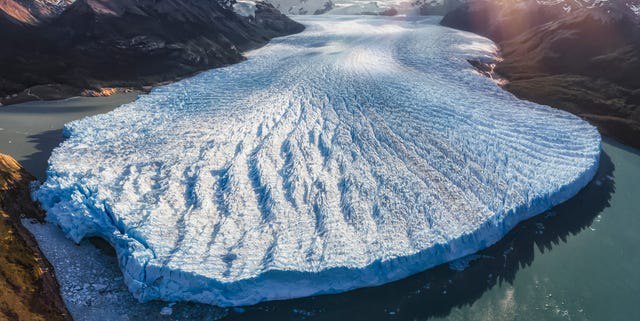
On October 29, the Green Climate Fund approved $250 million for Glaciers to Farms, a major adaptation initiative led by the Asian Development Bank (ADB) to build climate-resilient water and agricultural systems in glacier-dependent regions of Central Asia, the South Caucasus, and Pakistan. The funding, provided mostly as grants, will complement a broader $3.25 billion investment by ADB over the next decade. The program spans nine countries: Armenia, Azerbaijan, Georgia, Kazakhstan, Kyrgyzstan, Pakistan, Tajikistan, Turkmenistan, and Uzbekistan. These states rely heavily on glacier- and snow-fed rivers for agriculture, drinking water, and electricity. Accelerated glacial melt poses a direct threat to ecosystems and rural livelihoods, particularly in areas where one in four jobs depends on agriculture. By improving irrigation efficiency, expanding water storage, and investing in watershed management, the program seeks to reduce the growing frequency of droughts and floods linked to glacial melt. Glaciers to Farms will focus on four major glacier-fed river basins: the Naryn and Pyanj in Central Asia, the Kura in the South Caucasus, and the Swat in Pakistan. These basins cover about 27 million hectares and are home to an estimated 13 million people. The program will support glacier and climate assessments, upgrade monitoring networks, and introduce early warning systems to help communities prepare for glacial lake outburst floods and prolonged droughts. Beyond infrastructure, Glaciers to Farms will strengthen the capacity of local banks to finance agricultural enterprises, particularly those led by women, as part of its inclusive development approach. Climate-induced glacial retreat is a pressing concern for Central Asia, where glaciers supply up to 70 percent of river flows. The region contains more than 4,500 glacial lakes, many formed as a result of retreating ice. These lakes increase the risk of natural disasters such as lake outburst floods, avalanches, and landslides, threatening vulnerable mountain communities. Recognizing the urgency, the United Nations General Assembly has declared 2025 the International Year of Glacier Preservation. Tajikistan hosted the International Conference on Glaciers’ Preservation in Dushanbe in May, highlighting the region’s central role in global climate adaptation efforts.

Massive Glacier Collapse Reported on Mount Ismoil Somoni in Tajikistan

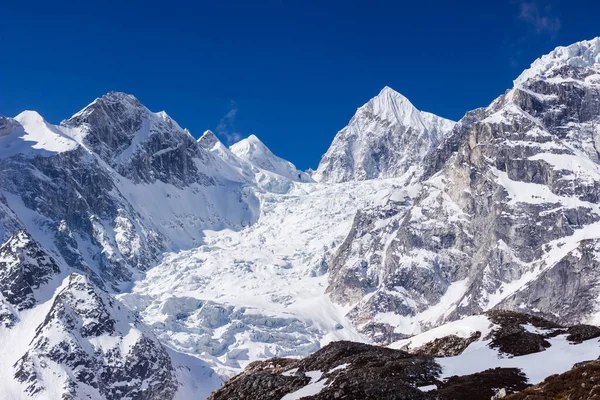
A large section of glacier broke away from Mount Ismoil Somoni in Tajikistan’s Tajikabad district on October 25, according to Asia-Plus, citing the Committee for Emergency Situations (CoES). The incident occurred around 11:00 a.m. near the village of Safedobi. The CoES reported that the detached ice mass measured approximately two kilometers in length, 25 meters in height, and 150-200 meters in width. It slid down a nearby gorge, prompting swift intervention. By 2:00 p.m., the situation was under control, with no casualties or significant damage reported. However, officials warned that ongoing rainfall and the risk of further glacier collapse could endanger agriculture in the nearby Gulrez area. Emergency services remain on high alert and are monitoring the site closely. The Ismoil Somoni glacier, one of the largest high-altitude ice masses in Tajikistan, is critical to regional water systems. Experts say the latest collapse is yet another indicator of the accelerating impact of climate change in the Pamir Mountains. Continued glacier retreat could have serious long-term environmental and economic consequences, particularly for water availability used in irrigation and hydropower generation. A recent study by the Institute of Science and Technology Austria (ISTA) found that the once-stable Pamir-Karakoram glaciers have been losing mass rapidly since 2018. Researchers, led by Francesca Pelliccotti, observed a 40-centimeter reduction in snow depth and a one-third decline in annual precipitation, conditions they described as marking a “point of no return.” The Pamir and Karakoram glaciers feed the Amu Darya and Syr Darya rivers, which support agriculture and energy production for millions across Central Asia. As glacial melt accelerates, inflow into these rivers has dropped sharply, threatening food and water security across the region. The Times of Central Asia previously reported that farmers in Tajikistan’s Vahdat district are already grappling with melting glaciers and growing irrigation demands. The recent incident on Mount Ismoil Somoni reinforces the urgency of addressing climate-related risks, which are now directly impacting both ecosystems and livelihoods across the region.

Learning About Glaciers: Scientists Extract Ice Cores in Tajikistan

A group of international scientists is on a complex, arduous expedition to learn more about the glaciers of the Pamir Mountains in Tajikistan, drilling and extracting two deep ice cores in what the team descibes as a race against the impact of global warming.  Scientists from the Swiss-funded PAMIR Project and their Tajik partners are working at an altitude of 5,800 meters on the Kon Chukurbashi ice cap, taking ice samples down to the bedrock at an estimated depth of just over 100 meters.   “The Pamirs remain to date one of the last major high-altitude regions where no deep ice core has ever been retrieved,” the PAMIR Project said in a statement. “If many glaciers in the Pamir Mountains of Tajikistan still seem resilient in the face of global warming, scientists do not know how long this will last.” The two-week expedition began on September 24. If successful, it will secure environmental information from air bubbles and chemical trace concentrations and isotopes, and possibly organisms trapped in the ice, and help future generations anticipate and adapt to changes in Earth’s climate and ecosystems, the project said.  The expedition is being coordinated by the University of Fribourg in Switzerland and conducted by the National Academy of Sciences of Tajikistan along with Swiss, Japanese, and American universities. Because of the extreme altitude, team members had prepared for gradual acclimatization with a plan for a base camp and a camp at higher altitude. Logistical difficulties and the challenges of site access have prevented such an expedition in the past.  The Pamir glaciers are a riddle to scientists who have observed both health and decay in the reaction of the high-altitude ecosystems to climate change. Various theories, including more wind-induced precipitation at high elevations and summertime cooling, have been put forward. But field measurements are lacking and the theories have not been tested against scientific data.  At an international conference on glacier preservation in Dushanbe this year, President Emomali Rahmon of Tajikistan called for the establishment of a regional lab to study the topic. Most of Central Asia’s glaciers are in Tajikistan.   The United Nations said last month that some 1,000 glaciers out of the total number of 14,000 that have existed in Tajikistan in recent decades have disappeared and many small ones are expected to vanish in the next 30-40 years.  A recent study published in the Communications Earth & Environment journal noted the relative stability of some glaciers in Central Asia, but said there had been a recent drop in glacier health in the Northwestern Pamirs following significantly lower snowfall and snow depth since 2018.  One of the authors of that study is Evan Miles, a Switzerland-based glaciologist who is leading the current PAMIR Project expedition. “This ice holds hundreds and possibly even thousands of years of physical records of snowfall, temperature, dust, and atmospheric chemistry,” Miles said, according to the project statement. “We are racing against time to retrieve it before climate-change induced melt damages these natural archives forever.”  Of the two ice...

Melting Glaciers Threaten Tajik Agriculture

Climate change in Tajikistan is no longer a future concern, it is an immediate crisis. Farmers across the country are grappling with the effects of melting glaciers, prolonged heatwaves, and dust storms that are disrupting traditional agricultural cycles. In Vahdat district, the Usto Murod farm has adopted a dual-harvest strategy to mitigate risk. “If one crop fails, the second helps cover the costs,” says farmer Galatmo Alieva. But increasingly rapid glacier melt has doubled irrigation needs from three rounds per season to six. Heatwaves and dust storms have further damaged crops, while honey yields have plummeted from 25 kilograms per hive to just five. To cope, Alieva’s family installed a biogas plant with support from the United Nations Development Programme (UNDP), saving between $550 and $1,100 annually. However, broader adaptation measures remain financially out of reach. Loan interest rates hover around 31%, and water-efficient drip irrigation is used only in greenhouses. Unequal Access, Dwindling Resources Other farmers face even harsher realities. Rain-fed plots deliver meager returns, pastures are drying up, and water distribution remains inequitable. “Those at the canal head take all the water,” laments farmer Bakhtiyor. Engineer Alexander Pirov warns that accelerating glacier melt threatens not only agriculture but also the country’s hydropower sector. By 2080, Tajikistan is expected to experience 12 additional days per year with temperatures exceeding 40°C, compared to the 1986-2005 average. Already, 70% of Tajikistan’s arable land is considered degraded. High Costs, Limited Support Water-saving technologies could significantly improve crop yields and farmer incomes, yet the upfront costs, estimated at $5,000 or more, remain prohibitive for most rural families. As climate risks intensify, Tajikistan’s rural population is increasingly vulnerable. Without targeted investments in adaptation, infrastructure, and equitable resource distribution, the country’s agricultural backbone may begin to fracture under the weight of a rapidly changing environment.

Pamir Loses Its “Ice Shield”: Scientists Confirm End of Glacier Stability Anomaly

For years, the Pamir-Karakoram anomaly stood as a rare outlier in global climate trends: a region where glaciers remained relatively stable despite accelerating global warming. Now, new research from the Institute of Science and Technology Austria (ISTA) confirms that even these “last strongholds” have begun to lose mass at an alarming rate. Snow Deficit and Rising Heat Data collected from a climate monitoring station on the Kyzylsu glacier in the northwestern Pamirs, active from 1999 to 2023, reveals a sharp shift. According to an international research team led by Francesca Pelliccotti, the tipping point came in 2018, when a significant decline in snow cover and precipitation irreversibly altered the glaciers’ mass balance. Once past this "point of no return," glaciers began rapidly depleting their own reserves to compensate for the lack of new snowfall, a process accelerating their melt. Since 2018, the region has experienced a persistent snow deficit. Snow depth has fallen by approximately 40 cm, and annual precipitation has declined by 328 mm, about one-third of the historical average. Seasonal snow melts earlier, is less stable in spring, and is no longer sufficient to replenish glacier mass. July 2022 was the hottest month on record, and during this period, the Kyzylsu glacier recorded unprecedented mass loss, melting at a rate eight times faster than the 1999-2018 average. Scientists identify increasingly hot summers and a lack of precipitation as the primary causes. Even the intensified ice melt has not made up for reduced snowfall: water inflow into rivers dropped by roughly 189 mm in water equivalent. The contribution of glacial runoff to total river flow rose from 19% to 31%, but this increase was still insufficient to offset the overall decline in water volume. The situation is most severe at altitudes above 4,000 meters, where solid precipitation has declined sharply. Snow from avalanches, which previously helped sustain the glaciers, has dropped nearly threefold from 0.21 to 0.08 m per year. Implications for Central Asia Experts warn that this is not a localized issue. The Pamir and Karakoram glaciers feed the Amu Darya and Syr Darya rivers, lifelines for millions across Central Asia. Diminishing glacial mass threatens freshwater availability, agriculture, hydropower generation, and overall socio-economic stability. “Due to the lack of accurate forecasts, we cannot yet say definitively whether the Pamir glaciers have passed the point of no return. However, since 2018, the processes have changed dramatically, and the reduction in precipitation has had a critical impact on their stability,” said ISTA researcher Achille Joubert. Data Gaps and New Monitoring Efforts Following the collapse of the Soviet Union, glacier monitoring in the region was largely suspended for nearly two decades. Systematic observations resumed only in 2021, when international researchers reinstalled instruments on the Kyzylsu glacier, one of the Vakhsh River’s primary sources. These new measurements confirmed a drastic drop in precipitation and snow thickness starting in 2018, with consistently unfavorable conditions persisting since. Compared to the late 1990s, spring and summer snow now melts much faster, and the "cold reserves"...

Kyrgyzstan Drafts Program to Preserve Lake Issyk-Kul

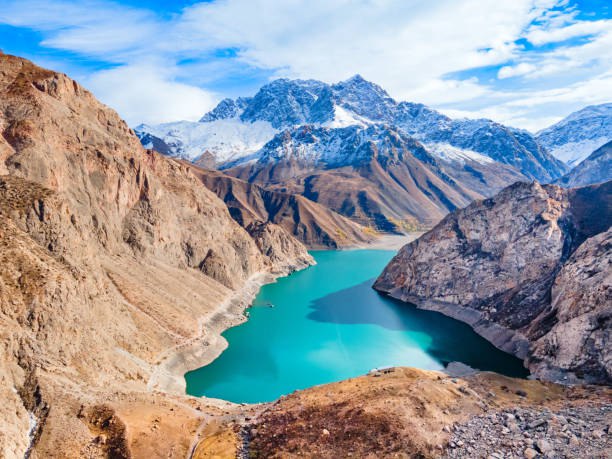
Kyrgyzstan’s Ministry of Natural Resources, Ecology, and Technical Supervision has released a draft Concept for the Sustainable Development of the Ecological and Economic System of Lake Issyk-Kul until 2030 for public discussion. The proposal addresses mounting environmental challenges that threaten the future of the lake, a vital component of the country’s climate system, biodiversity, and tourism industry. Located in northeastern Kyrgyzstan, Issyk-Kul is the nation's largest lake and one of its most important ecological assets and tourist destinations. The new Concept outlines a roadmap for sustainable management amid signs of accelerating environmental degradation. Falling Water Levels The lake’s water level has dropped by 2.75 meters between 1927 and 2003. To reverse this trend, the Concept recommends restoring hydrological monitoring infrastructure, including groundwater observation and river hydro-posts. It also proposes enforcing irrigation water accounting and transitioning local agriculture to water-saving technologies. Glacier Retreat and River Flow The 957 glaciers in the Issyk-Kul basin, spanning 560.8 km², are rapidly melting due to climate change. These glaciers feed roughly 120 rivers flowing into the lake, though only 80 reach it during the summer, largely due to irrigation withdrawals. To mitigate the loss, the government plans to introduce modern irrigation systems across 100,000 hectares of farmland, potentially redirecting up to 200 million cubic meters of water back into the lake annually. Wastewater and Sewerage Infrastructure Untreated wastewater from settlements and tourism infrastructure poses a serious threat to the lake’s ecosystem. The Concept includes measures to upgrade wastewater treatment, promote the reuse of treated water for irrigation, and expand sewerage systems. Over the past five years, 47 new treatment facilities have been built in the Issyk-Kul region. 2030 Environmental Goals The Concept sets several targets for the next five years: Reduce untreated wastewater discharge by 40% Expand specially protected natural areas to cover 20% of the region Implement ecotourism standards at all recreational facilities Introduce separate waste collection in all district centers Involve at least 80% of schoolchildren in environmental education programs “Issyk-Kul is a strategic resource for Kyrgyzstan. The Concept aims to ensure clean water, protect the shoreline, create safe recreation areas, and boost tourism and entrepreneurship,” said Meder Mashiev, Minister of Natural Resources, Ecology, and Technical Supervision.