• KGS/USD = 0.01144 0%
  • KZT/USD = 0.00205 0%
  • TJS/USD = 0.10784 0%
  • UZS/USD = 0.00008 0%
  • TMT/USD = 0.28490 0%
  • KGS/USD = 0.01144 0%
  • KZT/USD = 0.00205 0%
  • TJS/USD = 0.10784 0%
  • UZS/USD = 0.00008 0%
  • TMT/USD = 0.28490 0%
  • KGS/USD = 0.01144 0%
  • KZT/USD = 0.00205 0%
  • TJS/USD = 0.10784 0%
  • UZS/USD = 0.00008 0%
  • TMT/USD = 0.28490 0%
  • KGS/USD = 0.01144 0%
  • KZT/USD = 0.00205 0%
  • TJS/USD = 0.10784 0%
  • UZS/USD = 0.00008 0%
  • TMT/USD = 0.28490 0%
  • KGS/USD = 0.01144 0%
  • KZT/USD = 0.00205 0%
  • TJS/USD = 0.10784 0%
  • UZS/USD = 0.00008 0%
  • TMT/USD = 0.28490 0%
  • KGS/USD = 0.01144 0%
  • KZT/USD = 0.00205 0%
  • TJS/USD = 0.10784 0%
  • UZS/USD = 0.00008 0%
  • TMT/USD = 0.28490 0%
  • KGS/USD = 0.01144 0%
  • KZT/USD = 0.00205 0%
  • TJS/USD = 0.10784 0%
  • UZS/USD = 0.00008 0%
  • TMT/USD = 0.28490 0%
  • KGS/USD = 0.01144 0%
  • KZT/USD = 0.00205 0%
  • TJS/USD = 0.10784 0%
  • UZS/USD = 0.00008 0%
  • TMT/USD = 0.28490 0%

Viewing results 1 - 6 of 270

Uzbekistan’s Gas Shortage Forces Residents to Use Coal, Firewood, and Dung

Despite Uzbekistan’s abundant natural gas reserves, many residents are turning to coal, firewood, and even dung for heating, leading to significant environmental problems, according to a report by Radio Azattyk. Experts warn of worsening air pollution and other ecological consequences, as highlighted by the International Energy Agency, while the government plans to expand coal use. Energy officials claim gas production exceeds domestic demand by threefold. However, production has been in decline for five consecutive years. Today, many households rely on coal and other alternatives for heating and cooking, while power plants that once operated on gas are transitioning to coal. According to the World Bank, in 2019, air pollution from fine particulate matter (PM2.5) led to 89 deaths per 100,000 people in Uzbekistan. Environmentalists argue that the increased reliance on coal accelerates climate change, while illegal tree cutting exacerbates ecological damage. Residents blame the government for failing to provide effective alternatives, a problem that worsens during the winter months. “In the city center, the gas pressure in the pipes is so low in winter that the stoves don’t warm. People are forced to burn coal, manure, and even fruit trees,” said Ferghana-based activist Abdusalom Ergashev. In response to widespread deforestation, the government has tightened regulations, with fines for illegal tree felling now reaching 17 million UZS (USD $1,300). Additionally, violators must plant 100 saplings for every tree cut down. In rural areas, families prepare for winter by collecting firewood, drying dung, and purchasing coal. The average household burns approximately 1.5 tons of coal per season, supplemented by cotton stalks, wood, and nut shells. Environmental consequences are becoming increasingly visible. In one video, popular blogger Akmal Isomiddinov highlighted the suffocating smog enveloping Ferghana, a phenomenon occurring across much of the country. Uzbekistan ranks among the leading nations in natural gas reserves, with an estimated 1.8 trillion cubic meters. However, its fields are depleting, and new developments require advanced technologies. Gas production in the first 10 months of 2024 totaled nearly 39 billion cubic meters, a 4.8% decline year-on-year. By comparison, production peaked at 61.6 billion cubic meters in 2018, dropping to 46.7 billion cubic meters in 2023. The government has set a goal to increase production by 33% and return to 2018 levels by 2030. Meanwhile, coal production continues to rise. From less than 4 million tons in 2016, output reached 6.5 million tons in 2023, with plans to increase production to 10 million tons by 2025. Thousands of schools, kindergartens, and hospitals were ordered to switch from gas to coal in 2023. Despite these challenges, the government asserts it is taking steps to combat climate change, including investing in green energy, providing subsidies for electric vehicles, and planting 200 million trees as part of a national campaign.

Diplomacy in Detail: Where Each Central Asian Leader Traveled to in 2024

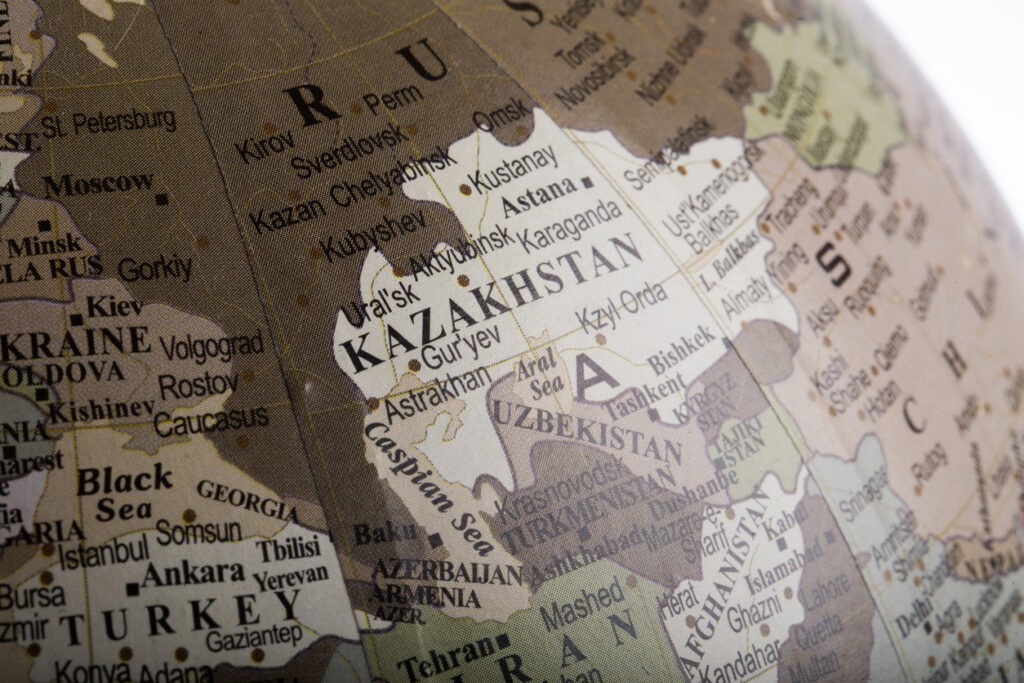
Central Asia is often synonymous with the term "multi-vector foreign policy," enabling its nations to navigate the competing interests of global and regional powers effectively. This "open door" strategy, grounded in the principle of "my friend's friend is my friend," has consistently granted Central Asian countries a distinctive role on the international stage, aiding them in achieving their foreign policy objectives despite shifting geopolitical dynamics. Drawing from official sources, we analyze the frequency and geography of foreign visits by the leaders of Central Asia in 2024, offering insights into their diplomatic engagements. Turkmenistan President Serdar Berdimuhamedov embarked on eight foreign trips in 2024. Among these, only one - a bilateral visit to Malaysia - was not tied to multilateral events. The other seven engagements showcased Turkmenistan’s participation in global diplomacy: XVI BRICS Summit (Kazan) CIS Heads of State Summit (Moscow) Victory Day Celebration (Moscow) Informal CIS Leaders' Meeting (St. Petersburg) Central Asia-Germany Summit (Astana) Sixth Consultative Meeting of Central Asian Leaders (Astana) UN COP28 Conference (Dubai) This year, Berdimuhamedov visited Russia four times, and Kazakhstan twice, and made single trips to the UAE and Malaysia. In parallel, his father and the previous president, Gurbanguly Berdimuhamedov, conducted 10 trips, including four bilateral visits to the UAE and Tajikistan and two to Iran. His international commitments included: One Water Summit (Riyadh) Turkic States’ Council of Elders (Budapest) V World Nomad Games Opening Ceremony (Astana) SCO Summit (Astana) Russia-Islamic World: KazanForum (Kazan) Antalya Diplomatic Forum (Antalya) Tajikistan President Emomali Rahmon undertook 22 foreign trips in 2024, six of which were bilateral, with visits to Russia, Iran, Azerbaijan, Italy/Vatican, and Qatar (twice). Multilateral engagements included: CSTO Summit (Astana) Central Asia-Germany Summit (Astana) Sixth Consultative Meeting of Central Asian Leaders (Astana) SCO Plus Meeting (Astana) COP29 Climate Conference (Baku) Arab-Islamic Extraordinary Summit (Riyadh) UN COP28 Conference (Dubai) UN General Assembly (New York) Uzbekistan President Shavkat Mirziyoyev made 18 international visits, including state visits to Turkey, China, and Tajikistan. He participated in numerous events: COP29 Climate Conference (Baku) Turkic States Informal Summit (Shusha) Arab-Islamic Summit (Riyadh) UN COP28 Conference (Dubai) SCO Meeting (Astana) BRICS+ Summit (Kazan) Kazakhstan President Kassym-Jomart Tokayev led the region in diplomatic outreach with 23 visits. Eleven of these were state visits to Hungary, Serbia, France, Italy/Vatican, Qatar, Azerbaijan, Armenia, Tajikistan, Mongolia, and Singapore. Key multilateral events included: Doha Forum (Doha) One Water Summit (Riyadh) COP29 Climate Conference (Baku) Boao Forum (Boao) Tokayev visited Russia five times, and Azerbaijan three times, and made additional trips to Saudi Arabia, UAE, and other countries in Europe and Asia. Kyrgyzstan President Sadyr Japarov also made 23 foreign visits, including eight state visits to South Korea, Uzbekistan, Kazakhstan, Azerbaijan, Belgium, Germany, Austria, and Italy/Vatican. He attended numerous multilateral forums: CSTO Summit (Astana) Central Asia-Germany Summit (Astana) UN COP28 Conference (Dubai) BRICS+ Summit (Kazan) Japarov visited Russia five times, and Kazakhstan four times, and made single trips to several European and Asian countries. In 2024, Tokayev and Japarov led the region in the number of foreign visits. While...

Digital Kazakhstan: Pioneering E-Government and AI Innovations Amid New Challenges

Kazakhstan has solidified its position as a global leader in digital transformation, ranking among the top 25 countries in e-government development and achieving significant milestones in IT innovation. After nearly two decades of digitalization efforts, the country is now aiming to surpass the most advanced nations. The concept of e-government in Kazakhstan was first announced in former President Nursultan Nazarbayev’s address on March 19, 2004. That same year, a program for the establishment of e-government was approved, and the eGov.kz web portal was launched in 2006. Initially, the platform primarily provided informational services. The second phase of e-government (2007–2008) introduced interactive services, allowing citizens to request certificates, submit inquiries to government bodies, and track their progress online. A key milestone was the establishment of Citizen Service Centers on January 5, 2007. Before the digital era, obtaining documents was a lengthy and cumbersome process, plagued by long queues and widespread corruption. In 2024, digitalization in Kazakhstan reached new heights. The government reports that 92% of public services are now provided electronically. Innovations such as biometric identification and QR signatures have simplified access, with over eight million QR code signatures registered and more than 18 million identifications conducted through the Digital ID system this year, according to Kanat Tuleushin, the First Vice-Minister of the Ministry of Digital Development, Innovation, and Aerospace Industry (MCRIAP). The modernization of the e-government platform is ongoing, with plans to transition to the third version of eGov. Additionally, IT services from Kazakhstan are now exported to 86 countries, with key markets including Russia, Ireland, Mexico, the United States, and Singapore. A central focus of the government strategy is the development of artificial intelligence (AI). In 2024, a draft law on AI was approved, and a Committee on AI was established to oversee the development of this field in the country. Kazakhstan continues to modernize its e-government platform, with plans to transition to the third version of eGov. The country has also made strides in exporting IT services to 86 countries, including major markets like Russia, Ireland, Mexico, the United States, and Singapore. A key priority for the government is the development of artificial intelligence (AI). In 2024, a draft law on AI was approved, and a dedicated Committee on AI was established to oversee advancements in this area. In the 2024 UN E-Government Development Index (EGDI), Kazakhstan ranked 24th among 193 countries, climbing four spots since the last assessment. The country also secured a place in the global top 10 of the Online Service Index (OSI), which evaluates the accessibility and quality of government-provided online services. South Korea leads the EGDI rankings, while Kazakhstan outpaces many of its regional neighbors, including Armenia (53rd), Russia (56th), Uzbekistan (59th), Kyrgyzstan (89th), and Turkmenistan (172nd). Kazakhstan’s banking sector has also played a pivotal role in driving digital innovation. Major banks now integrate a wide range of public and business services into their apps. For example, Halyk Bank offers over 60 services, Kaspi.kz provides 40, Bank CenterCredit more than 30, and Freedom...

Kazakhstan Reveals Fish Industry Plans

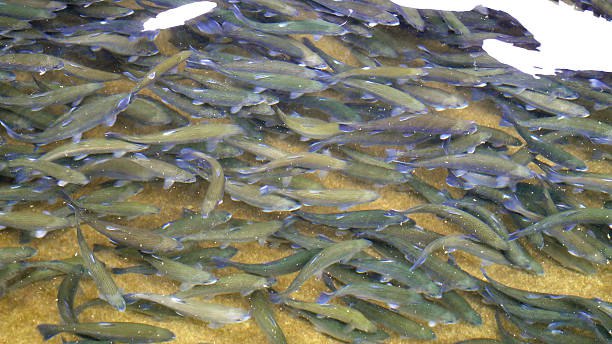
Kazakhstan’s fishing industry and its future development were the focus of a meeting held at the Ministry of Agriculture on December 28. Minister Aidarbek Saparov acknowledged that the sector’s current results fall short of expectations and called for intensified efforts across all areas​. A key announcement from the meeting was the planned modernization of the Atyrau sturgeon plant on Kazakhstan’s Caspian coast. The facility, which was commissioned in 1998, has not undergone major repairs since its establishment. Renovation work is scheduled to begin in the spring of 2025. The meeting also addressed strategies for developing fishing in the Caspian Sea. This includes increasing catch limits for sprat, as commercial sprat fishing has recently resumed in Kazakhstan's section of the sea. However, participants emphasized the need for comprehensive studies on the migration patterns of marine fish species to fully capitalize on the Caspian's fishing potential​. Efforts are underway to introduce preferential lending and leasing for sea fishing vessels. These measures aim to boost the total volume of Caspian fish production to 70,000 tons - a more than 1.5-fold increase - by 2025. Aquaculture, or fish farming, is another key area of focus. The government is providing subsidies for purchasing young fish, fodder, and medicines, as well as reimbursing 25% of investment costs for establishing fish farms and acquiring equipment. Kazakhstan’s parliament has approved the first reading of the “On Aquaculture” bill, which aims to expand state support for fish farming. The legislation includes provisions for allocating reservoirs and ponds to large investors and subsidizing water supply costs. These measures are expected to lead to a 25% increase in the number of fish farms by 2027, rising from 560 in 2024 to 700. Additionally, fish farm production is projected to grow from 20,000 tons to 50,000 tons per year. The initiatives discussed at the meeting reflect Kazakhstan’s commitment to revitalizing its fishing industry through modernization, financial support, and legislative reforms. By combining efforts in both marine and aquaculture sectors, the country aims to achieve sustainable growth while leveraging the vast potential of its fishing resources.

Rahmon Unveils Tajikistan’s Roadmap for Economic Growth and Diplomacy

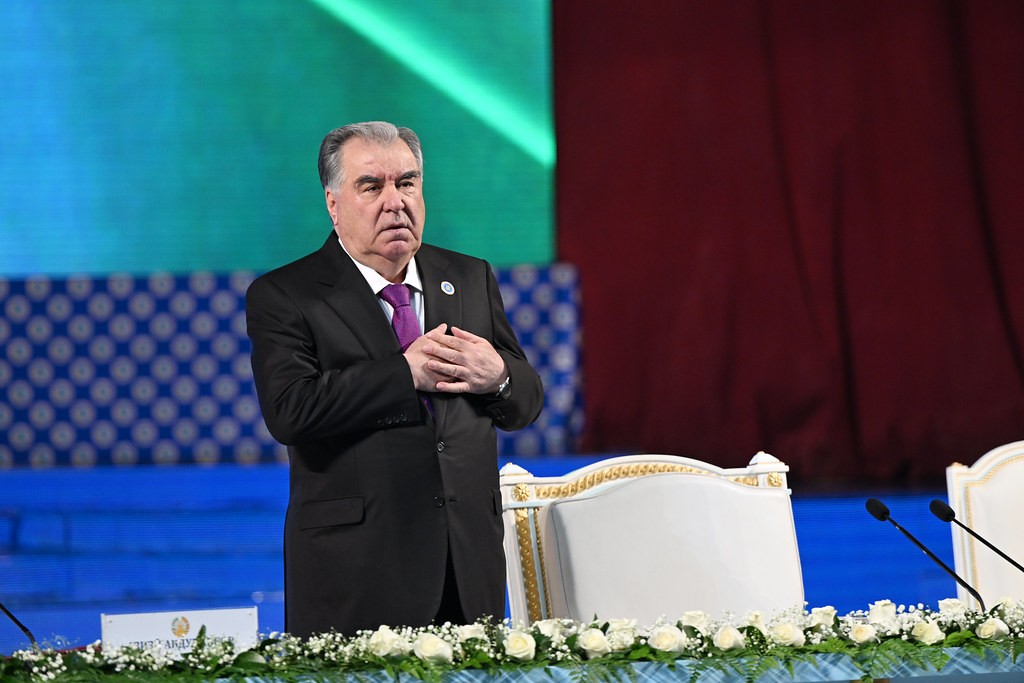
On December 28, Tajikistan’s President Emomali Rahmon delivered his annual address, titled “On Major Dimensions of Tajikistan’s Domestic and Foreign Policy,” during a joint session of both chambers of the Tajik Parliament​. The president outlined key priorities for implementing domestic and foreign policy and advancing various sectors of Tajikistan's economy, including industry, energy, agriculture, transport, investment, entrepreneurship, education, science, healthcare, and social protection. Rahmon directed the government to draft a "Medium-Term Development Program for 2026-2030" by the end of 2025. Highlighting the need for innovation, he proposed declaring 2025-2030 the “Years of Development of the Digital Economy and Innovation.” Additionally, he announced plans to establish a University of Innovation and Digital Technologies in Kulob, building upon the existing Institute of Technology and Innovation Management. Rahmon noted significant progress in industrialization, with Tajikistan’s industrial production nearly doubling in the past five years. This growth included the creation of more than 2,040 industrial enterprises and 74,000 jobs. In the road and transport sector, Rahmon underscored the importance of transforming Tajikistan into a transit hub. Ongoing modernization and reconstruction efforts have already improved the country’s ranking in the World Economic Forum’s road quality index, rising from 50th to 44th among 165 countries. Rahmon highlighted that 43% of Tajikistan's 2024 state budget is allocated to the social sector. Over the past five years, public-sector wages have increased four times, doubling overall during this period. He instructed the government to further raise salaries for employees in education, healthcare, social protection, culture, sports, government agencies, law enforcement, and the military. Employment remains a strategic priority. Rahmon noted that 4.1 million jobs have been created since independence, and he directed regional and local authorities to generate an additional 1.4 million jobs across all sectors of the economy in the next five years. On foreign policy, Rahmon reiterated Tajikistan’s commitment to its “open doors” approach, expressing readiness to strengthen bilateral and multilateral relations. He emphasized the importance of constructive engagement with international and regional organizations, including the United Nations, international financial institutions, and development partners. Rahmon’s address outlined a comprehensive roadmap for Tajikistan’s development, combining innovation, infrastructure, and social investment with an open and cooperative foreign policy. His directives reflect a vision aimed at fostering economic growth, improving living standards, and enhancing the country's position on the global stage.

Kyrgyz Journalists Reject Japarov Criticism of Foreign Funding in the Media

Kyrgyzstan's President Sadyr Japarov has criticized the country's media for its willingness to accept foreign funding. American diplomats disagree with the government’s “accusations,” while local journalists pointed out that Kyrgyz media operates with the help of advertising and grants. Speaking at the recent People's Kurultai (Congress) in Bishkek, Japarov criticized several Kyrgyz media outlets for receiving foreign funding, accusing journalists of spreading false information. According to him, most Kyrgyz publications have foreign sponsors. Japarov claimed that journalists obey their "masters" and are therefore deprived of freedom of speech. The president also shared data on foreign funding received by some opposition media outlets and NGOs. “These funds are accounted for in reports only superficially. Their foreign sponsors say, ‘Yes, they are doing a good job.’ But what’s really happening? Here, they spread false information, look for negativity, and undermine the reputation of others. And when lawsuits are filed against them, they immediately claim it’s an attack on freedom of speech,” Japarov said. The president addressed the leadership of the U.S. State Department, stating that funds should be directed directly to Kyrgyz authorities. “We will ensure their effective use. Do you want to raise the level of journalism? We can do it. Do you want complete freedom of speech? We guarantee it,” Japarov emphasized. A few days later, the U.S. Embassy in Bishkek responded to the criticism. “In the field of journalism, our assistance is aimed at funding fact-checking programs, supporting Kyrgyz-language journalism, and assisting investigative journalists in uncovering violations, including corruption,” the diplomats said in a statement. The embassy emphasized its belief that independent media, which performs a watchdog role in society, is crucial for any government. In an interview with The Times of Central Asia, journalist Chynara Sydykova shared that grant support enabled her to implement several socio-cultural projects. “These projects helped us grow and become independent professionals in directing, producing, and project management. Finally, it allowed us to simply become journalists capable of working honestly, objectively, and professionally, covering topics of public interest,” Sydykova said. The investigative journalist noted that none of the grant providers interfered with the work process. However, Sydykova admitted that manipulations could occasionally occur. “Journalists shouldn’t cling to every visible opportunity to get funding. They need to build a reputation so that no one would even think of using them as an agent of influence. Thanks to my television projects, I provided real help to respondents in the areas of health and social injustice,” Sydykova added. Public figure and journalist Alisher Tashmatov told The Times of Central Asia that he takes a neutral stance on grants. According to him, the most important thing is that grants allocated by foreign institutions should not threaten Kyrgyzstan’s national security. “In Kyrgyzstan, media survives through advertising and grants. Only a few receive funding from the state. Moreover, even state-owned media occasionally receives financial assistance from foreign institutions and companies,” he noted, adding that criticism of the authorities should be well-founded.