• KZT/USD = 0.00218
  • TJS/USD = 0.10820
  • UZS/USD = 0.00009
  • TMT/USD = 0.29760
  • KZT/USD = 0.00218
  • TJS/USD = 0.10820
  • UZS/USD = 0.00009
  • TMT/USD = 0.29760
  • KZT/USD = 0.00218
  • TJS/USD = 0.10820
  • UZS/USD = 0.00009
  • TMT/USD = 0.29760
  • KZT/USD = 0.00218
  • TJS/USD = 0.10820
  • UZS/USD = 0.00009
  • TMT/USD = 0.29760
  • KZT/USD = 0.00218
  • TJS/USD = 0.10820
  • UZS/USD = 0.00009
  • TMT/USD = 0.29760
  • KZT/USD = 0.00218
  • TJS/USD = 0.10820
  • UZS/USD = 0.00009
  • TMT/USD = 0.29760
  • KZT/USD = 0.00218
  • TJS/USD = 0.10820
  • UZS/USD = 0.00009
  • TMT/USD = 0.29760
  • KZT/USD = 0.00218
  • TJS/USD = 0.10820
  • UZS/USD = 0.00009
  • TMT/USD = 0.29760
24 August 2026

Viewing results 1 - 6 of 7

Kyrgyzstan Links Record Heatwave to Accelerating Glacier Retreat

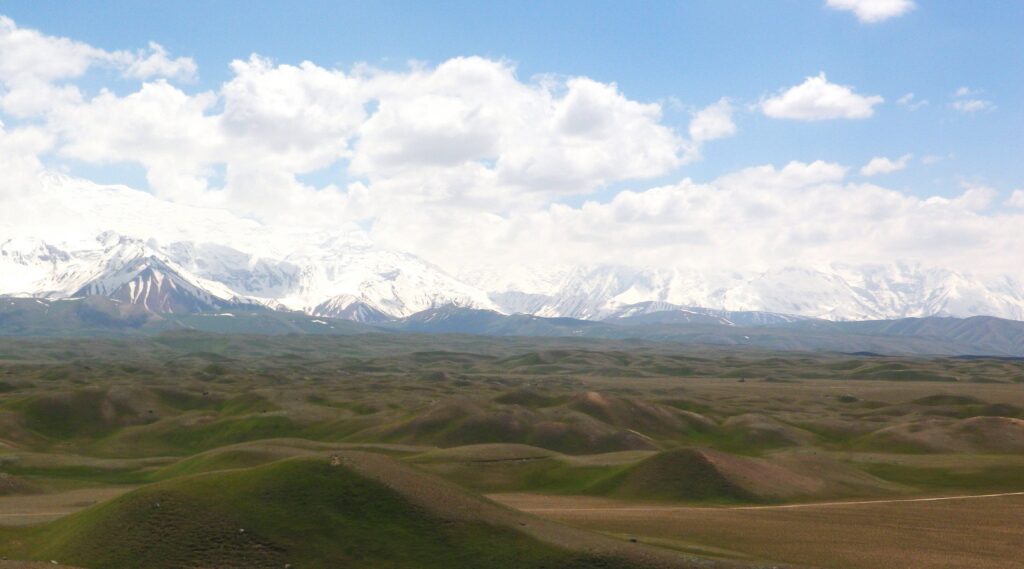
Kyrgyzstan's state weather agency, Kyrgyzhydromet, has warned that last month's record-breaking heatwave is the latest sign of climate change accelerating the retreat of the country's glaciers, threatening water supplies across Central Asia. The agency said the immediate heatwave was caused by regional atmospheric conditions, but its director, Daurbek Sakeyev, argued that the growing frequency of such extreme weather reflected a longer-term warming trend already affecting mountain ecosystems and water resources. Abnormally hot weather settled over Kyrgyzstan on July 14. Meteorologists attributed it to a combination of a summer thermal depression over Central Asia and a persistent area of high pressure in the upper atmosphere. The country saw consecutive days with temperatures exceeding 40°C. In Bishkek, the temperature reached 43.5°C on July 19, the highest July reading in the capital since observations began in 1936. Bishkek recorded no measurable rainfall during the month, while average daily temperatures on July 18 and 19 stood nearly 10°C above the seasonal norm. Record electricity demand prompted temporary supply restrictions in Bishkek and the surrounding Chuy Region, although a separate widespread outage on July 17 was attributed to the emergency disconnection of two 220-kilovolt transmission lines. Speaking after the heatwave had subsided, Sakeyev said spring was arriving earlier, summers were becoming hotter, and winters were bringing less precipitation, changes that were affecting the condition of the country’s glaciers. Earlier spring warming lengthens the annual melting season, while prolonged periods of extreme summer heat accelerate ice loss. Reduced winter snowfall also limits the accumulation of new ice and exposes darker glacier surfaces earlier, causing them to absorb more solar energy. According to Kyrgyzhydromet, Kyrgyzstan’s glaciers have lost around 16% of their total area over the past 70 years. Recent monitoring places the decline in the Talas Valley at 22%. Smaller, lower-altitude glaciers are particularly vulnerable, and scientists expect their number and area to decline substantially by 2050. Separately, Kyrgyzhydromet reported on July 30 that glacier area in the Issyk-Kul basin had declined by 33.7% over 70 to 90 years and by 23.1% over the most recent seven to ten years. The consequences extend beyond Kyrgyzstan. Tien Shan glaciers feed the Syr Darya, Chu, Talas, and Ili river systems, supplying water for millions of people, irrigation, and hydropower. Continued glacier retreat could alter seasonal flows and increase the risk of glacial lake outburst floods threatening mountain communities. Glacier retreat is one of Central Asia’s most significant long-term challenges. The region’s water security will depend on precipitation, seasonal snow cover, glacier loss, and governments’ ability to store and manage increasingly variable river flows.
Kazakhstan Wildfires: Heatwave Tests Reforms Three Years After Semey Ormany

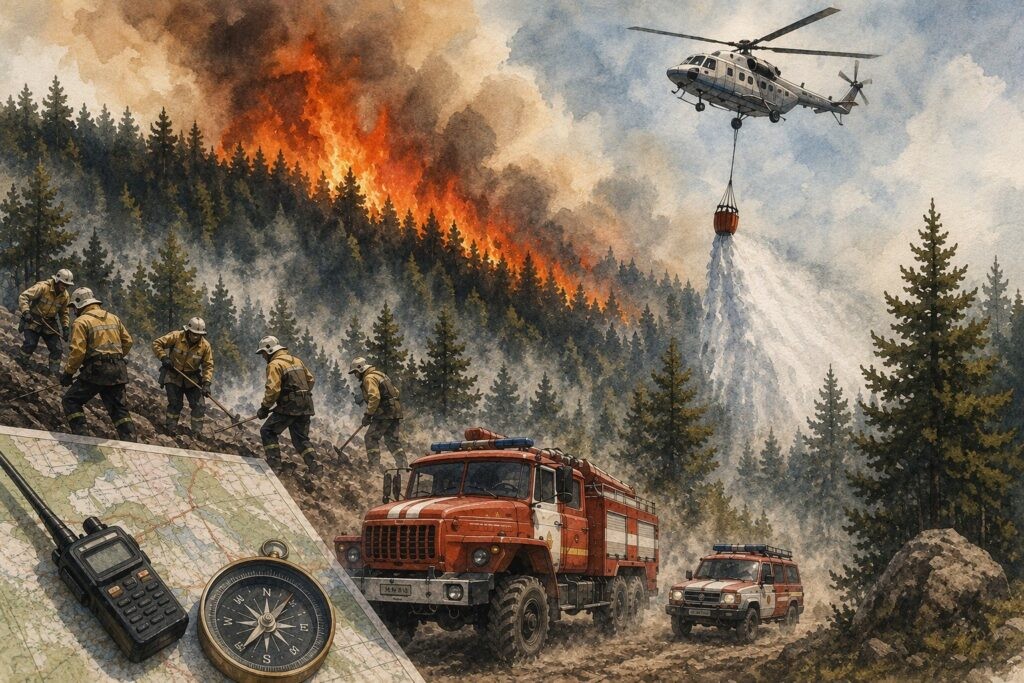
Between July 5 and 11, Kazakhstan’s state forest fund recorded 43 wildfires as an intense heatwave pushed much of the country into conditions of high and extreme fire danger. The Ministry of Ecology said all of the fires were contained before they could develop into large-scale disasters. For Kazakhstan, however, the significance of those figures extends beyond a single week. Three years after the deadly Semey Ormany wildfire exposed serious shortcomings in the country’s emergency response system, each fire season has become a test of whether the reforms introduced since 2023 are keeping pace with increasingly severe weather conditions. How the Fires Were Fought Of the 43 recorded wildfires, 34 occurred within the state forest fund, while nine affected forests managed by regional authorities. Officials said the fires were detected and contained through a combination of aerial surveillance, early warning systems, and coordinated operations involving forestry services and emergency responders. Aircraft conducted reconnaissance flights, transported firefighting crews to remote locations, and carried out water drops where ground access was limited. Firefighters and forestry personnel established firebreaks, extinguished smoldering vegetation, and continued patrols after the flames had been brought under control to prevent reignition. The most difficult situation developed in Akmola Region, where the number of forest fires since the beginning of the fire-hazard season has risen 68.4% compared with the same period last year. Regional authorities responded by strengthening forest patrols and increasing monitoring of high-risk areas, while urging residents to avoid lighting fires or burning dry vegetation during the continuing hot and dry weather. Heat Keeps Raising the Stakes Even as firefighters succeeded in containing the week’s blazes, weather conditions continued to increase the likelihood of new outbreaks. According to Kazhydromet, prolonged heat and limited rainfall have left much of Kazakhstan under high or extreme wildfire danger. Forecasters expect only limited relief. A cold front may bring localized rain and thunderstorms to northern Kazakhstan, but meteorologists say the precipitation is unlikely to significantly reduce wildfire risks. Southern regions are forecast to remain under temperatures of 104-113°F (40-45°C), allowing vegetation to dry rapidly and creating conditions in which even relatively small fires can spread quickly. The persistence of these weather patterns highlights a broader challenge. Kazakhstan’s emergency services are increasingly responding not to isolated wildfire events, but to prolonged periods during which multiple regions face elevated fire danger simultaneously. What Has Changed in Three Years Kazakhstan’s approach to wildfire management changed fundamentally after the June 2023 Semey Ormany disaster, when a fast-moving forest fire in the Abai Region killed 14 forestry workers, destroyed more than 60,000 hectares of forest, and caused an estimated $354 million in damage. A subsequent investigation identified serious shortcomings in the country's preparedness and a lack of regard to the protection of frontline personnel, prompting one of the most significant reforms of the country’s forest protection system since independence. In 2024, Kazakhstan established the Forest Fund Protection and Defense Service to train a generation of specialists and strengthen coordination during major wildfires. The upgraded response system...

Uzbekistan Braces for Extreme Heat as Temperatures Could Reach 46°C

Uzbekistan is preparing for extreme heat after the national weather agency warned that temperatures across much of the country could reach dangerous levels this week. Authorities have stepped up emergency measures and urged residents to take precautions. According to Uzhydromet, very hot air masses moving north from the south are expected to affect the country between July 13 and July 17. During the hottest days, daytime temperatures are forecast to reach 41-43°C across most regions, while northern, southern, and desert areas could see temperatures as high as 44-46°C. The weather agency also warned that wind speeds could increase to 13-18 meters per second in some areas, with possible dust storms. The expected heatwave is likely to put additional pressure on Uzbekistan’s electricity network. Citing the regional power distribution company Hududiy Elektr Tarmoqlari, or Regional Electric Networks, local news outlet Daryo reported that electricity demand typically rises during periods of extreme heat as households and businesses rely more heavily on cooling systems. Higher temperatures can also reduce the efficiency of transmission lines and transformers, increasing the risk of technical failures. The company said it has introduced a range of measures to maintain a stable electricity supply and respond quickly to any emergencies. More than 6,500 employees have been assigned to 1,203 emergency response teams operating around the clock across the country. Each team has been equipped with specialized vehicles and equipment, while additional repair materials and spare parts have been stockpiled to deal with possible breakdowns during the summer season. Hududiy Elektr Tarmoqlari said ensuring uninterrupted electricity supplies during peak demand remains one of its top priorities. The company appealed to consumers to use electricity responsibly in order to reduce unnecessary strain on the power system. Emergency authorities have also stepped up public safety efforts. Employees of the Ministry of Emergency Situations have been seen on the streets of Tashkent reminding residents to avoid going outside during the hottest part of the day unless absolutely necessary. The ministry issued a separate warning about the dangers of leaving vehicles in direct sunlight. It said temperatures inside a parked car can rise to between 50°C and 70°C within 50 to 60 minutes, creating life-threatening conditions. “Just one minute of carelessness can lead to irreversible consequences,” the ministry warned. Officials urged drivers never to leave children or other passengers inside parked vehicles, even for a short time, and encouraged the public to take extra precautions to protect themselves, their families, and those around them during the period of extreme heat. The latest forecasts suggest that Uzbekistan will remain under the influence of the hot air mass for several days, with authorities continuing to monitor weather conditions and the country’s energy infrastructure as temperatures approach some of the highest levels recorded this summer.

Kyrgyzstan Sets New Summer Electricity Consumption Record

Kyrgyzstan has recorded a new peak in daily electricity consumption during the summer season, reaching 44.1 million kilowatt-hours (kWh) in a single day, according to the National Electric Grid of Kyrgyzstan (NEGK). This marks a 22% increase compared to the same period in 2024, when the maximum daily load stood at 36 million kWh. The surge is largely attributed to an extended heatwave, with temperatures in major cities exceeding 40°C, prompting heavy use of air conditioners and cooling systems. The NEGK also reported a steady rise in electricity consumers, with an estimated 30,000 new subscribers joining the grid annually. This trend is fueled by Kyrgyzstan’s ongoing construction boom, which includes the development of residential complexes and industrial sites, sectors that have become pillars of the national economy. Despite the strain, the power grid remains stable. “We urge citizens to use electricity sparingly. Rational resource use contributes to the reliable operation of the energy system,” the company stated in a public advisory. Residents were also encouraged to unplug unused appliances to conserve energy. Summer Surplus, Winter Strain Unlike the winter months, Kyrgyzstan typically enjoys a surplus of electricity in summer due to the seasonal melting of glaciers, which boosts hydroelectric output. The country is preparing to participate in the CASA-1000 project alongside Tajikistan, aiming to export surplus electricity to Pakistan via Afghanistan. These exports will be limited to the summer, as Kyrgyzstan faces significant energy shortages in winter. According to the National Energy and Power System Company, winter electricity demand can reach 80 million kWh per day, placing substations under considerable stress. To mitigate shortages and prevent rolling blackouts, Kyrgyzstan imports electricity from Kazakhstan and Russia, and under contracts with Turkmenistan and Uzbekistan. The country’s energy reserve capacity is shrinking due to increasing demand. In response, the Ministry of Energy is investing in network expansion and voltage stabilization. In 2024, five 110 kV substations were constructed. In 2025, two additional major facilities are slated to open in the Issyk-Kul and Batken regions, each with a capacity of 500 kWh.

World Bank Report: Central Asia Faces Rising Risks from Extreme Heat

Cities across Central Asia are becoming increasingly vulnerable to extreme heat, posing significant risks to public health, economic productivity, and infrastructure, according to a new report by the World Bank. The study, which covers 70 urban areas in Europe and Central Asia, including Astana, Bishkek, Ashgabat, Tashkent, and several smaller cities in Tajikistan and Turkmenistan, highlights the urgent need for heat adaptation strategies. Rising Mortality and Economic Losses The report finds that heat-related mortality is already a serious concern. In Ashgabat, an estimated 25-28 people per 100,000 die annually due to extreme heat. In Astana, Bishkek, and Tashkent, the toll is slightly lower, at approximately 19-21 deaths per 100,000. Without intervention, annual heat-related deaths in cities like Astana and Tashkent could rise dramatically, reaching between 10,000 and 23,000 by 2090. Economic impacts are also mounting. In 2023, higher temperatures resulted in the loss of over 87,000 full-time jobs across the region. Uzbekistan alone saw more than 22,000 job losses, while nearly 18,000 were reported in Azerbaijan. By 2050, heat-related economic losses could exceed 2% of GDP in some urban centers, such as Ashgabat. Infrastructure Under Strain Rising temperatures are damaging infrastructure across Central Asia. In Kyrgyzstan, extreme heat causes deterioration to nearly 200 kilometers of road annually, driving up repair costs and disrupting transportation. Kazakhstan is facing similar challenges: recent heatwaves have warped asphalt and concrete surfaces in the southern and northeastern regions of the country. Adaptation Measures and Challenges Despite these threats, the report outlines viable solutions. Urban greening, such as planting trees and creating shaded areas, can help cool city streets. Retrofitting buildings to improve thermal insulation without increasing energy use, establishing early warning systems, and creating cooling centers are also recommended. Urban planning strategies should incorporate climate resilience by using heat-tolerant materials and factoring climate risks into infrastructure design. Investment in parks and green spaces, alongside the use of heat vulnerability maps, can guide targeted interventions. However, the report warns that a lack of funding may hinder progress. Without innovative financing mechanisms, many adaptation plans could be stalled despite their potential to mitigate long-term risks. The World Bank concludes that while the impacts of rising temperatures are already being felt across Central Asia, timely action can prevent far more serious consequences. Policymakers are urged to prioritize heat adaptation to safeguard lives, livelihoods, and infrastructure in an increasingly warming world.

Bishkek Launches “Living Wall” Project to Tackle Heat and Pollution

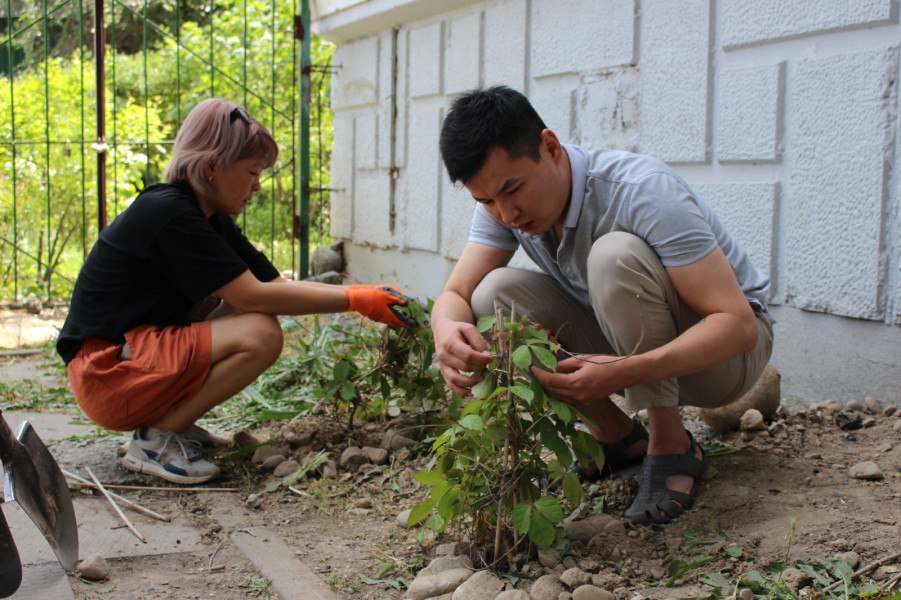
Bishkek has launched a pilot project to green the facades of buildings as part of a broader effort to adapt to climate change and mitigate growing heat and air pollution in Kyrgyzstan’s capital. In June, vertical greenery was installed on the facades of three schools and one apartment building under the “1000 Green Walls” program. The initiative is jointly implemented by the environmental organization MoveGreen and the Bishkek municipality, with support from the United Nations Environment Programme (UNEP) and the development agency Bread for the World. More Than Just Aesthetic Green facades, also known as living walls, offer both visual and environmental benefits. They reduce building surface temperatures, absorb carbon dioxide, release oxygen, and filter dust and pollutants from the air. These vertical gardens also improve sound insulation, protect buildings from temperature extremes, and support urban biodiversity, providing habitat for birds, insects, and butterflies. Two species were selected for the pilot phase: maiden grapes and ivy. Maiden grapes are fast-growing, frost- and drought-resistant vines that create dense green coverage. In addition to insulating buildings, they absorb dust and exhaust emissions, improving local air quality. Their vibrant red foliage in autumn also enhances the city’s visual appeal. Ivy, an evergreen perennial, retains its foliage year-round and provides consistent thermal and acoustic insulation. It is effective in trapping airborne pollutants and helps create a more temperate and pleasant microclimate around buildings. A Scalable Urban Solution The Bishkek municipality views this as a sustainable and scalable urban solution. “These green facades contribute to a more comfortable, ecological, and aesthetically pleasing urban environment,” officials said. The city plans to expand the 1000 Green Walls program to include more schools, kindergartens, and residential buildings in the coming months.