• KGS/USD = 0.01144 0%
  • KZT/USD = 0.00207 0%
  • TJS/USD = 0.10492 0.1%
  • UZS/USD = 0.00008 0%
  • TMT/USD = 0.28571 0%
  • KGS/USD = 0.01144 0%
  • KZT/USD = 0.00207 0%
  • TJS/USD = 0.10492 0.1%
  • UZS/USD = 0.00008 0%
  • TMT/USD = 0.28571 0%
  • KGS/USD = 0.01144 0%
  • KZT/USD = 0.00207 0%
  • TJS/USD = 0.10492 0.1%
  • UZS/USD = 0.00008 0%
  • TMT/USD = 0.28571 0%
  • KGS/USD = 0.01144 0%
  • KZT/USD = 0.00207 0%
  • TJS/USD = 0.10492 0.1%
  • UZS/USD = 0.00008 0%
  • TMT/USD = 0.28571 0%
  • KGS/USD = 0.01144 0%
  • KZT/USD = 0.00207 0%
  • TJS/USD = 0.10492 0.1%
  • UZS/USD = 0.00008 0%
  • TMT/USD = 0.28571 0%
  • KGS/USD = 0.01144 0%
  • KZT/USD = 0.00207 0%
  • TJS/USD = 0.10492 0.1%
  • UZS/USD = 0.00008 0%
  • TMT/USD = 0.28571 0%
  • KGS/USD = 0.01144 0%
  • KZT/USD = 0.00207 0%
  • TJS/USD = 0.10492 0.1%
  • UZS/USD = 0.00008 0%
  • TMT/USD = 0.28571 0%
  • KGS/USD = 0.01144 0%
  • KZT/USD = 0.00207 0%
  • TJS/USD = 0.10492 0.1%
  • UZS/USD = 0.00008 0%
  • TMT/USD = 0.28571 0%

Viewing results 1 - 6 of 66

Kazakh and Chinese Universities Sign Over 20 New Cooperation Agreements

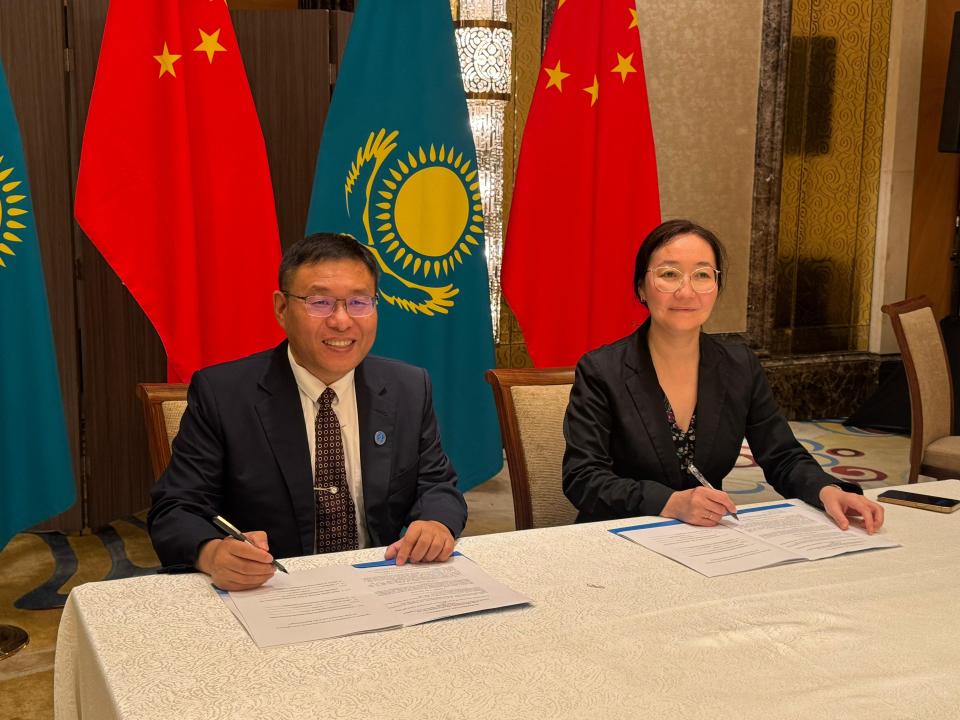
At the Kazakhstan-China Business Council meeting held in Beijing on September 2, leading universities from both countries signed more than 20 new agreements aimed at deepening cooperation in education, science, and innovation, according to the Kazakh Ministry of Science and Higher Education. The wide-ranging agreements span areas such as artificial intelligence, robotics, water resource management, and dual degree programs, highlighting the growing strategic role of academic and research collaboration in the Kazakhstan-China partnership. Among the most significant developments was the establishment of the Kazakh-Chinese Scientific and Technological Alliance on Spatio-Temporal Artificial Intelligence. The alliance includes the National Academy of Sciences of Kazakhstan, the Kazakh National Agrarian Research University, Zhejiang University of Technology, and Zhejiang Zhonghe Technology Co., Ltd. A joint laboratory will also be launched as part of the Belt and Road Initiative. Al-Farabi Kazakh National University (KazNU) signed an agreement with Chinese investment and development firm Yuan Zhen to jointly design and produce unmanned aerial vehicles. KazNU also partnered with Jiangsu Huibo Robotics Technology Co., Ltd. to inaugurate the International Institute of Digital Technologies and Robotics, along with a Robotics Center dedicated to training the next generation of engineers. In Almaty, the Technological University signed an agreement with Beijing Technology and Business University to create the Kazakhstan-China Center for Technology and Innovation Development. Meanwhile, the Kazakh National University of Water Resources and Irrigation and the North China University of Water Resources and Electric Power (NCWU) agreed to collaborate on sustainable water management. In the digital sphere, Astana IT University signed a memorandum of cooperation with Tus-Holdings, a science park affiliated with Tsinghua University, focusing on information technology, artificial intelligence, and startup incubation. Multiple institutions expanded joint academic offerings. Gumilyov Eurasian National University, Abylkas Saginov Karaganda Technical University, ALT University, and Uzbekali Zhanibekov South Kazakhstan Pedagogical University all signed agreements with top Chinese universities to launch dual bachelor’s and master’s degree programs. In the energy sector, the Atyrau University of Oil and Gas and Liaoning Petrochemical University will establish the Kazakhstan-China International Engineering School and a joint international laboratory. Additionally, Astana International University and Beijing Language and Culture University agreed to open a branch campus of the Chinese university in Kazakhstan. These agreements underscore the strategic role of higher education and scientific cooperation in advancing Kazakhstan-China relations, particularly within the framework of the Belt and Road Initiative.

Indian Regulator Flags Concerns About Uzbek University

India’s National Medical Commission (NMC) has issued a warning to Indian students regarding enrollment at the Chirchik branch of Tashkent State Medical University in Uzbekistan, as well as three medical schools in Belize. As reported by The New Indian Express, the NMC cited multiple concerns, including alleged non-compliance with Indian medical education standards, subpar infrastructure, inadequate clinical training, high tuition fees, and instances of student harassment. According to the NMC, all of the institutions in question “did not comply with Indian medical education standards, lacked adequate or functioning campus infrastructure, provided poor quality educational and clinical training, and had instances of harassment of Indian students. Additionally, they reportedly charged excessive fees and refused refunds upon withdrawal from the course.” In response, the Chirchik branch issued an official statement categorically denying the accusations, calling them “unfounded.” The university emphasized that it adheres strictly to academic and clinical guidelines established by Uzbekistan’s Ministry of Health and the World Federation for Medical Education (WFME). Established by presidential decree in July 2023, the branch began full operations in December 2024. It currently enrolls 801 students, including five from India, alongside others from Jordan, Pakistan, and Egypt. The university highlighted its modern facilities, which include fully equipped classrooms, laboratories, simulation centers, and student dormitories. “An open and transparent environment is created for students,” the statement read, underlining a commitment to academic freedom and equal treatment. The Chirchik branch is listed in the World Directory of Medical Schools, jointly maintained by WFME and FAIMER. It offers English-language medical programs and maintains partnerships with several international universities and clinical institutions. “We take the concerns raised by the NMC seriously,” the university stated. “However, we believe these claims are based on information that has not been verified locally and are unfounded.” The university expressed openness to inspections and dialogue with Indian authorities and reassured students and families of its adherence to global academic standards. “We categorically reject attempts to damage our reputation,” the statement concluded.

German University Launches Bachelor’s Programs in Kazakhstan

Germany’s Anhalt University of Applied Sciences has opened a branch campus in Almaty, marking a new milestone in German-Kazakh educational cooperation. The new campus, based at Energo University, is now accepting applications for bachelor’s programs in Biomedical Engineering and Electrical Engineering and Information Technology. The initiative is supported by Kazakhstan’s Ministry of Science and Higher Education and the German Consulate General in Almaty. According to the ministry, the programs were selected to align with current demands in Kazakhstan’s labor market. Graduates will receive dual diplomas, one from Anhalt University and one from a Kazakhstani institution. A total of 100 state-funded scholarships will be awarded to students who qualify through a competitive selection process. The Almaty campus features modern classrooms and laboratories equipped for practical and research-based instruction in electronics, biomedical science, and information technology. “This is a large-scale initiative for young people in Kazakhstan who are eager to learn,” said Jörg Bagdahn, President of Anhalt University. “They now have the opportunity to obtain a German engineering degree without leaving their country.” Courses will be taught by faculty from Germany, and German language instruction is included in the curriculum. “Partnership with Anhalt University is a strategic step for Energo University,” said Rector Gani Cosmetology. “We are creating a platform to deliver top-tier European education locally.”

Italian University Opens Branch in Kazakhstan to Train Agricultural Specialists

Marche Polytechnic University of Ancona, Italy, has officially opened a branch campus at Zhetysu University named after Ilyas Zhansugurov in Taldykorgan, the administrative center of Kazakhstan’s southeastern Zhetysu region. The inauguration ceremony on July 16 was attended by prominent officials including Zhetysu Region Governor Beibit Isabayev, Minister of Science and Higher Education Sayasat Nurbek, and Italian Ambassador to Kazakhstan Antonello De Riu. Marche Polytechnic University is a public institution that offers a broad range of academic programs in agriculture, engineering, economics, medicine, and biology. The new branch in Kazakhstan is expected to focus on disciplines that align with the region’s agricultural priorities, including agriculture, food engineering, tourism, economics, and digital technologies. Addressing the Region’s Workforce Needs In his remarks, Nurbek emphasized the importance of developing local expertise to support the region’s growing agri-tech and greenhouse sectors. “Our region is in need of agronomists and digital specialists to support the growth of our greenhouse complexes,” he said. “This new branch will help meet that demand with targeted academic programs.” Isabayev highlighted the regional administration’s support for the initiative, announcing 14 scholarships for students during the first stage of enrollment. “Our region is an agricultural one,” he said. “We need skilled professionals who can introduce innovation and advanced technologies into the sector.” A Boost for Bilateral Cooperation De Riu praised the initiative as a significant milestone in Kazakh-Italian academic cooperation. “Collaboration with Zhetysu University is a key part of Italy’s international strategy,” he said. “We will implement joint projects in education and scientific research and share expertise that enhances both institutions. This is not just about opening new opportunities, it's a real step forward in strengthening the friendship and partnership between Kazakhstan and Italy.” Faculty members from Marche Polytechnic University will deliver courses at the new branch, while students will benefit from access to joint research opportunities and international internships. Graduates will receive dual diplomas from both institutions.

Leading French Engineering School to Open Branch in Kazakhstan

The Kazakh Ministry of Science and Higher Education has finalized an agreement with Grenoble INP-Phelma, UGA - France’s premier engineering school specializing in physics, electronics, and materials science, to open a branch campus in Almaty in 2026. The new campus will operate in partnership with Satbayev University, one of Kazakhstan’s top technical institutions. The agreement was signed by vice presidents of both universities in the presence of Kazakhstan’s Minister of Science and Higher Education Sayasat Nurbek and French Ambassador to Kazakhstan Sylvain Guiguet. Grenoble INP-Phelma, located in the city of Grenoble, is part of the Grenoble Institute of Technology and is internationally recognized for its excellence in engineering education. The Kazakhstan branch of Phelma will offer dual degree programs in Nuclear Engineering, Renewable Engineering, and Advanced Studies. The initiative aims to train highly qualified specialists in nuclear and renewable energy, fields of growing strategic importance as Kazakhstan prepares to construct its first nuclear power plant. Participating students will have the opportunity to undergo practical training at French nuclear power facilities, which operate 56 reactors and supply more than 70% of France’s electricity. This hands-on experience is expected to prepare graduates for careers in Kazakhstan’s evolving energy sector. The Times of Central Asia previously reported that the Colorado School of Mines will also open its first international campus in Kazakhstan in 2026. That campus will be located in Zhezkazgan, the center of the country’s geological industry. The Colorado School of Mines has already established a dual degree partnership with Satbayev University in geology, petroleum engineering, and mining, which includes joint research collaborations.

Colorado School of Mines to Open First International Campus in Kazakhstan

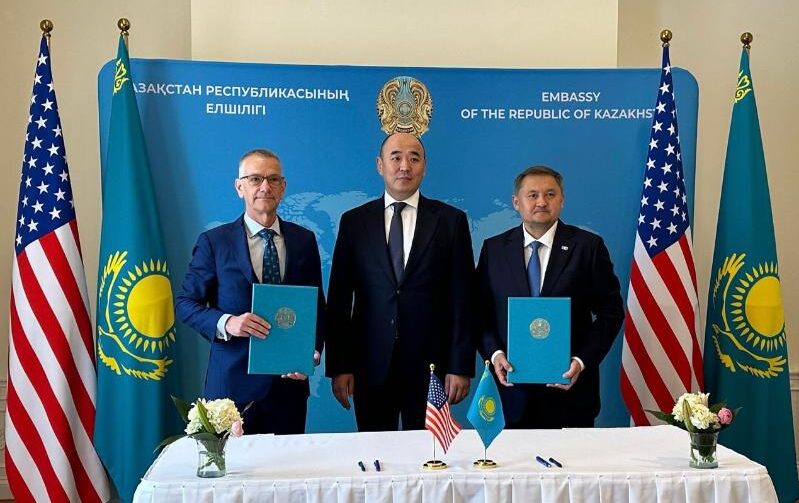
In 2026, the Colorado School of Mines will open its first international campus in Kazakhstan, marking a significant milestone in U.S.-Kazakhstan academic cooperation. An agreement to establish the branch was signed between Kazakhstan’s Ministry of Science and Higher Education and the Colorado School of Mines, which currently ranks No. 1 globally in Mineral & Mining Engineering according to the QS World University Rankings 2025. The new campus will be located in Zhezkazgan, the center of Kazakhstan’s geological industry, on the grounds of the newly established Ulytau Technical University. Instruction will be in English and will focus on four core bachelor's degree programs: Mining, Geology and Geological Exploration; Geophysical Engineering; and Petroleum Engineering. According to the Ministry, the project underscores Kazakhstan’s growing status as a destination for educational investment and knowledge transfer in technical fields. “We have identified Kazakhstan as a priority country for partnership and development,” said John Bradford, Vice President of Global Initiatives at the Colorado School of Mines. “This agreement will allow us to elevate our collaboration and academic exchange.” Earlier, the Colorado School of Mines signed a dual degree agreement with Kazakhstan’s Satbayev University in the fields of geology, petroleum engineering, and mining, which also includes joint research initiatives. Once operational, the Zhezkazgan campus is expected to attract young professionals to the region, create new job opportunities, and train highly qualified specialists for both Kazakhstan’s domestic needs and the global labor market.