• KGS/USD = 0.01144 0%
  • KZT/USD = 0.00204 0%
  • TJS/USD = 0.10415 -0.19%
  • UZS/USD = 0.00008 0%
  • TMT/USD = 0.28571 0%
  • KGS/USD = 0.01144 0%
  • KZT/USD = 0.00204 0%
  • TJS/USD = 0.10415 -0.19%
  • UZS/USD = 0.00008 0%
  • TMT/USD = 0.28571 0%
  • KGS/USD = 0.01144 0%
  • KZT/USD = 0.00204 0%
  • TJS/USD = 0.10415 -0.19%
  • UZS/USD = 0.00008 0%
  • TMT/USD = 0.28571 0%
  • KGS/USD = 0.01144 0%
  • KZT/USD = 0.00204 0%
  • TJS/USD = 0.10415 -0.19%
  • UZS/USD = 0.00008 0%
  • TMT/USD = 0.28571 0%
  • KGS/USD = 0.01144 0%
  • KZT/USD = 0.00204 0%
  • TJS/USD = 0.10415 -0.19%
  • UZS/USD = 0.00008 0%
  • TMT/USD = 0.28571 0%
  • KGS/USD = 0.01144 0%
  • KZT/USD = 0.00204 0%
  • TJS/USD = 0.10415 -0.19%
  • UZS/USD = 0.00008 0%
  • TMT/USD = 0.28571 0%
  • KGS/USD = 0.01144 0%
  • KZT/USD = 0.00204 0%
  • TJS/USD = 0.10415 -0.19%
  • UZS/USD = 0.00008 0%
  • TMT/USD = 0.28571 0%
  • KGS/USD = 0.01144 0%
  • KZT/USD = 0.00204 0%
  • TJS/USD = 0.10415 -0.19%
  • UZS/USD = 0.00008 0%
  • TMT/USD = 0.28571 0%

Viewing results 1 - 6 of 9

Information Sovereignty? Central Asia Tightens Control Over Its Information Space

Across the post-Soviet space, governments are adopting new measures that affect the scope of free expression. Similar trends are visible in Central Asia, the Caucasus, and parts of Eastern Europe, reflecting wider global shifts in how states manage their information environments. In Central Asia, where journalism has long faced political constraints, recent policies indicate a renewed emphasis on controlling the flow of information. From Georgia to Kazakhstan: Pushback Against Foreign Narratives Recent events in Georgia highlight these changes. The adoption of a controversial “foreign agents” law, widely described as a Russian-style or “pro-Russian” measure, reflected the ruling party’s growing hostility to foreign-funded media and NGOs, many backed by European donors, and triggered mass pro-EU protests in Tbilisi. Similar dynamics are emerging in Central Asia, where officials increasingly view foreign narratives as interference in domestic affairs. In Kazakhstan, legislative restrictions on so-called "LGBT propaganda" have sparked both domestic protests and criticism from international partners. At the same time, well-known media figure Gulnar Bazhkenova, editor-in-chief of Orda.kz, has been placed under house arrest, an episode that underscores the tightening environment for journalists. The Bazhkenova Case: A Turning Point for Kazakh Media Bazhkenova, a prominent editor known for critical coverage of Kazakhstan’s political elite and security services, came under scrutiny after Orda.kz falsely reported the arrest of Foreign Minister Murat Nurtleu, an unverified claim that was quickly debunked. Although Nurtleu remained in his position immediately afterward, he was dismissed later in September, prompting speculation that the incident had political consequences. Soon after his departure, law enforcement launched an investigation into Bazhkenova. On December 1, Almaty police searched her residence and the offices of Orda.kz. Authorities stated that a 2024 article had disseminated false information regarding a law enforcement officer allegedly caught accepting a bribe, an incident that officials assert never occurred. Another article reportedly misrepresented details in a property dispute, allegedly damaging the business reputation of the involved party. The Almaty police have since opened additional investigations into past publications from Orda.kz that may contain misleading content. Media organizations have largely responded with condemnation, urging the authorities to decriminalize the dissemination of false information and instead treat such cases under civil law. However, the Union of Journalists of Kazakhstan issued a pointed statement calling on media professionals to “treat the preparation and dissemination of information responsibly. Individual cases for the dissemination of inaccurate information cast a shadow on the entire journalistic community of our country,” the organization said.  An implicit acknowledgment, perhaps, that Bazhkenova’s actions may have crossed legal or ethical boundaries. Parallel Cases and Regional Patterns While suppression of the media in Tajikistan and Turkmenistan has long been widespread, Kyrgyzstan - long considered the most politically open country in Central Asia - has also moved to tighten control over its information space. In early 2024, authorities introduced a controversial “foreign representatives” law requiring NGOs and media outlets receiving international funding to register under a special status, echoing legislation seen in Russia and Georgia. Independent outlets such as Kloop, Temirov Live, and Azattyk...

Legal Media Center to Sue Kazakh Foreign Ministry Over Journalist Accreditation Refusal

The Legal Media Center, a media-focused human rights organization, has announced plans to file a lawsuit against Kazakhstan’s Ministry of Foreign Affairs (MFA) over its refusal to accredit seven journalists from Radio Azattyq, the Kazakh service of Radio Free Europe/Radio Liberty (RFE/RL). According to Gulmira Birzhanova, head of the center’s legal department, the new regulations on foreign media introduced in 2024 have created a restrictive legal framework that infringes on journalists’ constitutional rights. “By delaying their response and failing to provide concrete grounds for the MFA’s refusal to extend accreditation, the Ministry created conditions that violate journalists’ constitutional rights and legal protections. We remind the authorities that our journalists work for a media outlet already accredited in Kazakhstan,” Birzhanova said in a statement posted to Facebook. The updated rules prohibit foreign media outlets from operating in Kazakhstan without official MFA accreditation. The Legal Media Center argues that these provisions constitute a de facto professional ban and conflict with both Kazakhstan’s Constitution and international press freedom standards. The organization also claims that the restrictions appear to be selectively enforced, with Radio Azattyq being specifically targeted. In January 2024, the MFA denied accreditation to several RFE/RL journalists, some of whom had not had their credentials renewed since late 2022. Radio Azattyq subsequently filed a lawsuit, which resulted in a mediation agreement in April. At the time, RFE/RL President Stephen Capus welcomed the outcome. “All we have ever asked for is that our journalists be allowed to do their jobs safely and without pressure. We remain committed to providing the Kazakh audience with independent and reliable information,” he said. The Times of Central Asia previously interviewed Kazakh journalist Asem Tokayeva, a long-time contributor to RFE/RL. In that interview, she described internal challenges and disagreements within the media organization, raising broader concerns about the future of independent journalism in Central Asia.

Kyrgyz Authorities Step Up Pressure on Kloop: Searches, Arrests, and International Outcry

In late May, Kyrgyz security forces conducted coordinated raids on the homes of eight current and former employees of the independent media outlet Kloop. Operatives from the State Committee for National Security (GKNB) simultaneously entered apartments in Bishkek and Osh. Video journalist Alexander Alexandrov and former cameraman Joomart Duulatov were detained and remain in custody on charges of “public calls for mass unrest” under Article 278 of the Criminal Code. The other six individuals were released after hours of interrogation but were compelled to sign non-disclosure agreements. According to Kloop’s editorial staff, five minutes before the raids began, the outlet received an anonymous email with the subject line: “You have crossed the line.” The incident drew swift condemnation from human rights groups. The Committee to Protect Journalists (CPJ) demanded an immediate end to what it described as persecution, while other international organizations called for the charges to be dropped. From Student Project to Investigative Powerhouse Founded in 2007 by journalists Bektur Iskender and Rinat Tukhvatushin, Kloop began as a training platform for aspiring reporters. The outlet gained prominence during its around-the-clock reporting on the 2010 uprising. It later evolved into a leading investigative publication, exposing high-profile cases such as the 2017 “Samaragate” voter data scandal and the 2019 financial network linked to customs official Raiymbek Matraimov. Despite legal threats, including lawsuits from the Matraimov family that were later withdrawn, Kloop’s reporting bolstered its credibility and amplified its visibility, making it increasingly unwelcome in official circles. Escalating Crackdown Tensions escalated in August 2023 when the Bishkek Prosecutor’s Office filed a lawsuit to dissolve the Kloop Media Foundation, accusing it of “negative coverage of government activities.” The Oktyabrsky District Court approved the request in February 2024, and the Supreme Court upheld the decision that July in a closed session. The ruling remained classified for a month. The Ministry of Culture subsequently ordered Kloop’s website to be blocked within Kyrgyzstan, despite assurances that the foundation’s removal from the official register would not impede freedom of expression. In response, the editorial team relocated servers abroad and registered a new legal entity. Nevertheless, the authorities resumed the pressure in January 2024 with searches targeting other independent outlets, including Temirov Live and 24.kg. By May, the security forces were back at Kloop. The investigation now alleges that Kloop continued to operate illegally post-liquidation, publishing materials purportedly aimed at “inciting public discontent.” This echoes the case against Temirov Live, where several journalists were imprisoned, including director Makhabat Tazhibek Kyzy, who is serving a six-year sentence. Human rights advocates argue the charges are part of a broader strategy to criminalize dissent. International Reactions The arrests have provoked international condemnation. Amnesty International, Human Rights Watch, Civil Rights Defenders, and Reporters Without Borders were among more than a dozen NGOs that issued a joint statement decrying a “new wave of repression” threatening the future of independent journalism in Kyrgyzstan. The statement urged the immediate release of detained journalists and called on international partners, particularly the European Union, to adopt a...

Parents of Imprisoned Tajik Journalist Rukhshona Khakimova Urge Rahmon to Intervene

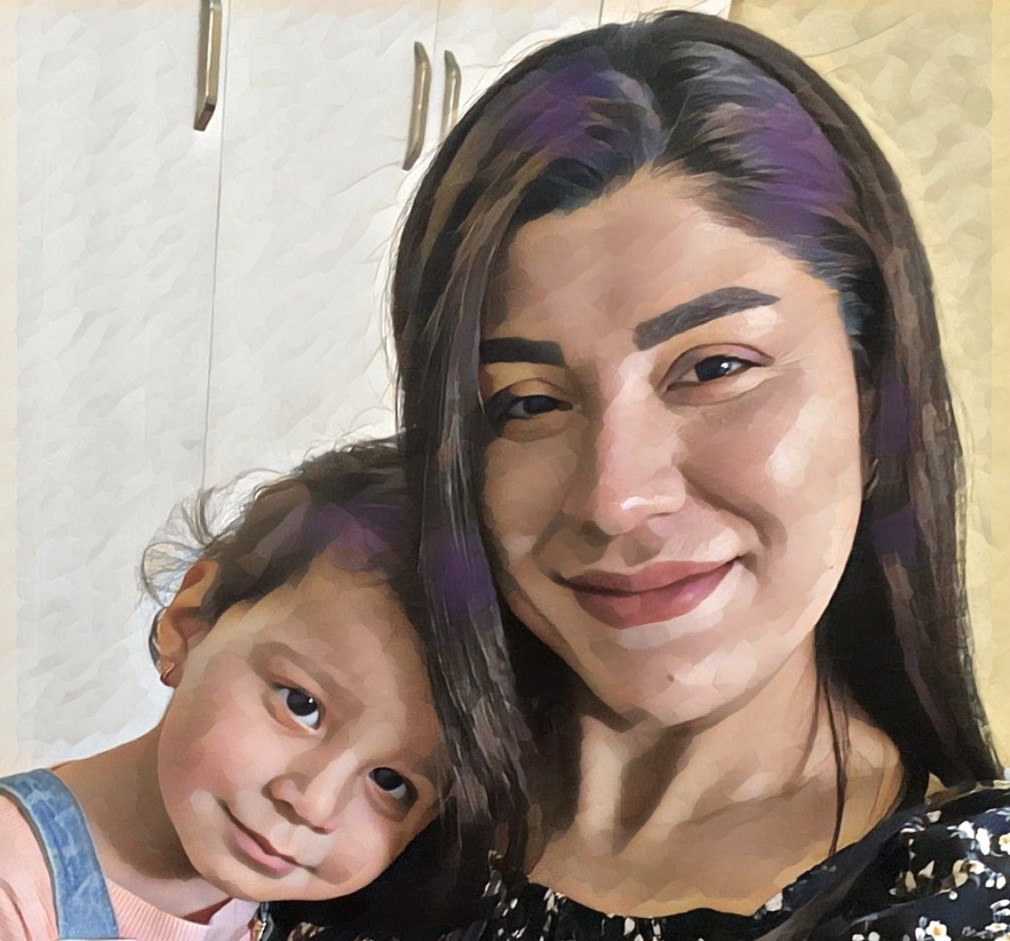
The parents of Rukhshona Khakimova, a Tajik journalist sentenced in February 2025 to eight years in prison on charges of treason, have issued an open letter to President Emomali Rahmon, urging him to reconsider their daughter’s case and facilitate her release. Family Appeals for Clemency A copy of the letter, signed by Khakimova’s parents, Zokir Khakimov and Makhsuda Sharopova, was published on social media on May 3. In the letter, the couple described their daughter’s upbringing in a family of educators committed to national values, patriotism, and humanism. Khakimov, a former school director in Kanibadam, and Sharopova, a retired teacher, emphasized their daughter’s achievements. “Our daughter graduated from school and university with honors, received a presidential scholarship, and always worked honestly and within the law,” they wrote. “We can say with complete confidence that Rukhshona could not have committed treason.” They appealed to Rahmon to intervene, especially considering that Khakimova is the mother of two young children. “We respectfully request and implore you, as the supreme leader of the nation, to take steps for her release,” the letter states. Background on the Charges Khakimova, 31, was convicted under Article 305, Part 2, Paragraph “c” of Tajikistan’s Criminal Code, “treason using her official position.” She was sentenced to eight years in prison following a closed trial. Human rights groups claim the charges were linked to her journalistic investigation into China’s influence in Tajikistan. Complicating the case is the fact that Khakimova is reportedly the niece of an opposition figure sentenced to 18 years for attempting a coup. Prior to her arrest, she had been placed under house arrest, her documents were confiscated, and on February 5, she was detained in the courtroom immediately following the verdict. An appellate court upheld the decision. Subsequently, about 230,000 somoni, savings intended for purchasing a home, were withdrawn from her bank account. On April 22, she was transferred from a pre-trial detention center in Dushanbe to a women’s correctional facility in Nurek. Public and International Reaction Khakimova’s sentencing has sparked condemnation both domestically and abroad. Journalists and human rights advocates described the case as emblematic of worsening conditions for press freedom in Tajikistan. Activists claim she faced repeated threats prior to her arrest. Earlier this year, a group of women and civil society activists also submitted a letter to Rahmon requesting leniency. International organizations including Human Rights Watch, Reporters Without Borders, and The Observatory for the Protection of Human Rights Defenders have called for her immediate release. Despite multiple appeals, Tajik authorities have yet to respond, and the sentence remains in effect.

OSCE, European Embassies Concerned About Media Freedom in Tajikistan

A conference was held in Dushanbe to mark World Press Freedom Day, celebrated annually on May 3. Despite Tajikistan's slight rise in the 2025 Press Freedom Index, international observers remain unconvinced that the situation in the country has improved. Official ratings vs. real-world conditions The event was organized by the media unit of the OSCE Office of Programs in Tajikistan, with support from Internews, the EU Delegation, and the embassies of Germany, France, and the United Kingdom. Discussions focused on the state of free speech, prospects for sustainable media development, and the role of women in journalism. According to Reporters Without Borders, Tajikistan ranked 153rd out of 180 countries in 2025, an improvement of two places from the previous year. However, Nuriddin Karshiboev, chairman of the National Association of Independent Media of Tajikistan (NAIMT), argued that the ranking does not reflect the lived reality. “The reality is different. The situation with freedom of expression and freedom of the press remains tense due to the prosecution of journalists, pressure on their relatives, self-censorship, and other factors,” he said. Karshiboev also criticized the ineffectiveness of existing mechanisms to protect journalists and a lack of understanding among some international media-support organizations. Freedom of speech is a right, not a privilege EU Ambassador to Tajikistan Raimundas Karoblis emphasized that journalism should never be grounds for intimidation or imprisonment. “No journalist should be subjected to intimidation or imprisonment for doing their job,” he told forum participants. Karoblis underlined that freedom of expression is not a political stance or cultural nuance, but a universally recognized right. “Freedom of expression in the media is a right, not a crime. The European Union’s protection of media freedom is not an external imposition. It is not a ‘European or Western value’ that can be exported or imposed, it is a universal human right recognized by all who believe in justice, dignity, and responsibility,” he said. He added that independent media do not threaten social stability but rather form its cornerstone. “Dynamic, independent media are not a threat to stability. They are the foundation of peace, democratic and economic progress,” Karoblis said, reaffirming the EU’s commitment to supporting journalists in Tajikistan and globally. High-profile cases against journalists In February 2025, Reporters Without Borders published a report highlighting increased repression of media figures in Tajikistan. One of the most notable cases involved freelance journalist Rukhshona Khakimova, who was sentenced to eight years in prison for treason following a closed trial. Her alleged offense was writing an analytical article on Chinese influence in Tajikistan. Khakimova is also the niece of an opposition politician sentenced to 18 years for an alleged coup attempt. Another case involved Ahmad Ibrohim, editor-in-chief of the weekly Payk, who was arrested in August 2024 on charges of corruption, extortion, and extremism. His trial was also held behind closed doors. According to media reports, the case was triggered by an officer from the State Security Committee demanding a bribe in exchange for renewing the paper’s state registration. Despite prosecution...

Tajik Journalist Rukhshona Khakimova Transferred to Prison After Closed Treason Trial

Rukhshona Khakimova, a Tajik journalist convicted of treason, has been transferred from a detention center in Dushanbe to a correctional facility in Nurek. The relocation was confirmed by a relative on April 22, who reported being informed of the transfer when attempting to deliver a package to the journalist​. Khakimova was sentenced to eight years in prison on February 5, 2025, following a closed-door trial. Her case is among several related to an alleged attempted coup. Despite the prosecution’s request for a 17-year sentence, the court handed down an eight-year term. The judge did not account for Khakimova's family circumstances; she is the mother of two young children, the eldest only two and a half years old, and the youngest nine months. She was taken into custody directly from the courtroom​. The case against Khakimova was initiated in June 2024 by Tajikistan’s General Prosecutor’s Office under charges of high treason. The accusation stemmed from a journalistic survey she conducted on China’s influence in Tajikistan. In the course of her reporting, Khakimova interviewed several individuals later implicated in the purported coup case, including former MP Saidjafar Usmonzod, who received a 27-year sentence, and her uncle, Shokirjon Khakimov, sentenced to 18 years. However, her interviews also included individuals unconnected to the alleged conspiracy. Before her arrest, Khakimova was placed under a travel restriction enforced by a signature bond, and all her identification documents had been confiscated. She was living in a rented apartment in Dushanbe. At the time of her arrest, authorities reportedly seized approximately 230,000 somoni ($21,427) from her personal bank account, funds she and her husband had saved toward purchasing a home. Khakimova is one of the few women in Tajikistan working openly with independent media. Her sentencing has become emblematic of the country’s increasing suppression of free speech. Human rights groups, including Human Rights Watch, Reporters Without Borders, and The Observatory for the Protection of Human Rights Defenders, have condemned her prosecution as a violation of press freedom, and have called for her immediate release. Additionally, a petition signed by 130 women in Tajikistan appealed to President Emomali Rahmon to commute Khakimova’s sentence, urging humane consideration for the mother of two. These efforts, however, have thus far failed to change her legal status.