• KGS/USD = 0.01144 0%
  • KZT/USD = 0.00207 0%
  • TJS/USD = 0.10440 -0.19%
  • UZS/USD = 0.00008 0%
  • TMT/USD = 0.28490 0%
  • KGS/USD = 0.01144 0%
  • KZT/USD = 0.00207 0%
  • TJS/USD = 0.10440 -0.19%
  • UZS/USD = 0.00008 0%
  • TMT/USD = 0.28490 0%
  • KGS/USD = 0.01144 0%
  • KZT/USD = 0.00207 0%
  • TJS/USD = 0.10440 -0.19%
  • UZS/USD = 0.00008 0%
  • TMT/USD = 0.28490 0%
  • KGS/USD = 0.01144 0%
  • KZT/USD = 0.00207 0%
  • TJS/USD = 0.10440 -0.19%
  • UZS/USD = 0.00008 0%
  • TMT/USD = 0.28490 0%
  • KGS/USD = 0.01144 0%
  • KZT/USD = 0.00207 0%
  • TJS/USD = 0.10440 -0.19%
  • UZS/USD = 0.00008 0%
  • TMT/USD = 0.28490 0%
  • KGS/USD = 0.01144 0%
  • KZT/USD = 0.00207 0%
  • TJS/USD = 0.10440 -0.19%
  • UZS/USD = 0.00008 0%
  • TMT/USD = 0.28490 0%
  • KGS/USD = 0.01144 0%
  • KZT/USD = 0.00207 0%
  • TJS/USD = 0.10440 -0.19%
  • UZS/USD = 0.00008 0%
  • TMT/USD = 0.28490 0%
  • KGS/USD = 0.01144 0%
  • KZT/USD = 0.00207 0%
  • TJS/USD = 0.10440 -0.19%
  • UZS/USD = 0.00008 0%
  • TMT/USD = 0.28490 0%

Viewing results 1 - 6 of 101

The New Geoeconomics of Uzbekistan: Insights from ISRS Director Eldor Aripov

The Times of Central Asia presents a two-part interview in Washington, D.C. with Eldor Aripov, Director of the Institute for Strategic and Regional Studies under the President of Uzbekistan. Dr. Aripov sat down with our Washington Correspondent, Javier M. Piedra, to discuss Uzbekistan’s strategic thinking regarding its diplomatic posture, regional integration, and relations with Central Asian and global partners. The conversation includes commentary on “Great Game” geopolitics, U.S.–Uzbekistan relations, trade, the meaning of “Uzbekistan First,” the historically explosive Ferghana Valley, and water management. Recognizing the link between investment, a stable geopolitical ecosystem, and the need to de-risk potentially conflictive issues, Aripov further sheds light on Tashkent’s practical approach to internal governance and business development. [caption id="attachment_40284" align="aligncenter" width="2360"] Central Asia on the Front Lines; image: Defense.info[/caption] TCA: “America First” refers to U.S. policies prioritizing national interests, often associated with non-interventionism, nationalism, and protectionist trade. Given Uzbekistan’s pragmatic foreign policy, can we speak of an “Uzbekistan First” policy? It is certainly not isolationist — but how is it manifested on a day-to-day basis? Aripov: What you describe as “Uzbekistan First” is, in our understanding, fundamentally about prioritizing national interests – stability and predictability for the people of Uzbekistan. Yet Uzbekistan’s uniqueness lies in the fact that our national interests are closely intertwined with those of the entire region – this means shared upsides at the transactional and strategic levels and thinking long-term. We border every Central Asian country as well as Afghanistan, and therefore any issue — security, trade, transport, or water management — directly depends on the quality of our relationships with neighbors. From his first days in office, President Shavkat Mirziyoyev — with his strategic vision and deep understanding of regional dynamics — declared that regional unity and mutual benefit stand at the core of Uzbekistan’s foreign policy. The essence of his doctrine is to resolve agreeably any historically or materially problematic issues with neighbors, remove barriers to understanding, and create predictable, stable conditions for mutually beneficial cooperation and the free movement of goods, ideas, and people. That is the true meaning of “Uzbekistan First”: not isolation, but openness, predictability, and regional consolidation. TCA: How are you realizing “Uzbekistan First” in practice? Aripov: Uzbekistan is strengthening its economy domestically and global track - putting in place the building blocks for internal sustainable development and accelerating accession to the World Trade Organization. The latter means expanding the geography and composition of exports and increasing the country’s investment attractiveness. This approach is rooted in the logic of sustainable development within the broader international context: long-term national interests are best served by Uzbekistan integrating into global value chains and markets. The results speak for themselves: in 2024, Uzbekistan’s GDP grew by 6.5%, foreign direct investment increased by more than 50% to reach $11.9 billion, and the target for 2025 is to attract $42 billion. This performance is also a tribute to our style of diplomacy, grounded in respect and having a constructive attitude towards others. Thus, “Uzbekistan First” represents a modern model...
From Glaciers to Green Goals: Central Asia at COP30

The UN Climate Change Conference (COP30) in Belém, Brazil, concluded with a hard-fought global deal that boosts climate finance for developing countries but avoids any promise to phase out fossil fuels. Amid this uneasy compromise, the Central Asian nations worked to get their priorities heard. Their delegations pressed for more climate funding, recognition of their unique vulnerabilities, and support for regional initiatives, with mixed results. A United Regional Voice on Climate Home to over 80 million people, Central Asia entered COP30 with a goal outlined as “five countries, one voice,” after a regional dialogue in Dushanbe ahead of the summit forged a common stance on shared threats such as melting glaciers and water stress. The region has already warmed about 2.2 °C – faster than the global average – and glaciers are shrinking by roughly 0.5% each year, Uzbekistan’s environment minister Aziz Abdukhakimov warned in Belém. He noted worsening land degradation and vanishing water resources, underscoring Central Asia’s acute climate vulnerability. In response, Uzbekistan unveiled a new pledge to cut its greenhouse gas emissions by 50% by 2035 (from 2010 levels) by expanding renewable energy and forests. Such actions align with COP30’s call for developed nations to triple adaptation finance by 2035 to help vulnerable countries cope. “COP30 showed that climate cooperation is alive and kicking, keeping humanity in the fight for a livable planet,” UN climate chief Simon Stiell said in his closing speech, praising delegates for persisting despite global divisions. National Commitments and Initiatives Kazakhstan, Central Asia’s largest economy and emitter, took on a visible role at COP30. Its delegation was led by Minister of Ecology and Natural Resources Yerlan Nyssanbayev, who addressed the summit’s opening session. Nyssanbayev reaffirmed Kazakhstan’s commitment to the Paris Agreement goals, noting the country has adopted a “Revised Nationally Determined Contribution (NDC) and a National Adaptation Plan” with more ambitious targets to cut emissions and bolster resilience. “It is crucial for us to consistently work toward achieving our climate goals,” he stated. Nyssanbayev emphasized the importance of climate finance for developing countries, highlighting the new “Baku–Belém Roadmap” to mobilize $1.3 trillion annually by 2035 and urging support for a significantly increased funding mechanism.  Kazakhstan also became one of only seven nations – and the sole Central Asian country – to sign a joint declaration pledging “near zero” methane emissions from its fossil fuel sector. In a sign of ongoing regional leadership, Nyssanbayev invited all delegates to attend a Central Asia Regional Environmental Summit that Kazakhstan will host in 2026, aiming to sustain climate cooperation beyond COP30. Kyrgyzstan, given its geography, used the summit to champion the mountain agenda and the plight of high-altitude communities on the frontlines of climate change. The Kyrgyz Republic chairs the UNFCCC’s Mountain Group and sent a delegation led by Deputy Chairman of the Cabinet of Ministers, Edil Baisalov, and Dinara Kemelova, the President’s Special Representative for the Mountain Agenda. In the first week of COP30, Kemelova delivered keynote remarks at multiple high-level sessions, calling for strengthened international support and...

COP30 Delegate from Kazakhstan Says International Cooperation Is Hard, But Worth It

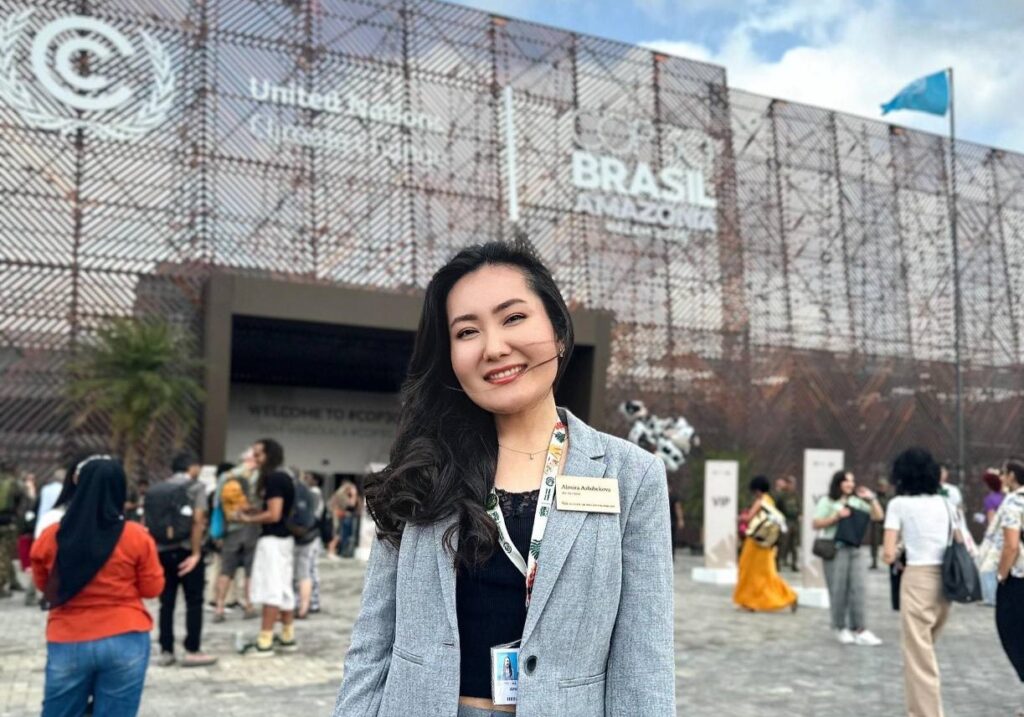
One of Kazakhstan’s representatives at the United Nations climate talks (COP30) in Belém, Brazil, this month was Almira Azhibekova, a Master of Environmental Management student at Yale University in the United States. As a member of the team from Kazakhstan’s Ministry of Ecology and Natural Resources, Azhibekova analyzed negotiations, helped prepare final reports, and performed other tasks. She shared this account, lightly edited by The Times of Central Asia. Views are her own. Attending COP30 as part of Kazakhstan’s delegation was an amazing chance to connect theoretical knowledge that I acquired at Yale with real-world climate diplomacy. I learned how countries like Kazakhstan access climate finance and technology support through fair partnerships and witnessed how, despite obstacles and challenges, international cooperation is the best way to turn ambitious goals into action. It is something I hope to bring back to Yale and my future work at home. What struck me most about COP30 was how global cooperation works in practice. It is inspiring, but also incredibly challenging. Seeing negotiations happen in real time was eye-opening. There is urgency, there is complexity, and there is a very human side to everything. Reaching consensus is not easy. Every country has its own priorities and concerns, and negotiators must ensure that everyone is heard and respected. Often, a single paragraph will go through informal consultations, smaller working groups, and then formal sessions before it can be agreed upon. Even one sentence in a final text can be discussed for hours, and some issues remain open for years. Diplomacy takes patience. Sometimes, a small difference in language becomes the focus of intense discussion because specific terminology can carry distinct legal and operational consequences. In international climate law, each term has a defined meaning, and a slight change in wording can alter how a mechanism will be implemented. I realized just how much weight language holds in shaping global climate action. Another insight, one I had known in theory but witnessed in practice, is that climate change affects every aspect of economies and societies and is a defining issue in international relations. Decisions made in negotiation rooms can influence economic development, security, and international cooperation, far beyond the environmental sphere. There were also practical challenges that made cooperation more difficult. Differences in languages, levels of technical expertise, national experiences, and even delegation sizes. Some countries can’t send enough people to be present in every negotiation. Equity in the process is as important as equity in the results. [caption id="attachment_39763" align="aligncenter" width="1327"] Photo provided by Almira Azhibekova[/caption] Another important factor is the quality of technical logistics and working conditions, which directly affect the effectiveness and accessibility of an already complex negotiation process. In addition to these observations, I was incredibly fortunate to speak to Dr. Katia Simeonova, a key architect and co-founder of the transparency framework under the Paris Agreement. She explained the peculiarities of negotiation: how every word in the text works in practice, how specific terms shape legal outcomes, and things that delegations must...

With Shared Goals, Azerbaijan Draws Closer to Central Asia

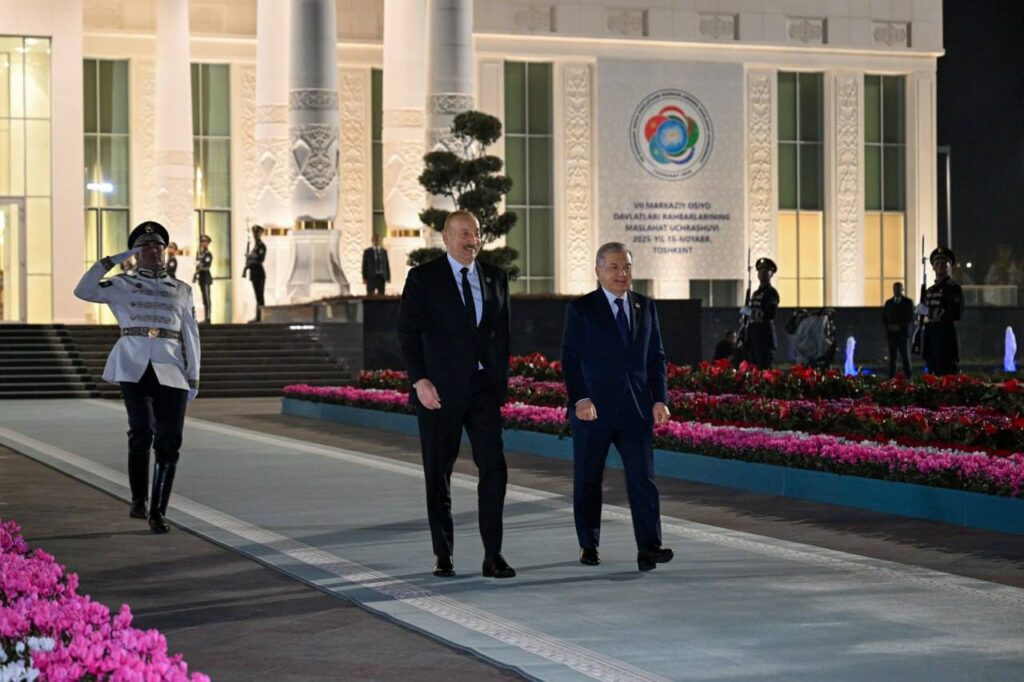
Then there were six. The five Central Asian countries of Kazakhstan, Kyrgyzstan, Tajikistan, Turkmenistan, and Uzbekistan are widely thought of as a group, united by geography, their shared history as former Soviet republics, and growing collaboration in recent years. Now, Azerbaijan is emerging as a sixth member of the group, even though it is in the South Caucasus. At a summit on Sunday, Central Asian leaders supported Azerbaijan’s accession to the region’s Consultative Meeting format as a full participant, “forming a unified space for interaction between Central Asia and the South Caucasus,” Uzbekistan’s presidency said. The Consultative Meeting format is a vehicle for high-level collaboration among Central Asian countries, which have taken steps to resolve border disputes and other sources of tension between them over the years. The format addresses trade, security, and other issues. All five Central Asian leaders, as well as President Ilham Aliyev of Azerbaijan, attended the annual meeting in Tashkent on Sunday. In a speech, Aliyev noted that he had visited Central Asian countries 14 times in the last three years, and that Central Asian leaders had visited Azerbaijan a total of 23 times during the same period. He said Azerbaijan and Central Asia “today form a single geopolitical and geo-economic region, whose importance in the world is steadily growing.” Azerbaijan, which is also a former Soviet republic, shares the Turkic background of some of the Central Asian nations. While all the countries have distinct national identities, they covet the goal of more robust trade routes linking Asia and Europe, as well as regional solidarity in an uncertain geopolitical environment where China, Russia, and the United States are dominant powers. After Azerbaijan was admitted to the Central Asian talks format, Azerbaijani presidential adviser Hikmet Hajiyev posted on X: “From now on, Central Asia stands as 6.”

Abraham Accords Frame Kazakhstan–Israel Cooperation to Deliver Tokayev’s Reforms

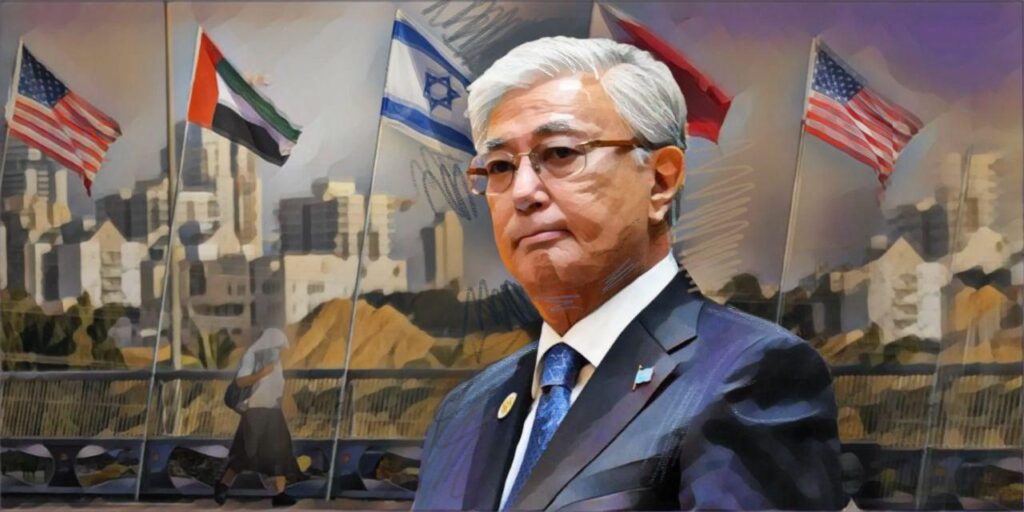
Kazakhstan’s decision to enter the Abraham Accords is a diplomacy-first move by President Kassym-Jomart Tokayev. Its aims include: 1) converting symbolic capital into policy traction in Washington, 2) arriving at workable co-financing with Gulf partners, and 3) preserving equilibrium with Moscow and Beijing. The step does not alter recognition; the two countries have had diplomatic relations for a third of a century, institutionalized through embassies. Cooperation has been steady, if modest. Entering the Abraham Accords now gives these relations a framework that U.S. agencies, funds, and implementers already use. The timing intersects the C5+1 turn from set-piece dialogues to transactions, with new deals announced alongside the Accords move. What the framework unlocks is execution. It compresses attention cycles inside U.S. bureaucracies, normalizes trilateral packaging with Gulf financiers, and clears diligence pathways for banks and development finance institutions. Those effects matter where Israeli capabilities dovetail with Tokayev’s priorities. The premise of Tokayev’s move is straightforward: diplomacy should shorten the distance between declared policy and the implementation of projects that work. Tokayev’s Diplomatic Architecture and the Bilateral Relationship Kazakhstan recognized Israel in 1992 and opened embassies soon after, setting a cautious but uninterrupted channel for official contact. The institutional scaffolding is visible in public sources. Trade volumes have been modest but steady, with 2024 bilateral turnover reported by Kazakhstan’s statistics at roughly $236 million, a figure that is broadly consistent with third-party trackers such as Trading Economics and OEC profiles. Practical frictions have eased as Air Astana initiated direct air links between Almaty and Tel Aviv in 2023. The Accords move aligns that long, incremental relationship with a framework that is transparent to Washington and to Gulf financiers. Reporting on the Washington week underscores the shift from set-piece dialogues to transactions, as the Accords announcement was paired with commerce headlines. Joining the Abraham Accords reorganizes and reframes practical bilateral activities. By placing existing ties under a known diplomatic wrapper, Astana becomes easier to route inside U.S. agencies and funds, and easier to match with Gulf co-financing for projects that fall in line with Tokayev’s domestic reforms and economic development program. The practical test becomes whether the new wrapper accelerates cooperation, where Israel’s comparative advantages can help Kazakhstan meet the goals of that program. Examples of this are precision irrigation and basin telemetry to optimize steppe agriculture, audit-plus-retrofit toolkits that cut grid and industrial losses without new generation, reinforcing the 2060 neutrality track, and civil-service-embedded cyber training with secure data exchange that lifts administrative credibility. The Accords thus function as additive diplomacy, widening Kazakhstan’s access to recognizable cooperation pathways without demanding a shift in alignments. In Washington, the move plugs into an existing rubric that officials already use for interagency routing and external partnerships. Regionally, it complements the C5+1’s turn toward transaction-focused engagement. Domestically, it moves Tokayev’s reform agenda forward. Internationally, it demonstrates continued leadership. The diplomatic wrapper works because Kazakhstan can route cooperation through recognized counterparties and rules. Samruk-Kazyna and core state-owned enterprises (SOEs) represent accountable anchors consistent with OECD-provided guidance on...

Between Trump and Putin: Tokayev Emerges as a Regional Diplomatic Powerbroker

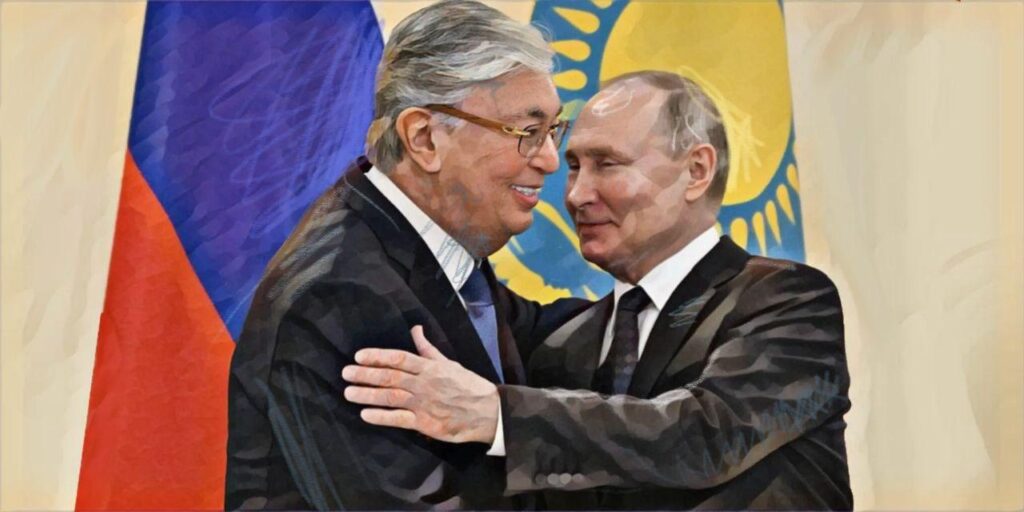
In a striking display of diplomatic balancing, Kazakhstan’s President Kassym-Jomart Tokayev ended 2025 with a high-profile state visit to Moscow, where he and Russian President Vladimir Putin signed a declaration elevating bilateral relations to a comprehensive strategic partnership and alliance. The visit came just days after Tokayev returned from Washington, where he participated in a summit with U.S. President Donald Trump, and the September meeting with Xi Jinping in Tianjin. Back-to-back high-level diplomatic engagements have underscored Tokayev’s rising stature as a regional statesman navigating the complex geopolitical landscape between Russia and the West, representing a somewhat diplomatic ‘hat trick’ for the Kazakh leader. Kazakhstan’s multi-vector foreign policy has long sought to maintain balanced relations with Russia, China, the United States, and Europe. This approach allows Astana to position itself as a neutral and pragmatic actor even during periods of geopolitical tension, and explains why Tokayev is one of the few leaders trusted by both Washington and Moscow. Amid speculation in global media about Kazakhstan’s accession to the Abraham Accords, Tokayev’s stop in Moscow has drawn attention not only for its symbolism but also for its possible behind-the-scenes diplomacy. Kazakhstan’s agreement to sign the Abraham Accords has generated considerable discussion within diplomatic circles. For Washington, Astana’s endorsement signals alignment with U.S. regional objectives in the Middle East, while for Russia, it raised questions about Kazakhstan’s strategic leanings, making Tokayev’s immediate trip to Moscow particularly important. No Central Asian state had previously moved to formally support a U.S.-brokered Middle Eastern diplomatic framework, making Kazakhstan’s position especially noteworthy. A Private Conversation at the Kremlin Russian political analyst Arkady Dubnov highlighted the significance of an informal, private meeting between Tokayev and Putin ahead of their official talks. “The presidents exchanged brief greetings, and then Putin invited his guest to his Kremlin apartment for a private conversation,” Dubnov noted. Tokayev later confirmed that the tête-à-tête lasted over two-and-a-half hours. Dubnov suggested that such discretion may point to confidential messages being relayed. He cited recent remarks by Finnish President Alexander Stubb, who visited Astana shortly before Tokayev’s Washington trip. Stubb reportedly said that Tokayev could serve as a conduit for communication between Trump and the Kremlin. Before this, only Chinese President Xi Jinping had been granted such extended privacy with Putin, Dubnov emphasized. Tokayev is one of the few leaders who has maintained uninterrupted working relationships with both Western capitals and Moscow throughout recent years. His neutral stance on the Ukraine conflict, refusal to recognize breakaway territories, and active participation in U.S.-backed initiatives - combined with Kazakhstan’s deep economic and security links with Russia - place Tokayev in a uniquely credible position. Neither side views him as fully aligned with the other, which increases his utility as a channel for sensitive political messaging. Kazakhstan as a Strategic Messenger? Kazakh political analyst Andrei Chebotarev also underscored the potential geopolitical significance of the Tokayev-Putin meeting. “Most likely, the Russian president was interested in the details of his Kazakh counterpart's recent visit to the U.S. and his talks with...