• KZT/USD = 0.00222
  • TJS/USD = 0.10820
  • UZS/USD = 0.00009
  • TMT/USD = 0.29760
  • KZT/USD = 0.00222
  • TJS/USD = 0.10820
  • UZS/USD = 0.00009
  • TMT/USD = 0.29760
  • KZT/USD = 0.00222
  • TJS/USD = 0.10820
  • UZS/USD = 0.00009
  • TMT/USD = 0.29760
  • KZT/USD = 0.00222
  • TJS/USD = 0.10820
  • UZS/USD = 0.00009
  • TMT/USD = 0.29760
  • KZT/USD = 0.00222
  • TJS/USD = 0.10820
  • UZS/USD = 0.00009
  • TMT/USD = 0.29760
  • KZT/USD = 0.00222
  • TJS/USD = 0.10820
  • UZS/USD = 0.00009
  • TMT/USD = 0.29760
  • KZT/USD = 0.00222
  • TJS/USD = 0.10820
  • UZS/USD = 0.00009
  • TMT/USD = 0.29760
  • KZT/USD = 0.00222
  • TJS/USD = 0.10820
  • UZS/USD = 0.00009
  • TMT/USD = 0.29760
13 September 2026

Viewing results 1 - 6 of 74

Tokayev Congratulates Putin After Alaska Meeting; Russian Leader Briefs Mirziyoyev

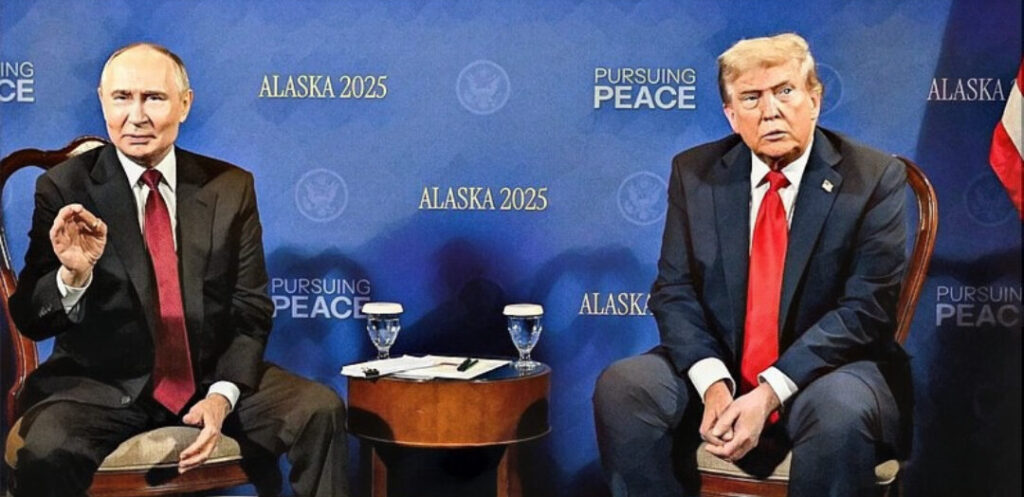
Russian President Vladimir Putin spoke to the leaders of Kazakhstan and Uzbekistan by telephone on Sunday, briefing them about his talks in Alaska with U.S. President Donald Trump about ending the war in Ukraine. Trade and joint energy projects between Russia and the Central Asian countries were also discussed. President Kassym-Jomart Tokayev of Kazakhstan congratulated Putin on “the results” of the meeting with Trump and said “the negotiations contributed to a better understanding by the American side of the Russian position on Ukraine, which will help find common ground on this complex issue,” Tokayev’s office said. “Kassym-Jomart Tokayev considers the Alaska summit a breakthrough event in terms of strengthening Russia's international positions and mutual understanding on the world stage,” the office said. Even so, uncertainty remains. Putin and Trump provided few details about their meeting on Friday, leaving Alaska without the Ukraine-backed cease-fire that Trump had previously demanded. Ukraine and its European allies are concerned that Trump could back a proposed deal under which Moscow secures more Ukrainian territory as part of a resolution. Ukrainian President Volodymyr Zelenskyy and European leaders are scheduled to meet Trump at the White House on Monday to press their case for a peace with security guarantees. In their phone call, Putin informed President Shavkat Mirziyoyev of Uzbekistan of the “main results” of his meeting with Trump, Mirziyoyev’s office said. “The leader of Uzbekistan expressed support for the agreements reached and voiced hope for a swift settlement of the situation surrounding Ukraine,” the office said. Putin and Mirziyoyev spoke about accelerating trade between their two countries, while Tokayev thanked the Russian leader for collaborating in the field of energy, a possible reference to Russia’s leading role in building Kazakhstan’s first nuclear power plant. The Kremlin released similar statements about the phone calls.

Despite War’s Challenges, Kazakhstan Says Trump-Putin Meeting Was “The Beginning”

Kazakhstan has praised Russian President Vladimir Putin and U.S. President Donald Trump for their meeting in Alaska, describing it as “the beginning of high-level negotiations on the situation in Ukraine.” President Kassym-Jomart Tokayev “regards the summit as a historic event, made possible by the political will and sincere determination of both leaders to seek common approaches to resolving contemporary global challenges, including the cessation of hostilities in Ukraine,” Tokayev´s press secretary, Ruslan Zheldibay, said on X on Saturday. Tokayev’s statement generally aligned with the positive statements made by Putin and Trump after their meeting on Friday, even though the two leaders provided few details about how they envisioned resolving the conflict when they spoke briefly to the media after their discussion. Ukraine and its European allies have been concerned that Trump could favor Putin’s terms for ending the war, leaving Ukraine vulnerable to renewed Russian pressure in the future. Ukrainian President Volodymyr Zelenskyy is expected to meet Trump at the White House on Monday. In a Truth Social post on Saturday, Trump appeared to back away from his previous demand for a Ukraine-supported ceasefire, saying it was better to “go directly to a Peace Agreement, which would end the war, and not a mere Ceasefire Agreement, which often times do not hold up.” Despite their concerns, European leaders have welcomed Trump’s negotiation efforts, noting a statement by the U.S. president that the United States “is prepared to give security guarantees” so that Ukraine can defend its sovereignty. “It will be up to Ukraine to make decisions on its territory. International borders must not be changed by force,” a joint statement by European leaders said. Kazakhstan is not directly involved in negotiations over Ukraine, but it has become an intermittent venue for international diplomacy and has offered to assist as needed since it maintains ties with both Russia and Ukraine. Tokayev has spoken in support of Ukraine’s sovereignty and territorial integrity. But in a phone call a week ago, Tokayev told Zelenskyy that “A bad peace is better than a good war,” possibly a pitch to the Ukrainian leader to consider concessions such as giving up territory in order to preserve the country’s independence. Russia occupies an estimated 20% of Ukraine and has made gains in eastern Ukraine in recent days. At least publicly, Zelenskyy has opposed the idea of giving up territory, saying the Ukrainian constitution prevents him from doing so. On Saturday, he said on X: “A real peace must be achieved, one that will be lasting, not just another pause between Russian invasions.” Kazakhstan, which has sought neutrality over the war, shares a long land border with Russia and has closer trade and diplomatic ties with Moscow than Kyiv. Since Russia’s full-scale invasion of Ukraine in February 2022, Tokayev has spoken to Zelenskyy several times in phone calls that, according to Kazakhstan’s presidency, were initiated by the Ukrainian side. Tokayev has spoken to Putin by phone on more than twice as many occasions and has also met the Russian...

After U.S. Bombs Iran, Central Asia Calls for Diplomacy and Restraint

In the early hours of June 22, the United States launched airstrikes on Iran’s nuclear facilities, triggering widespread concern across Central Asia. Despite the potential economic upside for Kazakhstan, with the possibility of rising oil prices, the region’s governments have uniformly called for restraint and a peaceful resolution. The operation, dubbed “Midnight Hammer” by the U.S. Department of Defense, reportedly targeted facilities in Fordow, Natanz, and Isfahan. While Washington claimed success, the Iranian authorities asserted they had evacuated uranium from the Fordow site in advance, calling the mission a failure. Military experts continue to debate the extent of the damage. Coordinated Responses from Central Asian Capitals The foreign ministries of Kazakhstan, Uzbekistan, Kyrgyzstan, Turkmenistan, and Tajikistan issued similarly worded statements expressing concern over the rapidly deteriorating situation. Kazakhstan’s Ministry of Foreign Affairs stated that the U.S. airstrikes marked a dangerous escalation and emphasized the need for negotiations grounded in the UN Charter. “Kazakhstan is part of the group of Caspian countries and is developing cooperation with Iran in various areas. Our country believes that all disagreements, including nuclear issues, should be resolved through negotiations,” the statement said. It also urged international efforts to prevent nuclear proliferation and establish security guarantees for nations adhering to the non-proliferation regime. Uzbekistan’s Foreign Ministry echoed this sentiment and advised citizens to avoid traveling to Israel and Iran. It also urged those currently in those countries to leave high-risk areas where possible. Kyrgyzstan called on all parties to exercise “maximum restraint” and avoid steps that could exacerbate the crisis. Turkmenistan reaffirmed its policy of "positive neutrality," stressing the importance of diplomacy and adherence to international law. Ashgabat stated that it “does not accept the use or threat of force as a means of resolving political and other disputes”. Tajikistan, meanwhile, issued the strongest statement, condemning the U.S. and Israeli strikes outright and warning that the conflict could lead to a prolonged regional war. Dushanbe called on the UN, IAEA, and other global bodies to prevent violations of international law and work towards peace and environmental safety. The Economic Subtext: Rising Oil Prices While official reactions were uniformly cautious, analysts in Kazakhstan noted the economic implications. Expert Olzhas Baidildin pointed out that shares in KazMunayGas surged by 11% following the strikes, with its market capitalization rising to 10.3 trillion KZT ($19.8 billion). Baidildin previously argued that Iran is unlikely to follow through on threats to block the Strait of Hormuz. Nevertheless, he noted that such a move would dramatically increase the strategic importance of Kazakhstan and other Central Asian energy producers to major consumers such as China and India. Financial analyst Andrei Chebotarev agreed, stating: "Iran’s threat to close the Strait of Hormuz is no longer the ace it once was. The West has diversified away from Gulf oil, while the real impact would fall on China, the region’s largest importer. Meanwhile, the U.S. could benefit from a price surge through its shale exports". It is estimated that China purchases approximately 90% of Iran's oil exports...

Kazakhstan’s Nuclear Diplomacy – With China Set to Build Second, Who Will Construct Third Nuclear Power Plant?

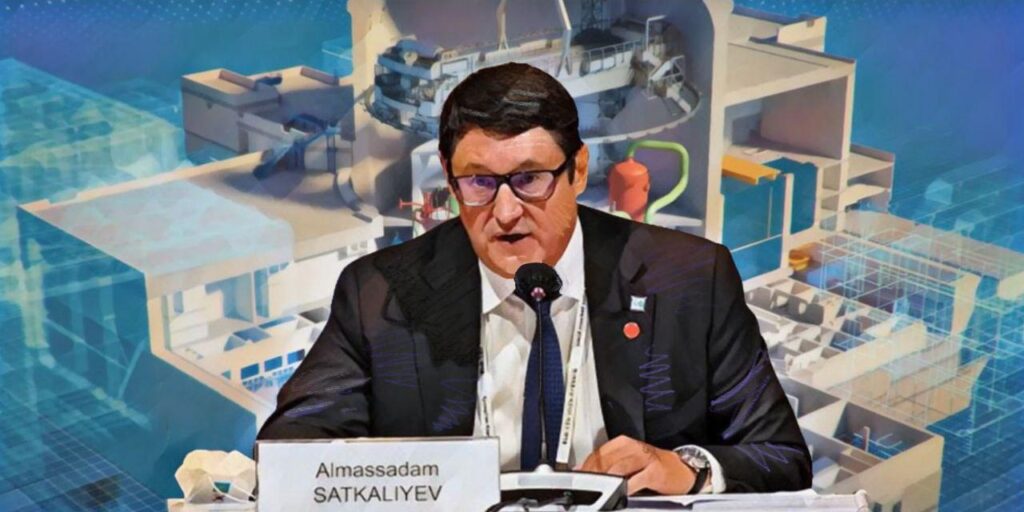
Kazakhstan’s famed hospitality, long enshrined in its national proverbs, has also become a guiding principle in its foreign policy. One recent example is the Kazakh government’s diplomatic maneuvering in the selection of partners for its nuclear power program. Leader of the Race Initially, Kazakhstan planned to build a single nuclear power plant by 2035 to address potential electricity shortages. However, following the October 6, 2024, referendum, where 71.12% of voters approved a plant in the Almaty Region, President Kassym-Jomart Tokayev instructed the government to explore the construction of at least two additional facilities. This directive, as it turns out, was both timely and strategic. In March 2025, the newly formed Atomic Energy Agency, reporting directly to the president, was tasked with overseeing the selection of international consortium leaders. On June 14, the agency announced that Russia’s state-owned Rosatom would lead the consortium to build Kazakhstan’s first nuclear power plant. Rosatom CEO Alexey Likhachev welcomed the decision, stating that the VVER-1200 Generation 3+ reactors, already operating in Russia and Belarus and selected by partners in Hungary, Egypt, Turkey, Bangladesh, and China, would be used. These reactors, he emphasized, meet international safety standards and integrate both active and passive safety systems. Tricks Up Their Sleeves Behind the scenes, the selection process revealed a quiet tug-of-war between Chinese and Russian interests. Ultimately, Rosatom prevailed, thanks, in part, to two strategic moves. First, Rosatom’s supporters enlisted Assystem, an ostensibly independent nuclear engineering consultancy, to assist Kazakhstan Atomic Power Plants LLP in the evaluation process. The firm’s analysis favored Rosatom. Second, to pre-empt concerns about Western sanctions, the Kazakh authorities emphasized that Kazakhstan would be the sole owner and operator of the facility. Atomic Energy Agency head Almasadam Satkaliev stated that Kazakhstan would control the entire production cycle from uranium mining to fuel processing and plant maintenance, thereby limiting direct Russian involvement post-construction. This arrangement may allow the creation of a Kazakh legal entity immune to Western sanctions, as it would be wholly state-owned. Whether this could offer Rosatom a loophole for acquiring restricted components remains an open question but one that few may press given the global interest in nuclear safety. Another Contender Emerges Just hours after Rosatom’s contract was announced, Satkaliev made a second, equally strategic statement: China National Nuclear Corporation (CNNC) would lead the construction of Kazakhstan’s second nuclear power plant. Satkaliev cited CNNC’s “strongest proposals” and revealed plans for a broader agreement on nuclear cooperation with China. “Objectively, few countries can master the entire nuclear cycle. China is one of them,” Satkaliev noted. Back in February, prior to the agency’s creation, Kazakhstan’s Ministry of Energy, then also led by Satkaliev, had identified Kurchatov and Aktau as potential sites for future nuclear facilities. Kurchatov lies near the former Semipalatinsk nuclear test site, while Aktau once hosted the Soviet-era BN-350 fast neutron reactor. The timing of Satkaliev’s announcement is no coincidence. Chinese President Xi Jinping is scheduled to visit Kazakhstan on June 16 for the second China-Central Asia Summit. For a nation that...

Kyrgyz Government Defends Russian Language Amid Push for Kyrgyz-Only Policies

Deputy Prime Minister of Kyrgyzstan Edil Baisalov has publicly defended the role of the Russian language in the country’s education system, stating that fluency in Russian should become standard for all schoolchildren. Speaking to journalists in Bishkek, Baisalov rejected recent calls by members of parliament and the National Commission on the State Language to translate all scientific literature into Kyrgyz. He argued that access to educational and methodological materials in Russian and English broadens Kyrgyzstan’s academic and scientific opportunities. “It is important for us that every schoolchild knows Russian. This is necessary not only for internal communication, but also for access to global science, culture, and interaction with the outside world,” Baisalov said. “Of course, we will develop other languages as well, English, Chinese, Arabic, and Turkish. The more languages young people know, the better they will feel in the modern world.” His comments come amid a controversial push by the National Commission on the State Language to mandate Kyrgyz as the sole language of instruction at universities and impose fines on professionals, including civil servants, judges, lawyers, and teachers, who do not know Kyrgyz. A bill to this effect is currently under public review. Melis Murataliyev, head of the Commission, has cited the low level of Kyrgyz proficiency among civil servants as a major issue, pointing to frequent errors in official documents. The Commission claims that 70-80% of Kyrgyzstan’s universities currently use Russian as the primary language of instruction, a situation it argues must change. However, the proposals have drawn widespread criticism from the public and lawmakers. Some members of parliament have urged a more balanced approach. While Murataliyev has proposed revising legislation related to the status of Russian as an official language, Baisalov assured that the government has no intention of doing so.

Kazakhstan’s Diplomatic Dance: Securing Power in Turbulent Times

For Kazakhstan, strengthening ties with neighboring Central Asian states – as well as with Russia, China, and the West – is a top foreign policy priority. That, however, does not mean that the energy-rich nation is not also seeking to build stronger relations with other actors on the international stage. The largest regional country views itself as an aspiring middle power. As such, it intends to continue pursuing what Roman Vassilenko, Kazakhstan’s Deputy Foreign Ministry, describes as a “balanced, constructive and pragmatic foreign policy.” Yet, in an increasingly turbulent world, this approach comes with its own sets of challenges. One of them is undoubtedly the construction of the nation’s first nuclear power plant. Kazakhstan’s President Kassym-Jomart Tokayev has repeatedly stated that an international consortium with participation by companies from China, France, Russia, and South Korea should be responsible for that. But how realistic is that under the current geopolitical circumstances? “No decision of the composition of the consortium has been made yet, although we are actively negotiating with the companies interested in the construction,” Vassilenko told The Times of Central Asia, emphasizing that Tokayev has stressed that Kazakhstan will need more than one nuclear power plant. That is why, in Vassilenko’s view, there will likely be different types of consortiums building different types of nuclear plants. Such an approach perfectly illustrates the Central Asian nation’s “multi-vector” foreign policy. “As the ninth largest country in the world, with only 20 million people, and neighboring such superpowers as Russia and China, we can naturally depend only on the best diplomacy we can deploy,” Vassilenko stressed. For that reason, Kazakhstan has initiated the Astana International Forum (AIF) – an event that reflects today’s interconnected global challenges, ranging from energy security and the climate crisis to technological innovation, sustainable development, and geopolitical cooperation. This year, the AIF – taking place in the Kazakh capital on May 29-30 – will host leaders from nations such as Rwanda, Qatar, Albania, Croatia, and North Macedonia, among others. The fact that Astana will host leaders from several Balkan countries clearly suggests that Kazakhstan plans to strengthen ties with this part of Europe. According to Vassilenko, Kazakhstan’s policymakers view the Balkans as a “promising market” which is why the Central Asian nation plans to establish direct flights to Serbia later this year. “We already have direct flights to Montenegro, and we aim to connect Kazakhstan with other European countries as well,” Vassilenko said, adding that his nation has recently opened embassies in Albania and North Macedonia. This approach demonstrates that Astana sees not only the European Union but also the EU candidate countries as potential partners. Still, for Kazakhstan – a major oil and gas producer – energy plays an important role in its foreign policy strategy. Given that the Central Asian state supplies large quantities of crude oil and petroleum products to Europe via Croatia, it’s no surprise that the Prime Minister of the former Yugoslav Republic, Andrej Plenkovic, is among the major speakers at the Astana International...