• KZT/USD = 0.00222
  • TJS/USD = 0.10820
  • UZS/USD = 0.00009
  • TMT/USD = 0.29760
  • KZT/USD = 0.00222
  • TJS/USD = 0.10820
  • UZS/USD = 0.00009
  • TMT/USD = 0.29760
  • KZT/USD = 0.00222
  • TJS/USD = 0.10820
  • UZS/USD = 0.00009
  • TMT/USD = 0.29760
  • KZT/USD = 0.00222
  • TJS/USD = 0.10820
  • UZS/USD = 0.00009
  • TMT/USD = 0.29760
  • KZT/USD = 0.00222
  • TJS/USD = 0.10820
  • UZS/USD = 0.00009
  • TMT/USD = 0.29760
  • KZT/USD = 0.00222
  • TJS/USD = 0.10820
  • UZS/USD = 0.00009
  • TMT/USD = 0.29760
  • KZT/USD = 0.00222
  • TJS/USD = 0.10820
  • UZS/USD = 0.00009
  • TMT/USD = 0.29760
  • KZT/USD = 0.00222
  • TJS/USD = 0.10820
  • UZS/USD = 0.00009
  • TMT/USD = 0.29760
13 September 2026

Viewing results 1 - 6 of 74

U.S. Special Envoy and Deputy Secretary of State to visit Central Asia

The U.S. Department of State has published a statement announcing that the Special Envoy for South and Central Asia, Sergio Gor, and Deputy Secretary of State Christopher Landau will travel to Kazakhstan and Uzbekistan from October 26 to October 30. According to the statement, "Special Envoy Gor and Deputy Secretary Landau will meet with Kazakh and Uzbekistani government counterparts to discuss a wide range of economic and security issues. The United States will continue to work with our Central Asian counterparts to strengthen relations and expand commercial ties. We look forward to enhancing bilateral cooperation between our countries and also recognizing ten years of U.S.-Central Asian partnership through the C5+1 diplomatic platform." No further details were provided in the announcement. Gor was born as Sergio Gorokhovsky on November 30, 1986, in Tashkent, Uzbekistan, which was part of the Soviet Union at the time. Gor's lawyer, Robert Garson, confirmed by email that his client was born in Tashkent. The previously unannounced visit is a continuation of recent talks held by the leaders of Astana and Tashkent with President Trump, and comes in the wake of new sanctions imposed on Russia last week, which directly affect countries in the region. In addition, last week, the U.S. Congressional Foreign Affairs Panel asked U.S. President Donald Trump to host a meeting in Washington, D.C. with leaders from Central Asia by the end of 2025.

Mirziyoyev Secures Spotlight During U.S. Visit

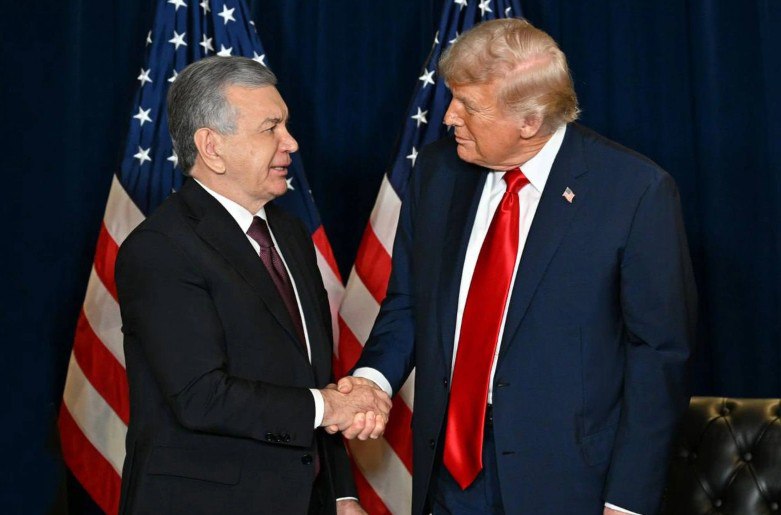
In a significant diplomatic breakthrough, Uzbekistan emerged as a standout player during this year’s United Nations General Assembly events in New York. President Shavkat Mirziyoyev not only secured a high-profile meeting with U.S. President Donald Trump, but also signed a landmark $8 billion deal with Boeing to purchase Dreamliner jets, a move that drew praise from Trump and captured the attention of the international business community. Trump publicly endorsed the agreement on social media, calling Mirziyoyev “a man of his word” and noting the deal would create “over 35,000 jobs” in the United States. Mirziyoyev’s visit included a high-level investment roundtable with executives from leading U.S. corporations and financial institutions. According to Forbes, trade between the two countries has quadrupled under Mirziyoyev’s leadership, with more than 300 American companies now active in Uzbekistan. Strategic sectors such as rare-earth metals and critical minerals took center stage during the discussions. Among the key meetings was one with the vice president of the Colorado School of Mines, who expressed support for establishing a research center in Uzbekistan. Other topics included joint initiatives in banking, information technology, transportation, and energy infrastructure. The scale of the Boeing deal served as a symbolic anchor to broader efforts: positioning Uzbekistan as a key connector between Central Asia and the Western economy. This aligns with a larger strategic pivot that analysts have long advocated. As U.S. engagement in Central Asia expands, countries like Uzbekistan are increasingly looking to diversify away from dependence on Russia and China. Forbes noted that the Trump administration is building on foundations laid by its predecessor by promoting regional initiatives such as the Zangezur Corridor, referred to as the “Trump Corridor”, aimed at linking Central Asia to global markets without passing through Russian territory. Mirziyoyev’s face-to-face meeting with Trump, followed by the public endorsement, also plays into shifting domestic narratives. It signals growing diplomatic credibility and a willingness to operate as an equal on the global stage. The convergence of political recognition and commercial investment may mark a turning point in Uzbekistan’s foreign policy, not just as a recipient of aid, but as a proactive economic actor. With the Boeing order and growing support from U.S. business leaders, Uzbekistan is staking its future on deepening ties with the West. Coupled with ongoing domestic reforms, the country is making a strategic bet that modernization and diversified partnerships will yield long-term dividends.

Kazakhstan Backs Trump’s Gaza Peace Initiative

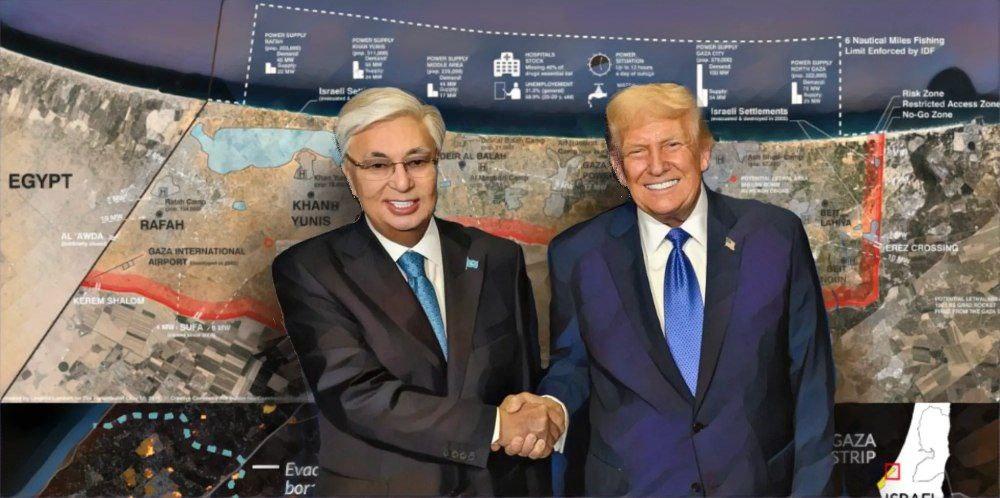
Kazakhstan has expressed support for President Donald Trump’s Comprehensive Peace Plan aimed at ending the conflict in Gaza. In a statement on X, Presidential Press Secretary Ruslan Zheldibay wrote that President Kassym-Jomart Tokayev considers the initiative a “unique opportunity” and “an important step toward resolving the situation in the Middle East, strengthening interstate trust, and establishing lasting and just peace in this region.” By describing the initiative as an “important step” rather than a definitive solution, Kazakhstan leaves room for diplomatic flexibility and avoids alienating partners that hold divergent views on Gaza. At the same time, the public endorsement is a clear gesture of support for the Trump administration’s leadership in addressing the central conflict of the Middle East, marking a notable moment where Astana aligns itself with Washington’s effort to shape the regional peace agenda. [caption id="attachment_36799" align="aligncenter" width="581"] Ruslan Zheldibay, President Tokayev’s press secretary, announced the position in a post on X[/caption] Trump’s Comprehensive Peace  Plan, released by the White House on September 29, 2025, ties Gaza’s governance to the broader framework of the Abraham Accords, proposing regional security guarantees, economic reconstruction measures, and expanded Arab participation as part of an effort to extend the accords’ realignment across the Middle East. Trump has repeatedly urged world leaders to expand the Abraham Accords, including appeals to Saudi Arabia, discussions with Israel’s Netanyahu, and even suggesting that Iran could join. At the 80th United Nations General Assembly (UNGA) last week, President Kassym-Jomart Tokayev pointed to the Abraham Accords as proof that reconciliation is possible in the Middle East. This endorsement is consistent with Tokayev’s broader diplomatic messaging and positions Kazakhstan as the only Central Asian state publicly backing the accords as a pathway to normalization at the UN meeting. Separately, UNGA week also saw Wabtec announce a $4.2 billion order from Kazakhstan’s national railway, a deal in line with Trump’s ‘America First’ policy that underscored the commercial dimension of U.S. engagement. The Gaza statement follows Tokayev’s remarks last week about the United Nations after technical failures during Trump’s UNGA appearance. Tokayev described the incident as “an extremely dangerous incident” and “a most serious shortcoming — one might even say a failure — of the UN Secretariat and the relevant services and departments.” He noted that, “The decision to conduct an investigation has already been made and is correct.” He linked the investigation into the failure to broader questions about the UN’s credibility, echoing Trump’s frustrations with the institution. Alongside these public remarks, Tokayev has made changes to Kazakhstan’s diplomatic team, recalling the ambassador to Washington and appointing a new foreign minister. While the reshuffle followed Tokayev’s return from New York, it also appears to reflect a deliberate recalibration of Kazakhstan’s diplomatic apparatus, with the new team brought in to carry forward these emerging foreign policy priorities. Taken together, these moves highlight Kazakhstan’s shift toward a more visible diplomacy, with Astana’s decisions increasingly aligned with Washington. By endorsing Trump’s Comprehensive Peace Plan, Tokayev has signaled a convergence with the former U.S....

Tokayev in New York: $100B U.S. Investment Push Boosts Kazakhstan Ties

Kazakhstan and the United States are continuing to strengthen their strategic partnership, with investment playing a central role. At a roundtable with U.S. business representatives in New York, President Kassym-Jomart Tokayev stated that American investments in Kazakhstan’s economy have surpassed $100 billion. “Today, more than 630 American companies are successfully operating in our country, including Chevron, ExxonMobil, Boeing, Visa, Mastercard, Meta, Wabtec, and Citibank. We regard the U.S. as an important strategic partner and reaffirm our commitment to further developing multifaceted cooperation,” Tokayev said. The president noted that Kazakhstan’s economy grew by 6.5% in the first eight months of 2025. He added that ongoing political and economic reforms are creating favorable conditions for long-term growth and attracting further investment. Energy and Uranium: The Cornerstone of Cooperation Energy continues to underpin U.S.-Kazakhstan relations. “We recognize and highly value the large and successful investments of Chevron and ExxonMobil over the past 30 years. Despite all the turbulence in regional geopolitics, their presence in our country has never been questioned,” Tokayev said. He pointed out that Kazakhstan supplies about 40% of the global uranium market and nearly a quarter of U.S. imports. Tokayev also highlighted Kazakhstan’s “four sources” strategy - oil, gas, coal, and uranium - and expressed support for the U.S. approach to coal as a reliable energy source in the near term. $4.2 Billion Wabtec Agreement: A Landmark Deal A key outcome of Tokayev’s U.S. visit was the signing of a $4.2 billion agreement with American locomotive manufacturer Wabtec. According to the U.S. Department of Commerce, the deal will see Kazakhstan’s national railway company, Kazakhstan Temir Zholy (KTZ), acquire 300 ES44Aci Evolution Series freight locomotives over the next decade. U.S. Secretary of Commerce Howard Lutnick described the contract as the "largest in history,” noting it would create approximately 11,000 jobs in Texas and Pennsylvania. “This is not just a story of massive success, it’s an example of how American innovation strengthens global leadership,” he posted on X. Wabtec President and CEO Rafael Santana added, “This project represents KTZ’s ambition to transform Kazakhstan’s railway network into a key bridge between Europe and Asia.” Tokayev has emphasized that Kazakhstan is upgrading transport hubs and rolling out a “Smart Cargo” digital customs and logistics system to streamline east–west and Trans-Caspian transit traffic. Presidential Support: Trump and Tokayev Hold Call The Wabtec agreement was preceded by a phone call between U.S. President Donald Trump and President Tokayev. “I just concluded a wonderful call with the Highly Respected President of Kazakhstan, Kassym-Jomart Kemeluly Tokayev,” Trump wrote on Truth Social. He emphasized the significance of the locomotive deal and linked it to his broader support for revitalizing U.S. infrastructure. “We need to support our rail industry, which has been attacked for years by ‘fake environmentalists.’ Now railroads are coming back and fast!” he said. Observers noted that Trump’s personal involvement underscored the political importance of the agreement for bilateral relations. Green Energy Progress: SAF Plant with LanzaJet Another notable development was the agreement between Kazakhstan’s national oil...

Opinion: The Contact Group on Afghanistan – Central Asia Formulates a Regional Position

On August 26, special representatives on Afghanistan from Kazakhstan, Kyrgyzstan, Tajikistan, and Uzbekistan met for the first time in Tashkent. The meeting resulted in the creation of a permanent regional platform: the Contact Group on Afghanistan. This gathering was not only a continuation of commitments outlined in the joint statement from the most recent Consultative Summit of Central Asian heads of state, but also a step toward preparing for the next high-level format, scheduled for November in Tashkent. Formally, Turkmenistan was absent. Available information suggests the reasons were purely technical. Ashgabat was ready to join and expressed support for the results through its foreign ministry channels. The key outcome is that Central Asian states have, for the first time, shown their readiness to speak with one voice on an issue long shaped by competing external interests. This is not the start of forming a common position; that had already developed de facto in recent years. All Central Asian countries have supported trade and transit with Afghanistan, continued supplying electricity and food, and maintained working contacts with the Taliban, while avoiding extremes. The Tashkent meeting institutionalized this approach: parallel tracks have now shifted, cautiously, toward coordination. Informal unity has been formalized into a tool. Unlike external players, who often cloak interests in grand rhetoric, Central Asia acts openly and pragmatically. The logic is simple: whatever is done for Afghanistan is, in fact, done for oneself. That is the distinctive feature of the regional approach - no ideological cover, no attempts to reshape Afghanistan. Examples are straightforward. Electricity continues to flow even when payments are delayed - not as charity, but as an investment in security. A blackout in Afghanistan could trigger refugee flows and threats heading north. Exports of flour and fuel sustain Afghan markets but also expand outlets for Central Asian producers. Participation in trans-Afghan corridors is not a gift to Kabul but an opportunity for Central Asia to anchor itself in southern logistics routes. Ultimately, every step “for Afghanistan” is primarily for the region itself. If Kabul ignores basic rules, cooperation will simply stop. In politics, there are no eternal friends, only eternal interests. The new format does not yet imply collective pressure on the Taliban. Rather, it creates conditions for each country to conduct more substantive bilateral dialogue, but grounded in a shared position. Until now, Central Asia has mainly spoken to the Taliban about trade, transit, and infrastructure. The Contact Group now makes it possible to add another dimension: clarifying boundaries of what is acceptable on issues like extremism, border escalation, or water pressure. For now, “red lines” are unlikely, since the Taliban have not crossed them. The situation remains manageable, leaving room for constructive dialogue. Equally important, the Contact Group is not a threat or ultimatum. Coordination is meant to expand opportunities for dialogue, not limit them. In the long run, this could evolve into a sustainable C5+A format. Afghanistan would then be integrated into regional frameworks not as a problem to be managed, but as...

Uzbekistan Jordan Relations Advance with Landmark State Visit

King Abdullah II of Jordan paid a state visit to Uzbekistan on August 25-26 at the invitation of President Shavkat Mirziyoyev. The visit, his first since the establishment of diplomatic relations, marked a milestone in bilateral ties and culminated in the signing of 15 agreements spanning politics, trade, investment, education, and culture. A Historic Visit with Symbolic and Strategic Weight Mirziyoyev welcomed King Abdullah with full ceremonial honors in Samarkand, including flag displays, a guard of honor, and performances of national songs and dances. The leaders visited prominent cultural sites, including the Shah-i-Zinda complex, Amir Temur’s mausoleum, and Registan Square, where the Jordanian monarch received an overview of Uzbekistan’s rich historical heritage. King Abdullah also visited the tomb of Qutham ibn al-ʿAbbas, a revered early Islamic preacher in Samarkand. The Jordanian delegation toured the “Eternal City” cultural park, which showcases Uzbekistan’s traditional crafts, architecture, and customs. Expanding Economic and Diplomatic Cooperation The official program commenced on August 26 at the Congress Center in Samarkand. Following the ceremonial welcome, the leaders visited an exhibition of Uzbekistan’s export-oriented products. The showcase featured a range of goods from key industries such as pharmaceuticals, chemicals, mining, textiles, agriculture, IT, and jewelry. King Abdullah praised Uzbekistan’s industrial development and called for increased business-to-business collaboration. During bilateral talks, the two sides agreed to elevate their relationship to a comprehensive partnership. Discussions focused on expanding political dialogue, boosting trade and investment, and strengthening cooperation in science, education, tourism, and culture. To formalize the partnership, the two countries agreed to establish a joint intergovernmental commission and a business council by the end of the year, and to convene an Uzbek-Jordanian business forum. They also outlined plans for cooperation in smart agriculture, geology, healthcare, and the textile industry. Broad-Based Agreements and International Alignment Fifteen agreements and memoranda were signed during the visit, including: An extradition treaty A bilateral investment promotion agreement A visa waiver agreement Cooperation protocols in higher education, scientific research, agriculture, veterinary medicine, tourism, and standardization The two leaders also reiterated their commitment to close coordination within international organizations, including the United Nations and the Organization of Islamic Cooperation. Honoring Partnership and Future Prospects In recognition of his role in strengthening bilateral ties, Mirziyoyev was awarded Jordan’s highest state honor, the Order of Al Nahda (“Renaissance”), presented personally by King Abdullah II. “I accept this award with great honor, as a recognition of our joint efforts to expand multifaceted cooperation and a sign of friendship and respect for the people of Uzbekistan, who are laying the foundations for the Third Renaissance in our country,” Mirziyoyev said. The visit concluded with a joint statement and mutual invitations for future high-level exchanges, reaffirming both countries’ shared ambition to elevate Uzbekistan-Jordan relations to a new strategic level.