• KGS/USD = 0.01144 0%
  • KZT/USD = 0.00217 0%
  • TJS/USD = 0.10625 0%
  • UZS/USD = 0.00008 0%
  • TMT/USD = 0.28530 0%
  • KGS/USD = 0.01144 0%
  • KZT/USD = 0.00217 0%
  • TJS/USD = 0.10625 0%
  • UZS/USD = 0.00008 0%
  • TMT/USD = 0.28530 0%
  • KGS/USD = 0.01144 0%
  • KZT/USD = 0.00217 0%
  • TJS/USD = 0.10625 0%
  • UZS/USD = 0.00008 0%
  • TMT/USD = 0.28530 0%
  • KGS/USD = 0.01144 0%
  • KZT/USD = 0.00217 0%
  • TJS/USD = 0.10625 0%
  • UZS/USD = 0.00008 0%
  • TMT/USD = 0.28530 0%
  • KGS/USD = 0.01144 0%
  • KZT/USD = 0.00217 0%
  • TJS/USD = 0.10625 0%
  • UZS/USD = 0.00008 0%
  • TMT/USD = 0.28530 0%
  • KGS/USD = 0.01144 0%
  • KZT/USD = 0.00217 0%
  • TJS/USD = 0.10625 0%
  • UZS/USD = 0.00008 0%
  • TMT/USD = 0.28530 0%
  • KGS/USD = 0.01144 0%
  • KZT/USD = 0.00217 0%
  • TJS/USD = 0.10625 0%
  • UZS/USD = 0.00008 0%
  • TMT/USD = 0.28530 0%
  • KGS/USD = 0.01144 0%
  • KZT/USD = 0.00217 0%
  • TJS/USD = 0.10625 0%
  • UZS/USD = 0.00008 0%
  • TMT/USD = 0.28530 0%

Viewing results 1 - 6 of 66

The Ferghana Valley: Navigating Complex Challenges in Central Asia’s Most Volatile Region

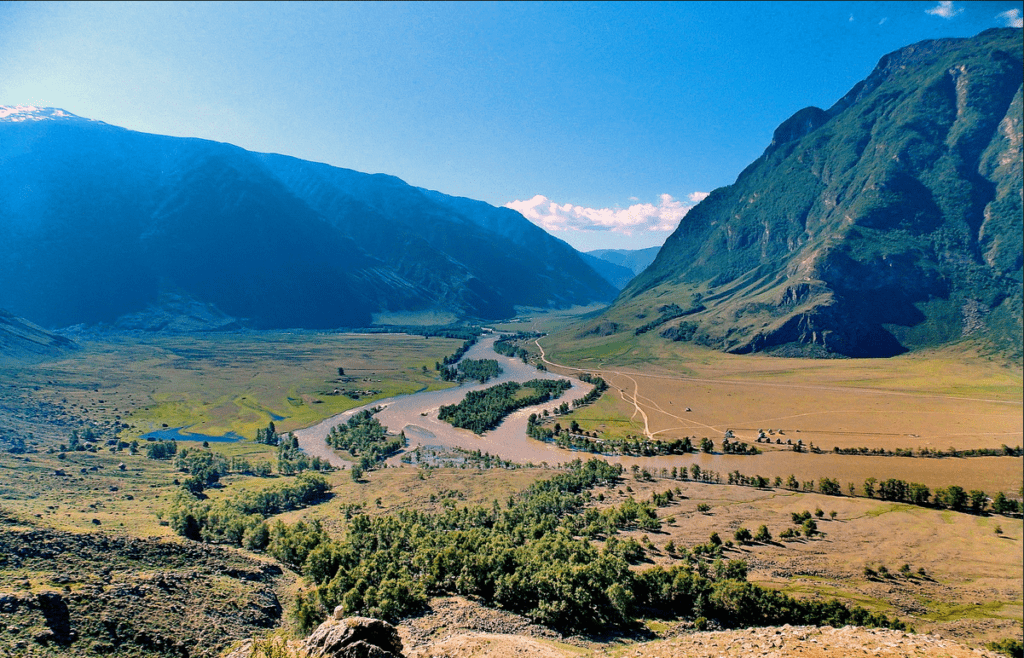
The Ferghana Valley is one of Central Asia’s most fertile and densely populated areas, but it is also among the most volatile. Spanning Uzbekistan, Kyrgyzstan, and Tajikistan, this landlocked region has long been a hotbed of ethnic tension, water disputes, and political instability. These challenges are deeply rooted in the geography, history, and sociopolitical landscape, making the valley a key focal point for understanding broader regional dynamics in Central Asia.   Geographical Importance and Ethnic Diversity Nestled between the towering Tien Shan and Pamir Mountain ranges, the Ferghana Valley covers over 22,000 square kilometers. It is fertile land nourished by the Syr Darya River, making it a critical area for cultivating cotton, fruits, and vegetables. These natural resources have historically drawn diverse populations, creating a vibrant ethnic mosaic. The valley is home to Uzbeks, Kyrgyz, and Tajiks, as well as smaller ethnic groups. While ethnic Uzbeks form the majority, significant Kyrgyz and Tajik minorities inhabit border regions. The ethnic diversity of the Ferghana Valley is both a strength and a source of tension. Soviet-era border policies exacerbated these divisions by creating artificial boundaries that crisscrossed the valley, leaving behind ethnic enclaves — pockets of one nationality surrounded by the territory of another. These enclaves have complicated governance and territorial integrity, making border management a persistent challenge.   The Soviet Legacy and Border Disputes During Soviet rule, the Central Asian republics were organized under Stalin’s divide-and-rule strategy, which deliberately created complex borders to weaken local identities and prevent regional unity. The Ferghana Valley, divided among three Soviet republics, is a prime example of this approach. After the Soviet Union's collapse in 1991, the administrative boundaries became international borders overnight between Uzbekistan, Kyrgyzstan, and Tajikistan. The lack of clearly defined borders has sparked numerous conflicts over territory, water, and land. A notable clash between Kyrgyzstan and Tajikistan in 2021 resulted in over 40 deaths and the destruction of homes and infrastructure. Many disputes revolve around access to scarce resources like water and arable land. These issues have escalated into violent confrontations, leading to casualties and the displacement of local populations.   Water: A Scarce and Contested Resource Water is the lifeblood of the Ferghana Valley, but disputes over its allocation are a major source of tension. The valley depends heavily on irrigation for its agricultural productivity, and the Syr Darya River, along with its tributaries, plays a crucial role in supplying water to the region. However, the division of the valley among the three countries complicates water management. Uzbekistan, the most populous of the three, relies on the valley’s water resources for its cotton industry, a cornerstone of its economy. Meanwhile, Kyrgyzstan and Tajikistan, which control the headwaters of the Syr Darya, often use their upstream position to leverage water access. This dynamic has led to frequent disagreements over water usage. For instance, Kyrgyzstan has at times threatened to withhold water unless it receives compensation, either through payments or electricity.   Ethnic Tensions and Political Instability Ethnic tensions further complicate the Ferghana Valley’s already volatile...

Kyrgyzstan Presents its Candidacy for UN Security Council

Speaking at the 79th session of the UN General Assembly in New York, Kyrgyz President Sadyr Japarov called on the global community to reduce arms spending and international tensions. During the general debate, Japarov nominated Kyrgyzstan's candidacy for the Security Council, saying the time has come to address historical injustices. “If elected, Kyrgyzstan will work to improve the efficiency and transparency of the Security Council and to expand it with balanced regional representation. It is time to eliminate the historical injustice of 60 member states, including Kyrgyzstan, who have never been elected to the Security Council, and to correct the under-representation of African countries on the Council,” Japarov said. The Kyrgyz leader said the world is becoming increasingly unpredictable and complex. He urged all states to continue to support the UN in its core mission of ensuring peace and preventing modern risks and threats in this “turbulent period.” “Unfortunately, this is happening in a world where many nations and peoples still lack access to basic clean water, healthcare, and education. We need to ensure that the money that goes to wars, destruction, and death goes to creating or solving global challenges for all,” Japarov said. The council has 15 members, including five permanent members. The next elections to the Council will be held in June 2026.

Project To Support Women and Youth Launched in Turkmenistan

A new project developed by the United Nations Development Program (UNDP) in cooperation with the British Embassy has been launched in Turkmenistan to support the country's economic diversification and empowerment of women and youth. The project aims to stimulate sustainable economic growth and increase Turkmenistan's global competitiveness by developing a creative and innovative economy. Narine Sahakyan, UNDP Resident Representative in Turkmenistan, emphasized the importance of unlocking the creative sector's potential to achieve economic prosperity. She said stimulating entrepreneurship and innovation will open new economic diversification and growth opportunities. British Ambassador to Turkmenistan, Stephen Conlon also spoke about the importance of the creative economy, noting the UK's experience in this area. Conlon stated that the creative sector contributes to economic growth, strengthens national identity, and supports local communities, especially in rural areas. Within the project framework, the UNDP plans to launch recommendations for the development of the creative economy and support for entrepreneurship and innovation. One of the key events will be a forum on the creative economy, which will bring together representatives of the government, international organizations, and businesses. The forum will be a platform within which to share experiences and discuss legislative measures to support the creative sector. The United Nations Development Program (UNDP) is actively cooperating with Turkmenistan on various projects aimed at sustainable development. One of the key projects deals with managing the consequences of the Aral Sea crisis. Together with the Government of Turkmenistan, the UNDP is implementing a project aimed at preserving ecosystems in the Aral Sea basin, improving the use of land and water resources, and increasing the sustainability of local communities. Another important project is Digital Transformation, which aims to help Turkmenistan implement advanced inter-agency data exchange systems to improve the efficiency of public services.

Uzbek Parliament Adopts Law on “Undesirable” Foreigners

On September 20, the Senate of Uzbekistan's Oliy Majlis approved amendments to the law regulating the legal status of foreign citizens and stateless persons. The main changes concern those who, through their public statements and actions, threaten Uzbekistan's state sovereignty, territorial integrity, and security. According to Senator Anvar Tuichiev, such persons often provoke interstate, social, and religious discord and discredit the honor and dignity of the people of Uzbekistan. The existing legislation lacks the legal mechanisms to tackle such actions. The amendments adopted establish that foreign citizens and stateless persons who commit such acts will be considered "undesirable," and will be included in the registry of the Ministry of Foreign Affairs of Uzbekistan. Those on the registry will be subject to a five-year ban on entering the country, opening bank accounts, buying real estate, and participating in the privatization of state property. If such a person temporarily or permanently resides in Uzbekistan, they will be given ten days to leave voluntarily. Otherwise, a procedure for their deportation will be initiated. A person can be removed from the register if the reasons for their inclusion are eliminated. The senator also stated that the experience of countries such as Kazakhstan, Azerbaijan, Poland, Belarus, Russia, Ukraine, and China was considered when drafting the law. The amendments will come into force after being signed by President Mirziyoyev. The decision came to make changes to the legislation came amid statements such as that made by Russian politician Zakhar Prilepin in 2023, who proposed that Russia annex Uzbekistan and other former Soviet republics. This provoked a sharp reaction among Uzbek politicians, including deputies Rasul Kusherbayev and Bobur Bekmurodov. The Norwegian Helsinki Committee has said that it fears the new amendments could contradict international standards of freedom of expression, leading to Uzbekistan's isolation.

Uzbekistan Ratifies International Labor Organization Convention

On September 21 a meeting of the Uzbek Senate passed the new law “On the ratification of the International Labor Organization Convention No. 155 on Occupational Safety and Hygiene and the Working Environment”. The Convention was adopted in Geneva in 1981, and among other Eurasian countries has also been ratified by Russia, Belarus, Ukraine, Tajikistan, Kazakhstan, and Azerbaijan. Senators noted that it is appropriate to ratify this convention, taking into account the development of cooperation between Uzbekistan and the International Labor Organization and the fact that the national labor legislation meets international labor standards. As noted, the convention's ratification will improve national labor laws, enhance safety and hygiene standards per international guidelines, and help prevent workplace accidents. The International Labor Organization has been criticizing the use of forced labor in cotton plantations in Turkmenistan for a long time.

Redefining Diplomacy: Kazakhstan’s Strategic Shift in Relations With Afghanistan

On September 9, 2024, President Kassym-Jomart Tokayev signed a decree dismissing Alimkhan Yesengeldiyev from the position of Kazakhstan's Ambassador to Afghanistan. Yesengeldiyev has been at the post since April 2018. Local media have not yet reported on the appointment of a new ambassador. Previously, Astana has made bold diplomatic steps towards normalizing relations with Afghanistan under Taliban rule. For instance, Kazakhstan accredited Taliban diplomats in April 2023, and removed the Taliban from its list of banned organizations in December 2023. On August 21 of this year, Kazakhstan accredited the head of the Afghan diplomatic mission as charge d'affaires in the country. Astana continues to increase trade, economic, and humanitarian cooperation with the de facto authorities, and has actively engaged in various international platforms for initiatives in Afghanistan. Moreover, President Tokayev outlined Kazakhstan's position on the situation in Afghanistan just a month after the Taliban seized Kabul, when the world was still in shock. “Kazakhstan sees the future Afghanistan as a truly independent and united state living in peace with itself and its neighbors," he stated. "At this crucial historical moment, the multinational people of Afghanistan should not be left alone in the face of unprecedented difficulties.” By changing the head of its diplomatic mission in Kabul, it appears that the authorities in Kazakhstan intend to qualitatively improve the state of their relations with the Taliban. The eventual appointment of a new head of the Kazakh embassy will symbolize a new page in relations. In all likelihood, according to recognized international practice, a diplomat will be presented to the Taliban not in the rank of Ambassador Extraordinary and Plenipotentiary but as the Charge d'Affaires of Kazakhstan. This will preserve the principle of parity and be understandable given international disputes surrounding recognition of the Taliban. Overall, Kazakhstan's foreign policy steps have always been characterized by consistency and an unwavering focus on international law. It seems that the world as a whole is now acclimatizing to the idea of pragmatic dialog with the authorities in Kabul, with whom it is necessary to maintain constant bilateral and multilateral diplomatic contacts. On September 27, at the official request of the British government, the embassy of the former Islamic Republic of Afghanistan in London will officially cease operations. The embassy building will not be handed over to the Taliban or any other political representation. The embassy in Oslo representing the former government in Afghanistan has also ceased functions since September 12 at the request of the authorities there. Neither the British nor the Norwegian authorities are currently commenting on the situation. A few days ago, Deutsche Welle reported that the German Foreign Ministry has accepted the Taliban's application to recognize their consulate general in Munich as the sole center for providing consular services in Germany. In July, the Taliban Foreign Ministry declared that documents issued by 14 Afghan missions abroad are illegitimate. They were located in Britain, Berlin and Bonn in Germany, Belgium, Switzerland, Austria, France, Italy, Greece, Poland, Australia, Sweden, Canada, and Norway. Currently, the...