• KZT/USD = 0.00214
  • TJS/USD = 0.10810
  • UZS/USD = 0.00008
  • TMT/USD = 0.29850
  • KZT/USD = 0.00214
  • TJS/USD = 0.10810
  • UZS/USD = 0.00008
  • TMT/USD = 0.29850
  • KZT/USD = 0.00214
  • TJS/USD = 0.10810
  • UZS/USD = 0.00008
  • TMT/USD = 0.29850
  • KZT/USD = 0.00214
  • TJS/USD = 0.10810
  • UZS/USD = 0.00008
  • TMT/USD = 0.29850
  • KZT/USD = 0.00214
  • TJS/USD = 0.10810
  • UZS/USD = 0.00008
  • TMT/USD = 0.29850
  • KZT/USD = 0.00214
  • TJS/USD = 0.10810
  • UZS/USD = 0.00008
  • TMT/USD = 0.29850
  • KZT/USD = 0.00214
  • TJS/USD = 0.10810
  • UZS/USD = 0.00008
  • TMT/USD = 0.29850
  • KZT/USD = 0.00214
  • TJS/USD = 0.10810
  • UZS/USD = 0.00008
  • TMT/USD = 0.29850
13 August 2026

Viewing results 1 - 6 of 69

Kyrgyzstan Removes Taliban From List of Terrorist Organizations

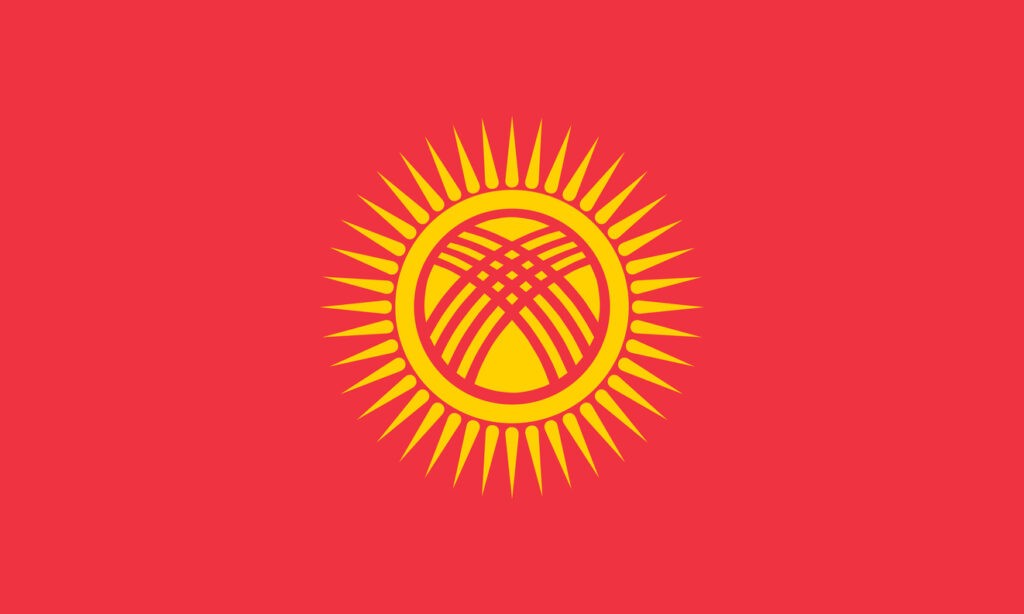
Kyrgyzstan has quietly removed the Taliban from its list of banned terrorist organizations. Kyrgyzstan's Prosecutor General's Office recently published a list of extremist terrorist organizations whose activities are banned by courts in the country. The list includes 20 organizations, but the Taliban is not among them. The State Commission on Religious Affairs could not answer precisely why the Taliban is not on the list. Azamat Yusupov, the agency's deputy head, told reporters that the commission had nothing to do with approving the list. “Given the recent changes in Afghanistan, the Taliban can be removed from the list of terrorist organizations. It is better to contact the judiciary, which can answer this question more accurately,” Yusupov stated. Afghanistan's Taliban government has already responded. The foreign ministry of the unrecognized Islamic Emirate said it “welcomes and approves of the Kyrgyz authorities' decision to remove the Taliban from the list of banned groups.” “The step taken by Kyrgyzstan signifies the growing political recognition of the Islamic Emirate of Afghanistan at both regional and international levels and removes an obstacle to strengthening bilateral relations between Afghanistan and other countries,” the foreign ministry said in a statement. The Taliban has been recognized as a terrorist organization in different years and by other countries and organizations. For example, in Kazakhstan, the Taliban was recognized as a terrorist organization by the Supreme Court on March 15, 2005. And in Kyrgyzstan by the decision of the Pervomaisky District Court of Bishkek on September 15, 2006. In Russia, the Taliban was recognized as a terrorist organization by a decision of the Supreme Court in 2003. In June this year, Kazakhstan removed the Taliban regime from the terrorist list to develop economic interaction with Afghanistan. This was announced by President Kassym-Jomart Tokayev, at a meeting of the Council of the Parliamentary Assembly of the Collective Security Treaty Organization (CSTO). In May of this year, the Russian Foreign Ministry and the Ministry of Justice reported to Russian President Vladimir Putin that the Taliban could be removed from the list of banned organizations; however, this issue still needs to be resolved in Russia.

Politicians Discuss the Impact of Afghan Military Aircraft Remaining in Uzbekistan

The Times of Central Asia previously reported that when the Taliban seized power in August 2021, 22 military aircraft and 24 helicopters of the Afghan military crossed into Uzbekistan’s airspace. US Ambassador to Uzbekistan Jonathan Henick reported that the US and Uzbekistan had officially agreed that fighter jets and military helicopters will remain in Uzbekistan, whilst The Ministry of National Defense of the Islamic Emirate of Afghanistan, in turn, stated that “Any deal regarding the fate of Afghanistan’s helicopters and planes in Uzbekistan is unacceptable.” Dr. Davud Azami, an expert on international politics and security issues, commented: “Until the normalization of bilateral relations, the US will not hand over this aviation equipment to the Taliban, but this is unlikely to happen soon. This makes the matter more complicated.” Regarding the Taliban government’s demand for the return of the equipment to Afghanistan, he explained:  “The Taliban wants to strengthen its Air Force with these planes, especially helicopters. They also want to use the aircraft for humanitarian and rescue operations, especially during natural disasters like floods and earthquakes. Because buying such planes and helicopters requires money and a partner to sell them, the Taliban is at a huge disadvantage.” Azami stated that the Taliban is waiting for a “favorable opportunity” to exert more pressure on Uzbekistan, and added that the two sides will continue improving their relations despite disagreements over aircraft and helicopters. According to another BBC Uzbekistan interviewee, Uzbek political analyst Farhod Tolipov, this recent Taliban statement is flexible, and referenced the warning of the Taliban's interim Defense Minister that the countries who provided the military aircraft will suffer harmful consequences if the units are not returned. “The Taliban responded by using the phrase ‘good neighborliness’ in the sense that they should not break cooperation. That's why I think that based on what they said, the issue should not take a sharp turn. Because now, neither Afghanistan itself nor its government has become a superpower, and its economy, which is in crisis, needs to be developed. No country in the world has yet recognized them; many problems are ahead. That's why, in my opinion, the probability that they will be obsessed with this one problem is not very high,” said Tolipov. The analyst also expressed his opinion on the construction of the Qoshtepa Canal: “If this project is left unchecked and implemented unilaterally, the environmental consequences will harm Afghanistan itself. Environmental consequences and tragedies know no bounds. It will not be a tragedy for Uzbekistan alone, but also, potentially, for Afghanistan. Therefore, -given an understanding of the risks involved- they should continue work on the project,  in coordination, of course, with Uzbekistan, Turkmenistan, and Tajikistan.” Recommendations from Daniel Runde, a Senior Vice President at the Center for Strategic and International Studies (CSIS), on strengthening the USA's relations with Uzbekistan, appeared in previous report by The Times of Central Asia.

New Checkpoint Opens on Kyrgyzstan’s Border With China

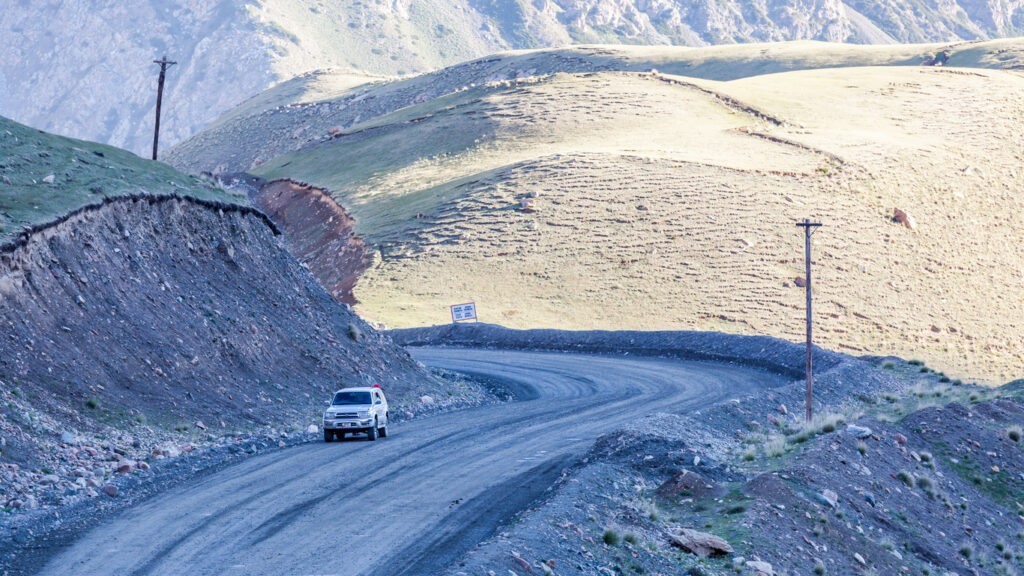
A new checkpoint has opened along the Kyrgyz-Chinese border, in the settlement of Bedel in the Issyk-Kul region. Kyrgyz president Sadyr Japarov called the event historic and significant for the country. In his address, Japarov emphasized that opening the Bedel checkpoint is a significant achievement that opens new opportunities for strengthening ties with China, one of the world's leading economies. This step, he said, will significantly increase Kyrgyzstan's transport and logistics potential, and strengthen the strategic partnership with China, symbolizing a new stage in bilateral relations. The issue of opening the Bedel checkpoint has been discussed since 1996, but agreements were reached only last year, during Japarov's state visit to China. The new checkpoint is the third checkpoint on the border between Kyrgyzstan and China. It is located in the remote southeastern region of Kyrgyzstan, about equidistant from the Kyrgyz town of Karakol and the district of Aksu in China's Xinjiang Uygur Autonomous Region. Historically, travelers and traders used this pass on the Silk Road. The opening of the Bedel border station is expected to significantly improve trade ties between the two countries, and relieve pressure on existing border crossings.

Moldova To Open Embassy in Kazakhstan

The government of Moldova has approved plans to open its first embassy in Kazakhstan's capital of Astana. The opening of the embassy is intended to expand Moldova's diplomatic presence in Central Asia, and strengthen economic and cultural ties with Kazakhstan. Kazakhstan is an important regional economic player, with rich energy resources and a significant Moldovan diaspora. According to the Moldovan Foreign Ministry, about 20,000 Moldovan citizens living in Kazakhstan currently have to seek consular assistance from the Moldovan diplomatic mission in Russia. The ministry said that Kazakhstan is a promising market and an essential partner for attracting investments and developing bilateral trade. The opening of the embassy is expected to contribute to a more active political dialog, and create new opportunities for economic cooperation between the countries. The decision also aligns with Moldova's National Development Plan 2025-2027, which aims to expand its diplomatic and consular network worldwide. The country seeks to diversify its trade portfolio, particularly in the European Union or the EU's immediate neighborhood.

Kazakhstan and Tajikistan to Cooperate Over Rare-Earth Metals

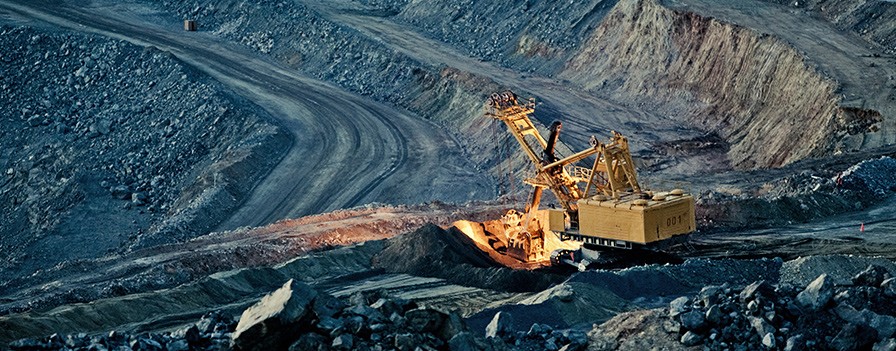
Kazakhstan’s national atomic company, Kazatomprom, the world's largest producer of uranium, has announced a new strategic partnership with Tajikistan’s TajRedMet (Tajik Rare Metals) in the mining and processing of uranium and rare and rare-earth metals. According to the parties' agreement, the companies will collaborate in exploring, mining, and processing uranium and other rare and rare-earth metals, conducting research and development work, introducing innovative technologies, and training personnel. Meirzhan Yussupov, CEO of Kazatomprom, commented: “This step is of great importance for strengthening the partnership between our companies. Although it is too early to talk about specific results, we are focused on promising joint projects in the uranium industry and rare and rare-earth metals, which can significantly benefit Kazakhstan and Tajikistan.” As part of the agreement, TajRedMet representatives will soon visit Kazakhstan to inspect Kazatomprom's production facilities and assess the potential for further cooperation in more detail. According to an IAEA research paper, Tajikistan has significant mineral resources awaiting development, including rare metals, earth elements, and uranium. Several countries have expressed interest in the development of Tajikistan’s uranium resources. Russia was considering assisting Tajikistan in developing its uranium resources, as well as assisting in geological prospecting, with the aim of involvement in the subsequent extraction and possible processing of uranium. China’s Guangdong Corporation has also expressed an interest in participating in projects to develop Tajik uranium deposits. The Tajik government has also agreed to allow Indian companies to explore for uranium mineralization. In his address to parliament in December 2023, Tajik President Emomali Rahmon ordered the government to focus on mining lithium, tungsten, nickel, and antimony, and develop a program for processing these metals domestically into finished products.

Uzbekistan and Afghanistan To Work Together on Mining Projects

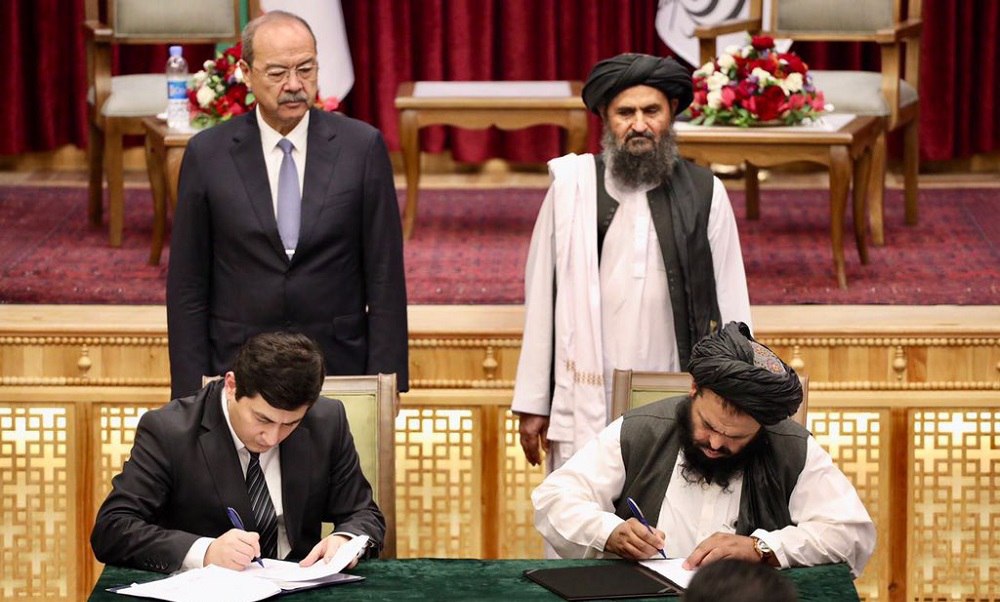
Afghanistan and Uzbekistan have signed five agreements related to mining projects in Afghanistan. The agreements are for the exploration of hydrocarbon fields in the Afghan-Tajik oil and gas basin, the development of copper and gold deposits in the Qandaran district of Zabul province, iron extraction in the Hesh district of Bamyan province, and hydrocarbon resources in the Tuti-Maidan district of Faryab province. There are also plans to build a 120-megawatt gas-fired power plant in Faryab province. These agreements, totaling $1.15 billion, were part of a more comprehensive package of 35 agreements and memorandums of understanding signed between the two countries. These agreements amount to an Uzbek investment in Afghanistan of over $2.5 billion. The latest round of cooperation points to the strengthening of economic ties between Tashkent and Kabul, which is especially important given the region's current geopolitical challenges and financial instability. These agreements can also significantly impact Afghanistan's economic development by providing needed resources and creating jobs in crucial regions of the country.