• KGS/USD = 0.01144 0%
  • KZT/USD = 0.00216 0%
  • TJS/USD = 0.10663 0%
  • UZS/USD = 0.00008 0%
  • TMT/USD = 0.28530 0%
  • KGS/USD = 0.01144 0%
  • KZT/USD = 0.00216 0%
  • TJS/USD = 0.10663 0%
  • UZS/USD = 0.00008 0%
  • TMT/USD = 0.28530 0%
  • KGS/USD = 0.01144 0%
  • KZT/USD = 0.00216 0%
  • TJS/USD = 0.10663 0%
  • UZS/USD = 0.00008 0%
  • TMT/USD = 0.28530 0%
  • KGS/USD = 0.01144 0%
  • KZT/USD = 0.00216 0%
  • TJS/USD = 0.10663 0%
  • UZS/USD = 0.00008 0%
  • TMT/USD = 0.28530 0%
  • KGS/USD = 0.01144 0%
  • KZT/USD = 0.00216 0%
  • TJS/USD = 0.10663 0%
  • UZS/USD = 0.00008 0%
  • TMT/USD = 0.28530 0%
  • KGS/USD = 0.01144 0%
  • KZT/USD = 0.00216 0%
  • TJS/USD = 0.10663 0%
  • UZS/USD = 0.00008 0%
  • TMT/USD = 0.28530 0%
  • KGS/USD = 0.01144 0%
  • KZT/USD = 0.00216 0%
  • TJS/USD = 0.10663 0%
  • UZS/USD = 0.00008 0%
  • TMT/USD = 0.28530 0%
  • KGS/USD = 0.01144 0%
  • KZT/USD = 0.00216 0%
  • TJS/USD = 0.10663 0%
  • UZS/USD = 0.00008 0%
  • TMT/USD = 0.28530 0%

Viewing results 1 - 6 of 66

Kazakhstan-Tajikistan Trade Turnover Rises 6%

According to the State Revenue Committee of Kazakhstan's Ministry of Finance, the trade turnover between Kazakhstan and Tajikistan has reached $780.7 million so far this year, 6% higher than for the same period last year. From January to August 2024, Kazakhstan exported over 1.6 million tons of goods worth $613.2 million to Tajikistan, an increase of 15.5% compared to last year. The main export product was wheat, with 629,100 tons valued at $154.5 million. Tajikistan also produces more sunflower, safflower, and soybean oil – 44,800 tons (+8.2%), pasta – 5,300 tons (+20.7%), and sweet drinks – 12.5 million liters (+5.8 times). The export of aluminum oxide also increased by 40.5% to 105,400 tons; iron and steel rods increased 1.5 times, up to 36,800 tons; plastic windows and frames increased ten times, up to 12,400 tons; and smartphones and media stations increased 1.8 times, up to 148,100 units. However, the supply of liquefied gas decreased by 4% (211,300 tons). At the same time, imports from this country continued to decrease. In January-August, 220,800 tons (-19.4%) of products worth $167.5 million were imported from there. This decrease affected the sales volume of ores and concentrates (lead, copper, zinc) by 12.3%, up to 106,500 tons, and children’s scooters and skateboards by 32.6%, up to 46,00 units. In addition, Kazakhstan has begun to buy fewer fresh fruits and vegetables. For example, the supply of apricots, peaches, and grapes immediately decreased by 2.1 times, to 6,900 tons, and onions by 3.3 times, to 17,600 tons. However, the volume of imported dried fruits increased by 23.3% and amounted to 36,800 tons.

Drop in Uzbekistan’s Exports to Central Asia

Local media has reported that from January - August, Uzbekistan's exports to its four neighboring countries decreased, compared to the same period in 2023. According to data from the  Statistical Agency data, exports to Kazakhstan dropped from 950 million USD to 872 million USD; to Kyrgyzstan, from 491 million USD to 365 million USD; to Tajikistan, from 389 million USD to 329 million USD, and to Turkmenistan, from 118 million USD to 78 million USD. The share of Central Asian countries in Uzbekistan's total foreign trade turnover (FTT) in the first nine months of 2023 was 11.5%. The total FTT was worth 40 billion 45 million USD, of which 4 billion 574.3 million USD were with Central Asian countries. This year, it has decreased to 10.3%, meaning 4 billion 400.6 million USD of FTT of 42 billion 703.3 million USD are with CA countries. The Ministry of Investments, Industry, and Trade attributed the drop to an increase Uzbekistan's exports to international markets with high purchasing power, especially Europe, Arab countries, Southeast Asia, and the Americas, and explained, " due to diversification, the volume of exports to neighboring countries, which are considered a traditional market, decreased. In particular, the volume of exports to Kazakhstan decreased by 8.3%, to Kyrgyzstan by 25.6%, to Tajikistan by 15.3%, and to Turkmenistan by 36.2%."

UNDP Helps Entrepreneurs in Kyrgyzstan Master E-Commerce

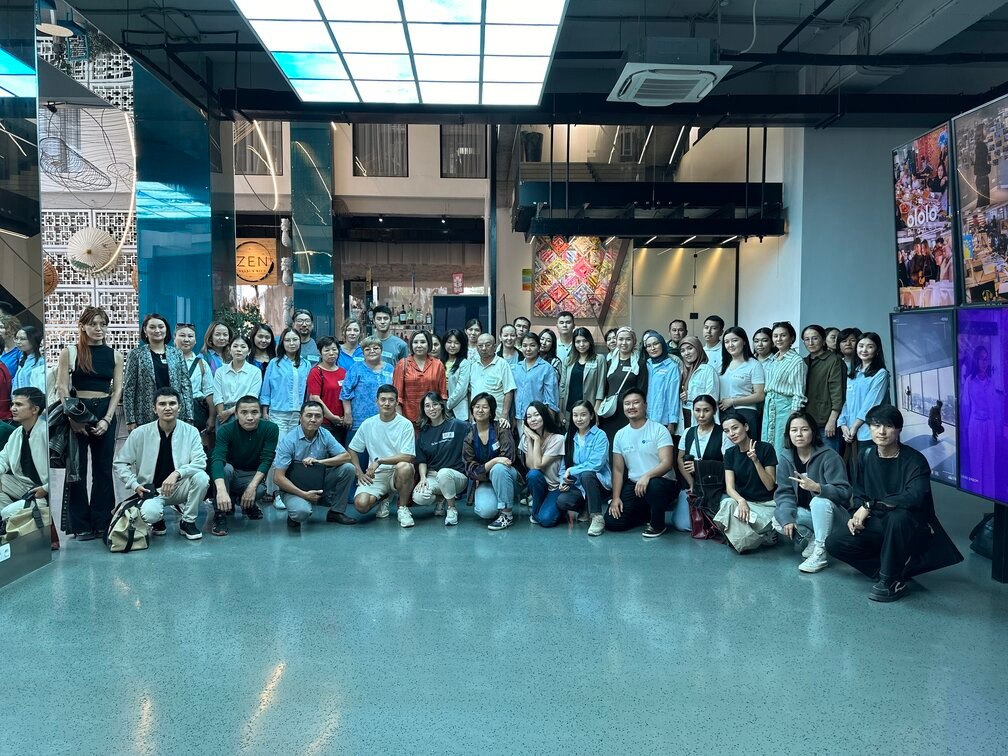
More than 50 entrepreneurs from Kyrgyzstan are learning about e-commerce through the "Janyration Sanarip" program, an initiative aimed at supporting micro, small, and medium-sized enterprises in the country, jointly implemented by the government of Kyrgyzstan and the United Nations Development Programme (UNDP), UNDP Kyrgyzstan reports. According to Nazarbek Malayev, Kyrgyzstan’s Deputy Minister of Economy and Commerce, "E-commerce opens up unique opportunities for domestic entrepreneurs to enter international markets, expand their customer base, and improve the competitiveness of their products. The Government of the Kyrgyz Republic is trying to create a favorable ecosystem where digital technologies contribute to business development and improve citizens' quality of life." Since 2019, e-commerce in Kyrgyzstan has been experiencing rapid growth, driven by the development of internet infrastructure and an increase in mobile payment users. However, the sector faces several challenges, such as a lack of consumer trust in online shopping and limited internet access in rural areas, where 60% of the population lives. In response to these challenges, the government launched the E-Commerce Development Program for 2023-2026, aimed at enhancing the competitiveness of local products in international markets and attracting investments. Within this initiative, UNDP provides comprehensive support to entrepreneurs, helping them acquire e-commerce skills and work effectively on global marketplaces. UNDP Resident Representative in Kyrgyzstan, Alexandra Solovieva, commented: "Digitalization is a key factor in bridging the digital divide and accelerating Kyrgyzstan's economic development. E-commerce improves access to services and creates new opportunities for local entrepreneurs. We are confident that the joint efforts of the Government and UNDP will contribute to sustainable and inclusive economic growth, particularly in rural areas where internet access remains limited.” Five hundred forty-two applications were submitted for the program, and entrepreneurs were selected based on several criteria, including having an existing business in Kyrgyzstan and a personal investment of at least 80,000 KGS (almost $1,000). These entrepreneurs, representing key sectors such as garment manufacturing, tourism, honey production, light industry, services, and trade, were selected from all regions of the country. Kyrgyzstan is the world's 96th largest market for e-commerce, with a predicted revenue of more than $359 million in 2024, placing it ahead of Uzbekistan. The country’s e-commerce revenue is expected to grow at a compound annual rate of 13.5% from 2024 to 2028, resulting in a projected market volume of $595.7 million by 2028.

Kyrgyz-Chinese Trade Center Opened in Xi’an

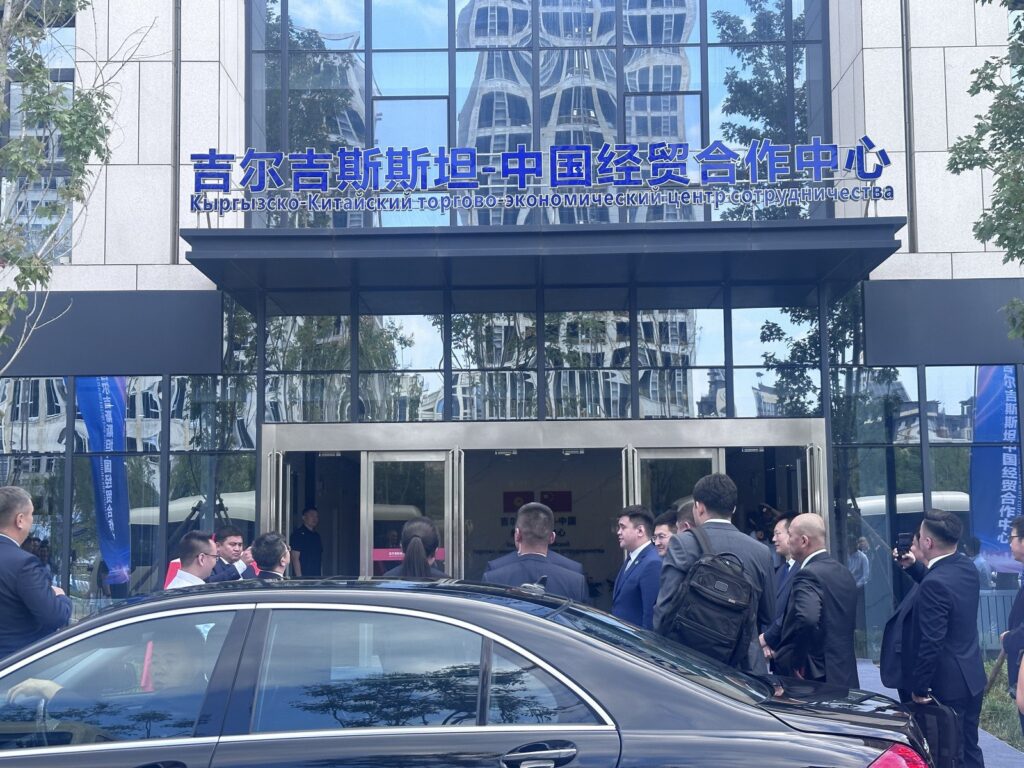
On September 21, a Kyrgyz-Chinese Center for Trade and Economic Cooperation was opened in Xi'an in China’s Shaanxi Province. The new center, which occupies an area of 1,000 square meters, will hold exhibitions of products manufactured in Kyrgyzstan, provide information about the country, and organize meetings between Kyrgyz and Chinese entrepreneurs. On the same day, a 200-square-meter trade pavilion of Kyrgyzstan opened in downtown Xi'an. The pavilion will permanently display Kyrgyz products sold offline and online through applications such as Douyin, WeChat, and Pingduoduo. The Xi'an municipality provided Kyrgyzstan with a total area of 1,200 square meters free of charge for three years. "The trade center and pavilion will become an incentive for the development of trade turnover between the two countries, where Chinese consumers will be able to get acquainted with the products of Kyrgyzstan," Deputy Chairman of the Kyrgyz Cabinet of Ministers Bakyt Torobaev said at the opening ceremony of the center. Xi'an also hosted a business forum attended by representatives of more than 200 companies from Kyrgyzstan and Shaanxi Province. During the forum, representatives of government agencies in Kyrgyzstan and China and entrepreneurs discussed investment opportunities in sectors such as industry, tourism, transport, and agriculture. In 2023, trade turnover between China and Kyrgyzstan amounted to $20 billion, a 32% increase compared to 2022. Bilateral trade reached almost $11 billion from January to July this year.

Trade Volume Between Kyrgyzstan and China Reaches $11 Billion

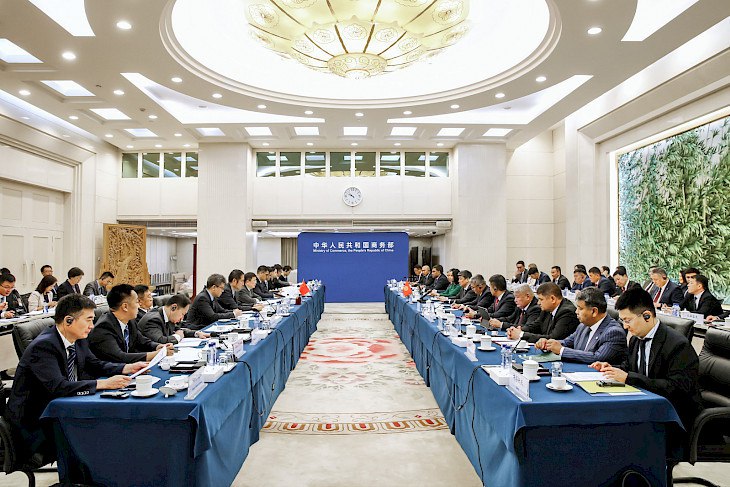
Trade turnover between Kyrgyzstan and China for the first seven months of 2024 reached approximately $11 billion, as reported by the Deputy Chairman of the Cabinet of Ministers of Kyrgyzstan, Bakyt Torobayev, in Beijing. Torobayev emphasized that the foundation for successful cooperation was laid during the meetings between Kyrgyz President Sadyr Japarov and Chinese President Xi Jinping. In 2023, the volume of trade turnover between the countries reached $20 billion, 32% more than in 2022. Torobayev also noted that important steps to strengthen cooperation continue. In particular, the project to build a railroad connecting China, Kyrgyzstan, and Uzbekistan is moving forward. Another significant event was the opening of the simplified border crossing point “Bedel” on the Kyrgyz-Chinese border, which indicates the beginning of a new stage in bilateral relations. Cooperation between Kyrgyzstan and China covers trade, energy, and infrastructure spheres. In addition, China is actively investing in hydropower and implementing programs to improve Kyrgyzstan's infrastructure. These projects are expected to contribute to sustainable economic growth.

Uzbekistan Concludes WTO Membership Talks With 18 Countries

According to a report issued by Azizbek Urunov, President Special Representative on International Trade, Uzbekistan has now completed negotiations on membership of the World Trade Organization (WTO) with 18 countries. Negotiations with Argentina closed on September 13, and protocols on finalizing market access negotiations have been signed with 14 of the 18 member countries, including Brazil and Sri Lanka. Posting on LinkedIn on September 12, Urunov wrote: "In the margins of the WTO Public Forum, we had signing ceremonies with the participation of DPM Jamshid Khodjaev, DDG Xiangchen Zhang, and ex-DDG Alan Wolff. The Uzbek delegation, led by Madam Saida Mirziyoyeva, is participating in the 2024 WTO Public Forum in Geneva." After pursuing its goal for almost 30 years, Uzbekistan seeks further support from the U.S. support to join the World Trade Organization. To date, the U.S. has provided some technical help, and during a recent visit, U.S. Trade Representative Katherine Tai reaffirmed America’s support.  However, to forward progress and strengthen trade ties, Uzbekistan could benefit from greater involvement from such U.S. institutions as the Development Finance Corporation (DFC), Export-Import Bank (EXIM), and the U.S. Trade and Development Agency (USTDA). Following a meeting with Katherine Tai during her visit to Uzbekistan in June, Uzbekistan’s Presidential Assistant, Saida Mirziyoyeva stated,  “We intend to become a full-fledged participant in the international trade system and rely on the support of the United States to accelerate the process of Uzbekistan becoming a member of the WTO." For background, Uzbekistan initiated the process of joining the WTO in 1994 before abandoning it 2005. In 2019, the country strengthened its efforts to become a member of the WTO, and on July 7, 2020, the joint working group was restored.