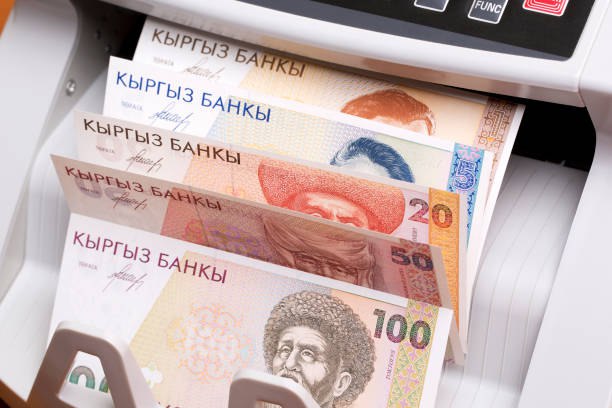
• KGS/USD = 0.01143 0%
  • KZT/USD = 0.00205 0%
  • TJS/USD = 0.10724 0.09%
  • UZS/USD = 0.00008 0%
  • TMT/USD = 0.28571 0%
  • KGS/USD = 0.01143 0%
  • KZT/USD = 0.00205 0%
  • TJS/USD = 0.10724 0.09%
  • UZS/USD = 0.00008 0%
  • TMT/USD = 0.28571 0%
  • KGS/USD = 0.01143 0%
  • KZT/USD = 0.00205 0%
  • TJS/USD = 0.10724 0.09%
  • UZS/USD = 0.00008 0%
  • TMT/USD = 0.28571 0%
  • KGS/USD = 0.01143 0%
  • KZT/USD = 0.00205 0%
  • TJS/USD = 0.10724 0.09%
  • UZS/USD = 0.00008 0%
  • TMT/USD = 0.28571 0%
  • KGS/USD = 0.01143 0%
  • KZT/USD = 0.00205 0%
  • TJS/USD = 0.10724 0.09%
  • UZS/USD = 0.00008 0%
  • TMT/USD = 0.28571 0%
  • KGS/USD = 0.01143 0%
  • KZT/USD = 0.00205 0%
  • TJS/USD = 0.10724 0.09%
  • UZS/USD = 0.00008 0%
  • TMT/USD = 0.28571 0%
  • KGS/USD = 0.01143 0%
  • KZT/USD = 0.00205 0%
  • TJS/USD = 0.10724 0.09%
  • UZS/USD = 0.00008 0%
  • TMT/USD = 0.28571 0%
  • KGS/USD = 0.01143 0%
  • KZT/USD = 0.00205 0%
  • TJS/USD = 0.10724 0.09%
  • UZS/USD = 0.00008 0%
  • TMT/USD = 0.28571 0%

Viewing results 1 - 6 of 55

EBRD Finances Coffee-Processing Plant at Kazakh-Chinese Border

The European Bank for Reconstruction and Development (EBRD) has announced a loan of up to $10 million to Empire Manufacturing Kazakhstan (EMK) to support the construction of a coffee-processing facility in the Khorgos Free Economic Zone, located on Kazakhstan’s border with China. EMK is a subsidiary of Food Empire Holdings, a global food and beverage group listed on the Singapore Exchange. The new plant will enhance the company’s regional production capacity and is expected to set a new standard for food-processing technology and hygiene in Kazakhstan and Central Asia. Once operational, the facility will export up to 50 percent of its coffee products to markets across Central Asia and the South Caucasus, where demand for Food Empire’s instant beverages is on the rise. The investment aligns with the EBRD’s broader strategy to support private sector growth in Kazakhstan. To date, the Bank has invested more than €11 billion in 335 projects across the country, with a strong emphasis on fostering entrepreneurship and innovation.

Kazakhstan is Striving for Investment Amid “Resource Nationalism”

Amid the war in Ukraine, as well as various geopolitical turbulences that threaten to fundamentally change the current global order, Kazakhstan is aiming to attract more foreign investment. The war in Ukraine has so far had a relatively positive impact on the economies of most Central Asian nations, giving Astana room to achieve its ambitious goal of attracting $150 billion in foreign direct investment by 2029.  Kazakhstan, along with other neighboring actors, used the Russian invasion of Ukraine to develop closer economic ties with the West, namely with the European Union. It is therefore no surprise that, in 2022 and 2023, the EU member Netherlands invested over $12 billion in the Kazakh economy, making it the leading foreign investor. The United States, according to the official statistics, is the second-largest investor, with Switzerland rounding out the top three. Although between 2005 and its total foreign direct investment (FDI) reached $402 billion, Kazakhstan’s innovation agenda aims to attract $150 billion of FDI in the next five years while doubling the country’s GDP. The problem is that in 2023 the inflow of foreign direct investment into Kazakhstan decreased by 32.3%, which suggests that Astana may have a hard time finding ways to attract more capital into the Kazakh economy. Experts claim that there is no comprehensive development strategy for both industries and regions in Kazakhstan, which limits investments in its economy. But the creation of platforms with tax preferences, an independent regulator, and a regulatory environment based on the principles of British law are believed to contribute to the active development of entrepreneurship. In other words, the authorities in Kazakhstan are using a model based on practices in Britain and the United Arab Emirates to attract investment, drawing inspiration from the British Common Law system, as well as the Dubai International Financial Center, which served as a reference for the Astana International Financial Center. Given that both Kazakhstan and the UAE are economies based on fossil fuel exports, it is unlikely to be a coincidence that Astana aims to use Abu Dhabi’s experiences to improve its existing arrangements with foreign corporations operating in Kazakhstan.  "Large investments require a long-term planning horizon. Therefore, the government will have to intensify negotiations regarding the extension of production sharing agreements contracts on the updated terms, favorable to the country," Kazakhstan’s President Kassym-Jomart Tokayev said on January 28, as foreign companies reportedly claim that Astana is seeking to increase its shares in key oil and gas projects in what amounts to "resource nationalism".  At the same time, the Kazakh government seeks to create a favorable investment climate for foreign companies by reducing bureaucratic obstacles, introducing tax breaks, eliminating financial audits, and ensuring the protection of the legal rights of investors. Kazakhstan has also recently introduced a Digital Nomad visa (also called a 'Neo Nomad' visa), which grants foreign nationals the right to reside in the country while working for a foreign employer. Such a move can be interpreted as another attempt to attract foreign investment in Kazakhstan. ...

Chinese Company to Develop Low-Altitude Technologies and Intelligent Manufacturing in Kazakhstan

Kazakh Invest, Kazakhstan’s national investment company, has signed a memorandum of understanding (MoU) with China's Polyking New Horizons Technology Industry Co. Ltd. The agreement focuses on collaboration in the emerging field of low-altitude economy and intelligent manufacturing. As part of the partnership, the companies plan to establish an industrial park in Kazakhstan, which will integrate drone technologies, smart city solutions, and advanced manufacturing systems. The $200 million project is expected to create 1,000 new jobs, according to Kazakh Invest. Expanding High-Tech Opportunities The MoU also includes provisions for developing projects in the chemical industry and innovative technologies. These initiatives aim to strengthen Kazakhstan's position as a hub for high-tech production and innovation in Central Asia. Azamat Kozhanov, Managing Director of Kazakh Invest, highlighted the vast potential for low-altitude technologies in various sectors, including agriculture, energy, construction, and infrastructure management. “The advanced technologies and expertise of Polyking will bring new momentum to the development of this field in Kazakhstan,” Kozhanov stated. He also noted the significant economic opportunity tied to this sector, adding: “By 2050, the global low-altitude economy market is expected to reach $8.8 trillion. Therefore, we are actively creating platforms to develop new industries and providing comprehensive support.” Broader Trends in Low-Altitude Technology Kazakhstan has already taken steps to integrate drone production into its economy. The Times of Central Asia recently reported on a $12 million project by Yesil Technology Company, a subsidiary of China’s Shaanxi Kaizhuo Electronic Technology Co. Ltd., to establish an industrial drone manufacturing facility in the country. This collaboration underscores Kazakhstan’s strategic focus on becoming a leader in the low-altitude economy, a field that includes drones, unmanned aerial vehicles (UAVs), and other advanced technologies that operate at low altitudes. The partnership between Kazakh Invest and Polyking New Horizons Technology marks another milestone in Kazakhstan’s push to diversify its economy through high-tech industries. The planned industrial park, along with complementary projects like drone manufacturing, positions Kazakhstan to capitalize on the growing global market for low-altitude technologies and intelligent manufacturing. If successfully implemented, these initiatives could transform the country into a regional leader in cutting-edge technology and innovation.

Important Deal Signed for China-Kyrgyzstan-Uzbekistan Railway Project

On December 20, Bishkek hosted the signing of an investment agreement between Kyrgyzstan’s Cabinet of Ministers and China-Kyrgyzstan-Uzbekistan Railway Company LLC. The agreement encompasses the design, construction, financing, operation, and maintenance of the China-Kyrgyzstan-Uzbekistan railway. The announcement came shortly after Kyrgyz President Sadyr Japarov revealed that construction on the strategic railway, which will connect the three nations, is set to begin on December 27. The agreement was signed by Kyrgyzstan’s Minister of Transport and Communications, Absattar Syrgabaev, and Zhong Shenggui, Chairman of the Board of Directors of China-Kyrgyzstan-Uzbekistan Railway Company LLC. A Historic Milestone The signing ceremony was attended by Kyrgyz Deputy Chairman of the Cabinet of Ministers and Minister of Water Resources, Agriculture, and Processing Industry Bakyt Torobayev; Li Baojie, Charge d’Affaires of the Chinese Embassy in Kyrgyzstan; and Saidikram Iyazkhodjaev, Uzbekistan’s Ambassador to Kyrgyzstan. In his remarks, Torobayev called the agreement a historic achievement for the three nations, marking the conclusion of a lengthy negotiation process and the start of practical implementation. “This large-scale infrastructure project is of both regional and international significance,” he emphasized. Strategic Importance of the Railway The China-Kyrgyzstan-Uzbekistan railway is a pivotal development for the transport strategies of the participating countries. Currently, neither Kyrgyzstan nor Uzbekistan has a direct railway link with China, while Central Asia’s rail connection to China is limited to a route through Kazakhstan. Furthermore, Kyrgyzstan and Uzbekistan lack a direct railway link between them. The project’s significance was cemented on June 6, 2024, when China, Kyrgyzstan, and Uzbekistan signed an intergovernmental agreement in Beijing. The 523-kilometer railway will traverse Kashgar (China), Torugart, Makmal, Jalal-Abad (Kyrgyzstan), and Andijan (Uzbekistan). Transit and logistics infrastructure will be developed along the route to support its operations. Once completed, the railway is expected to transport up to 15 million tons of cargo annually, significantly enhancing trade and connectivity in the region.

Uzbekistan Welcomes 6.5 Million Tourists in 10 Months of 2024, With China Leading Growth Outside CIS

Uzbekistan’s tourism industry is thriving, with 6.5 million foreign visitors from January to October 2024, fueled by a 17.2% year-on-year increase, or 951,300 more visitors compared to the same period last year. Among these tourists, 57,700 were from China, marking a 63.1% rise and making China the leading source of visitors outside the Commonwealth of Independent States (CIS). China's interest in landlocked Uzbekistan comes as no surprise. Rich in natural resources and brimming with untapped potential, Uzbekistan stands as a promising opportunity for growth and prosperity when strategic investments are managed effectively. For instance, China continues to dominate Uzbekistan’s trade scene, accounting for 18.8% of the country's total foreign trade turnover as of October 2024. Bilateral trade between the two nations reached $10.2bn, with Uzbekistan exporting $1.7bn worth of goods to China and importing $8.5bn in return. While this was a slight dip from the $10.8bn in 2023, China has maintained its position as Uzbekistan’s largest trade partner since 2020, thanks in part to strategic agreements like the Bilateral Investment Treaty (BIT) and the Agreement on Avoidance of Double Taxation (DTA). Additionally, China’s investment footprint in Uzbekistan is hard to miss. By the end of 2022, China had invested a total of $4.5bn, with over 2,000 Chinese enterprises operating in the country as of January 1, 2024. These businesses span a wide range of sectors, from oil and gas exploration to infrastructure development, automotive assembly, agriculture, and textiles. Projects include the Pengsheng Industrial Park, which focuses on construction materials and modern agriculture with a $129mn investment, and the Anjiyan Textile Park, which specializes in textile production, backed by more than $64mn. The Luoyang-Bukhara Agricultural Cooperation Zone takes this partnership to the next level, blending agricultural cultivation with industrial activities for a dynamic collaboration. Agriculture has blossomed as a key area of collaboration between Uzbekistan and China in recent years. Uzbek exports, such as cherries, apricots, and dried fruits are hitting the sweet spot in China, while Chinese investments in agri-tech are giving Uzbekistan’s productivity and export game a major boost. When it comes to green energy, Uzbekistan’s renewable ambitions are getting a powerful push from Chinese know-how. A standout project, a 1 GW solar power plant under the Belt and Road Initiative, is a shining example of both nations’ dedication to a greener, more sustainable future. In addition, on December 5, Uzbekistan's Uzatom and China National Nuclear Corporation Overseas (CNOS) signed a cooperation agreement, setting the stage for small nuclear power plants and improved uranium processing in Uzbekistan. This follows earlier talks about tapping into China's expertise to enhance the country’s nuclear energy capabilities. The digital transformation of Uzbekistan is another exciting frontier of opportunity. With plans to expand its digital infrastructure, Chinese companies are stepping in with cutting-edge technologies like 5G networks and e-commerce platforms. These innovations are set to supercharge Uzbekistan’s digital economy, making it more efficient and connected than ever before. It’s a win-win that promises to drive growth and elevate the country’s technological landscape. Two major...

Kazakhstan Hosts Meeting of Council of Foreign Investors

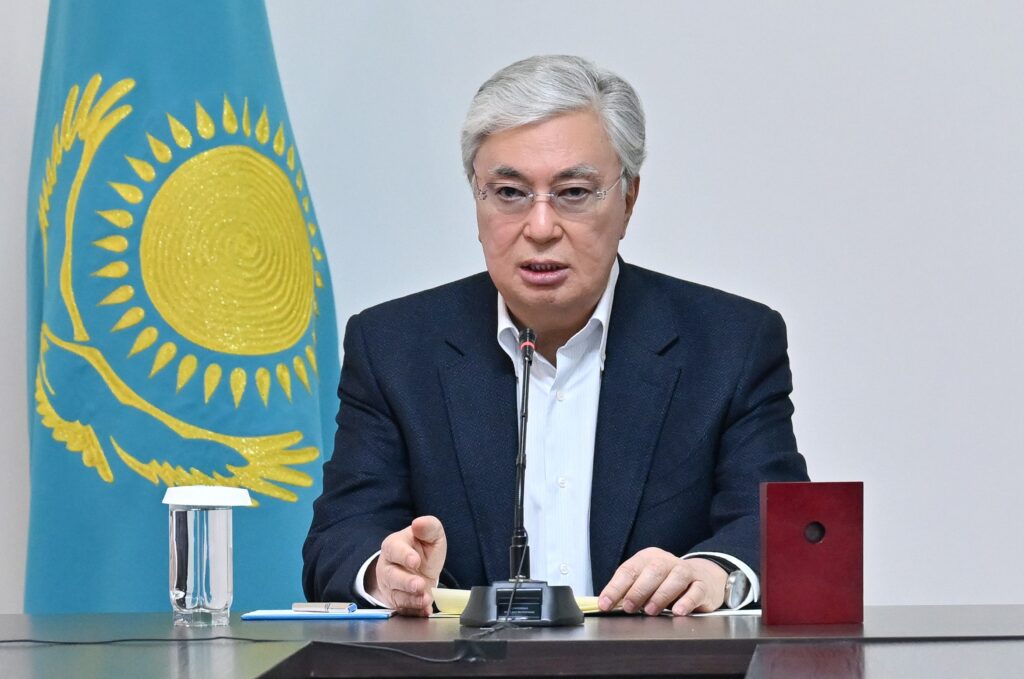
Astana's Palace of Independence hosted the 36th meeting of the Foreign Investors Council. Kazakhstan's President Kassym-Jomart Tokayev and Prime Minister Olzhas Bektenov attended the event. This year's central theme was “Kazakhstan's New Investment Cycle.” The meeting discussed strategies for the new investment cycle and the development of Kazakhstan's attractiveness to investors. Citing data from the International Institute for Management Development (IMD), Tokayev emphasized that Kazakhstan has become one of the world's top 35 competitive countries. “We set ourselves a rather ambitious goal: to attract $150 billion of foreign direct investment by 2029. To realize this goal, the Investment Headquarters under the Government is endowed with expanded powers to solve emerging problems promptly,” said the president. Tokayev noted the merits of international oil companies, which have played an essential role in the country's development. “Foreign investors have invested capital and provided advanced technologies and highly skilled labor. Their investments have contributed to the growth of our energy industry: over the past 30 years, oil production has tripled. Thanks to this, Kazakhstan has become one of the five countries with the highest oil production growth rates. Speaking about the future, we set a goal to overcome the threshold of 100 million tons per year,” he said. The meeting focused on increasing investment attractiveness in the “clean energy” sector. Specific agreements were reached with world companies such as Total, Svevind, ACWA Power, and Masdar on realizing 43 GW of “green” projects in Kazakhstan. In addition, Kazakhstan has a vast potential for developing nuclear energy, so creating an international consortium to realize the NPP construction project is under consideration. Kazakhstan focuses on the work of the Astana International Financial Center to strengthen cooperation in the financial sector. Tokayev spoke of the importance of continuing the dialog between the Council members and government agencies to improve the country's investment climate and implement new initiatives and specific projects. The meeting also included Odile Renaud-Basso, President of the EBRD; Nurlan Dosymbekov, Deputy Prime Minister and Minister of National Economy; Zhang Daowei, Chairman of the Board of the Kazakh Association “Baibazarov” and the Yerstanign Investors; Nikolai Podguzov, chairman of the EDB; Andrew Deleoni, president of Alstom for Africa, the Middle East, and Central Asia; and Vadim Vorobyov, Chief Executive Officer of PJSC Lukoil. Established in 1998, the Council of Foreign Investors is a platform for foreign investors and the government of Kazakhstan to discuss strategic objectives and find solutions to improve the business climate. From the Kazakhstani side, the Council is attended by government members and heads of several national companies and development institutions. Foreign participants include representatives of major international corporations and organizations, underscoring the global interest in investing in Kazakhstan. Last year's 35th Plenary Meeting of the Foreign Investors Council was also chaired by President Tokayev. The main topic of the meeting was “Digital Transformation of the Economy.” At the time, Tokayev emphasized that digitalization is a tremendous technological breakthrough and opportunity. The growth of digitalization is already dramatically impacting economic development and changing the game's...