• KGS/USD = 0.01144 0%
  • KZT/USD = 0.00212 0%
  • TJS/USD = 0.10699 0.19%
  • UZS/USD = 0.00008 0%
  • TMT/USD = 0.28490 0%
  • KGS/USD = 0.01144 0%
  • KZT/USD = 0.00212 0%
  • TJS/USD = 0.10699 0.19%
  • UZS/USD = 0.00008 0%
  • TMT/USD = 0.28490 0%
  • KGS/USD = 0.01144 0%
  • KZT/USD = 0.00212 0%
  • TJS/USD = 0.10699 0.19%
  • UZS/USD = 0.00008 0%
  • TMT/USD = 0.28490 0%
  • KGS/USD = 0.01144 0%
  • KZT/USD = 0.00212 0%
  • TJS/USD = 0.10699 0.19%
  • UZS/USD = 0.00008 0%
  • TMT/USD = 0.28490 0%
  • KGS/USD = 0.01144 0%
  • KZT/USD = 0.00212 0%
  • TJS/USD = 0.10699 0.19%
  • UZS/USD = 0.00008 0%
  • TMT/USD = 0.28490 0%
  • KGS/USD = 0.01144 0%
  • KZT/USD = 0.00212 0%
  • TJS/USD = 0.10699 0.19%
  • UZS/USD = 0.00008 0%
  • TMT/USD = 0.28490 0%
  • KGS/USD = 0.01144 0%
  • KZT/USD = 0.00212 0%
  • TJS/USD = 0.10699 0.19%
  • UZS/USD = 0.00008 0%
  • TMT/USD = 0.28490 0%
  • KGS/USD = 0.01144 0%
  • KZT/USD = 0.00212 0%
  • TJS/USD = 0.10699 0.19%
  • UZS/USD = 0.00008 0%
  • TMT/USD = 0.28490 0%

Viewing results 1 - 6 of 1214

Asian Development Bank to Invest $5.5 Billion in 15 Projects in Kazakhstan by 2029

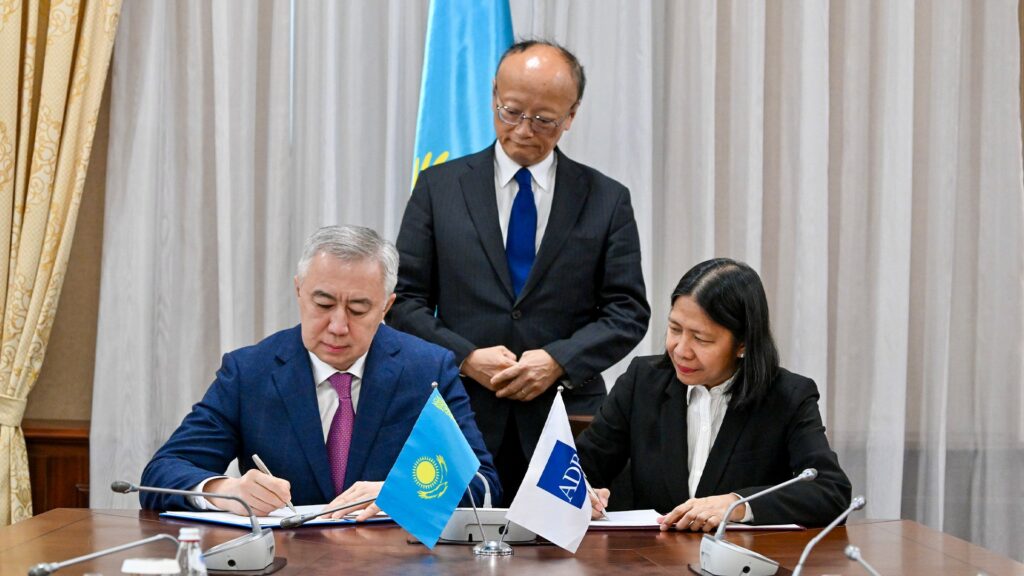
Kazakhstan's government and the Asian Development Bank (ADB) have signed a memorandum of understanding to implement 15 major projects worth approximately $5.5 billion in the period 2026-2029. The initiatives, focused on infrastructure, digitalization, and sustainable development, aim to strengthen the country’s transit capacity and investment appeal. According to an official statement, the memorandum lays the groundwork for large-scale projects in regional connectivity, disaster resilience, water resource management, modernization of housing and utilities infrastructure, and housing market development. ADB will also continue financing private-sector initiatives, including projects in agriculture, transport, and logistics. Priority areas include transport and logistics infrastructure, emergency response systems, digital technology development, and green finance. The parties also highlighted potential cooperation in artificial intelligence, the construction of data centers, the expansion of fiber-optic backbone networks, and the digitalization of transport corridors and customs procedures. One of the first concrete steps under the agreement is a project between KazAutoZhol JSC and the ADB to construct a 102-kilometer bypass road around the town of Saryagash in the Turkestan region. The new road is expected to enhance road safety, accelerate freight and passenger transport, and strengthen trade links between Kazakhstan and Uzbekistan. The parties also reviewed progress on a public-private partnership project to build a 300-bed university hospital in Karaganda. The planned medical cluster will combine professional training and scientific research, with subsequent integration of innovations into practical healthcare. ADB President Masato Kanda noted Kazakhstan’s progress in structural reforms, including measures to enhance financial sector stability, and reaffirmed the bank’s interest in supporting the country’s digital transformation. Earlier, ADB initiated a project to develop a shorter road route from Almaty to Lake Issyk-Kul in Kyrgyzstan. The new route is expected to reduce travel time by nearly half, strengthening tourism and trade connectivity between the two countries.

EBRD Provides €20 Million Loan to Expand Uzbekistan’s Pharmaceutical Production

Uzbekistan is taking further steps to strengthen its pharmaceutical industry and healthcare system through new investment and sector reforms aimed at reducing reliance on imported medical products. The European Bank for Reconstruction and Development (EBRD) has announced a loan of up to €20 million to its long-term client Samarkand England Eco-Medical (SEEM) and its sister company, Bayan Medical. Both companies produce intravenous solutions, including sodium chloride, glucose, and amino acid infusions, as well as generic and specialized medicines in tablet and capsule form. The financing will support the installation of new production lines at SEEM, enabling the company to expand manufacturing of in-glass intravenous solutions, antibiotics, syrups and suspensions, medical-grade water, nasal sprays, suppositories, and ointments. Part of the funds will also be allocated to modernizing Bayan Medical’s facilities, including energy-efficiency upgrades and the installation of a blow-fill-seal ampoule production line and other specialized equipment. The companies are also expected to restructure their balance sheets as part of the project. The investment comes at a time when approximately 75% of medical goods used in Uzbekistan are imported. Expanding domestic production capacity is intended to promote localization, strengthen supply security, and align manufacturing standards with international requirements. The project also includes social and workforce components. Bayan Medical plans to introduce internship opportunities for university graduates, expand professional training programs for employees, and create new jobs, including positions accessible to people with disabilities. To date, the EBRD has invested nearly $6.9 billion (€5.8 billion) in Uzbekistan across 205 projects, the majority of which have supported private sector development. Uzbekistan has been the largest recipient of EBRD funding in Central Asia for six consecutive years, reflecting sustained economic reforms and investor engagement. Healthcare indicators point to broader structural progress. According to the 2024 Health Care Index published by CEOWORLD magazine, Uzbekistan ranks first in Central Asia and 64th globally, with a score of 36.26. Kazakhstan ranks 78th, and Turkmenistan 95th. Data from the World Health Organization and the World Bank indicate that Uzbekistan’s Universal Health Coverage service index rose from the mid-50s in 2000 to the mid-70s by 2021, suggesting expanded access to essential medical services. Authorities aim to further increase coverage by 2027 while reducing out-of-pocket healthcare spending through strengthened primary care systems and clearer guarantees of publicly funded services.

Tajikistan Plans Over $1 Billion for Rogun Hydropower Project in 2026

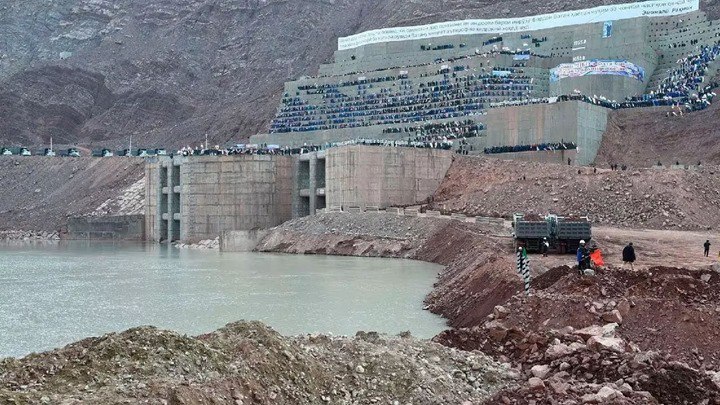
The government of Tajikistan plans to allocate at least 10 billion TJS (more than $1 billion) to finance the Rogun hydropower project in 2026, Finance Minister Faiziddin Qahhorzoda said on February 13 at a press conference in Dushanbe. The statement was later released by the Ministry of Finance and reported by Asia-Plus. Qahhorzoda specified that 8.2 billion TJS has already been earmarked in the state budget for completion of the Rogun hydropower plant. He added that additional financing could be mobilized through development partners, as agreements have been signed and the required domestic procedures and partner conditions have been fulfilled. “Certain conditions had to be met by the government of Tajikistan to access these funds. All conditions have been completed, and financing under the first tranche of $350 million has begun,” the minister said, referring to grant funding from the World Bank. He added that negotiations for an additional $300 million from the institution have been concluded successfully, with the funds expected to become available by mid-year. The minister also stated that domestic procedures are being finalized to attract $150 million from the Islamic Development Bank, as well as $100 million each from the Saudi Fund for Development, the Kuwait Fund for Arab Economic Development, and the OPEC Fund for International Development. According to Qahhorzoda, the remaining step is the completion of tender procedures. In addition, all procedures have reportedly been completed to secure $500 million from the Asian Infrastructure Investment Bank, of which $270 million is expected to be disbursed in the first tranche. According to the Finance Ministry, approximately 11 billion TJS was allocated in 2025 for the completion of Rogun, including 2 billion TJS designated for servicing Eurobonds issued to support the project. Earlier, at the end of January, the Energy Ministry stated during a separate press conference that several financing agreements signed with international partners in 2024-2025 had already entered into force. Officials noted that activating these agreements required fulfilling a number of technical and procedural conditions. The Rogun hydropower plant, located 110 kilometers from Dushanbe on the Vakhsh River, is the largest energy project in Tajikistan. Construction began in 1976 but was suspended following the collapse of the Soviet Union. Work resumed after independence. Of the six planned generating units, each with a capacity of 600 MW, two are currently operational and had produced 9.9 billion kWh of electricity by the end of last year. In December 2025, President Emomali Rahmon announced that the third unit is scheduled to be commissioned in September 2027. Once all six units are operational, the plant’s total installed capacity will reach 3.78 GW, and its 335-meter dam is projected to become the tallest in the world. The total cost of construction has been estimated at $6.2 billion.

Foreign Capital Inflows to Tajikistan Jump by One-Third, Approaching $7 Billion

Foreign investment in Tajikistan increased sharply in 2025, rising by more than one-third compared to the previous year, as the authorities also announced new investment agreements and long-term development strategies extending to 2040. Speaking at a press conference, Sulton Rahimzoda, chairman of the State Committee for Investment and State Property Management of the Republic of Tajikistan, said that by the end of 2025, total foreign capital inflows had reached $6,925.3 million. This represents an increase of $1,798.6 million, or 35.1%, compared to 2024. In absolute terms, the economy attracted nearly $1.8 billion more in foreign investment than a year earlier. According to the committee, $3,031.0 million of the total came from post-Soviet states in 2025, accounting for 43.8% of overall foreign investment. At the same time, countries outside the former Soviet Union accounted for the majority share. Tajikistan received $3,894.3 million from these countries, or 56.2% of total inflows. Investment from this group increased by $731.3 million year over year, or 23.1%. Authorities attributed the growth in foreign capital to improvements in the regulatory framework. On the initiative of the State Committee, a new version of the Law of the Republic of Tajikistan “On Investments and Stimulation of Investment Activity,” dated May 14, 2025, No. 2173, was adopted. Additional momentum came from the International Investment Forum “Dushanbe Invest - 2025,” held on October 14-16, where more than 50 cooperation agreements worth a combined $4.1 billion were signed.

EBRD Invested Over $100 Million in Tajikistan’s Economy in 2025

The European Bank for Reconstruction and Development (EBRD) invested nearly $103 million in Tajikistan’s economy in 2025, signing 19 agreements over the course of the year. The funding targeted key sectors including energy, transport, municipal infrastructure, and private sector development. According to the bank, 83% of its 2025 loan portfolio in Tajikistan supported sustainable infrastructure projects. Another 14% of resources were channelled through local banks to finance small and medium-sized enterprises (SMEs), women’s and youth entrepreneurship initiatives, and programs focused on climate adaptation and resource efficiency. The public sector received the majority of financing, accounting for 83% of the EBRD’s annual activity in the country. Of the total lending volume, approximately 58% was directed toward green economy development. One of the year’s largest initiatives was a financing package of up to €43 million for the state-owned power distribution company, Shabakahoi Taqsimoti Barq. The package includes an EBRD sovereign loan of up to €28 million and a €15 million grant from the European Union. These funds are being used to modernize electricity metering and billing systems across nine cities in the Khatlon and Sughd regions. Significant investment also went into road infrastructure. An EBRD sovereign loan of up to €38 million, combined with an $86.7 million grant from the Asian Development Bank, will fund the reconstruction of the Danghara-Guliston highway. The route connects the north and south of the Khatlon region, which produces over half of Tajikistan’s agricultural output and is home to more than one-third of the population. A major energy milestone was achieved in 2025 with the completion of the Kayrokkum hydropower plant’s modernization. The plant’s installed capacity increased from 126 MW to 174 MW after all six units were brought online. Serving around 500,000 people in the Sughd region, the project, initiated in 2019, was financed with $196 million arranged by the EBRD. The bank also issued three sovereign loans totaling over €12 million for water supply system upgrades in Kulyab and Yavan, and for the modernization of Dushanbe’s centralized heating system. Alongside infrastructure projects, the EBRD expanded its support for the private sector. In 2025, more than 500 small enterprises across Tajikistan received various forms of assistance from the bank.

What the U.S. Really Wants in Central Asia: Behind the B5+1 Forums

The B5+1 business forum continued in Kyrgyzstan’s capital on February 5, as government officials, regional business leaders, and a sizable U.S. delegation met to discuss trade, investment, and regulatory barriers shaping economic ties between Central Asia and the United States. As Washington signals a more pragmatic, commercially driven approach to the region, questions persist over why U.S. investment has lagged behind political engagement and which markets are truly seen as priorities. The Times of Central Asia spoke with Dmitry Orlov, director of the Strategy: East–West analytical center, about the structural obstacles deterring American capital, the shift in U.S. policy thinking, and how Central Asian states are positioned within Washington’s evolving economic calculus. TCA: What serious U.S. capital investments in Central Asia can we talk about today? ORLOV: It is important to understand the main point. Talk of large investments, the arrival of American business, and long-term economic cooperation only makes sense in one case: if the U.S. repeals the Jackson-Vanik amendment, which was adopted back in the 1970s and extended to all former Soviet republics after the collapse of the USSR. Today, it remains a formal and, in many ways, psychological obstacle to a fully-fledged business partnership. At the same time, it is necessary to establish contacts at a business level right now. This is because if the amendment is repealed - and such statements are regularly heard in Washington - it is difficult to predict which countries in the region will receive investment flows and in what volumes. Recent international forums, including Davos, have shown that Kazakhstan and Uzbekistan are of the greatest interest to the U.S. in Central Asia. Their economies are developing more dynamically, and they can offer large-scale projects and a clear export base. The other countries in the region, Kyrgyzstan, Tajikistan, and Turkmenistan, are still perceived by investors as lower priorities. TCA: Previously, the U.S. actively promoted a political agenda in the region, including human rights and freedom of speech. Now these are rarely mentioned. Why do you think this is the case? ORLOV: The approach has become more pragmatic. The history of U.S. foreign policy shows that strategic and economic interests have always taken precedence. If a territory is attractive in terms of resources or transit routes, a format for cooperation will be found. In Europe, relatively speaking, the rule of law prevails. In Asia, the situation is different, and the Americans understand this perfectly well. Issues of ideology and human rights can move to the background if economic expediency comes first. This is especially true in Central Asia, where many issues are resolved through personal agreements and informal connections. Washington understands this. TCA: What exactly can Central Asia offer the U.S.? ORLOV: In terms of individual countries, Kazakhstan and Uzbekistan are again in the lead. They offer oil, gas, and, no less importantly, control over transit routes. There is currently a lot of discussion about rare earths and critical minerals, but their development is always long and expensive. As a result, interest in...