• KGS/USD = 0.01144 0%
  • KZT/USD = 0.00216 0%
  • TJS/USD = 0.10562 0%
  • UZS/USD = 0.00008 0%
  • TMT/USD = 0.28530 0%
  • KGS/USD = 0.01144 0%
  • KZT/USD = 0.00216 0%
  • TJS/USD = 0.10562 0%
  • UZS/USD = 0.00008 0%
  • TMT/USD = 0.28530 0%
  • KGS/USD = 0.01144 0%
  • KZT/USD = 0.00216 0%
  • TJS/USD = 0.10562 0%
  • UZS/USD = 0.00008 0%
  • TMT/USD = 0.28530 0%
  • KGS/USD = 0.01144 0%
  • KZT/USD = 0.00216 0%
  • TJS/USD = 0.10562 0%
  • UZS/USD = 0.00008 0%
  • TMT/USD = 0.28530 0%
  • KGS/USD = 0.01144 0%
  • KZT/USD = 0.00216 0%
  • TJS/USD = 0.10562 0%
  • UZS/USD = 0.00008 0%
  • TMT/USD = 0.28530 0%
  • KGS/USD = 0.01144 0%
  • KZT/USD = 0.00216 0%
  • TJS/USD = 0.10562 0%
  • UZS/USD = 0.00008 0%
  • TMT/USD = 0.28530 0%
  • KGS/USD = 0.01144 0%
  • KZT/USD = 0.00216 0%
  • TJS/USD = 0.10562 0%
  • UZS/USD = 0.00008 0%
  • TMT/USD = 0.28530 0%
  • KGS/USD = 0.01144 0%
  • KZT/USD = 0.00216 0%
  • TJS/USD = 0.10562 0%
  • UZS/USD = 0.00008 0%
  • TMT/USD = 0.28530 0%

Viewing results 1 - 6 of 357

Caspian Escalation Raises Stakes for Central Asia

Central Asia, which has increasingly sought to present itself as a coordinated actor on the global political stage, has until recently maintained a cautious, non-aligned stance regarding the escalation in the Middle East. However, attacks affecting infrastructure in the Caspian region have altered the diplomatic balance. The Caspian Sea is a critical transit zone for Central Asia, linking Kazakhstan and Turkmenistan to Azerbaijan and onward to European and Middle Eastern markets. It forms part of key east–west and north–south trade corridors that have gained importance since Russia’s war in Ukraine disrupted traditional transit routes. In recent years, regional dynamics have also been shaped by Azerbaijan’s growing engagement with Central Asian states, including its formal inclusion in the expanded Central Asian consultative format, which has effectively evolved from the C5 into the C6. Baku has played an important role in regional connectivity. It has developed close relations with both Turkey and Israel, factors that influence geopolitical calculations in the Caspian basin, which directly borders Kazakhstan and Turkmenistan. This growing alignment has reinforced efforts to develop the Middle Corridor across the Caspian, linking Central Asia to Europe via the South Caucasus. Turkey maintains political, economic, and cultural influence in Kazakhstan, Kyrgyzstan, and Uzbekistan through the Organization of Turkic States. Russian political discourse has at times portrayed this cooperation as part of a broader pan-Turkic geopolitical project, a characterization widely dismissed by officials and analysts in Central Asia. Nevertheless, Astana and Baku continue to maintain strong relations with Ankara, a development that has periodically caused concern in Moscow. Under President Kassym-Jomart Tokayev, Kazakhstan has also strengthened ties with Gulf states. Qatar, Kuwait, the United Arab Emirates, and Saudi Arabia have become significant investors in the country’s economy. In this context, Iranian attacks on Gulf states not directly involved in the conflict have shaped Astana’s diplomatic positioning during the current crisis. Reports of drone attacks widely blamed on Iran targeting the Azerbaijani exclave of Nakhchivan have further heightened regional tensions. At the initial stage of the escalation, Kazakhstan’s response was largely limited to diplomatic contacts with regional leaders. At the same time, several Central Asian countries, along with Azerbaijan, expressed concern over the humanitarian consequences of the conflict and began dispatching aid to Iran. Azerbaijan sent nearly 30 tons of food and medical supplies on March 10, followed by another 82 tons of humanitarian aid on March 18. Uzbekistan delivered approximately 120 tons of humanitarian supplies, including flour, vegetable oil, sugar, and canned food, according to regional media reports. Turkmenistan also sent humanitarian aid consisting of medicines, medical supplies, and other goods, primarily intended for children. The Tajik government reported sending a convoy of 110 heavy trucks carrying humanitarian cargo to Iran, with a total weight of 3,610 tons. The diplomatic environment shifted further after Israeli air strikes on March 18 targeting Iranian naval facilities in the Caspian Sea. According to Israeli military statements cited by international media, the targets included a major port of the Iranian Navy, where, reportedly, "dozens of ships were destroyed,”...

Central Asia’s Airspace Is Growing in Value as the Iran Conflict Reshapes Routes

The war involving Iran has made Central Asia’s skies more important, but it has not made them a replacement for the Gulf. The change is narrower and more practical. As previously reported by The Times of Central Asia, the conflict has already reshaped Europe–Asia flight routes, with airlines forced to reroute around high-risk airspace. As EASA’s conflict-zone bulletin for Iran remains in force through March 31, and its broader Middle East and Persian Gulf bulletin advises operators to avoid a wide band of regional airspace, airlines flying between Europe and Asia now have fewer safe and efficient options than they did even a month ago. That matters for Central Asia because the region sits just north of the disrupted corridor. Iran’s airspace is considered high risk and is being widely avoided by airlines, while large parts of the central Middle East corridor are closed or heavily restricted. Safe Airspace’s March 21 summary states that the normal central route has been effectively shut for many operators, while Oman has become a heavily used southern bypass. That leaves a northern arc running through the Caucasus and Central Asia as one of the few workable alternatives for many carriers. The roots of this go back further than this month’s escalation. Since Russia’s full-scale invasion of Ukraine in 2022, many Western and Europe-bound operators have had to rethink routes that once crossed Russian airspace. In January 2025, Uzbekistan Airways began rerouting its Europe flights around Russia and Belarus. The airline said the Tashkent–Munich route grew from 4,849 kilometers to 5,156 kilometers, adding 30 to 40 minutes to each flight. The conflict has now squeezed traffic again, this time from the south. That double squeeze raises a harder question. Can Central Asia handle more strategic weight in the air, not just on a map but in daily operations? Kazakhstan is the strongest candidate. Kazaeronavigatsiya says Kazakhstan’s airspace handled 216,616 flights in the first half of 2025. Of those, 161,029 were flown by foreign airlines in transit or landing operations, while 55,587 were operated by Kazakh carriers. The same state operator lists 124 air traffic service routes with a combined length of 113,530 kilometers. These are substantial figures for a landlocked state positioning itself as a Eurasian transit hub. The country’s broader aviation system has also been expanding. The Civil Aviation Administration of Kazakhstan says airports served 31.8 million passengers in 2025, up from 29.7 million in 2024. Airlines carried 20.7 million passengers, and Kazakhstan’s compliance with international aviation safety standards reached 95.7%. The same report points to a three-year development plan, a new accident investigation center, and continued work on digital systems and urban air mobility rules. Still, higher value does not mean unlimited capacity. Central Asia is not one integrated aviation market. It is a set of separate national systems with uneven infrastructure, uneven investment, and different regulatory speeds. Kazakhstan has scale, but it is also expanding passenger traffic, cargo capacity, and international routes at the same time. More overflights can bring revenue, but...

Tokayev Proposes Turkestan as Venue for Middle East Peace Talks

Kazakhstan’s president, Kassym-Jomart Tokayev, has called for immediate negotiations to resolve the conflict in the Middle East and proposed the city of Turkestan as a venue for talks. Tokayev made the remarks during a visit to the Turkestan region, warning that escalating conflicts worldwide, including the conflict involving Iran, the United States, and Israel, are harming global stability and trade conditions for countries not directly involved in the hostilities. He said the situation in the Middle East has reached a critical stage and that further escalation by Iran, the United States, or Israel would benefit none of the parties. “First and foremost, I call for an end to armed attacks on civilian and economic targets. Then it is necessary to sit down at the negotiating table,” Tokayev said. The president said Kazakhstan is not seeking to mediate in the conflict but is prepared to offer its territory as a neutral platform for negotiations. “I believe such a dialogue could be organized in Turkestan. This would demonstrate the goodwill of the Kazakh people,” Tokayev added, noting that the final decision depends on the parties involved. The choice of Turkestan is both geographic and symbolic. The city is regarded as one of Central Asia’s spiritual centers and an important destination for pilgrims. It is home to the mausoleum of Khoja Ahmed Yasawi, a prominent Sufi poet and thinker. The structure, commissioned in the 14th century by Amir Timur, adds historical resonance to Tokayev’s proposal and is included on the UNESCO World Heritage List. Turkestan’s historical legacy and religious significance make it a potentially neutral and symbolically meaningful setting for peace talks. The proposal also reflects Kazakhstan’s long-standing effort to position itself as a neutral diplomatic platform. Astana has previously hosted international negotiations, including talks on Syria, and has sought to build a reputation as a venue for dialogue between competing powers. Offering Turkestan, rather than the capital, reinforces both the initiative's symbolic and political neutrality. Tokayev’s proposal comes amid continued escalation in hostilities involving Iran and a U.S.-Israel coalition, which intensified in late February following exchanges of missile strikes and air attacks. For Kazakhstan and other Central Asian states, the conflict carries direct implications. Iran’s status as a Caspian littoral country raises additional security concerns for Kazakhstan’s western regions in the event of further escalation. The Times of Central Asia previously reported on disruptions to regional supply chains and transport routes. Volatility in global oil prices and the risk of disruption across Caspian-linked trade routes add further pressure, underscoring how conflicts far beyond Central Asia’s borders can quickly translate into economic and security risks for the region.

War Reaches the Caspian: Central Asia Faces Growing Regional Risk

The United States and Israel's war with Iran began on February 28, 2026. The intensity of the conflict has fluctuated, but daily reports of missile strikes and explosions are increasingly resonating across Central Asia. Meanwhile, Russia’s latest war against Ukraine has continued for 1,466 days since it began on February 24, 2022. Late last year, Ukrainian drones reportedly struck a Russian oil platform at the Filanovsky field in the Caspian Sea, more than 700 kilometers from Ukraine’s nearest border. Ukraine also said the operation targeted the patrol ship Okhotnik, although the extent of the damage was not independently verified. The war in Ukraine has also created serious challenges for Kazakhstan’s oil exports via the Caspian Pipeline Consortium (CPC). Repeated attacks and disruptions have threatened export flows, increased logistical risks, and added pressure on Kazakhstan’s budget revenues. The war against Iran has now brought military action to the Caspian coast of Iran, raising concern for energy producers and transit routes across the wider region. On March 5, Azerbaijan’s Ministry of Foreign Affairs stated that drones launched from Iranian territory struck the Nakhchivan Autonomous Republic. According to the ministry, one drone hit the terminal building at Nakhchivan International Airport, while another crashed near a school in the village of Shekerabad. Azerbaijan demanded a thorough investigation. Iran later stated that it had promised to investigate the incident. Azerbaijan’s Prosecutor General’s Office subsequently opened a criminal case. As of now, tensions remain high, with both sides continuing to exchange accusations, and Azerbaijan maintaining heightened alert measures. More recently, the Israeli Defense Forces confirmed carrying out airstrikes in northern Iran, targeting naval vessels in the port city of Bandar-Anzali on the Caspian coast. The straight-line distance from Bandar-Anzali to Azerbaijan’s capital, Baku, is just over 300 kilometers, and approximately 420 kilometers to Turkmenbashi, a major international seaport and the center of Turkmenistan’s oil-refining industry. The resort zone of Avaza is also located there. By comparison, the distance from Israel to Bandar-Anzali exceeds 1,300 kilometers. These developments are contributing to rising economic uncertainty across Central Asia. The consequences extend beyond transportation and logistics disruptions, with broader implications for regional economies. The U.S. and Israel have not always appeared aligned on what would constitute victory, meaning the measure of success remains difficult to gauge. While the United States and Israel have repeatedly stated that significant damage has been inflicted on Iran’s military infrastructure (including destroying a substantial part of the Iranian navy), there is no publicly available, independently verified evidence confirming the extent of the damage to Iran’s leadership structure following the death of Ali Khamenei, Ali Larijani and other senior Iranian figures, or on Iran’s ability to mount an effective defence. Analysts have described Iran’s military resilience as decentralized, sometimes using the term "mosaic defense," meaning units can continue operating under standing orders even when senior leadership is hit. It is understood that, as part of this strategy, the Iranian military has spent decades refining its ability to operate as independent nodes, each equipped to conduct strikes under...

Tajikistan, Turkmenistan and Uzbekistan Send Humanitarian Aid to Iran

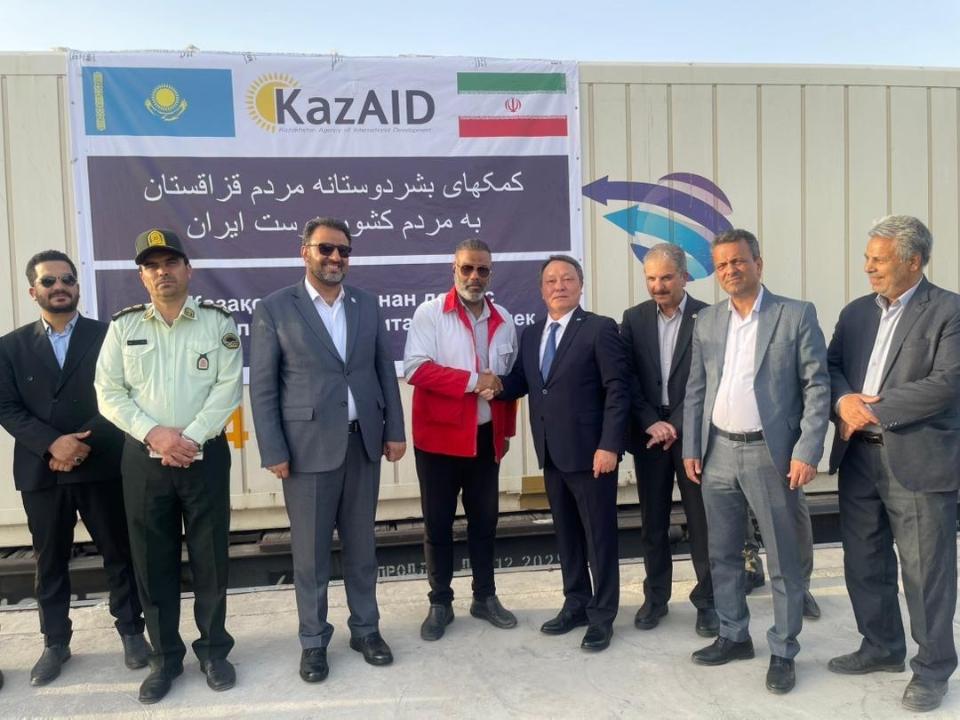
Tajikistan is sending a convoy of 110 trucks carrying humanitarian aid to Iran, which has been targeted by heavy U.S. and Israeli air strikes in a war that started on February 28. The dispatch of aid follows similar deliveries by Turkmenistan, Uzbekistan and Azerbaijan.  Central Asian countries are aiming for neutrality in the Mideast war, maintaining ties with the Iranian government even as they profess support for Gulf Arab states that have been targeted by Iranian drones and missiles. Iran’s relationships with countries to the east range from the close cultural affinity that it enjoys with Tajikistan to sometimes tense interactions with Azerbaijan, which has a military partnership with Israel.   The trucks from Tajikistan left for Iran on Wednesday and “will soon arrive in the friendly and brotherly country,” Tajikistan’s government said, without providing details about how the aid will be distributed. The convoy would likely travel through Uzbekistan and Turkmenistan to reach the northeastern Iranian border. The aid “comprises 3,610 tons of cargo, including 45 tons of medicines, a large volume of sanitary and hygienic products, children's clothing, various food products, household items, bedding, tents, building materials, and other necessary supplies,” Tajikistan’s Ministry of Foreign Affairs said.   Tajik President Emomali Rahmon posted a photo on social media that showed a long line of aid trucks on a highway.  Turkmenistan, which shares a border with Iran, has said it sent humanitarian aid, mainly for distribution to children. It appeared to allude to the war, saying that “supporting and assisting close neighbors in difficult times is a noble tradition of the Turkmen people, rooted in ancient times.” Uzbekistan has sent trucks carrying flour, rice, sugar, pasta, sunflower oil, canned goods and medical supplies to Iran.   Azerbaijan, which borders northwest Iran, has also dispatched truckloads of humanitarian aid to Iran, according to Ali Alizada, Azerbaijan’s ambassador to Iran. Azerbaijan previously said it was evacuating staff from its embassy in Tehran as well as its consulate in the Iranian city of Tabriz, after accusing Iran of drone attacks on its territory.

Iran Warns of Military Action Over Iran International Broadcasts via Turkmenistan Satellite

Iran has warned of potential military consequences for countries and organizations cooperating with the independent television channel Iran International, raising concerns about infrastructure linked to satellite broadcasting, including resources connected to Turkmenistan. Iranian officials said that “certain institutions and countries” that continue to support the broadcaster could face serious repercussions. According to a statement released by Iran International, facilities and infrastructure involved in transmitting its signal “may be included on the list of targets for the Iranian military.” The channel cited reports in Iranian state media quoting a representative of the Iranian Armed Forces’ Khatam al-Anbia Air Defense Base. In remarks reported by the semi-official Tasnim news agency, the military representative accused Iran International of seeking to “create tension, spread false information and rumors, and conduct psychological warfare against the Iranian people in pursuit of the goals of the U.S. and Israel.” The statement also included a warning that continued support for the broadcaster could result in those cooperating with it being placed on a list of potential targets. Iran International broadcasts from the United Kingdom using the TürkmenÄlem 52E / MonacoSAT satellite. The same satellite platform carries a range of international media services, including the BBC’s Persian-language programming, Radio Farda, a project of Radio Free Europe/Radio Liberty, as well as numerous other television and radio channels. According to the broadcaster, direct warnings had previously been sent to Turkmenistan and Monaco, which host infrastructure enabling signal transmission.