• KGS/USD = 0.01144 0%
  • KZT/USD = 0.00205 0%
  • TJS/USD = 0.10439 0%
  • UZS/USD = 0.00008 0%
  • TMT/USD = 0.28490 0%
  • KGS/USD = 0.01144 0%
  • KZT/USD = 0.00205 0%
  • TJS/USD = 0.10439 0%
  • UZS/USD = 0.00008 0%
  • TMT/USD = 0.28490 0%
  • KGS/USD = 0.01144 0%
  • KZT/USD = 0.00205 0%
  • TJS/USD = 0.10439 0%
  • UZS/USD = 0.00008 0%
  • TMT/USD = 0.28490 0%
  • KGS/USD = 0.01144 0%
  • KZT/USD = 0.00205 0%
  • TJS/USD = 0.10439 0%
  • UZS/USD = 0.00008 0%
  • TMT/USD = 0.28490 0%
  • KGS/USD = 0.01144 0%
  • KZT/USD = 0.00205 0%
  • TJS/USD = 0.10439 0%
  • UZS/USD = 0.00008 0%
  • TMT/USD = 0.28490 0%
  • KGS/USD = 0.01144 0%
  • KZT/USD = 0.00205 0%
  • TJS/USD = 0.10439 0%
  • UZS/USD = 0.00008 0%
  • TMT/USD = 0.28490 0%
  • KGS/USD = 0.01144 0%
  • KZT/USD = 0.00205 0%
  • TJS/USD = 0.10439 0%
  • UZS/USD = 0.00008 0%
  • TMT/USD = 0.28490 0%
  • KGS/USD = 0.01144 0%
  • KZT/USD = 0.00205 0%
  • TJS/USD = 0.10439 0%
  • UZS/USD = 0.00008 0%
  • TMT/USD = 0.28490 0%

Viewing results 1 - 6 of 294

OTS Faces Security Test from Turkey to Central Asia

Iran's widening war has now reached the institutional space linking Turkey, the South Caucasus, and Central Asia. Turkey said on March 4 that NATO air defenses destroyed an Iranian ballistic missile entering Turkish airspace, while Azerbaijan said the next day that four Iranian drones crossed into Nakhchivan, injuring four people, and damaging civilian infrastructure at the exclave’s airport. Iran denied targeting Nakhchivan; in the Turkish case, the missile’s intended target has not been fully clear in public reporting. Even so, the combined effect was unmistakable. By March 7, the Organization of Turkic States (OTS) had become more than a bystander to a Middle Eastern war that had earlier seemed outside its main agenda. This is what gave the OTS foreign ministers’ meeting in Istanbul its significance. The Turkish Foreign Ministry announced on March 6 that the informal meeting of the OTS Council of Foreign Ministers would be held in Istanbul on March 7, with Foreign Minister Hakan Fidan hosting. After the meeting, the ministers adopted a joint statement declaring that threats to the security of any OTS member are a matter of concern for the whole organization. That language does not make the OTS a military alliance. It does, however, show the organization moving more openly into collective political-security signaling when member states come under attack. Why Nakhchivan Matters Nakhchivan is central to the logic of this story. The exclave is an integral part of Azerbaijan, but is separated from the rest of the country. It borders Armenia, Iran, and Turkey, making it significant out of proportion to its size. A military strike there is not a routine border incident. It reaches one of the most sensitive nodes in the wider Turkic political space: it is a meeting point for Azerbaijani sovereignty, Turkish strategic concern, and Iranian proximity. Until recently, Nakhchivan’s special status and borders were anchored in the 1921 Moscow and Kars treaties, which gave Turkey and Soviet Russia a formal say over the exclave’s autonomy and, it could be argued, its external security. But last year, Baku folded Nakhchivan more tightly into Azerbaijan’s domestic legal order by removing those references (along with other changes) from the constitution of the exclave, which has suddenly become a target in a much wider regional confrontation. Baku’s response to the Iranian attack showed that it saw the incident in political as well as tactical terms. President Ilham Aliyev said Azerbaijan would prepare retaliatory measures. Reuters later reported that Azerbaijan had ordered the evacuation of its diplomats from Iran, citing safety concerns. This is understandable, particularly in light of the January 27, 2023, incident when an armed attacker entered Azerbaijan’s embassy in Tehran and opened fire, killing the head of the embassy’s security and wounding two other staff. Baku called this a terrorist attack, evacuated most of its diplomatic personnel, and suspended embassy operations. Azerbaijani officials also said the March 5 attack on Nakhchivan violated international law, rejecting any implication that it could have been a technical mishap. The stakes widened further after...

Kazakhstan Says Iranian President’s Statement is Step to Easing Mideast Tensions

Kazakhstan has welcomed a statement by Iranian President Masoud Pezeshkian about ending Iranian missile and drone attacks on neighboring countries, though some Gulf Arab states reported continuing attacks on Saturday. President Kassym-Jomart Tokayev of Kazakhstan noted the statement by Pezeshkian, “who conveyed the decision of the Interim Governing Council to renounce attacks on neighboring countries,” said Aibek Smadiyarov, spokesman for Kazakhstan’s presidency. Tokayev “considers this an important step aimed at easing tensions in the Middle East,” Smadiyarov said. In a video message, Pezeshkian apologized “on my own behalf” for Iranian attacks on neighboring countries, including Azerbaijan, where two drones struck near an airport and a school. The Iranian president said Iran should not attack those countries unless they attack Iran. Iran has been governed by an interim council since Supreme Leader Ali Hosseini Khamenei was killed in an air strike at the start of the war a week ago. U.S. and Israeli forces have kept up intense bombardments since then and President Donald Trump is demanding that the Iranian government unconditionally surrender. Pezeshkian rejected Trump’s demand in his message on Saturday.

Iran’s Ambassador in Tashkent Defends Tehran’s Position on Middle East Conflict

Iran’s ambassador to Uzbekistan, Mohammad Ali Iskandari, has held a press conference in Tashkent during which he sharply criticizing the United States and Israel for the escalating war in the Middle East. According to the Uzbek diplomatic news platform UzDiplomat, Iskandari spoke with journalists about Tehran’s position on the fighting and the broader political tensions. “We are fighting a mindset, the mindset that everything belongs to them,” Iskandari said on Wednesday, referring to Israel and the United States. “We did not start this war,” the ambassador said, adding that the escalation began while diplomatic negotiations were still underway. He said the conflict was closely tied to Israel’s regional policies and the decisions of its leadership. According to Uzbek journalist Sharofiddin Tulaganov, who attended the event and later described it on his Telegram channel, Iskandari said the air strike that killed Iranian Supreme Leader Ali Hosseini Khamenei was a violation of international law. Iran’s theocratic leadership has long been a source of international concern because of its nuclear program, sponsorship of proxy forces in the Middle East, and bloody crackdowns on protesters seeking more freedom. U.S. President Donald Trump and senior administration officials cited those concerns in the run-up to the air strike campaign, indicating that the United States wants a change of leadership in Iran. The Iranian ambassador also condemned an alleged air strike that hit a school in Iran, killing, by Iskandari’s account, 168 Iranian girls between the ages of seven and twelve. The U.S. military has said it is investigating the incident. The ambassador maintained that Iran’s military actions have targeted only specific facilities, including U.S. military bases and intelligence centers belonging to the United States and Israel. However, some missiles and drones fired from Iran have reportedly hit civilian locations in several Gulf Arab states, and Azerbaijan said that drones launched from Iranian territory struck Azerbaijan’s Nakhchivan Autonomous Republic on Thursday. It said one drone fell on the terminal building of Nakhchivan International Airport, while another crashed near a school in the village of Shekerabad. Governments in Uzbekistan, Kazakhstan, and other Central Asian countries have tried to maintain a balance, keeping in touch with their Iranian counterparts while expressing support for Gulf states that have activated air defense facilities because of the Iranian threat.

Iran War Highlights Central Asia’s Vulnerable Southern Trade Corridors

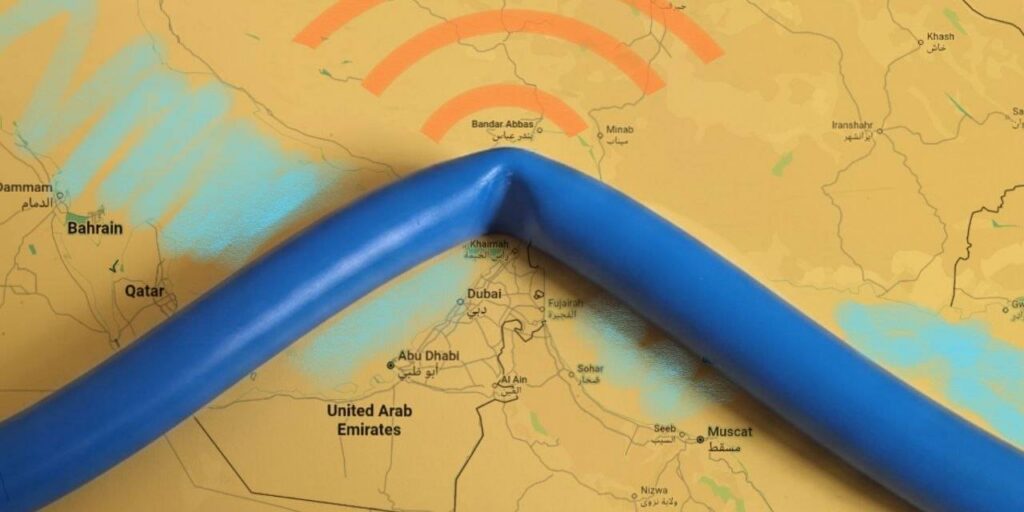
The widening war centered on Iran is reverberating far beyond the Middle East, exposing a structural vulnerability in Central Asia’s economic geography: the region’s reliance on transport corridors that pass through or near Iran and the Persian Gulf. As fighting escalates and shipping risks spread across the region, insurers, shipping companies, and logistics firms are reassessing operations across the Gulf. War-risk insurance premiums have surged while some commercial carriers have scaled back bookings to parts of the region amid growing security concerns. Tensions around the Strait of Hormuz have already pushed shipping costs higher as governments and logistics firms weigh the risks of operating in one of the world’s most important maritime chokepoints. For Central Asia’s landlocked economies, the crisis highlights how much regional connectivity strategies still depend on southern access routes linking the region to global markets. The conflict has also edged closer to the transport routes linking Central Asia with Europe after what were alleged to be Iranian drone strikes on Azerbaijan’s Nakhchivan region, damaging facilities at the exclave’s airport and prompting diplomatic protests from Baku. While the strike did not directly disrupt trade corridors, it underscored how quickly the conflict could spill over into the South Caucasus, a key segment of the Middle Corridor. Nakhchivan is a landlocked Azerbaijani exclave bordering Iran and Turkey, separated from mainland Azerbaijan by Armenia, and lies at the frontier where Iranian territory meets the transport networks of the South Caucasus. The South Caucasus also hosts energy infrastructure with wider geopolitical significance. The Baku–Tbilisi–Ceyhan (BTC) pipeline transports mostly Azerbaijani crude through Georgia to the Turkish Mediterranean port of Ceyhan, from where it is shipped to global markets. In 2025, Azerbaijani oil accounted for 46.4% of Israel’s crude imports, most of it moving through this supply chain before being shipped onward by tanker. The pipeline also carries limited volumes of Kazakh crude - 2-3% of Kazakhstan’s overall exports - making it far more significant for Israel’s energy supply than for Kazakhstan’s export system. Iran’s armed forces have denied responsibility for the drone incident, instead accusing Israel of attempting to provoke tensions and disrupt relations between Muslim countries. The Geography of Connectivity Since independence, Central Asian governments have sought to overcome the constraints of geography. Landlocked and long dependent on Soviet-era transport networks running north through Russia, the region has spent three decades developing alternative corridors in multiple directions. Routes leading south have held particular appeal, offering the shortest overland access to ports on the Persian Gulf and the Indian Ocean. Iran sits at the heart of several connectivity initiatives designed to connect Central Asian rail networks to ports on the Persian Gulf and the Indian Ocean. The Ashgabat Agreement — a multimodal transport framework linking Iran, Oman, Turkmenistan, and Uzbekistan and designed to connect Central Asia with ports on the Persian Gulf and the Gulf of Oman — was created specifically to facilitate international trade and transit between Central Asia and global shipping routes. For countries such as Turkmenistan and Uzbekistan, rail routes...

Evacuation Through Turkmenistan: Dozens of Foreigners Leave Iran as Assistance Conditions Vary

Amid the ongoing military conflict involving Iran, foreign nationals have begun leaving the country by land. One of the main evacuation routes has been through neighboring Turkmenistan, although the conditions for departure and the level of assistance provided to citizens of different countries have varied. Foreign citizens began leaving Iran after strikes were launched on its territory. With Iranian airspace closed, evacuation has only been possible by land. According to diplomatic sources in Kazakhstan, Russia, Uzbekistan, and South Korea, about 60 foreign nationals have already left Iran via Turkmenistan. Kazakhstan’s Minister of Transport, Nurlan Sauranbayev, said that on March 2, 18 Kazakh citizens were successfully evacuated from the northern Iranian city of Gorgan. The closest available route was through the Turkmen border. According to the minister, Turkmen authorities granted permission for the group to cross the border, although the specific checkpoint used was not disclosed. Serakhs remains the main transit crossing in this direction, while other checkpoints remained closed until March 2. On the same day, a group of eight Russian citizens crossed the border through the Serakhs checkpoint. According to Igor Samoshkin, head of the consular department of the Russian Embassy, Turkmen officials met the arrivals at the border and arranged transportation to Ashgabat as well as hotel accommodation. Russian diplomats later assisted the group with further travel arrangements. On March 3, the group flew home on an S7 Airlines flight. On March 3, 13 citizens of Uzbekistan crossed the border in an organized manner through the same Serakhs checkpoint. According to the Dunyo news agency, they were met by Uzbek embassy staff in official vehicles. After the Gaudan-Bajgiran crossing opened, diplomats also began meeting their citizens there. However, the subsequent route taken by the Uzbek nationals was not specified. There are currently no direct flights between Turkmenistan and Uzbekistan, and the distance from Serakhs to the nearest land crossing between the two countries, Farab-Alat, is about 460 kilometers. On the same day, a group of 23 South Korean citizens entered Turkmenistan. According to The Korea Times, they were accompanied by South Korean diplomats throughout their transit in the country before departing from Ashgabat on individual flights. Representatives of the South Korean embassy noted the prompt response of Turkmenistan’s Ministry of Foreign Affairs, as well as assistance with immigration procedures, consular support, accommodation, and flight reservations. Foreign citizens require a visa to transit through Turkmenistan, and this requirement has not been completely waived even during the evacuation. As Russian diplomat Igor Samoshkin explained, those seeking to leave Iran through Turkmenistan must first contact their country’s embassy in Iran and submit documents for a visa. The diplomatic mission then sends a request to the Turkmen authorities, after which further coordination takes place between Ashgabat and the relevant embassies accredited in Turkmenistan. Turkmen authorities directly accompanied only the Russian citizens. For other foreign nationals, their respective diplomatic missions were responsible for organizing further travel arrangements. The reasons for the differences in the level of assistance have not been publicly explained. It...

Azerbaijan Accuses Iran of Drone Attack on Nakhchivan

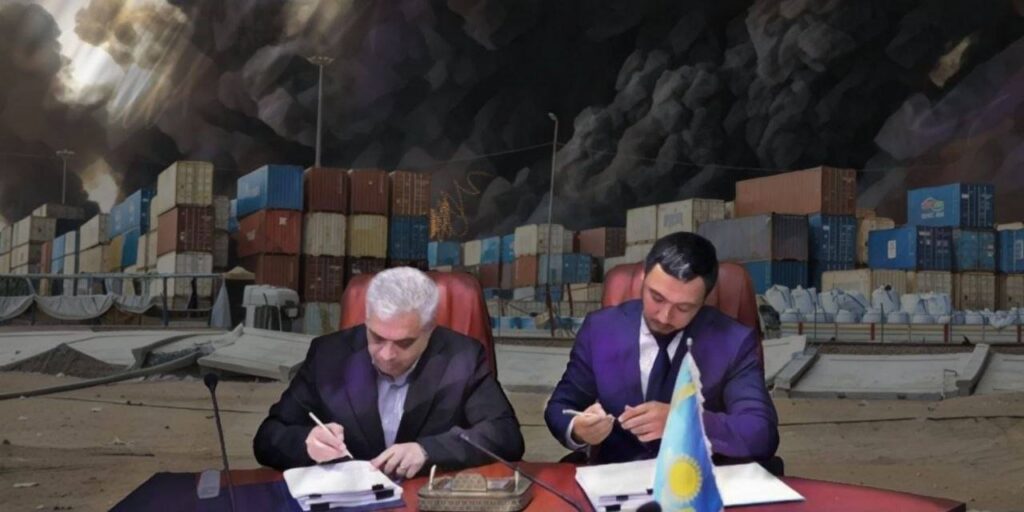
Drones allegedly launched from Iranian territory struck Azerbaijan’s Nakhchivan Autonomous Republic around noon on March 5, Azerbaijan’s Foreign Ministry has said. According to the ministry, one drone fell on the terminal building of Nakhchivan International Airport, while another crashed near a school in the village of Shekerabad. Azerbaijan’s Foreign Ministry issued a statement following the incident, "strongly condemn[ing] these drone attacks carried out from Iranian territory, which caused damage to the airport building and injured two civilians,” the ministry said in a statement. The ministry added that the strike on Azerbaijani territory violates the norms and principles of international law and risks escalating tensions in the region. Baku has demanded that Tehran promptly clarify the circumstances of the incident, provide official explanations, and take immediate steps to prevent similar events from occurring in the future. “The Azerbaijani side reserves the right to take appropriate retaliatory measures,” the statement said. Following the incident, Iran’s ambassador, Mujtaba Demirchilu, was summoned to the Azerbaijani Foreign Ministry, where he is expected to receive a formal protest note. The strikes coincided with an appeal by Iranian President Masoud Pezeshkian to neighboring countries. According to Pezeshkian, Iran has sought to prevent conflict through diplomatic means but ultimately had no choice but to defend itself. “We respect your sovereignty and believe that the security and stability of the region must be achieved through the collective efforts of its countries,” Pezeshkian wrote on X. Earlier reports indicated that the Azerbaijani authorities were assisting citizens of Central Asian countries in leaving Iran through the Julfa border crossing in Nakhchivan following the start of military operations involving the Islamic Republic. Iran’s military denied launching the drone attack, instead accusing Israel of attempting to provoke tensions between Muslim countries.