• KGS/USD = 0.01144 0%
  • KZT/USD = 0.00215 0%
  • TJS/USD = 0.10639 0.76%
  • UZS/USD = 0.00008 0%
  • TMT/USD = 0.28530 0%
  • KGS/USD = 0.01144 0%
  • KZT/USD = 0.00215 0%
  • TJS/USD = 0.10639 0.76%
  • UZS/USD = 0.00008 0%
  • TMT/USD = 0.28530 0%
  • KGS/USD = 0.01144 0%
  • KZT/USD = 0.00215 0%
  • TJS/USD = 0.10639 0.76%
  • UZS/USD = 0.00008 0%
  • TMT/USD = 0.28530 0%
  • KGS/USD = 0.01144 0%
  • KZT/USD = 0.00215 0%
  • TJS/USD = 0.10639 0.76%
  • UZS/USD = 0.00008 0%
  • TMT/USD = 0.28530 0%
  • KGS/USD = 0.01144 0%
  • KZT/USD = 0.00215 0%
  • TJS/USD = 0.10639 0.76%
  • UZS/USD = 0.00008 0%
  • TMT/USD = 0.28530 0%
  • KGS/USD = 0.01144 0%
  • KZT/USD = 0.00215 0%
  • TJS/USD = 0.10639 0.76%
  • UZS/USD = 0.00008 0%
  • TMT/USD = 0.28530 0%
  • KGS/USD = 0.01144 0%
  • KZT/USD = 0.00215 0%
  • TJS/USD = 0.10639 0.76%
  • UZS/USD = 0.00008 0%
  • TMT/USD = 0.28530 0%
  • KGS/USD = 0.01144 0%
  • KZT/USD = 0.00215 0%
  • TJS/USD = 0.10639 0.76%
  • UZS/USD = 0.00008 0%
  • TMT/USD = 0.28530 0%

Viewing results 1 - 6 of 357

Hormuz Crisis: Transit Routes Through Afghanistan, Pakistan Would Be an Opportunity for Central Asia

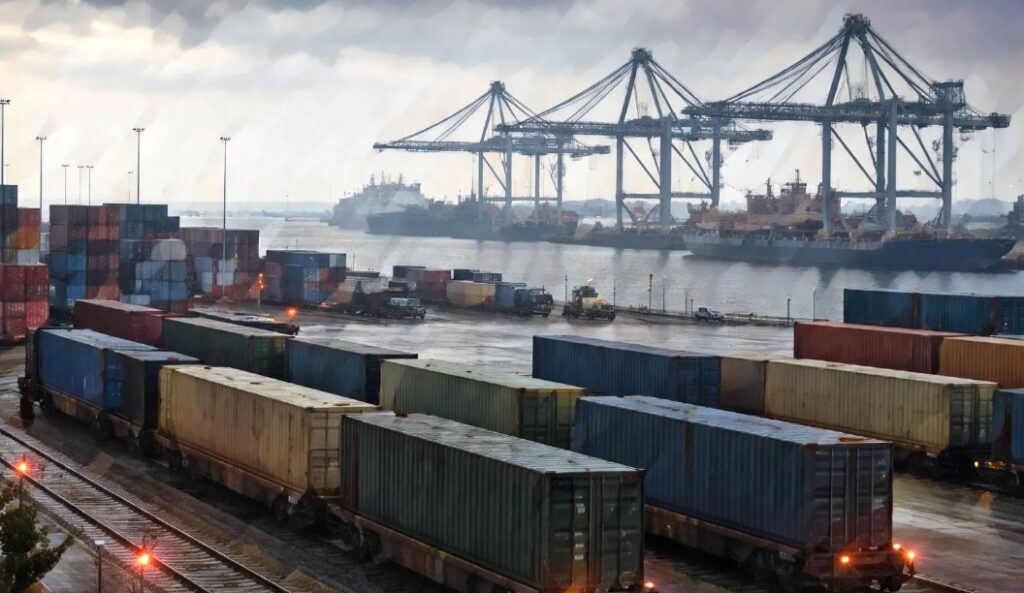
The Strait of Hormuz has long been regarded as a central artery of global energy trade. A substantial share of oil and gas exports moves through this corridor, and regional crises are often framed in terms of energy security. For Central Asia, however, current tensions carry broader implications. They may increase demand for alternative food supply chains and transit routes linking the region to the Arabian Sea and Gulf markets. Recent tensions involving Iran also point to the strait’s growing role in food logistics. For Gulf states, Hormuz remains an energy chokepoint and a vital route for essential goods. For Central Asian policymakers, this shift matters. Any prolonged disruption could raise the region’s importance as both a supplier of agricultural commodities and a transit hub. Member states of the Gulf Cooperation Council (GCC) are among the world’s most import-dependent food markets. According to Reuters, between 80% and 90% of food consumed in GCC countries is imported. This reliance creates external demand that could increasingly draw Central Asia into Gulf food security planning. At the same time, the geography of these supplies remains relatively concentrated. Analysts estimate that more than 70% of the region’s food imports transit the Strait of Hormuz. This pattern could heighten interest in Central Asia as a source of food exports and a transit route. Amid ongoing regional tensions, this dependence has attracted growing attention from experts. Reuters described recent developments as “the greatest test of the Gulf countries’ food strategy since the 2008 global food crisis.” In recent years, regional governments have sought to diversify suppliers and build strategic reserves. Analysts nevertheless warn that stockpiles and diversification measures may provide only limited protection. If disruptions persist, logistical constraints could drive up prices and extend delivery times. This would create both a market shock and new commercial opportunities in Central Asia. Under such conditions, GCC food security depends on access to global markets as well as the resilience of transport routes. This is where Gulf vulnerabilities begin to intersect more directly with Central Asia’s economic geography. The infrastructure of major regional ports plays a central role in this system. One of the key logistics hubs is Jebel Ali Port in Dubai, the largest container port in the Middle East and a major re-export center. A substantial share of food shipments destined for GCC states and neighboring markets passes through this facility. Estimates suggest that disruptions at major logistics hubs such as Jebel Ali could affect supply chains on which tens of millions of people depend. This concentration of logistics flows increases the region’s strategic exposure to maritime instability. For Central Asian economies, this raises the strategic value of diversified overland and multimodal routes. Food security concerns are also linked to agricultural inputs. Industry analyses suggest that roughly 25–30% of global nitrogen fertilizer exports transit the Strait of Hormuz, including about 31% of global urea trade. During the initial weeks of heightened tensions, urea prices in Middle Eastern markets reportedly rose by about $70–80 per ton, from roughly...

Threats to Regional Security: Why Escalation Around Iran Matters for Central Asia

For Central Asia, the central question is not simply whether a wider conflict involving Iran would destabilize the Middle East, but how that instability could spill north into a region that has repeatedly absorbed the consequences of crises to its south. Central Asian states have seen before how militant infiltration, narcotics trafficking, and extremist mobilization can intensify when neighboring wars weaken state control and create more permissive transit corridors. History gives Central Asia specific reasons to take that risk seriously. During the Tajik civil war and its aftermath, the Tajik-Afghan border became a frontline against crossings by Afghan militants and narcotics traffickers. In 1999 and 2000, fighters from the Islamic Movement of Uzbekistan, or IMU, carried out the Batken incursions  into southern Kyrgyzstan, took hostages, and demonstrated how quickly insecurity from the Afghan theater could penetrate Central Asia. At the same time, Afghan opiates moved north through the Northern Route, tying militancy, organized crime, and border insecurity into a single regional problem. Afghanistan remains the most important precedent, but the comparison with Iran must be made carefully. After the fall of Najibullah in 1992, Afghanistan fragmented into competing militias and warlord zones. The Taliban later emerged from that disorder, and the Afghan state collapsed again when the Taliban captured Kabul and returned to power in 2021. Iran is structurally different. It has a centralized state, a denser security apparatus, and the Islamic Revolutionary Guard Corps, or IRGC, which is deeply embedded in regime security and domestic politics. For that reason, the most plausible risk is not an immediate Afghanistan-style collapse, but a slower weakening of control in peripheral regions that could open space for armed groups, trafficking networks, and extremist recruiters. Those peripheral regions matter because Iran’s borderlands already contain armed actors with their own agendas. In the northwest, PJAK remains part of the Kurdish militant landscape. In the southeast, Jaysh al-Adl operates in Sistan-Baluchistan and adjoining border areas. Their capabilities should not be exaggerated, and they do not represent entire Kurdish or Baloch populations. But in a period of prolonged instability, such groups could exploit weaker local control, greater arms circulation, and more permissive smuggling corridors. For Central Asia, however, the greatest concern is the interaction between any Iranian crisis and the threat environment centered on Afghanistan. United Nations reporting in 2025 assessed ISIL-K as the predominant extra-regional terrorist threat, and the U.S. National Counterterrorism Center says ISIS-K has carried out attacks in Afghanistan, Iran, Pakistan, and Russia while using media to recruit new members and advance a vision of “Khorasan” that explicitly includes parts of Central Asia and Iran. In other words, Central Asia already faces a live extremist ecosystem to its south; wider instability involving Iran could amplify that pressure rather than replace it. This is why Central Asia should not be seen as a passive observer. The region sits at the junction of security corridors linking Afghanistan, Iran, the Caspian basin, and Russia. A wider conflict involving Iran could intensify trafficking through existing routes, strain border...

Iran War Quietly Raises the Strategic Value of Central Asian Airspace

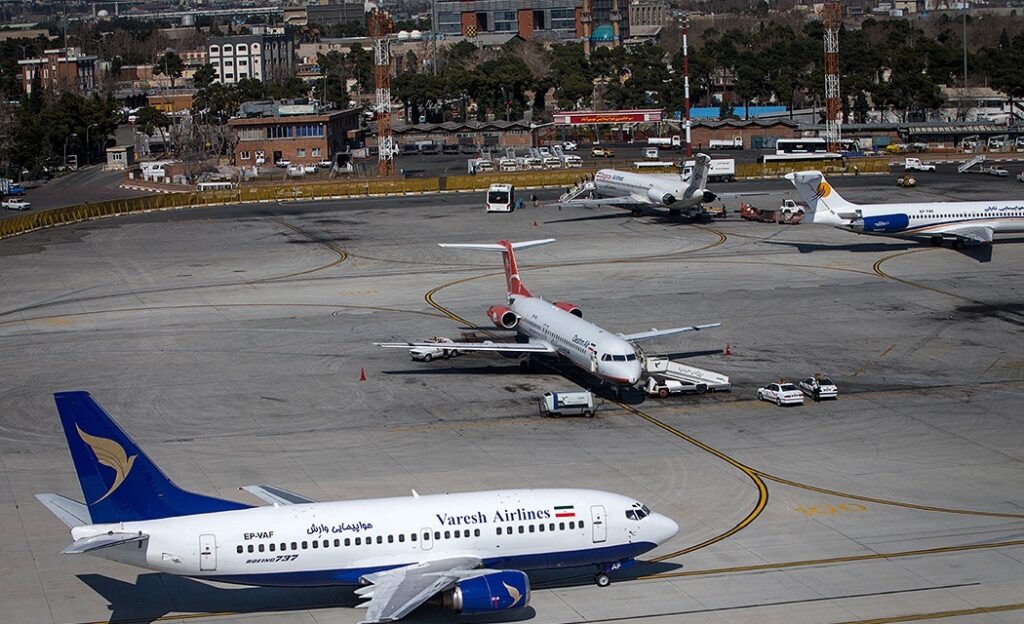
The war in Iran has disrupted one of the main aviation corridors linking Europe and Asia. The European Union Aviation Safety Agency (EASA) has issued safety bulletins warning of high risk to civilian aircraft in Iranian airspace and surrounding regions affected by military activity, missile launches, interceptions, and air defense operations. A separate EASA bulletin covering Iran, valid through March 31, describes a high risk to civil flights at all altitudes within the Tehran flight information region. The consequences reach far beyond the Middle East. Since Russia’s full-scale invasion of Ukraine in 2022, most Western airlines have been unable to use Russian airspace. With Iranian airspace now considered unsafe for normal commercial transit, the map for long-haul traffic between Europe and Asia has become extremely tight. Reuters mapping of global flight paths shows airlines diverting north via the Caucasus or taking longer southern routes through the eastern Mediterranean and the Arabian Peninsula. Many passengers traveling between Europe and Asia still transit through Gulf hubs. However, airports across the region, including Dubai, Abu Dhabi, Doha, Kuwait, and Bahrain, have faced disruption and unstable schedules during the conflict. Central Asia sits just beyond that northern bypass. It is not replacing the Gulf as a passenger hub, and is not suddenly becoming the main bridge between Europe and Asia, but the region’s airspace is increasingly strategically valuable as the number of efficient alternatives shrinks. The war has made Central Asia more important as part of a wider arc stretching from Turkey and the Caucasus across the Caspian basin and onward toward South and East Asia. [caption id="attachment_45218" align="aligncenter" width="1290"] Live flight-tracking map (image taken at 840am EST) showing aircraft routes avoiding Iranian airspace during the crisis. Many flights between Europe, the Middle East, and South Asia are being diverted north over the Caspian Sea and across Central Asia instead of flying over Iran; source: Planes Live[/caption] Kazakhstan is the clearest example. Local airlines had already begun to adjust before the current escalation reached its present level. In January, The Times of Central Asia reported that Air Astana had rerouted flights to Sharm el-Sheikh, Dubai, Doha, and Medina to avoid Iranian airspace. After the conflict widened, Air Astana canceled flights to several Middle Eastern destinations following the closure of Iranian airspace and rising regional tensions. Kazakhstan also imposed a temporary ban on flights over or near the airspace of Iran, Israel, Syria, Iraq, Jordan, and Lebanon. Uzbekistan also moved quickly. As early as October 2024, Kun.uz reported that Uzbekistan Airways was avoiding Iraqi airspace and western Iranian airspace on safety grounds. After the latest escalation, on March 4, Uzbekistan suspended flights to six Middle Eastern countries. The pattern is clear: Central Asian carriers are not immune to the crisis; they are already adjusting networks, schedules, and commercial risk, with the broader economic consequences of the conflict emerging across regional supply chains. However, the region’s aviation systems clearly now carry far greater strategic and economic importance than they did only a few years ago. On its...

Kazakhstan Condemns Missile, Drone Strikes from Iran on UAE

Kazakhstan has condemned aerial attacks “from Iranian territory” on the United Arab Emirates, in remarks that emphasized de-escalation and diplomacy while refraining from directly criticizing the Iranian government. “President Kassym-Jomart Tokayev condemned the missile strikes and drone attacks from Iranian territory on the United Arab Emirates, which resulted in numerous casualties among the population and damage to civilian infrastructure,” according to a statement posted by Aibek Smadiyarov, spokesman for Kazakhstan’s presidency. “The head of state considers such actions unacceptable, as they lead to a dangerous escalation of the armed conflict in the Middle East,” said the statement, which was released on Tuesday. “In Kassym-Jomart Tokayev's opinion, the use of diplomatic means is the only correct method of resolving all disputed international issues.” The statement maintained a diplomatic tone and emphasized de-escalation, differing from a statement from Tokayev several days ago in which he welcomed comments by Iranian President Masoud Pezeshkian about ending Iranian missile and drone attacks on neighboring countries. However, attacks by Iran on some U.S. allies in the region have continued in retaliation for intense U.S. and Israeli air strikes on Iran that began on February 28. Without providing evidence, some Iranian officials have claimed that some strikes on neighboring states, including a recent drone attack on Azerbaijan, were false flag operations aimed at undermining the Iranian government. Pezeshkian’s apology for Iranian attacks raised questions about the cohesion of Iranian government narratives following the death of Supreme Leader Ayatollah Ali Khamenei on the first day of the war. His son, Mojtaba Khamenei, was appointed to replace him. Central Asian countries have been trying to maintain a balance in their public pronouncements on the war, maintaining ties with the Iranian government while expressing support for Gulf Arab countries that have been targeted by Iranian missiles and drones. Central Asia has trade ties with both sides.

Informal OTS Foreign Ministers’ Meeting Tests Limits of Turkic Coordination

Escalating tensions linked to the widening conflict in the Middle East have tested the political cohesion of the Organization of Turkic States (OTS), according to Kazakh political commentator Dzhanibek Suleyev. Recent incidents affecting both Azerbaijan and Turkey — including drone strikes in Azerbaijan’s Nakhchivan Autonomous Republic and a missile intercepted by Turkish air defenses — have raised security concerns across the wider region. Suleyev argues that developments of this scale might normally prompt an urgent summit of heads of state. Instead, Turkey convened an informal meeting of foreign ministers and senior diplomatic representatives from OTS member states. The gathering took place on March 7, when officials convened at the invitation of Turkish Foreign Minister Hakan Fidan. According to Turkish media, ministers later met with President Recep Tayyip Erdoğan during their visit. Speaking to The Times of Central Asia, Suleyev drew attention to how the meeting was covered in the media of Central Asian member states. “In the Uzbek press, coverage was limited, and even on the website of their Ministry of Foreign Affairs, there is not a single word about the informal summit of OTS foreign ministers. Kazakhstan, moreover, was represented not by Foreign Minister Yermek Kosherbayev but by his deputy Alibek Bakayev. Kyrgyzstan’s Foreign Ministry issued four notes about the trip of its minister Jeenbek Kulubaev to Istanbul, three of which were devoted to the summit, but without any particular details,” Suleyev said. Kazakhstan’s Foreign Ministry published a short summary of the meeting, noting in broad terms that representatives discussed cooperation among Turkic states and regional developments. According to Suleyev, the joint statement adopted after the meeting was difficult to find outside of Azerbaijani media. One of the few outlets to publish the text in full was Azerbaijan’s APA news agency. Much of the statement focused on the incidents affecting Azerbaijan and Turkey, stressing that “any threat to the security of OTS member states causes concern for the entire Organization… The ministers strongly condemned the attacks carried out from the territory of the Islamic Republic of Iran against the Nakhchivan Autonomous Republic of the Republic of Azerbaijan, including strikes against civilian facilities and the territory of the Republic of Turkey,” the statement continued. “The rest of the statement boils down to destabilization in the Middle East could lead to a global economic crisis, the Palestinian conflict must be resolved taking into account UN resolutions, and so on,” Suleyev told TCA. One notable event during the meeting was the foreign ministers’ reception by President Erdoğan. Official summaries released by participating governments described the discussion in diplomatic terms. “Kazakh sources wrote that ‘prospects for the development of cooperation within the framework of Turkic cooperation were discussed,’” Suleyev said. Kyrgyz statements used similar language, stating that the “President of Turkey… noted the importance of regular dialogue on current regional and international issues and expressed interest in further developing multilateral cooperation within the framework of the Organization.” “In short, these are streamlined diplomatic formulations without specific details,” Suleyev said. According to a press...

Uzbekistan Repatriates Over 21,700 Citizens from Middle East

Uzbekistan has repatriated 21,712 citizens from several Middle Eastern countries as of 07:00 on March 9, the country’s Ministry of Foreign Affairs has said, as evacuation efforts continue amid regional instability. Most of those returned came from Saudi Arabia, where 17,963 citizens were brought back to Uzbekistan. Additional repatriations included 3,290 people from the United Arab Emirates, 378 from Qatar, 47 from Iran, 27 from Bahrain, and seven from Oman. The ministry said the return of Uzbek citizens is being carried out “systematically and in stages,” with authorities continuing to coordinate transport and logistics for those seeking to return. Officials noted that many repatriation flights are currently being organized through countries whose airspace remains open to civilian aviation. Uzbekistan’s evacuation reflects the scale of its citizens’ presence across the Gulf. In recent years, the country has expanded labor migration agreements with Saudi Arabia, the United Arab Emirates, and Qatar, sending thousands of workers into construction, hospitality, and service sectors. Saudi Arabia has also become a major destination for religious travel from Uzbekistan, with large annual flows of pilgrims traveling for the Hajj and Umrah. Kazakhstan has also evacuated citizens during the crisis, bringing 8,585 people home from Middle Eastern countries since the operation began. Central Asian citizens travel widely to Gulf states for work, tourism, and pilgrimage, leaving thousands affected when conflicts disrupt flights and close regional airspace. The number of returned citizens has risen steadily over the past several days. According to the foreign ministry, 19,347 Uzbek citizens had returned home as of 07:00 on March 8. Uzbek diplomatic missions in the region have also issued safety guidance to citizens who remain abroad. In a statement published by the Embassy of Uzbekistan in Israel, citizens were urged to follow official security instructions issued by local authorities. The embassy said red alerts issued by Israel’s civil defense authorities indicate a dangerous situation and require people to stay near protected shelters and immediately enter them if warning sirens sound. Blue alerts indicate that the threat has passed, and people may leave shelters. Other Central Asian countries have also organized evacuations of their citizens. According to Tajik media outlet Asia-Plus, more than 300 citizens of Tajikistan returned home on March 8 on two flights from Dubai. One charter flight brought 130 Tajik citizens to Dushanbe in the morning, while a later flight operated by Somon Air transported another 180 passengers. The charter operation was organized with support from the Tajik embassy in the United Arab Emirates, local authorities, and the airline Flydubai. About 550 Tajik citizens have returned home from Abu Dhabi and Dubai on charter flights in recent days amid the ongoing regional conflict.