• KGS/USD = 0.01144 0%
  • KZT/USD = 0.00215 0%
  • TJS/USD = 0.10599 -0.28%
  • UZS/USD = 0.00008 0%
  • TMT/USD = 0.28571 0%
  • KGS/USD = 0.01144 0%
  • KZT/USD = 0.00215 0%
  • TJS/USD = 0.10599 -0.28%
  • UZS/USD = 0.00008 0%
  • TMT/USD = 0.28571 0%
  • KGS/USD = 0.01144 0%
  • KZT/USD = 0.00215 0%
  • TJS/USD = 0.10599 -0.28%
  • UZS/USD = 0.00008 0%
  • TMT/USD = 0.28571 0%
  • KGS/USD = 0.01144 0%
  • KZT/USD = 0.00215 0%
  • TJS/USD = 0.10599 -0.28%
  • UZS/USD = 0.00008 0%
  • TMT/USD = 0.28571 0%
  • KGS/USD = 0.01144 0%
  • KZT/USD = 0.00215 0%
  • TJS/USD = 0.10599 -0.28%
  • UZS/USD = 0.00008 0%
  • TMT/USD = 0.28571 0%
  • KGS/USD = 0.01144 0%
  • KZT/USD = 0.00215 0%
  • TJS/USD = 0.10599 -0.28%
  • UZS/USD = 0.00008 0%
  • TMT/USD = 0.28571 0%
  • KGS/USD = 0.01144 0%
  • KZT/USD = 0.00215 0%
  • TJS/USD = 0.10599 -0.28%
  • UZS/USD = 0.00008 0%
  • TMT/USD = 0.28571 0%
  • KGS/USD = 0.01144 0%
  • KZT/USD = 0.00215 0%
  • TJS/USD = 0.10599 -0.28%
  • UZS/USD = 0.00008 0%
  • TMT/USD = 0.28571 0%

Viewing results 1 - 6 of 360

Iran’s Ambassador in Tashkent Defends Tehran’s Position on Middle East Conflict

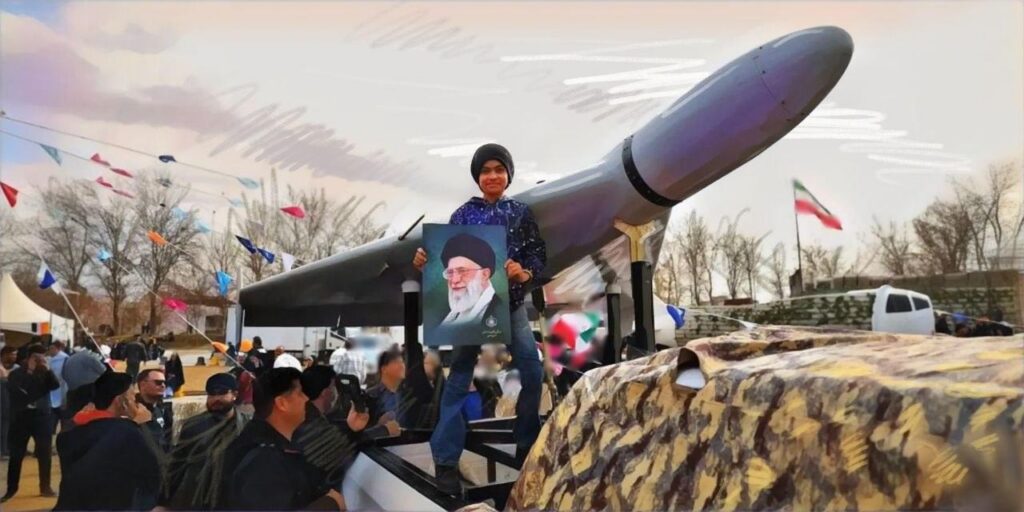
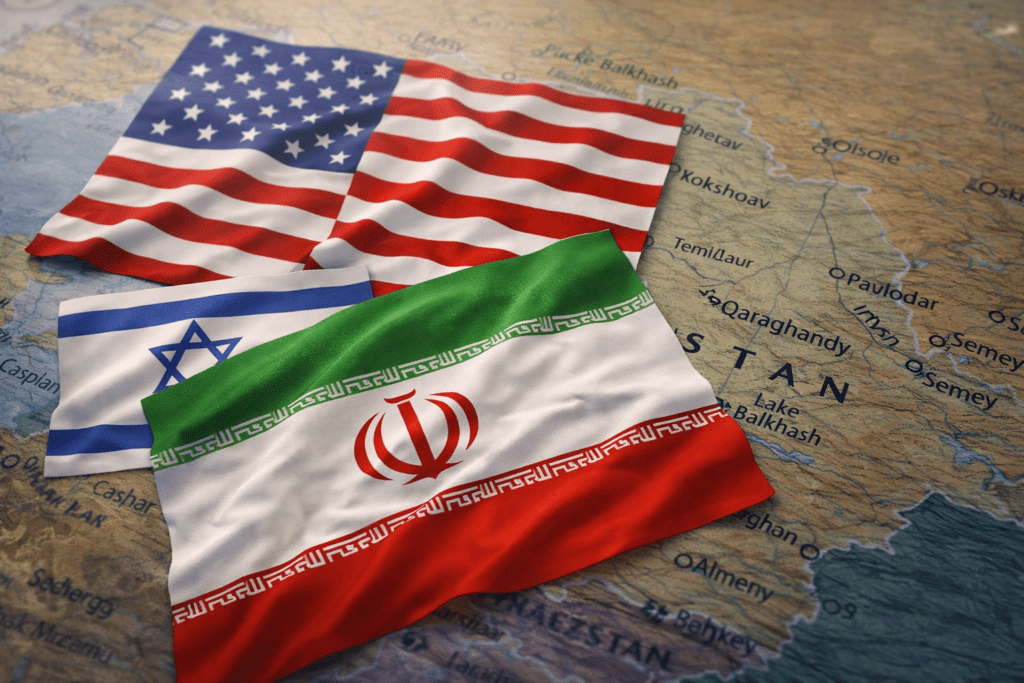
Iran’s ambassador to Uzbekistan, Mohammad Ali Iskandari, has held a press conference in Tashkent during which he sharply criticizing the United States and Israel for the escalating war in the Middle East. According to the Uzbek diplomatic news platform UzDiplomat, Iskandari spoke with journalists about Tehran’s position on the fighting and the broader political tensions. “We are fighting a mindset, the mindset that everything belongs to them,” Iskandari said on Wednesday, referring to Israel and the United States. “We did not start this war,” the ambassador said, adding that the escalation began while diplomatic negotiations were still underway. He said the conflict was closely tied to Israel’s regional policies and the decisions of its leadership. According to Uzbek journalist Sharofiddin Tulaganov, who attended the event and later described it on his Telegram channel, Iskandari said the air strike that killed Iranian Supreme Leader Ali Hosseini Khamenei was a violation of international law. Iran’s theocratic leadership has long been a source of international concern because of its nuclear program, sponsorship of proxy forces in the Middle East, and bloody crackdowns on protesters seeking more freedom. U.S. President Donald Trump and senior administration officials cited those concerns in the run-up to the air strike campaign, indicating that the United States wants a change of leadership in Iran. The Iranian ambassador also condemned an alleged air strike that hit a school in Iran, killing, by Iskandari’s account, 168 Iranian girls between the ages of seven and twelve. The U.S. military has said it is investigating the incident. The ambassador maintained that Iran’s military actions have targeted only specific facilities, including U.S. military bases and intelligence centers belonging to the United States and Israel. However, some missiles and drones fired from Iran have reportedly hit civilian locations in several Gulf Arab states, and Azerbaijan said that drones launched from Iranian territory struck Azerbaijan’s Nakhchivan Autonomous Republic on Thursday. It said one drone fell on the terminal building of Nakhchivan International Airport, while another crashed near a school in the village of Shekerabad. Governments in Uzbekistan, Kazakhstan, and other Central Asian countries have tried to maintain a balance, keeping in touch with their Iranian counterparts while expressing support for Gulf states that have activated air defense facilities because of the Iranian threat.

Iran War Highlights Central Asia’s Vulnerable Southern Trade Corridors

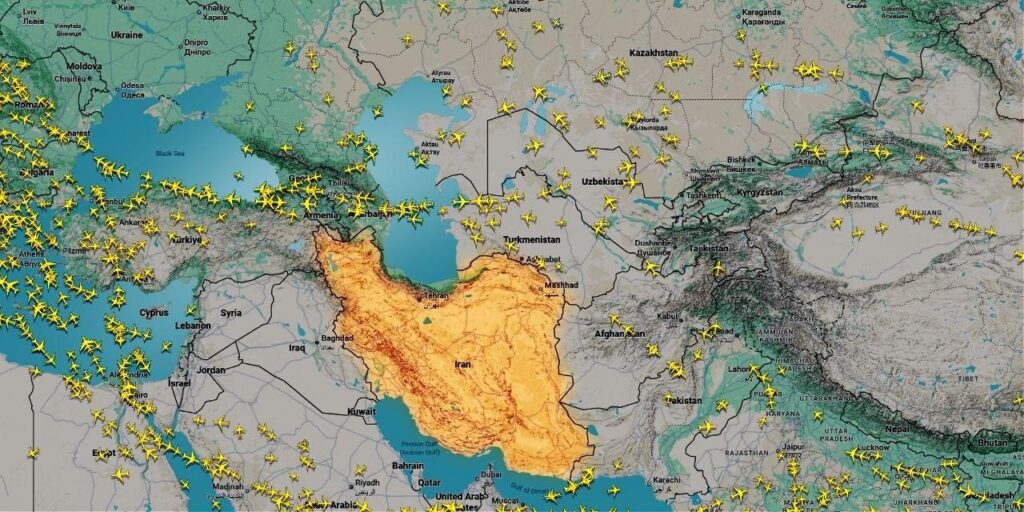
The widening war centered on Iran is reverberating far beyond the Middle East, exposing a structural vulnerability in Central Asia’s economic geography: the region’s reliance on transport corridors that pass through or near Iran and the Persian Gulf. As fighting escalates and shipping risks spread across the region, insurers, shipping companies, and logistics firms are reassessing operations across the Gulf. War-risk insurance premiums have surged while some commercial carriers have scaled back bookings to parts of the region amid growing security concerns. Tensions around the Strait of Hormuz have already pushed shipping costs higher as governments and logistics firms weigh the risks of operating in one of the world’s most important maritime chokepoints. For Central Asia’s landlocked economies, the crisis highlights how much regional connectivity strategies still depend on southern access routes linking the region to global markets. The conflict has also edged closer to the transport routes linking Central Asia with Europe after what were alleged to be Iranian drone strikes on Azerbaijan’s Nakhchivan region, damaging facilities at the exclave’s airport and prompting diplomatic protests from Baku. While the strike did not directly disrupt trade corridors, it underscored how quickly the conflict could spill over into the South Caucasus, a key segment of the Middle Corridor. Nakhchivan is a landlocked Azerbaijani exclave bordering Iran and Turkey, separated from mainland Azerbaijan by Armenia, and lies at the frontier where Iranian territory meets the transport networks of the South Caucasus. The South Caucasus also hosts energy infrastructure with wider geopolitical significance. The Baku–Tbilisi–Ceyhan (BTC) pipeline transports mostly Azerbaijani crude through Georgia to the Turkish Mediterranean port of Ceyhan, from where it is shipped to global markets. In 2025, Azerbaijani oil accounted for 46.4% of Israel’s crude imports, most of it moving through this supply chain before being shipped onward by tanker. The pipeline also carries limited volumes of Kazakh crude - 2-3% of Kazakhstan’s overall exports - making it far more significant for Israel’s energy supply than for Kazakhstan’s export system. Iran’s armed forces have denied responsibility for the drone incident, instead accusing Israel of attempting to provoke tensions and disrupt relations between Muslim countries. The Geography of Connectivity Since independence, Central Asian governments have sought to overcome the constraints of geography. Landlocked and long dependent on Soviet-era transport networks running north through Russia, the region has spent three decades developing alternative corridors in multiple directions. Routes leading south have held particular appeal, offering the shortest overland access to ports on the Persian Gulf and the Indian Ocean. Iran sits at the heart of several connectivity initiatives designed to connect Central Asian rail networks to ports on the Persian Gulf and the Indian Ocean. The Ashgabat Agreement — a multimodal transport framework linking Iran, Oman, Turkmenistan, and Uzbekistan and designed to connect Central Asia with ports on the Persian Gulf and the Gulf of Oman — was created specifically to facilitate international trade and transit between Central Asia and global shipping routes. For countries such as Turkmenistan and Uzbekistan, rail routes...

Evacuation Through Turkmenistan: Dozens of Foreigners Leave Iran as Assistance Conditions Vary

Amid the ongoing military conflict involving Iran, foreign nationals have begun leaving the country by land. One of the main evacuation routes has been through neighboring Turkmenistan, although the conditions for departure and the level of assistance provided to citizens of different countries have varied. Foreign citizens began leaving Iran after strikes were launched on its territory. With Iranian airspace closed, evacuation has only been possible by land. According to diplomatic sources in Kazakhstan, Russia, Uzbekistan, and South Korea, about 60 foreign nationals have already left Iran via Turkmenistan. Kazakhstan’s Minister of Transport, Nurlan Sauranbayev, said that on March 2, 18 Kazakh citizens were successfully evacuated from the northern Iranian city of Gorgan. The closest available route was through the Turkmen border. According to the minister, Turkmen authorities granted permission for the group to cross the border, although the specific checkpoint used was not disclosed. Serakhs remains the main transit crossing in this direction, while other checkpoints remained closed until March 2. On the same day, a group of eight Russian citizens crossed the border through the Serakhs checkpoint. According to Igor Samoshkin, head of the consular department of the Russian Embassy, Turkmen officials met the arrivals at the border and arranged transportation to Ashgabat as well as hotel accommodation. Russian diplomats later assisted the group with further travel arrangements. On March 3, the group flew home on an S7 Airlines flight. On March 3, 13 citizens of Uzbekistan crossed the border in an organized manner through the same Serakhs checkpoint. According to the Dunyo news agency, they were met by Uzbek embassy staff in official vehicles. After the Gaudan-Bajgiran crossing opened, diplomats also began meeting their citizens there. However, the subsequent route taken by the Uzbek nationals was not specified. There are currently no direct flights between Turkmenistan and Uzbekistan, and the distance from Serakhs to the nearest land crossing between the two countries, Farab-Alat, is about 460 kilometers. On the same day, a group of 23 South Korean citizens entered Turkmenistan. According to The Korea Times, they were accompanied by South Korean diplomats throughout their transit in the country before departing from Ashgabat on individual flights. Representatives of the South Korean embassy noted the prompt response of Turkmenistan’s Ministry of Foreign Affairs, as well as assistance with immigration procedures, consular support, accommodation, and flight reservations. Foreign citizens require a visa to transit through Turkmenistan, and this requirement has not been completely waived even during the evacuation. As Russian diplomat Igor Samoshkin explained, those seeking to leave Iran through Turkmenistan must first contact their country’s embassy in Iran and submit documents for a visa. The diplomatic mission then sends a request to the Turkmen authorities, after which further coordination takes place between Ashgabat and the relevant embassies accredited in Turkmenistan. Turkmen authorities directly accompanied only the Russian citizens. For other foreign nationals, their respective diplomatic missions were responsible for organizing further travel arrangements. The reasons for the differences in the level of assistance have not been publicly explained. It...

Azerbaijan Accuses Iran of Drone Attack on Nakhchivan

Drones allegedly launched from Iranian territory struck Azerbaijan’s Nakhchivan Autonomous Republic around noon on March 5, Azerbaijan’s Foreign Ministry has said. According to the ministry, one drone fell on the terminal building of Nakhchivan International Airport, while another crashed near a school in the village of Shekerabad. Azerbaijan’s Foreign Ministry issued a statement following the incident, "strongly condemn[ing] these drone attacks carried out from Iranian territory, which caused damage to the airport building and injured two civilians,” the ministry said in a statement. The ministry added that the strike on Azerbaijani territory violates the norms and principles of international law and risks escalating tensions in the region. Baku has demanded that Tehran promptly clarify the circumstances of the incident, provide official explanations, and take immediate steps to prevent similar events from occurring in the future. “The Azerbaijani side reserves the right to take appropriate retaliatory measures,” the statement said. Following the incident, Iran’s ambassador, Mujtaba Demirchilu, was summoned to the Azerbaijani Foreign Ministry, where he is expected to receive a formal protest note. The strikes coincided with an appeal by Iranian President Masoud Pezeshkian to neighboring countries. According to Pezeshkian, Iran has sought to prevent conflict through diplomatic means but ultimately had no choice but to defend itself. “We respect your sovereignty and believe that the security and stability of the region must be achieved through the collective efforts of its countries,” Pezeshkian wrote on X. Earlier reports indicated that the Azerbaijani authorities were assisting citizens of Central Asian countries in leaving Iran through the Julfa border crossing in Nakhchivan following the start of military operations involving the Islamic Republic. Iran’s military denied launching the drone attack, instead accusing Israel of attempting to provoke tensions between Muslim countries.

Calls and Meetings: Central Asia’s Diplomats Seek Balance in Mideast War

Central Asian countries are being careful not to criticize any actors during the Mideast war, maintaining ties with the Iranian government while expressing support for Gulf Arab countries that have been targeted by Iranian missiles and drones. The diplomacy on both sides of a war that began with U.S. and Israeli air strikes on Iran reflects a longstanding approach in Central Asia, where leaders have sought to project neutrality and maintain amicable relations with major powers including Russia, China and the United States. Increasingly, those leaders are taking coordinated positions on conflicts such as the one now convulsing the Mideast region, partly in order to preserve trade routes and strengthen a call for regional stability. It all means that Central Asian diplomats are busy these days. A lot of calls and meetings. Alibek Bakaev, Kazakhstan’s deputy foreign minister, discussed the situation in the Middle East with Iranian ambassador Ali Akbar Joukar in Astana on Wednesday. The two sides “reaffirmed their commitment to the implementation of the agreements reached following high-level negotiations,” the Kazakh government said, in an apparent reference to deals, probably related to trade, that were made before the massive strikes on Iran and ensuing upheaval that could affect the global economy. Like Kazakhstan, Uzbekistan has reached out to Gulf Arab countries during the crisis and thanked them for helping with the evacuation of Central Asian nationals, including Muslim pilgrims. On Wednesday, Uzbek President Shavkat Mirziyoyev spoke to Qatari Emir Sheikh Tamim bin Hamad Al Thani about the importance of bringing the war to a quick end, Uzbekistan’s Ministry of Foreign Affairs said. “Deep concern was expressed over unacceptable actions that exacerbate divisions within the Muslim ummah during the holy month of Ramadan,” said the ministry, without specifying who was responsible for the “unacceptable actions.” Just a day earlier, Foreign Minister Bakhtiyor Saidov of Uzbekistan spoke by telephone to his Iranian counterpart, Seyed Abbas Araghchi. Saidov expressed condolences over the loss of civilian lives in the war and the pair agreed on the need for dialogue. Among Central Asian countries, Uzbekistan and Kazakhstan in particular have been growing closer to the United States, signing trade deals and joining President Donald Trump’s Board of Peace initiative. Trump has described the Iranian leadership as “a vicious group of very hard, terrible people.” Nations in Central Asia aren’t the only ones looking for a balance in the current crisis. China, which relies heavily on Iranian oil but also values its ties to the wealthy Gulf Arab states, has called for an end to the war. Russia, which has received help from Iran for its war in Ukraine, has condemned the strikes, but Moscow has been developing ties with the Gulf states as well. Among traditional U.S. allies, Canadian Prime Minister Mark Carney has said he supports the strikes in Iran “with regret” because they reflect a further breakdown of the international order, even though Iran is a threat. French President Emmanuel Macron has expressed similar concerns about the strikes, while denouncing the...

Middle East Conflict Tests Central Asia’s Trade Routes and Energy Security

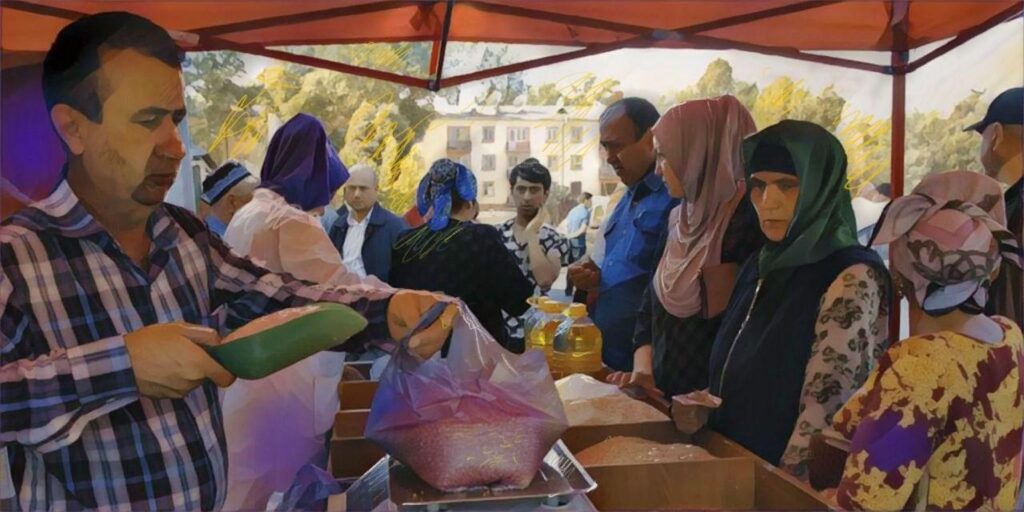
The escalating conflict between Iran, the United States, and their regional partners is raising economic concerns across Central Asia. Turkmenistan shares a long border with Iran, while other Central Asian economies depend on energy markets and trade routes that pass through or around the Persian Gulf. A wider conflict there could ripple across Central Asia through higher fuel prices, disrupted logistics, and pressure on key transport corridors. For countries such as Kyrgyzstan and Tajikistan, the most immediate risk is rising fuel prices. Both depend heavily on imported fuel. Kyrgyz security expert Taalaibek Jumadylov has warned that Kyrgyzstan could face rising prices for food, clothing, and other essential goods. For Tajikistan, the closure of the Strait of Hormuz would significantly increase import costs. Tajik media reports that trade between Tajikistan and Iran has grown rapidly over the past five years. Tajik-Iranian trade turnover increased from $377.7 million in 2024 to approximately $484 million in 2025, a rise of around 28%. Tajikistan’s exports totaled about $113 million, while imports from Iran exceeded $371 million, giving Iran a 4.5% share of Tajikistan’s total foreign trade turnover. If global oil prices rise significantly, Tajikistan could also face additional pressure on its budget. There are indirect risks as well: a slowdown in the economies of Russia, China, or other major partners could affect Tajikistan through trade, investment flows, and remittances. In Uzbekistan, analysts note that in recent years Iran has actively pursued transport diplomacy with Central Asia, seeking to strengthen its position as a regional logistics hub. Uzbek analyst Nargiza Umarova says this trend aligns with China’s Belt and Road Initiative. Iran and China signed a 25-year cooperation agreement in March 2021, a deal widely described as deepening Iran’s role in Belt and Road-linked connectivity. Kazakh economist Almas Chukin highlighted the logistical advantages of transport routes through Iran. “If we take the point where the Turkmenistan railway connects with Iran and the route to the Persian Gulf, it is about 1,200-1,500 kilometers. This is comparable to the distance from Astana to Almaty. Once you cover this distance, you reach the Persian Gulf and its major ports, where you can handle anything from oil transshipment to grain shipments. From there, sea transport to Rotterdam takes about three to four weeks,” he stated. Chukin added that such routes could simplify exports compared with transporting oil through Russia to Novorossiysk and then via the Black Sea, the Bosphorus Strait, and the Mediterranean. According to his estimates, a rail route to Europe through Iran would be about 3,500 kilometers from the Turkmen border. The economist suggested that if Iran’s political system changes and sanctions are lifted, Central Asia could benefit significantly. “This would be a huge shift for Central Asia: a region with a population of 80 million, abundant resources, and a young workforce, but constrained by geography, suddenly gaining direct access to global markets,” Chukin argued. Some analysts also point to emerging competition among regional transport corridors. In the South Caucasus, a proposed Zangezur corridor has been promoted...