
• KZT/USD = 0.00210
  • TJS/USD = 0.10820
  • UZS/USD = 0.00008
  • TMT/USD = 0.29760
  • KZT/USD = 0.00210
  • TJS/USD = 0.10820
  • UZS/USD = 0.00008
  • TMT/USD = 0.29760
  • KZT/USD = 0.00210
  • TJS/USD = 0.10820
  • UZS/USD = 0.00008
  • TMT/USD = 0.29760
  • KZT/USD = 0.00210
  • TJS/USD = 0.10820
  • UZS/USD = 0.00008
  • TMT/USD = 0.29760
  • KZT/USD = 0.00210
  • TJS/USD = 0.10820
  • UZS/USD = 0.00008
  • TMT/USD = 0.29760
  • KZT/USD = 0.00210
  • TJS/USD = 0.10820
  • UZS/USD = 0.00008
  • TMT/USD = 0.29760
  • KZT/USD = 0.00210
  • TJS/USD = 0.10820
  • UZS/USD = 0.00008
  • TMT/USD = 0.29760
  • KZT/USD = 0.00210
  • TJS/USD = 0.10820
  • UZS/USD = 0.00008
  • TMT/USD = 0.29760

Viewing results 1 - 6 of 20

Opinion: Tengiz, Karachaganak, and Kashagan: Kazakhstan Asserts Contract Stability Amid Lawsuits Exceeding $170 Billion

Following statements by President Kassym-Jomart Tokayev, the intrigue surrounding the PSA agreements for Kashagan and Karachaganak and the stabilized contract for Tengiz have taken on new dimensions. Previously, in the articles, Breaking Down Kazakhstan’s Claims Against International Oil Consortiums and Is Kazakhstan Preparing to Take on the Oil Consortium “Whales?, TCA examined the ongoing lawsuits filed by the government and the authorized body, PSA LLC, against the North Caspian Operating Company N.V. (NCOC) and Karachaganak Petroleum Operating B.V. (KPO), noting that the Ministry of Energy and KazMunayGas have not raised any claims against the joint venture Tengizchevroil LLP (TCO). While shares in NCOC and KPO are managed by PSA LLC, those in TCO are controlled by the national company, KazMunayGas. What did President Tokayev say? On January 28, President Tokayev held an expanded government meeting addressing the public and political debate surrounding PSA agreements. "Reforms in the subsoil use sector must continue, no matter what," Tokayev stated. "This is a fundamental position that the government should firmly adhere to. The implementation of production-sharing agreements (PSAs) for major oil fields has allowed Kazakhstan to become a reliable supplier of energy resources to the global market. These projects make a significant contribution to the country’s socioeconomic development. However, large investments require a long-term planning horizon. Therefore, the government must intensify negotiations on extending PSA contracts, possibly on updated and more favorable terms for our country." This statement sparked discussions among experts; who exactly was the president referring to? The major PSAs in Kazakhstan are the Karachaganak and Kashagan projects, with contracts expiring in 2038 and 2041, respectively. In contrast, Tengiz does not operate under a PSA but rather a stabilized contract, which is set to expire much sooner, in 2033. I have repeatedly emphasized the need for an audit of Tengiz before the contract expires and have proposed that it should not be extended. Kazakhstan can independently, or with the involvement of foreign oil service companies, develop this highly profitable field under more advantageous conditions. On January 29, Kazakhstan's Minister of Energy, Almassadam Satkaliyev, provided clarification, confirming that the president's directive was specifically about Tengiz. "The directive was given quite openly within the framework of international agreements and international law to conduct consultations with consortium participants. Given the development timelines, the most relevant project for us is Tengizchevroil, which operates the Tengiz field in partnership with Chevron, ExxonMobil, and Lukoil. We plan to start certain preliminary consultations with them, and once we are ready for negotiations, we will proceed with them. The government will first develop an agenda and a list of its demands. One possible demand is an increase in Kazakhstan’s stake in these projects." So, is Tengiz the primary target? Or is Kazakhstan preparing for a broader offensive on all three fronts? “There are Hardliners in the Government” On February 16, the international industry portal Upstream Online published an extensive article titled Kazakhstan Seeks Shake-Up at Crucial Foreign-Led Oil Projects. The article primarily focuses on the production-sharing agreements (PSAs) for Karachaganak...

Kashagan LPG to Fuel Kazakhstan’s Domestic Market

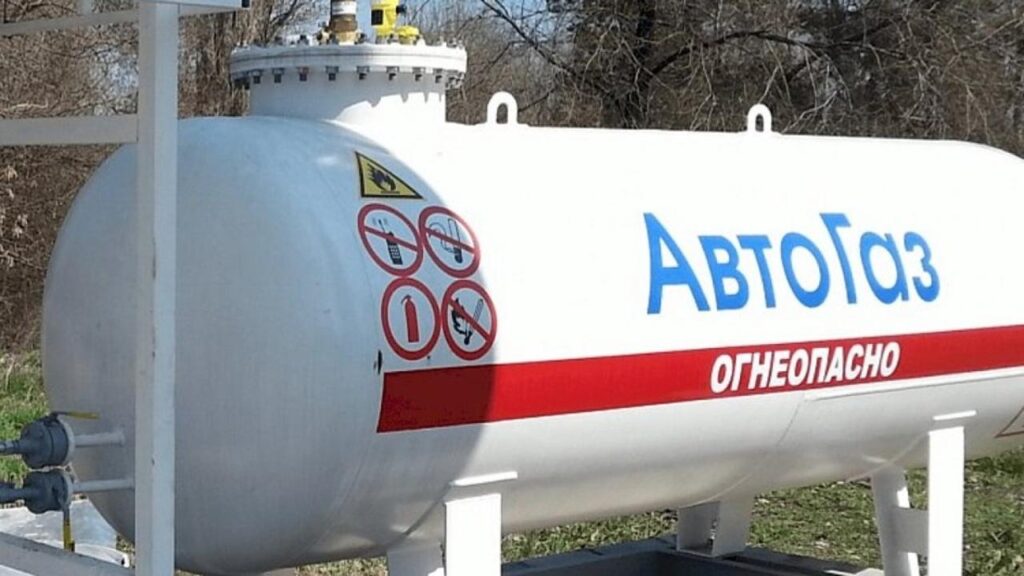
The Ministry of Energy of Kazakhstan announced on September 4 that following the negotiations between the partners of the North Caspian Project and Kazakhstan’s national gas company QazaqGaz, with the participation of the Ministry of Energy of Kazakhstan, an agreement had been signed regarding the sale and purchase of liquefied petroleum gas (LPG) from Kazakhstan’s Kashagan oil field. The North Caspian Project was developed under the North Caspian Sea Production Sharing Agreement signed in 1997, by Kazakhstan and an international consortium including KazMunayGas (16.88%), Eni (16.81%), Shell (16.81%), ExxonMobil (16.81%), TotalEnergies (16.81%), CNPC (8.33%), and INPEX Ltd (7.56%). The move comes amid the increasingly high demand for LPG, which cheaper than gasoline, is the most popular and economical fuel amongst Kazakhstan's vehicle owners. According to the agreement, supplies of LPG from Kashagan will be released at the end of 2025 and by 2027, on completion of work on the infrastructure, reach over 700,000 tons per year. The Ministry of Energy believes that supplies from Kashagan will help reduce the chronic shortage of LPG in Kazakhstan, and positively impact the socio-economic situation in the country's regions. As recently reported  by The Times of Central Asia, supplies have long failed to meet demand. In July, Kazakhstan’s Minister of Energy, Almasadam Satkaliyev, stated that in 2023, Kazakhstan had 582,000 motor vehicles running on LPG, an 18% increase compared to 2022 (491,000), resulting in a rise in consumption by 400,000 tons, or 28%. Last year, LPG consumption volumes amounted to 2.2 million tons compared to 1.8 million in 2022, and according to analysts, may increase this year by a further 200 thousand tons and reach 2.4 million annually. According to the Minister, Kazakhstan produced 1.6 million tons of LPG in 2023 and plans the same volume for 2024.

Moldovan businessman threatens to force sale of Kazakhstan’s Kashagan oilfield stake

ASTANA (TCA) — A spokesman for Moldovan businessman Anatolie Stati says that Stati will demand the sale of a $5.2 billion stake in Kazakhstan’s Kashagan oil field in the Caspian Sea if Astana refuses to pay an arbitration award, RFE/RL reports. Continue reading

Kashagan to become Kazakhstan’s major oil producer in the years to come — expert

ASTANA (TCA) — The maximum potential of Kazakhstan’s Kashagan oil field will be revealed in 25-30 years, when oil extraction at the Caspian field is to reach 60 million tons per year to remain at that level for a long time, the President of the Kazakhstan Society of Petroleum Geologists Baltabek Kuandykov said in an interview with PrimeMinister.kz. Continue reading

Official presentation of Kashagan oil field held in Kazakhstan

ATYRAU, Kazakhstan (TCA) — Official presentation of Kazakhstan’s huge offshore Kashagan oil field took place on December 7 in Atyrau with the participation of Kazakhstan President Nursultan Nazarbayev, the Kazakh Energy Ministry said. Continue reading

Commercial oil production starts at Kazakhstan’s Kashagan field

ASTANA (TCA) — The Ministry of Energy of Kazakhstan has officially confirmed the start of commercial oil production at huge Kashagan oil field located in the Kazakh sector of the Caspian Sea. This indicates the transition of the North-Caspian oil and gas project from the pilot development phase to production phase, the official website of the Prime Minister of Kazakhstan reports. Continue reading
