• KGS/USD = 0.01144 0%
  • KZT/USD = 0.00213 0%
  • TJS/USD = 0.10720 0.19%
  • UZS/USD = 0.00008 0%
  • TMT/USD = 0.28490 0%
  • KGS/USD = 0.01144 0%
  • KZT/USD = 0.00213 0%
  • TJS/USD = 0.10720 0.19%
  • UZS/USD = 0.00008 0%
  • TMT/USD = 0.28490 0%
  • KGS/USD = 0.01144 0%
  • KZT/USD = 0.00213 0%
  • TJS/USD = 0.10720 0.19%
  • UZS/USD = 0.00008 0%
  • TMT/USD = 0.28490 0%
  • KGS/USD = 0.01144 0%
  • KZT/USD = 0.00213 0%
  • TJS/USD = 0.10720 0.19%
  • UZS/USD = 0.00008 0%
  • TMT/USD = 0.28490 0%
  • KGS/USD = 0.01144 0%
  • KZT/USD = 0.00213 0%
  • TJS/USD = 0.10720 0.19%
  • UZS/USD = 0.00008 0%
  • TMT/USD = 0.28490 0%
  • KGS/USD = 0.01144 0%
  • KZT/USD = 0.00213 0%
  • TJS/USD = 0.10720 0.19%
  • UZS/USD = 0.00008 0%
  • TMT/USD = 0.28490 0%
  • KGS/USD = 0.01144 0%
  • KZT/USD = 0.00213 0%
  • TJS/USD = 0.10720 0.19%
  • UZS/USD = 0.00008 0%
  • TMT/USD = 0.28490 0%
  • KGS/USD = 0.01144 0%
  • KZT/USD = 0.00213 0%
  • TJS/USD = 0.10720 0.19%
  • UZS/USD = 0.00008 0%
  • TMT/USD = 0.28490 0%

Viewing results 1 - 6 of 27

Astana Launches First Light Rail Transit Service After Years of Delay

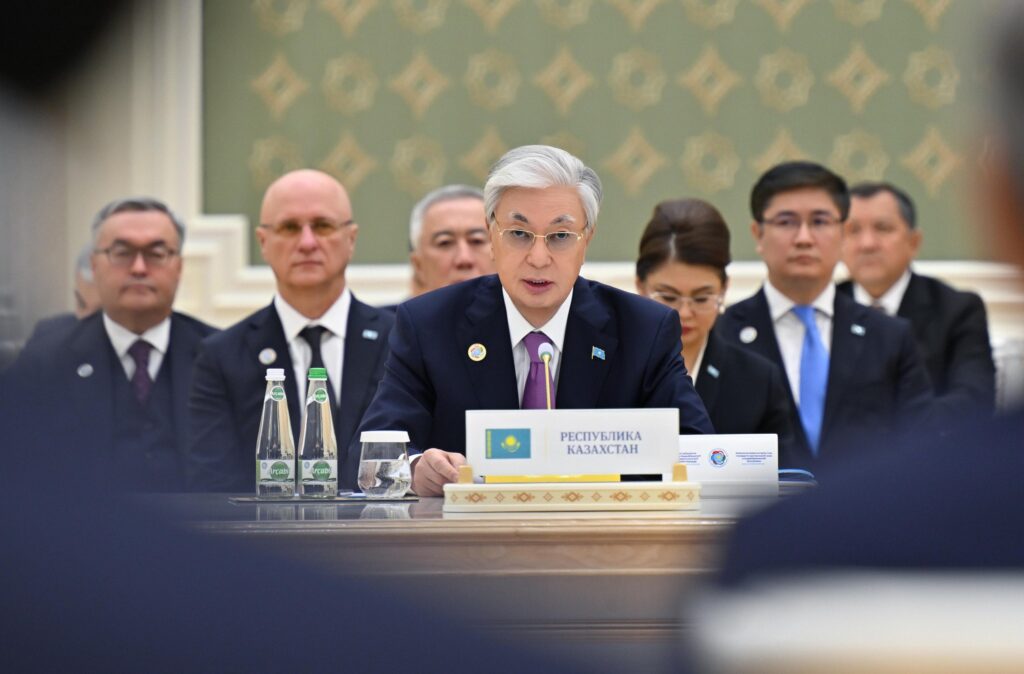
Kazakhstan has officially launched Astana’s long-awaited light rail transit (LRT) system, connecting the capital’s international airport with Nurly Zhol railway station. President Kassym-Jomart Tokayev took part in the inauguration ceremony despite previously expressing doubts about the project’s viability. The Astana LRT project, envisioned as a high-speed elevated transport system designed to bypass road congestion, was first launched in 2011. Authorities initially planned to complete construction by 2017, ahead of the international EXPO exhibition hosted in the capital. However, the project was suspended in 2013 because of rising costs. In 2015, Astana’s city administration attempted to revive the initiative with the participation of a consortium of Chinese companies, China Railway International Group Limited and Beijing State-Owned Assets Management Co., Ltd., but the contractors later withdrew because of financing problems. [caption id="attachment_49015" align="aligncenter" width="2560"] @Akorda[/caption] In 2019, criminal investigations were launched over allegations of inflated project costs and embezzlement of public funds allocated for construction. Former Astana LRT chief Talgat Ardan and former deputy mayor of Astana Kanat Sultanbekov were accused of embezzling nearly 30 billion KZT (approximately $79 million at the exchange rate at the time). In May 2023, both men were sentenced in absentia to seven years in prison. Ardan was detained in Turkey in May 2025 following an extradition request by Kazakhstan. However, to date, he has not been extradited because the legal assistance agreement between Kazakhstan and Turkey does not specify deadlines for extradition procedures. [caption id="attachment_49041" align="aligncenter" width="2560"] @Akorda[/caption] Despite Tokayev’s initial skepticism about the LRT project’s practicality, city authorities ultimately decided to complete construction. The system officially entered service this weekend, with Tokayev personally attending the launch ceremony. During a visit to the Unified Dispatch Center, which is responsible for monitoring and regulating Astana’s public transport system, including the LRT network, Tokayev described the opening as significant not only for Astana but for Kazakhstan as a whole. Tokayev said the capital should eventually become a major transportation hub for Eurasia. [caption id="attachment_49016" align="aligncenter" width="2560"] @Akorda[/caption] After receiving passenger card No. 001, Tokayev became the system’s first official passenger, traveling from the airport to the National Museum station. Astana Mayor Zhenis Kassymbek said a dedicated dispatch service for the LRT system has been established. Twenty-one specialists are involved in monitoring and regulating the city’s public transport network. Each LRT train can carry more than 600 passengers. The 22.4-kilometer line will operate with 15 trains, while four additional trains will remain in reserve. The trains operate in fully automated driverless mode. Train acceleration, braking, door operations, and emergency response systems are entirely automated, although manual control and communication with dispatchers remain available as backup systems. The new infrastructure includes 18 stations and a modern depot facility. Travel time across the entire route is expected to take approximately 40 minutes, with average speeds of 50-60 kilometers per hour. Trains are scheduled to run at intervals of five to six minutes. [caption id="attachment_49017" align="aligncenter" width="2560"] @Akorda[/caption] Authorities are already discussing a second expansion phase of the LRT network. Planned future...

Turkic States Focus on AI and Trade at Kazakhstan Summit

Leaders of the Organization of Turkic States (OTS) are holding an informal summit in the city of Turkistan, focused on artificial intelligence, digitalization, and economic integration, as Central Asia gains importance as an alternative trade corridor between Europe and China. The meeting brings together the leaders of Kazakhstan, Turkey, Azerbaijan, Uzbekistan, and Kyrgyzstan, along with representatives of observer states. Discussions are centered on digital platforms, joint AI projects, transport corridors, and industrial cooperation. The summit comes amid rapid growth of the Trans-Caspian International Transport Route, also known as the Middle Corridor, which links China and Europe through Central Asia and the Caucasus while bypassing Russia. According to analysts in Kazakhstan, cargo volumes along the route reached 3.3 million tons in 2024, almost six times the 2021 level. Turkish President Recep Tayyip Erdoğan arrived in Astana on a state visit ahead of the summit and held talks with Kazakh President Kassym-Jomart Tokayev. “Kazakhstan and Turkey are connected by enduring friendship, brotherhood, and eternal partnership,” Tokayev said following the meeting. Erdoğan thanked Kazakhstan for the reception and highlighted the escort provided by Kazakh military fighter jets after his aircraft entered the country’s airspace. According to participants at the OTS business forum, the combined GDP of member states exceeds $2.1 trillion, while their total population stands at 178 million people. Despite increasing political coordination, trade between OTS countries still accounts for only around 7% of their total foreign trade turnover, leaving considerable room for deeper economic integration, analysts say. OTS member states are increasingly seeking to expand cooperation beyond cultural and political ties by focusing on logistics, the digital economy, and joint investment projects. Kazakhstan views the organization as one of the instruments for diversifying its foreign economic relations and expanding its role as a transit hub between Asia and Europe.

Opinion: Turkey’s Third Vector: How the Turkic States Are Expanding Central Asia’s Room for Maneuver

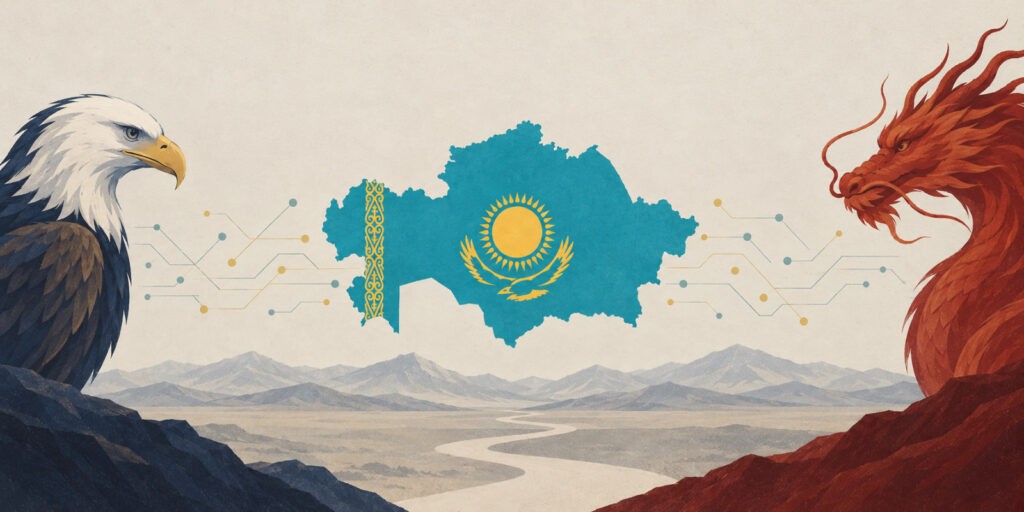
President Recep Tayyip Erdoğan’s May 13-14 state visit to Kazakhstan and the May 15 informal summit of the Organization of Turkic States in Turkistan should not be read as isolated diplomatic events. Together, they point to a larger shift in Central Asia’s geopolitical architecture. During Erdoğan’s visit to Astana, Kazakhstan and Turkey signed the Declaration on Eternal Friendship and Expanded Strategic Partnership, along with agreements covering trade, transport, energy, education, investment, defense cooperation, oil and gas, and financial-sector collaboration. The two sides also reaffirmed their goal of raising bilateral trade to $15 billion. Erdoğan was awarded the newly established Khoja Ahmed Yassawi Order, a symbolic gesture tied to the summit being hosted in Turkistan, the city most closely associated with Yassawi’s legacy. A day later, Turkistan hosted the informal summit of the Organization of Turkic States under the theme “Artificial Intelligence and Digital Development.” The timing matters. Central Asia is no longer operating inside a simple Russia-China framework. Russia remains deeply embedded in the region through security history, infrastructure, language, labor migration, and energy networks. China remains the region’s main infrastructure and trade heavyweight. The West is increasingly focused on sanctions, critical minerals, connectivity, and the Middle Corridor. But Turkey is becoming something different: not a replacement for Russia or China, but a useful third vector. Its influence is built on identity, logistics, defense technology, education, digital cooperation, and institutional networking through the Turkic States framework, rather than overwhelming capital or military dominance. Turkey as a Corridor Power Turkey cannot match China’s investment scale in Central Asia. It also cannot match Russia’s historical security depth. Ankara does not need to replace either power to matter. Its comparative advantage is different. Turkey connects Central Asia westward, to the South Caucasus, the Black Sea, the Mediterranean, and Europe. It also offers a language of partnership that is culturally familiar and politically less threatening than great-power patronage. Tokayev captured this dimension during the joint statements in Astana, describing Turkey as a “golden bridge” connecting Europe and Asia. The framing is telling: not a partner of equal weight, but a connector, exactly the function of a corridor power. A corridor power does not dominate a region directly. It expands the routes, partnerships, platforms, and strategic options available to states that do not want to be trapped between larger powers. That is why the Erdoğan-Tokayev meeting and the Turkistan summit matter. The issue goes beyond bilateral trade. It is the gradual construction of a Turkic corridor linking identity, transport, defense, digital governance, and markets. The OTS as Identity Infrastructure The Organization of Turkic States is often dismissed as symbolic: summits, speeches, flags, cultural rhetoric, and references to shared history. That reading is incomplete. Identity is not just emotion. In international politics, identity can become infrastructure. Shared language, educational networks, media links, cultural affinity, and repeated institutional contact reduce the cost of trust-building. They make it easier to sign agreements, build transport projects, expand student exchanges, coordinate business forums, and create political habits of consultation. The...

Turkic States to Focus on Artificial Intelligence at Kazakhstan Summit

Kazakhstan will host an informal summit of the Council of Heads of State of the Organization of Turkic States (OTS) in the city of Turkistan on May 15, where participating leaders are expected to focus on artificial intelligence, digitalization, and expanding economic cooperation. Held under the theme “Artificial Intelligence and Digital Development,” the summit is expected to become one of the largest regional gatherings of Turkic states in 2026. Heads of state and government from member and observer countries, along with the OTS secretary-general, are expected to attend. According to the organization, participants will discuss the use of AI and digital innovation to stimulate economic growth, modernize public services, and improve regional connectivity. The agenda also includes joint initiatives involving Turkic digital platforms. Ahead of the summit, President Recep Tayyip Erdoğan of Turkey will make a state visit to Astana at the invitation of President Kassym-Jomart Tokayev. The leaders of Kazakhstan and Turkey are scheduled to hold the sixth meeting of the High-Level Strategic Cooperation Council and discuss the development of bilateral relations. In recent years, the OTS has gradually expanded cooperation beyond its traditional political and cultural agenda to include transport corridors, energy, and the digital economy. The summit in Turkistan is expected to represent an effort to shape a common regional agenda in the field of artificial intelligence. The OTS said holding the meeting in Turkistan, described by the organization as the “spiritual capital of the Turkic world”, symbolizes an attempt to combine shared historical heritage with technological modernization across the region. The organization’s members include Kazakhstan, Turkey, Azerbaijan, Uzbekistan, and Kyrgyzstan. Observer status is held by Turkmenistan, Hungary, and the Turkish Republic of Northern Cyprus. The economic dimension of the summit also remains central. According to Turkish sources, annual trade turnover between Turkey and OTS member states has approached $17 billion. Turkish exports to Kazakhstan, Azerbaijan, Kyrgyzstan, and Uzbekistan increased from $6.2 billion in 2021 to $10 billion in 2024. During the same period, imports rose from $4.2 billion to $6.5 billion. In 2025, Turkish exports to OTS countries totaled $9.6 billion, while imports reached $7.3 billion. Kazakhstan remains Turkey’s largest export destination among OTS member states, with Turkish exports to the country reaching $3.2 billion. During the first three months of 2026 alone, Turkish exports to Kazakhstan amounted to approximately $700 million. A Turkish-Kazakh business forum is also expected to take place during Erdoğan’s visit to Astana, with participation from business representatives from both countries and Turkey's Trade Minister Ömer Bolat. The forum is expected to focus on expanding trade and investment ties. As preparations for the summit intensify, Kazakhstan has increased security measures. Additional police forces from neighboring regions have reportedly been deployed to Turkistan, while military aviation training flights began in Astana on May 10 ahead of an aerial demonstration scheduled for May 15. Kazakhstan’s Defense Ministry said the flights would be conducted at safe altitudes and should not significantly affect daily life in the capital.

Tokayev Proposes Turkestan as Venue for Middle East Peace Talks

Kazakhstan’s president, Kassym-Jomart Tokayev, has called for immediate negotiations to resolve the conflict in the Middle East and proposed the city of Turkestan as a venue for talks. Tokayev made the remarks during a visit to the Turkestan region, warning that escalating conflicts worldwide, including the conflict involving Iran, the United States, and Israel, are harming global stability and trade conditions for countries not directly involved in the hostilities. He said the situation in the Middle East has reached a critical stage and that further escalation by Iran, the United States, or Israel would benefit none of the parties. “First and foremost, I call for an end to armed attacks on civilian and economic targets. Then it is necessary to sit down at the negotiating table,” Tokayev said. The president said Kazakhstan is not seeking to mediate in the conflict but is prepared to offer its territory as a neutral platform for negotiations. “I believe such a dialogue could be organized in Turkestan. This would demonstrate the goodwill of the Kazakh people,” Tokayev added, noting that the final decision depends on the parties involved. The choice of Turkestan is both geographic and symbolic. The city is regarded as one of Central Asia’s spiritual centers and an important destination for pilgrims. It is home to the mausoleum of Khoja Ahmed Yasawi, a prominent Sufi poet and thinker. The structure, commissioned in the 14th century by Amir Timur, adds historical resonance to Tokayev’s proposal and is included on the UNESCO World Heritage List. Turkestan’s historical legacy and religious significance make it a potentially neutral and symbolically meaningful setting for peace talks. The proposal also reflects Kazakhstan’s long-standing effort to position itself as a neutral diplomatic platform. Astana has previously hosted international negotiations, including talks on Syria, and has sought to build a reputation as a venue for dialogue between competing powers. Offering Turkestan, rather than the capital, reinforces both the initiative's symbolic and political neutrality. Tokayev’s proposal comes amid continued escalation in hostilities involving Iran and a U.S.-Israel coalition, which intensified in late February following exchanges of missile strikes and air attacks. For Kazakhstan and other Central Asian states, the conflict carries direct implications. Iran’s status as a Caspian littoral country raises additional security concerns for Kazakhstan’s western regions in the event of further escalation. The Times of Central Asia previously reported on disruptions to regional supply chains and transport routes. Volatility in global oil prices and the risk of disruption across Caspian-linked trade routes add further pressure, underscoring how conflicts far beyond Central Asia’s borders can quickly translate into economic and security risks for the region.

Kazakhstan Prepares for Its First-Ever Administrative Amnesty

President Kassym-Jomart Tokayev has announced plans to introduce Kazakhstan’s first-ever administrative amnesty. The statement was made during a ceremony marking the adoption of the country’s new Constitution. In the past, Kazakhstan has periodically granted amnesties to individuals convicted of criminal offenses, often timed to coincide with national anniversaries. The most recent such amnesty was carried out in 2025 to mark the 30th anniversary of the Constitution. The new initiative is linked to the adoption of the updated Constitution. On March 15, a nationwide referendum was held in which a majority of voters supported the new basic law. The document is scheduled to enter into force on July 1, 2026. Speaking at the ceremony, Tokayev said that constitutional reform represents a transition to a new stage in the country’s development and requires a reassessment of the relationship between the state and society. “The People’s Constitution is a strategic mandate of trust and a new social contract aimed at long-term goals and horizons of progress,” the president said. He instructed parliament to adopt an amnesty law by the end of the current session. The proposed amnesty is expected to cover a range of criminal and administrative offenses that do not pose a threat to public or national security. The current parliamentary session is due to conclude at the end of June. Under the new Constitution, however, the powers of the existing parliament will cease on July 1, 2026, the same day the new constitutional framework enters into force. In the near future, five new constitutional laws are expected to be submitted to parliament, including legislation governing the presidency, the Kurultai (the future parliament), the Halyk Kenesi (People's Council), as well as laws regulating the status of the capital and the country’s administrative-territorial structure. According to Tokayev, eight existing constitutional laws and more than 60 regulatory acts, including key legal codes, will also require revision. These legislative changes are expected to be synchronized with upcoming parliamentary elections. Elections to the new unicameral parliament are likely to take place before the opening of the next parliamentary session, which traditionally begins on September 1. As a result, voting could be held within the coming months. “By that time, preparation of the necessary legal framework must be fully completed. The comprehensive transformation of Kazakhstan’s legal and political system will continue throughout this year and possibly into the next,” the president said. According to Tokayev, the reforms envisage the creation of new state institutions, as well as structural and personnel changes within existing government bodies.