• KGS/USD = 0.01144 0%
  • KZT/USD = 0.00205 0%
  • TJS/USD = 0.10785 0.09%
  • UZS/USD = 0.00008 0%
  • TMT/USD = 0.28571 0.28%
  • KGS/USD = 0.01144 0%
  • KZT/USD = 0.00205 0%
  • TJS/USD = 0.10785 0.09%
  • UZS/USD = 0.00008 0%
  • TMT/USD = 0.28571 0.28%
  • KGS/USD = 0.01144 0%
  • KZT/USD = 0.00205 0%
  • TJS/USD = 0.10785 0.09%
  • UZS/USD = 0.00008 0%
  • TMT/USD = 0.28571 0.28%
  • KGS/USD = 0.01144 0%
  • KZT/USD = 0.00205 0%
  • TJS/USD = 0.10785 0.09%
  • UZS/USD = 0.00008 0%
  • TMT/USD = 0.28571 0.28%
  • KGS/USD = 0.01144 0%
  • KZT/USD = 0.00205 0%
  • TJS/USD = 0.10785 0.09%
  • UZS/USD = 0.00008 0%
  • TMT/USD = 0.28571 0.28%
  • KGS/USD = 0.01144 0%
  • KZT/USD = 0.00205 0%
  • TJS/USD = 0.10785 0.09%
  • UZS/USD = 0.00008 0%
  • TMT/USD = 0.28571 0.28%
  • KGS/USD = 0.01144 0%
  • KZT/USD = 0.00205 0%
  • TJS/USD = 0.10785 0.09%
  • UZS/USD = 0.00008 0%
  • TMT/USD = 0.28571 0.28%
  • KGS/USD = 0.01144 0%
  • KZT/USD = 0.00205 0%
  • TJS/USD = 0.10785 0.09%
  • UZS/USD = 0.00008 0%
  • TMT/USD = 0.28571 0.28%

Viewing results 1 - 6 of 2187

Kazakhstan’s Oil Exports Uninterrupted Despite Caspian Pipeline Consortium Berth Suspensions

Despite the suspension of two out of three offshore berths operated by the Caspian Pipeline Consortium (CPC), Kazakhstan’s oil exports are proceeding without disruption, according to the Ministry of Energy of the Republic of Kazakhstan. The ministry stated that there are currently no restrictions on the receipt or shipment of oil through the CPC system. Transshipment is being carried out on schedule via VPU-3, the third remote mooring unit, which has been in operation since 2014. “Shipments are proceeding normally and according to schedule through the VPU-3 offshore mooring device, which remains operational,” the Ministry of Energy announced. Temporary Suspension of VPU-1 and VPU-2 Earlier, CPC announced the temporary suspension of VPU-1 and VPU-2 following an unscheduled inspection conducted by Russia’s Rostransnadzor. The inspections are part of a broader review of marine infrastructure safety across the Azov-Black Sea basin, launched in the wake of an oil product spill in the Kerch Strait in December 2024. Following the inspection, regulatory authorities issued protocols and directives mandating the temporary shutdown of the two berths until the violations identified are addressed. In the meantime, all CPC shipments have been consolidated through VPU-3. Consortium shareholders have been formally notified of the developments. Similar Measures at Transneft Facility The crackdown on safety violations has extended beyond the CPC. The eighth oil-loading berth operated by JSC Novorossiysk Commercial Sea Port (NCSP Group), part of Russia’s Transneft, has also been suspended for 90 days. The suspension followed the identification of safety violations related to the handling of hazardous cargo. Transneft has been ordered to correct the deficiencies by June 30. Strategic Significance of CPC The CPC is Kazakhstan’s most critical export route for crude oil, linking the giant Tengiz Field with the Yuzhnaya Ozereyevka Terminal on the Black Sea. The pipeline stretches 1,510 kilometers, including 452 kilometers within Kazakhstan, and has an annual capacity of up to 81.5 million tons. In 2024, Kazakhstan exported 54.9 million tons of oil via CPC, accounting for approximately 80% of the country's total oil exports. Security Concerns: Drone Attacks Raise Alarms Security concerns continue to loom over the CPC infrastructure. In February, the Kropotkinskaya station was targeted by seven drones. While the Ministry of Energy reassured that oil deliveries remained unaffected, the incident heightened concerns about operational stability. Although Russia and Ukraine later agreed not to target CPC facilities, Russia alleges that its air defense systems intercepted another drone attack on March 24, the third such incident in a month. Oil market analyst Olzhas Baidildinov voiced skepticism about the durability of the ceasefire arrangement. “We shouldn’t count on an end to attacks on CPC infrastructure,” Baidildinov said. “There’s unwarranted optimism in Kazakh media and among some experts, especially against the backdrop of record oil output in February-March. A decline in both oil production and exports seems inevitable, along with a drop in KazMunayGas’ dividend income from CPC and budget revenues.” He also warned that irregular operations could damage infrastructure designed for continuous, stable use. “Oil pipelines are engineered for consistent operational...


Italian Company Eyes Tomato Product Manufacturing in Kazakhstan

Italy’s Tramite Group is exploring opportunities to establish a tomato paste production facility in Kazakhstan, as part of broader efforts to boost agro-industrial cooperation between the two countries. On April 1, Kazakhstan’s Minister of Agriculture, Aidarbek Saparov, met with Gianantonio Tramet, founder and general manager of Tramite Group, to discuss tomato cultivation and processing in Kazakhstan, according to a statement from the Ministry of Agriculture. Tramet noted that his company is actively seeking partners to supply natural food products from Kazakhstan, citing the country's favorable climate for growing high-quality produce. Italy currently imports 180,000 tons of tomato paste annually, and Tramite Group is considering shifting part of this demand to be met through production in Kazakhstan and other Central Asian countries. Agro-Industrial Cluster in Shardara Tramite Group plans to collaborate with Kazakhstan’s Agriqa Farms LLP, which has launched a project to develop an export-oriented agro-industrial cluster in town of Shardara, in the central Turkestan region. The initiative will begin in May 2025 with the construction of a 22-hectare greenhouse complex. It will also include: A tomato paste processing plant with a planned capacity of 3,360 tons per day An alfalfa granulation facility A fruit and vegetable drying and freezing plant In 2026, the project will expand to install drip irrigation systems across 8,000 hectares of farmland. Saparov welcomed the initiative and reaffirmed Kazakhstan’s commitment to supporting large-scale agro-processing ventures. He assured Tramite Group of comprehensive government assistance for the joint Kazakh-Italian enterprise.

Kazakhstan Launches Digital Highway Assistance Service

Kazakhstan has introduced a new digital service enabling drivers to notify fellow motorists about emergency situations on the road, an initiative designed to foster mutual assistance and reduce traffic incidents. Using a mobile application, drivers can input the license plate number of a vehicle they observe in trouble and send an anonymous alert to its owner. The system covers common scenarios such as a flat tire, an open window, a car blocking the road, activated alarms, or situations where another vehicle has collided with a parked car. The list of alert types may expand over time, and all messages are sent anonymously and free of charge to both sender and recipient. “If you notice that a car has been left with an open window or is blocking the driveway, all you have to do is enter the license plate number and select the situation. The driver will receive an anonymous notification,” said Zhaslan Madiev, Minister of Digital Development, Innovation and Aerospace Industry. “We expect that this service will become a tool of mutual support and civil responsibility among drivers and will lead to the minimization of emergency situations on the roads.” The initiative was developed in collaboration with the Ministry of Internal Affairs. The two institutions also plan to integrate augmented reality and computer vision technologies into Kazakhstan’s driver licensing procedures. Expanding Digital Public Services Kazakhstan continues to expand its portfolio of digital services in the transportation sector. According to Arman Kenzhegaliev, Chairman of the state corporation Government for Citizens, the country delivered 3 million vehicle-related services in the past year, including digital signing of sale and purchase agreements, expedited production of registration plates, and online auto insurance issuance. “We plan to launch a platform for document processing, introduce biometric identification, and implement a service to check vehicle history,” said Kenzhegaliev. In 2024, Kazakhstan expects to provide 341 million public services, 91% of them remotely. Currently, 92% of all public services are accessible online. Digital ID Cards and Data Protection By the end of April, Kazakhstan will roll out a digital alternative to physical identity cards. The new system, which has already undergone testing, allows citizens to verify their identity through the eGov platform, upload a photo and signature, pay online, and receive an SMS once the document is ready. To protect personal data, a new government-run data access control service has been launched. Citizens will now receive notifications when someone attempts to access their personal data and can block unauthorized attempts in real time. As previously reported by The Times of Central Asia, Kazakhstan is also investing in infrastructure to support the introduction of artificial intelligence systems, with international partners, including those from Singapore, contributing to the development of data centers and digital frameworks across the country.

Singapore to Build Two Data Centers in Kazakhstan

Singaporean firm GK Hyperscale Ltd will participate in the construction of two major data processing centers (DPCs) in Kazakhstan's Akmola and Karaganda regions, according to Minister of Digital Development, Innovation and Aerospace Industry Zhaslan Madiev. Speaking at the AlmatyFair.ai exhibition, Madiev informed Kazakh President Kassym-Jomart Tokayev and his Uzbek counterpart Shavkat Mirziyoyev of Kazakhstan’s plans to expand the use of artificial intelligence (AI) across industrial and social sectors. He emphasized that large-scale AI deployment requires robust infrastructure, including high-capacity data centers. To this end, two centers with a combined capacity of 200 megawatts will be built with Singaporean investment. During the same event, an investment agreement was signed between the Kazakh government and GK Hyperscale Ltd. The deal will bring $1.5 billion in foreign direct investment to construct Tier 3-compliant data centers, an international standard defined by the Uptime Institute that ensures high reliability and availability. According to the ministry, these facilities will provide essential infrastructure for the growth of cloud computing, AI, and high-performance computing in Kazakhstan. “This project, in both scale and quality, will attract global technology giants such as Microsoft, Google, and Amazon, as well as companies specializing in big data and AI,” Madiev said. “It will bolster Kazakhstan’s position as a digital hub in Central Asia and drive the expansion of IT service exports.” An additional $1.2 billion will be invested in acquiring and upgrading a power plant to serve the new infrastructure. Funds will also support the construction of a wind farm and an energy storage system to ensure a stable power supply. Construction is scheduled to begin in the first quarter of 2026, with the first data center module expected to come online in 2027. As The Times of Central Asia previously reported, Kazakhstan is also developing legislation to regulate artificial intelligence, ensuring human oversight in its application.

Kazakhstan Mandates Sports Federations to Help Detect Extremism

Sports federations in Kazakhstan will now be required to assist in preventing extremism and terrorism, under new provisions in the updated Law “On Physical Culture and Sport.” The amendment stems from concerns over the growing influence of religious movements in the sports environment, according to Vice-Minister of Tourism and Sports Serik Zharasbayev. Speaking to reporters on the sidelines of a Senate session, Zharasbayev explained that the measure is being implemented in cooperation with the National Security Committee. “This provision was introduced in collaboration with the National Security Committee due to the need to address emerging risks. We are working within the framework of the Anti-Terrorist Center and have already developed a roadmap through 2027,” he said. Previously, sports federations were not involved in national security matters, but Zharasbayev stated that “the time has come” for them to take part in identifying potential threats and reporting relevant information to state authorities. Currently, the focus is strictly on preventive measures. In April, specialists from the Anti-Terrorist Center will begin traveling to the regions to provide detailed briefings on the new requirements. “By the end of April or early May, we’ll meet with all federations to clarify these norms. For now, it's solely about prevention,” he added. The government also plans to involve theologians with experience in countering extremist ideologies as part of the outreach. The urgency of the issue was underscored by President Kassym-Jomart Tokayev during the fourth session of the National Kurultai in Burabay in early March. “Mazhilis deputy Yermurat Bapi has raised concerns about the country’s religious climate. Kurultai members Daniya Kydyrbayeva and Olzhas Suleimen have also noted the growing influence of non-traditional religious movements among youth, especially in the sports sector,” Tokayev said. He reaffirmed that while freedom of religion is constitutionally protected, “disorder and permissiveness are unacceptable.” The president called for preventing destructive ideologies and using regulatory frameworks to promote national unity. The new obligation for sports federations is part of a broader legislative package recently passed by the Senate in two readings. According to Deputy Asem Rakhmetova, the amendments aim to improve legal frameworks in the field of physical culture and sports, while also clarifying the division of powers between central and local executive bodies as part of ongoing administrative reforms. In total, the bill modifies two codes and five laws. Similar concerns have arisen outside Kazakhstan. In Russia, State Duma deputy Sergei Mironov recently requested that the Prosecutor General’s Office investigate MMA clubs for possible links to radical groups. He warned that the “uncontrolled functioning” of such organizations could pose a threat to state security, citing reports that terrorists involved in the Crocus City Hall attack had trained at one such club. Kazakhstan’s sports organizations are now being tasked with responsibilities beyond their traditional scope. As Zharasbayev put it, “Federations must pay attention to such risks”, and this is no longer optional, but a formal obligation under the law.

Two Earthquakes Strike Kazakhstan and Kyrgyzstan, Causing Damage in Talas Region

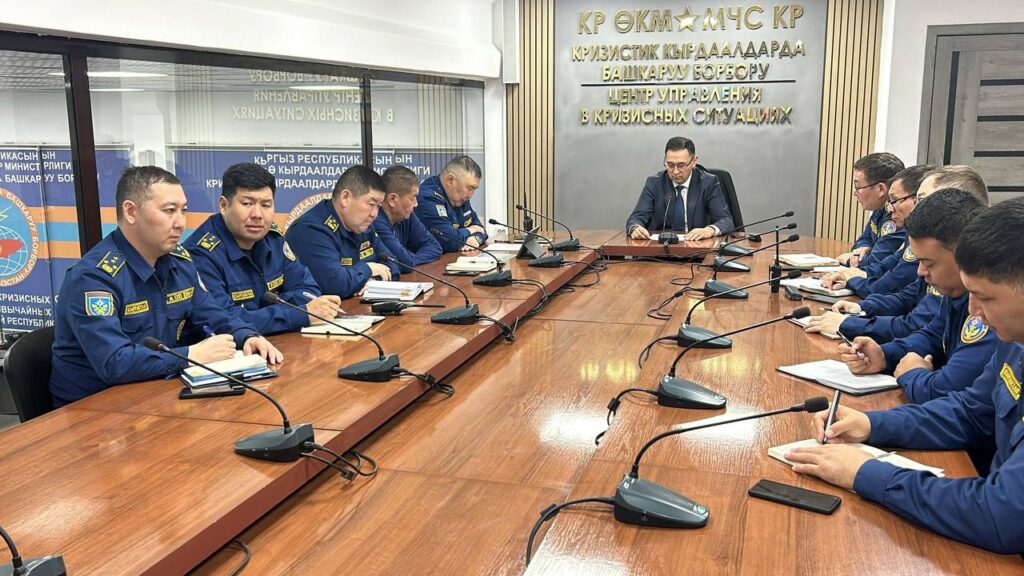
Two earthquakes struck Central Asia early on March 28, affecting parts of Kazakhstan and Kyrgyzstan. The first tremor, with a magnitude of 5.5, occurred in southern Kazakhstan, approximately 133 kilometers from Bishkek. The Kyrgyz capital felt the tremors at 4:42 a.m., according to the Institute of Seismology at the National Academy of Sciences of Kyrgyzstan. The quake registered a strength of four points in Bishkek and reached up to five points in parts of Kyrgyzstan’s Talas Region, which borders Kazakhstan. A second, less powerful earthquake was recorded at 7:00 a.m. on the Chatkal Ridge in southwestern Kyrgyzstan. It registered a magnitude of 3.5. According to the Kyrgyz Ministry of Emergency Situations, five residential buildings and one educational institution sustained damage in the Talas Region following the first quake. An operational team has been dispatched to assess the extent of the damage. “A state of emergency has been declared in connection with the earthquake recorded in Kazakhstan on March 28. An emergency meeting was held at 5 a.m. at the central office of the Ministry of Emergency Situations and the Crisis Management Center of Kyrgyzstan. First Deputy Minister of Internal Affairs Azamat Mambetov instructed officials to maintain a high alert regime,” the ministry's press service reported. No casualties have been reported. Authorities have stated that the situation remains under control. Kyrgyzstan’s Crisis Management Center is in direct communication with its counterpart in Kazakhstan, with both agencies exchanging real-time updates. Two major earthquakes were also recorded on March 28 in Southeast Asia. Seismologists from China and the United States reported tremors affecting Myanmar and Thailand. In Myanmar, the first quake registered a magnitude of 7.9 (with other sources citing 7.7), followed by a second at 6.4. The tremors were also felt in Bangladesh, India, Thailand, Laos, and China.