The Language Gap: Why the Korean Language Is Outpacing Japanese in Kazakhstan and Uzbekistan
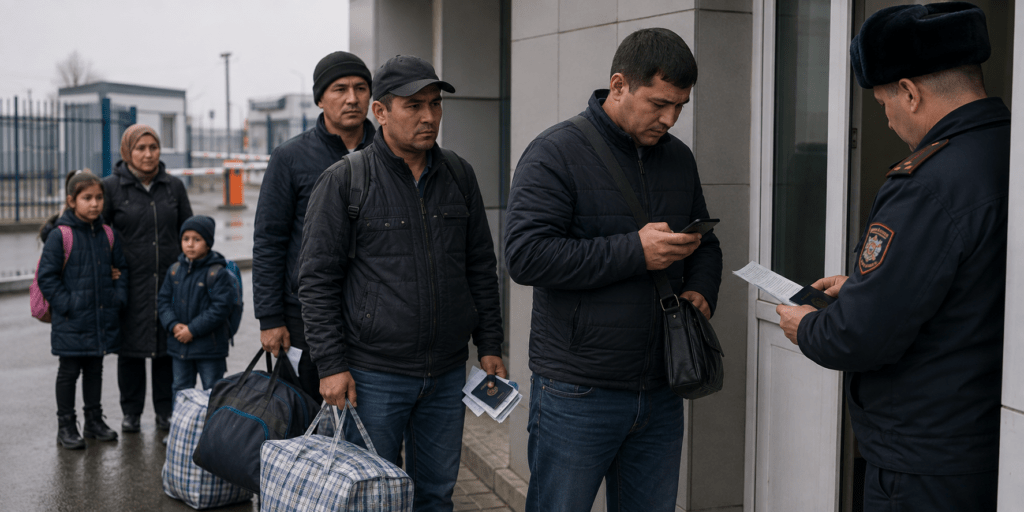
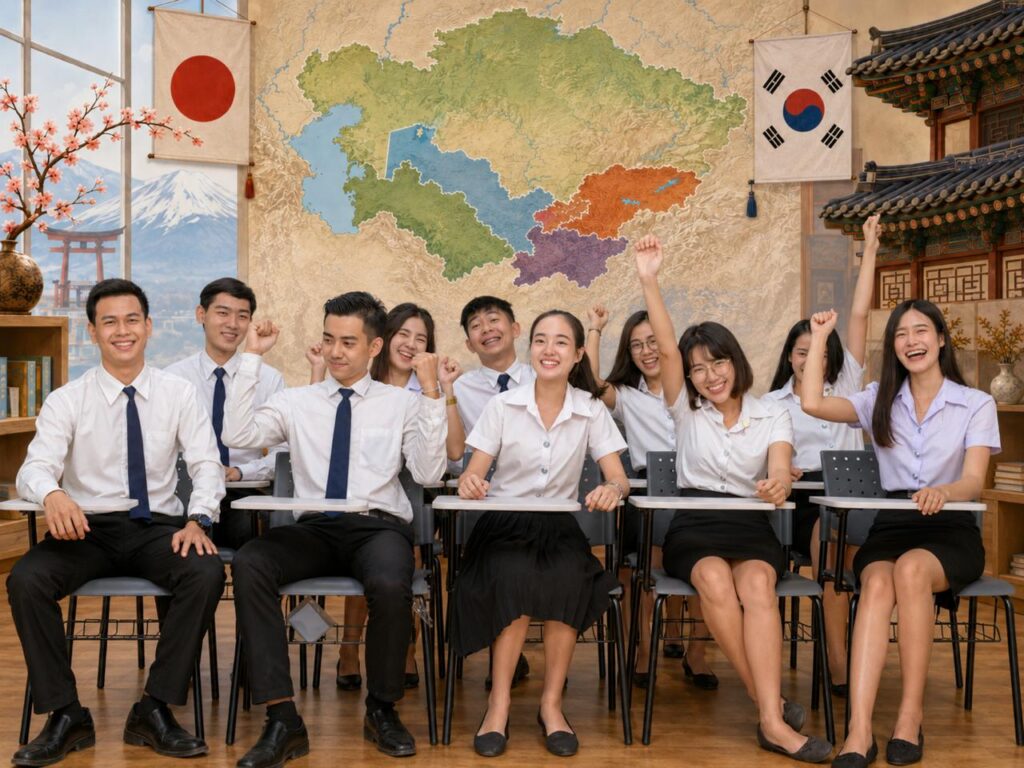
Two weeks ago, Kazakhstan officially joined South Korea’s Employment Permit System (EPS), becoming the 18th country admitted to the program. Even before the change, thousands of Kazakhstani nationals were working in South Korea, many without legal status. Kazakhstani authorities estimated the total at around 15,000 in 2025, including 11,000 without legal documentation. To work legally in South Korea under the EPS, applicants must pass the EPS-TOPIK, a standardized Korean-language test. In this context, learning Korean has become a direct route to better-paid work for many young people in Kazakhstan. Japan, however, has generated no comparable rush. A Widening Gap, By the Numbers The contrast is also evident in language-learning trends. In 2022, Jang Ho-jong, a professor at the Kazakh Ablai Khan University of International Relations and World Languages, told The Korea Times that Korean ranked alongside English and Chinese among Kazakhstan’s three most popular foreign languages and was taught at 15 to 20 universities. About 400 students were taking Korean courses at his university, compared with just three or four when the program opened 20 years earlier. South Korea has also expanded teaching and testing infrastructure. In July 2026, the King Sejong Institute at Akhmet Baitursynuly Kostanay Regional University became Kazakhstan’s first official center for the Sejong Korean Language Assessment (SKA), allowing candidates to take the exam without traveling abroad. Official enrollment data from the King Sejong Institute Foundation show that 1,320 students were enrolled at its institutes in Kazakhstan in 2025, down slightly from 1,481 in 2024. The picture is very different for Japanese. The Japan Foundation counted 581 learners across eight institutions in Kazakhstan in 2024, compared with 1,569 learners in 2006. In Uzbekistan, Korean-language education has expanded even faster. The country recorded the largest increase worldwide in 2025, adding 68 schools offering Korean classes. Sri Lanka placed second with 43. Enrollment at King Sejong institutes in Uzbekistan rose from 1,873 in 2021 to 7,931 in 2024. It eased to 6,308 in 2025, according to the same official dataset. Japanese-language study has also grown in Uzbekistan, but more slowly. The same Japan Foundation survey counted 4,201 learners across 19 institutions in 2024, up from 3,579 at 18 institutions in 2021. Although the two datasets cover different types of institutions, the nationwide Japanese total remained below enrollment in Uzbekistan’s King Sejong network that year. A More Complicated Picture Next Door Across the rest of Central Asia, however, the comparison is less clear-cut. The Japan Foundation’s 2024 regional survey recorded 1,708 Japanese-language learners at 14 institutions in Kyrgyzstan, taught by 50 teachers. That was almost three times Kazakhstan’s total, even though Kyrgyzstan’s population is roughly one-third as large. Among the learners in Kyrgyzstan, 411 were in primary or secondary education. A 2020 account by a Japan Foundation specialist described young people learning through anime and the internet, while Japan International Cooperation Agency volunteers introduced Japanese in rural schools. Some later traveled to Bishkek for more formal study. This points to demand developing from the ground up alongside institutional support. Korean-language...