• KGS/USD = 0.01144 0%
  • KZT/USD = 0.00205 0%
  • TJS/USD = 0.10782 0%
  • UZS/USD = 0.00008 0%
  • TMT/USD = 0.28571 0.28%
  • KGS/USD = 0.01144 0%
  • KZT/USD = 0.00205 0%
  • TJS/USD = 0.10782 0%
  • UZS/USD = 0.00008 0%
  • TMT/USD = 0.28571 0.28%
  • KGS/USD = 0.01144 0%
  • KZT/USD = 0.00205 0%
  • TJS/USD = 0.10782 0%
  • UZS/USD = 0.00008 0%
  • TMT/USD = 0.28571 0.28%
  • KGS/USD = 0.01144 0%
  • KZT/USD = 0.00205 0%
  • TJS/USD = 0.10782 0%
  • UZS/USD = 0.00008 0%
  • TMT/USD = 0.28571 0.28%
  • KGS/USD = 0.01144 0%
  • KZT/USD = 0.00205 0%
  • TJS/USD = 0.10782 0%
  • UZS/USD = 0.00008 0%
  • TMT/USD = 0.28571 0.28%
  • KGS/USD = 0.01144 0%
  • KZT/USD = 0.00205 0%
  • TJS/USD = 0.10782 0%
  • UZS/USD = 0.00008 0%
  • TMT/USD = 0.28571 0.28%
  • KGS/USD = 0.01144 0%
  • KZT/USD = 0.00205 0%
  • TJS/USD = 0.10782 0%
  • UZS/USD = 0.00008 0%
  • TMT/USD = 0.28571 0.28%
  • KGS/USD = 0.01144 0%
  • KZT/USD = 0.00205 0%
  • TJS/USD = 0.10782 0%
  • UZS/USD = 0.00008 0%
  • TMT/USD = 0.28571 0.28%

Viewing results 1 - 6 of 16

Tajikistan Seeks to Expand the Geography of Labor Migration

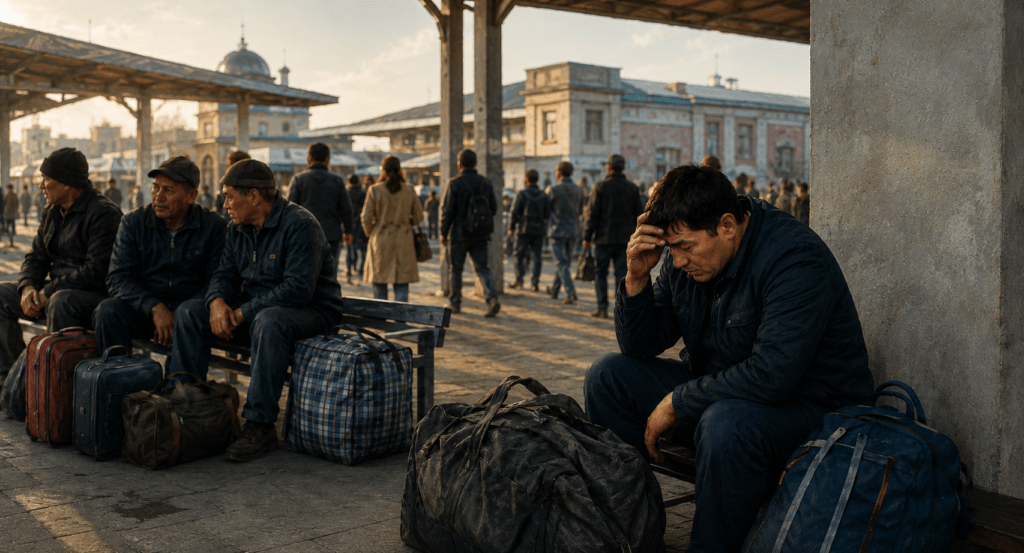
Tajikistan has stepped up efforts to expand destinations for labor migration, including countries in Europe and East Asia. The announcement was made by Minister of Labor, Migration and Employment Soleha Kholmahmadzoda at a press conference summarizing the ministry’s work in 2025. According to the Kholmahmadzoda, a memorandum of cooperation with relevant agencies of the Kingdom of Belgium was signed in November last year and is currently undergoing internal approval procedures. The agreement provides for the possibility of organized employment for Tajik citizens in the Benelux countries, namely Belgium, the Netherlands, and Luxembourg. The most in-demand sectors include agriculture, construction, social services, and healthcare. The Ministry of Labor said the initiative is intended to create transparent and legal employment channels, enhancing protection for migrant workers and reducing the risks associated with illegal employment. Cooperation with Japan is also advancing. The ministry has established a special working group and developed a mechanism to attract Tajik citizens as “specially qualified” workers. Relevant documents have been sent to the Tajik Embassy in Japan for publication on the website of the Japan International Training Cooperation Organization (JITCO). In addition, the Agency for Employment Abroad has prepared a draft agreement with Japanese employers. As a result, the first 10 citizens of the republic have already secured jobs. Special attention is also being given to cooperation with South Korea. In 2025, the Korean side allocated 800 quotas for labor migrants from Tajikistan. After completing professional training and passing the EPS-TOPIK exam, 21 people were employed through the Korean job portal, while documentation is still being processed for 12 additional candidates. Despite the expansion of destinations, Russia remains the primary labor market for Tajik citizens. According to the Ministry of Labor, in 2025, 30 licensed entities sent 35,747 citizens abroad through organized channels, an increase of 18,805 compared with the previous year. Of these, more than 31,000 were employed in Russia, Deputy Minister of Labor, Migration and Employment Norzoda Sharif Sanginmurod said. These figures broadly correspond with estimates from the Russian side. Official data indicate that more than 1 million Tajik citizens are currently working in Russia, mainly in construction, housing and utilities, transport, and logistics.

Uzbekistan Seeks Talks With U.S. on Seasonal Work Program

Uzbekistan will seek talks with the United States on allowing its citizens to work as seasonal laborers, President Shavkat Mirziyoyev announced at a recent foreign policy meeting. According to the president’s press secretary, Mirziyoyev noted that the U.S. government had simplified procedures last year for obtaining special visas for agricultural workers. He directed Uzbekistan’s ambassador in Washington to initiate talks aimed at securing Uzbekistan’s inclusion on the U.S. list of countries whose citizens can be recruited for seasonal employment. The initiative aims to expand access to legal, well-paid jobs for Uzbek citizens working abroad. The president said regional governors will now be required to build direct ties with developed countries and regions that actively recruit foreign labor. Mirziyoyev also tasked ambassadors with assuming a more active role in identifying high-income employment opportunities overseas. They are to assist in preparing citizens for these roles through vocational training and language instruction. He stressed the importance of signing bilateral labor migration agreements with countries including Japan, Sweden, Norway, Bulgaria, Austria, Croatia, Slovenia, Serbia, Greece, and Oman. The president again expressed concern over the number of Uzbek citizens residing abroad illegally. He cited last year’s migration amnesty in Russia, which benefited more than 150,000 Uzbek nationals, and instructed officials to intensify negotiations with other countries to help citizens secure legal employment. At the same time, he underscored the responsibility of migrants to comply with local laws. Supporting Uzbek labor migrants in countries with rising migration flows, particularly in Europe, will become a key responsibility for consular staff. Mirziyoyev also called for simpler registration procedures and fewer bureaucratic hurdles. The Times of Central Asia previously reported that the U.S. State Department plans to suspend the issuance of immigrant visas for citizens of Uzbekistan and 74 other countries starting January 21, adding urgency to Tashkent’s pursuit of alternative legal migration pathways.

Uzbek Migrants Face Growing Risks in Russia as Tashkent Seeks Probe Into Alleged Abuse

Russian security forces reportedly carried out a raid on a café in Khabarovsk in mid-December 2025, during which several Central Asian migrants were allegedly beaten. According to information circulated on social media, two Uzbek citizens fell into a coma following the incident, and one of them subsequently died. On January 2, Uzbekistan’s Ministry of Foreign Affairs announced it had sent a diplomatic note to Russia requesting an impartial and lawful investigation. The ministry also said steps were being taken to repatriate the deceased’s body. However, it noted that the cause of death has not been officially confirmed, and reports of a second Uzbek in a coma remain unverified. In response to the incident, Alisher Qodirov, member of parliament and leader of the Milliy Tiklanish (National Revival) Democratic Party, issued a stark warning to Uzbek migrants in Russia. “Believe me, the situation will only get worse month by month,” Qodirov wrote on Telegram. “Russian security services see Central Asians as potential participants in future unrest, and they have already given up on any benefit migrants may bring... Use your common sense and leave Russia as soon as possible,” he added. “No income is worth the tears of your parents and children.” As Russia’s war against Ukraine enters its fourth year, labor migrants remain among the most vulnerable and least protected groups affected by the conflict. Central Asian nationals,  particularly Uzbeks, face increasing risks of coercion, legal jeopardy, and systemic abuse. By July 2025, at least 902 Uzbek citizens were reported to have been recruited by Russia to fight in Ukraine. Independent monitors believe the true figure is considerably higher. In October 2025, the ‘I want to live’ project identified 2,715 Uzbek nationals who had participated in the conflict, including those recruited illegally, those who signed contracts, and ethnic Uzbeks already serving in the Russian military. Despite this, Russia remains heavily reliant on migrant labor. As of September 1, 2024, nearly four million citizens from Central Asia were living in Russia. Of these, 1.79 million were from Uzbekistan, followed by significant numbers from Tajikistan, Kazakhstan, Kyrgyzstan, and Turkmenistan. For Uzbekistan, the economic implications of growing pressure on migrants are profound. Remittances remain a cornerstone of the national economy. In the first half of 2025 alone, Uzbekistan received $8.2 billion in cross-border transfers, with 78% originating from Russia. Amid rising xenophobia and labor restrictions, economists warn that this dependence could have severe long-term consequences. Economist Abdulla Abdukadirov, Doctor of Economic Sciences, said total remittances by year-end are expected to approach $20 billion. “This is an extremely large sum,” Abdukadirov said at an offline session of the Fikrat analytical program, responding to a question from The Times of Central Asia. “If the state budget is around $28 billion, then nearly $20 billion in remittances reveals how dependent our economy is becoming on external sources.” Abdukadirov warned that Uzbekistan is developing a dangerous structural dependency. “First, we’re becoming more reliant on external investments and borrowing,” he said. “Second, our dependence on cross-border remittances is deepening.” According...

Kazakhstan Labor Migration Report Shows Most Citizens Working in Russia

The Ministry of Labor and Social Protection has released updated data on the number of Kazakh citizens working abroad. According to the ministry, 126,000 citizens are currently employed outside the country, which has a population of more than 20 million. The vast majority, over 80%, have found work in neighboring Russia. The figures were shared by First Deputy Minister of Labor and Social Protection Askarbek Yertayev during a briefing with journalists on the sidelines of a Senate meeting. Of the 126,000 citizens working abroad, 102,000 are employed in Russia, 15,000 in South Korea, and approximately 2,000 in the United Kingdom and European Union member states. Yertayev noted that Kazakhstan has yet to finalize bilateral labor agreements with all countries where its citizens are working. “In particular, an agreement with South Korea is still under discussion, we have been negotiating for two years. Talks were paused due to the domestic political situation there,” Yertayev said, referring to the ongoing standoff between South Korean President Yoon Suk Yeol and the country’s parliament. “Negotiations resumed this fall, and we plan to continue them, as 11,000 of the 15,000 Kazakh citizens in South Korea are working illegally. Measures must be taken, but the Korean side has several conditions, including that Kazakhstan address the issue of its undocumented migrants,” he added. Seoul has requested a “road map” from Kazakhstan to address the problem of illegal labor migration. The document is expected to include mechanisms to prevent undocumented employment. Yertayev expressed confidence that an agreement would be reached before the end of the year. He noted that legal employment in South Korea would allow Kazakh workers to access higher wages and social protections, including healthcare and insurance. “Currently, our citizens in South Korea who are working illegally cannot even send their earnings back home: banks refuse to process the transfers, forcing them to rely on informal channels, which often leads to fraud,” the deputy minister said. As previously reported by The Times of Central Asia, Kazakh authorities have also intensified domestic efforts to formalize the labor market by cracking down on employers who pay “gray” wages, off-the-books income that evades taxes and social contributions.