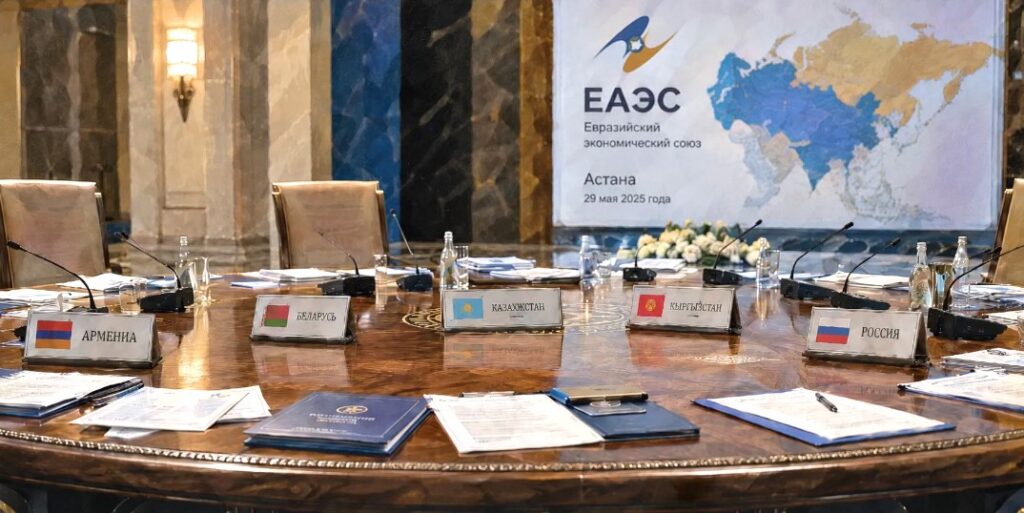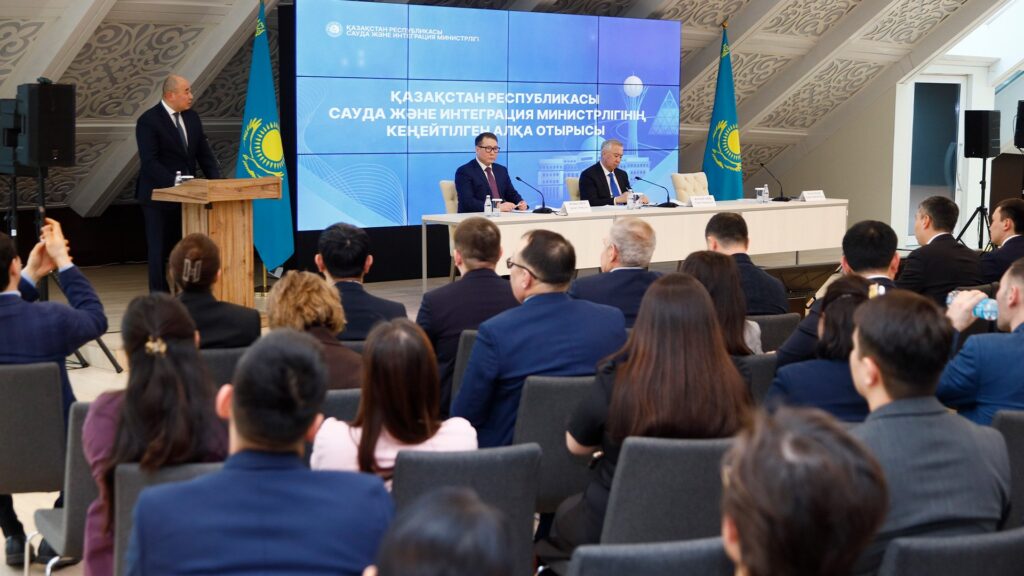
Armenia’s increasingly uncertain future within the Eurasian Economic Union (EAEU) appears to have entered a new phase. On May 29, the presidents of Kazakhstan, Belarus, Russia, and Kyrgyzstan issued a joint statement calling on Yerevan to clarify whether it intends to pursue deeper integration with the European Union or remain committed to the Eurasian bloc.
The four leaders announced that members of the Eurasian Intergovernmental Council would present a report at the next meeting of the Supreme Eurasian Economic Council in December 2026 outlining the possible consequences of suspending Armenia’s participation in the EAEU treaty framework.
“We share the view that the Republic of Armenia should, within the shortest possible timeframe, hold a nationwide referendum on joining the European Union or continuing its membership in the Eurasian Economic Union,” the statement said.
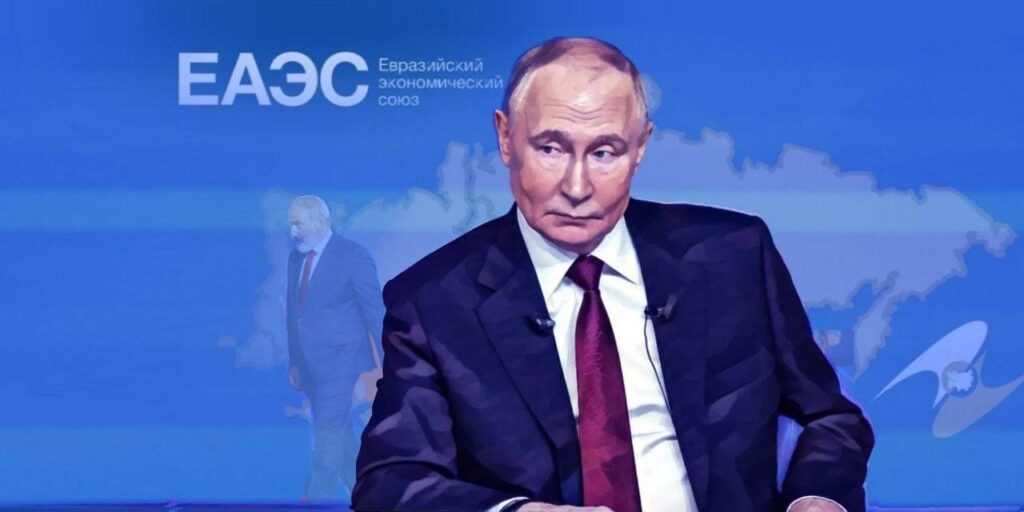
Speaking to journalists after the summit in Astana, Russian President Vladimir Putin drew parallels between Armenia’s current trajectory and the developments that preceded the crisis in Ukraine.
“I have mentioned this before: the crisis in Ukraine began with attempts to join the EU,” Putin said. He added that significant differences between European and EAEU standards, particularly in agriculture and industry, make simultaneous participation in both integration projects difficult.
“Combining the two is practically impossible,” Putin said. “Therefore, we would be forced to curtail much of our economic integration work with Armenia.”
The following day, Russia recalled its ambassador to Armenia for consultations amid Yerevan’s growing engagement with the European Union. According to Russian political analyst Arkady Dubnov, the move was a clear diplomatic signal of Moscow’s dissatisfaction with the pro-European course pursued by Armenian Prime Minister Nikol Pashinyan’s government and indicated a downgrading of bilateral relations.
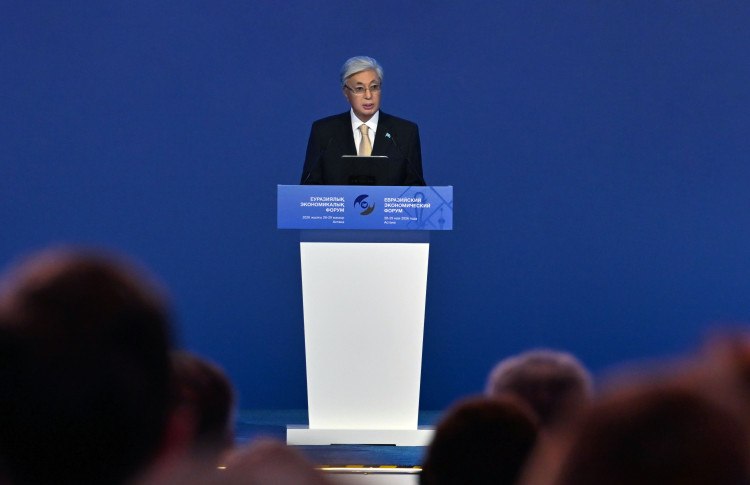
Dubnov also argued that Armenia’s representative at the Astana summit, Deputy Prime Minister Mher Grigoryan, avoided harsher criticism from Putin partly because of the position taken by Kazakhstan’s President Kassym-Jomart Tokayev.
“Kazakhstan itself signed an Enhanced Partnership and Cooperation Agreement with the European Union in 2020,” Dubnov noted, suggesting that arguments about Armenia’s European integration harming the EAEU are largely political rather than economic in nature.
One recent poll appears to reinforce confidence within Armenia’s ruling camp. A survey conducted ahead of parliamentary elections indicates that Pashinyan’s Civil Contract party could secure nearly 65% of decided voters, positioning it for a convincing victory and a substantial parliamentary majority.
Against that backdrop, Moscow’s pressure on Yerevan may be less about influencing the outcome of Armenia’s elections than about preparing for a longer-term strategic realignment. Supporters of Pashinyan increasingly associate his political project with closer ties to Europe, a perception reinforced not only by European leaders but also by U.S. President Donald Trump, who recently expressed support for Pashinyan’s re-election campaign.
For his part, Pashinyan appears focused on a broader regional recalibration. Speaking via Facebook Live on May 31, he emphasized the importance of normalizing relations with neighboring states.
“I am convinced that we will achieve the goal of normalizing relations with Azerbaijan and Türkiye,” he said. “This means that a balanced and balancing foreign policy will achieve its objectives, creating new opportunities for Armenia in building a state of a new quality.”
Such a shift could further reduce Russia’s influence in the South Caucasus, while increasing the role of Türkiye as a regional powerbroker.
Moscow, meanwhile, appears eager to deepen ties with another strategically important partner: Uzbekistan.
On May 22, Putin held a telephone conversation with Uzbek President Shavkat Mirziyoyev. A week later, Mirziyoyev participated in the expanded-format meeting of the Supreme Eurasian Economic Council in Astana. Uzbekistan currently holds observer status in the EAEU.
“For Uzbekistan, expanding practical cooperation with EAEU member states remains one of the key priorities of our foreign economic policy,” Mirziyoyev told participants. “Our interaction with the Union’s countries has evolved into a comprehensive economic partnership.”
Mirziyoyev proposed creating a unified digital trade space within the EAEU, including harmonized approaches to e-commerce regulation, customs procedures, phytosanitary and veterinary controls, certificates of origin, and mutual recognition of electronic documents.
He also highlighted labor mobility as a priority area, calling for the integration of national employment platforms into a common digital system that would provide citizens with access to vacancies, labor regulations, and migration-related information across member states.
For Uzbekistan, labor migration remains a critical component of economic relations with Russia, which continues to employ large numbers of Uzbek migrant workers. As a result, the December meeting of the Supreme Eurasian Economic Council could bring two questions into sharper focus: the future of Armenia’s participation in the EAEU, and the extent to which Uzbekistan is prepared to deepen cooperation with the bloc.
Whether Uzbekistan ultimately moves from observer to full member remains uncertain. However, as Armenia moves closer to Europe and Uzbekistan deepens economic engagement with Eurasian partners, the balance within the EAEU may be entering a period of significant transformation.