• KGS/USD = 0.01144 0%
  • KZT/USD = 0.00205 0%
  • TJS/USD = 0.10771 0%
  • UZS/USD = 0.00009 0%
  • TMT/USD = 0.28571 0.28%
  • KGS/USD = 0.01144 0%
  • KZT/USD = 0.00205 0%
  • TJS/USD = 0.10771 0%
  • UZS/USD = 0.00009 0%
  • TMT/USD = 0.28571 0.28%
  • KGS/USD = 0.01144 0%
  • KZT/USD = 0.00205 0%
  • TJS/USD = 0.10771 0%
  • UZS/USD = 0.00009 0%
  • TMT/USD = 0.28571 0.28%
  • KGS/USD = 0.01144 0%
  • KZT/USD = 0.00205 0%
  • TJS/USD = 0.10771 0%
  • UZS/USD = 0.00009 0%
  • TMT/USD = 0.28571 0.28%
  • KGS/USD = 0.01144 0%
  • KZT/USD = 0.00205 0%
  • TJS/USD = 0.10771 0%
  • UZS/USD = 0.00009 0%
  • TMT/USD = 0.28571 0.28%
  • KGS/USD = 0.01144 0%
  • KZT/USD = 0.00205 0%
  • TJS/USD = 0.10771 0%
  • UZS/USD = 0.00009 0%
  • TMT/USD = 0.28571 0.28%
  • KGS/USD = 0.01144 0%
  • KZT/USD = 0.00205 0%
  • TJS/USD = 0.10771 0%
  • UZS/USD = 0.00009 0%
  • TMT/USD = 0.28571 0.28%
  • KGS/USD = 0.01144 0%
  • KZT/USD = 0.00205 0%
  • TJS/USD = 0.10771 0%
  • UZS/USD = 0.00009 0%
  • TMT/USD = 0.28571 0.28%

Viewing results 1 - 6 of 14

Kyrgyzstan Logistics Center Aims to Link China and Central Asia

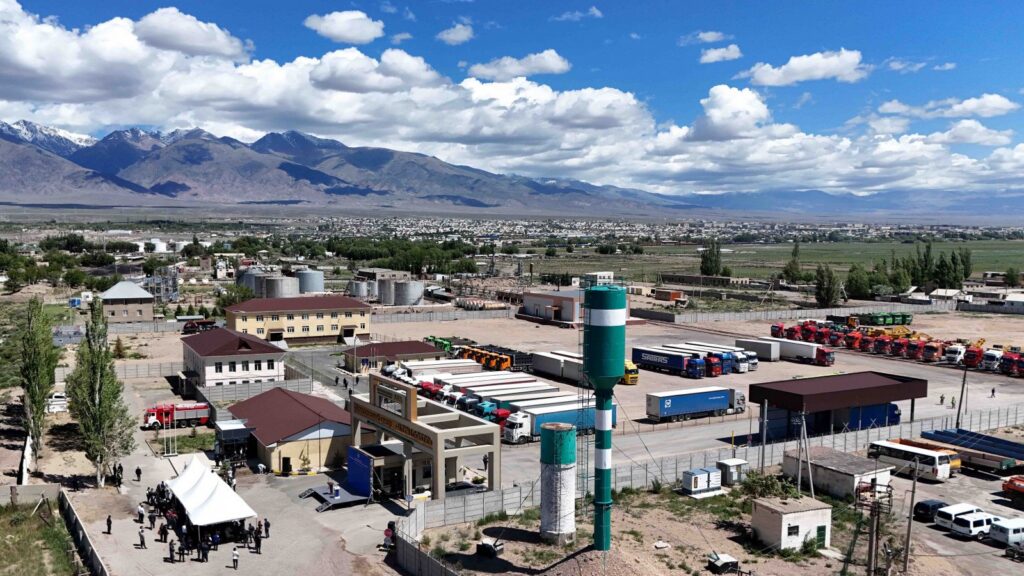
Kyrgyzstan has opened a new international trade and logistics center designed to strengthen transport links between China, Central Asia and wider post-Soviet markets, as Bishkek seeks to expand its role as a regional transit hub. The new facility, Altyn Logistic, officially opened on May 28 in the city of Balykchy, at the western end of Lake Issyk-Kul. The 5.5 hectare logistics center includes warehouses, a railway line with loading and unloading infrastructure, and a large open parking area. According to officials, the complex is capable of handling up to 200 trucks per day and is expected to create around 80 jobs. Speaking at the opening ceremony, Kyrgyzstan’s Chairman of the Cabinet of Ministers Adylbek Kasymaliev said the country is seeking to grow its transit and logistics potential due to its strategic position along international transport corridors. “The center is located on one of the key routes of the Silk Road, and I am confident that it will effectively function as a major logistics hub linking China, Central Asian countries and CIS states,” Kasymaliev said. The choice of Balykchy is strategically important as the city already serves as a transport junction in northern Kyrgyzstan. Located at the western end of Lake Issyk-Kul, it is the final stop on the railway line from Bishkek and sits on the road corridor running from the capital toward Naryn and the Torugart Pass on the Chinese border. Balykchy is also the starting point for the Balykchy-Kochkor-Kara-Keche railway, a 186-kilometer line under construction since 2022. The route is intended to connect the existing northern rail network with Kochkor and the Kara-Keche coal deposit in Naryn Region, one of the main sources of coal for Bishkek’s thermal power plant. Authorities plan eventually to integrate this line with the China-Kyrgyzstan-Uzbekistan railway, which is currently under construction inside Kyrgyzstan. If that happens, Balykchy would become a central node in a wider rail system linking the country’s north with new east-west freight routes through Naryn, Jalal-Abad and onward to Uzbekistan. The city’s road position is also becoming more important. TCA has previously reported that Kyrgyzstan’s alternative North-South highway is designed to link Balykchy with Jalal-Abad, cutting the journey between the two cities from around 13 hours to six once fully operational. That would give Balykchy a stronger role in domestic freight movement, not only in trade with China and Kazakhstan. The new logistics center also fits into Kyrgyzstan’s wider effort to turn its limited rail network into a transit asset. Kyrgyzstan’s railway system still spans only 425 kilometers and remains split between northern and southern sections, but that freight turnover has begun recovering after years of stagnation. For Bishkek, the value of Altyn Logistic will depend on whether those larger rail and road projects are completed. For now, the center strengthens Balykchy’s role as a northern cargo hub; in the longer term, it could become a link between Kyrgyzstan’s existing rail connection to Kazakhstan and the new routes being built toward China and Uzbekistan.
Kazakhstan to Build New International Cargo Airport Near China Border

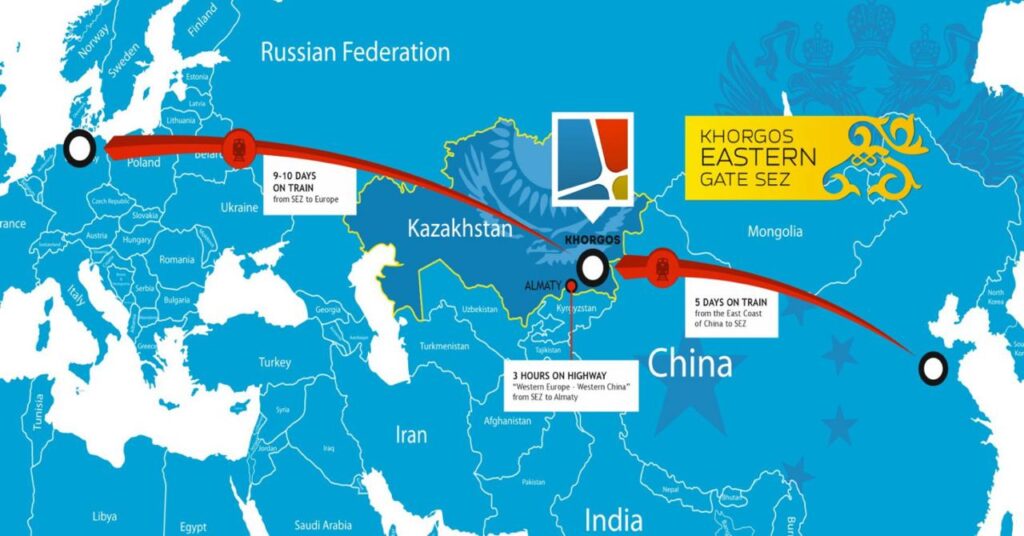
Kazakhstan plans to construct a new international cargo and passenger airport in the Zhetysu region, near the Chinese border, as part of efforts to develop a major multimodal aviation and logistics hub along key transit routes linking China, Central Asia, and Europe. The facility will be located within the Khorgos–Eastern Gate Special Economic Zone (SEZ), a strategic logistics cluster on the New Silk Road. According to Dias Esdauletov, Deputy Akim of the region, the project is one of the most significant and promising investment initiatives currently underway and aims to establish Kazakhstan as a central player in Eurasian trade. The project is being developed by the Kazakh-German joint venture Skyhansa LLP and is coordinated by the Ministry of Transport of the Republic of Kazakhstan. The airport is designed to complement the existing railway and road infrastructure in the SEZ, enabling faster movement of high-value and time-sensitive cargo, and bolstering regional passenger transport and tourism. Once completed, it will integrate rail, road, and air links in a single multimodal logistics system. Construction will be carried out in three stages. The first stage, set for completion by mid-2027, will include the development of core airfield infrastructure, a cargo terminal, a fuel complex, an aviation technical center, and a business center with hotel facilities. It will also integrate the airport with the SEZ’s existing rail and road networks. The second stage will expand the cargo and passenger infrastructure, build additional logistics and storage areas, increase refueling capacity, and attract airline and logistics partners. In the third stage, the airport is expected to evolve into a full-fledged international aviation hub with an expanded route network, full-service and MRO (maintenance, repair, and overhaul) operations, and deep integration with the SEZ’s industrial and commercial zones. Esdauletov highlighted the importance of the Air-Rail-Auto-Air transport model for improving logistics efficiency, particularly for sectors such as e-commerce, pharmaceuticals, and electronics. Seamless transitions between transport modes can dramatically reduce door-to-door delivery times and costs. Kazakhstan has already demonstrated the viability of such multimodal solutions. In 2014, KTZ Express piloted a successful international cargo transit from China to Europe via a rail-air corridor. HP products were shipped from Chongqing to Almaty by rail and then flown to Amsterdam, completing the 9,900 km journey in just seven days. The new airport is expected to ease congestion in the Almaty transport hub and significantly improve cargo throughput capacity in southeastern Kazakhstan. In the medium and long term, authorities anticipate strong growth in both cargo and passenger volumes, driven by increasing transit flows between China, Central Asia, Europe, and the United States, as well as ongoing shifts in global logistics routes. To mitigate risks, the regional government has launched comprehensive preparatory work. Skyhansa has already secured 800 hectares of land within the Khorgos-Eastern Gate SEZ. The project is expected to create approximately 700 jobs.

Tokayev Sets Agenda for Kazakhstan’s 2026 EAEU Chairmanship

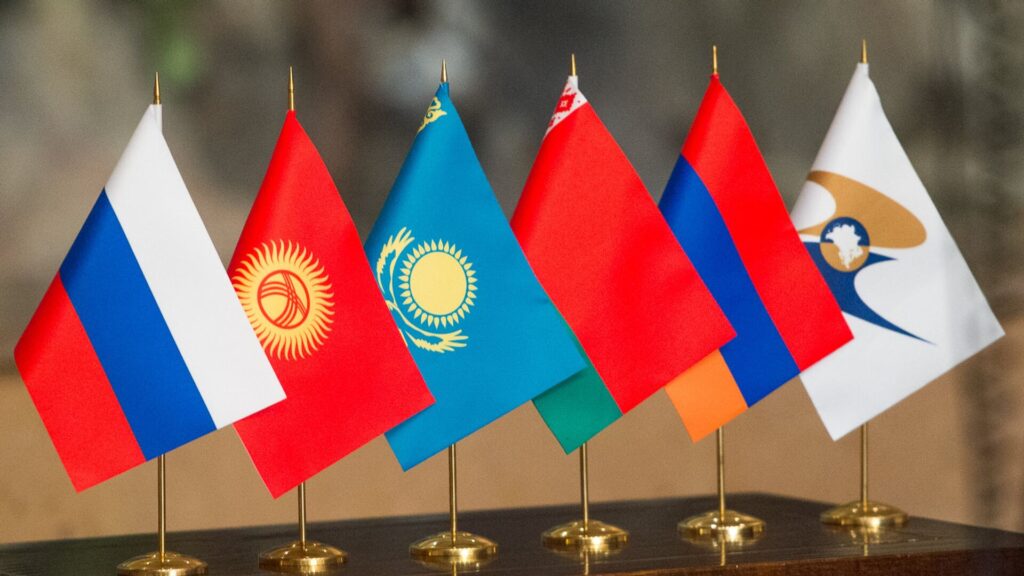
Kazakhstan has assumed the rotating chairmanship of the Eurasian Economic Union (EAEU) for 2026, pledging to focus on digital transformation, logistics integration, and the removal of internal trade barriers across the bloc. In a statement published on December 31, 2025, President Kassym-Jomart Tokayev outlined five key priorities for Kazakhstan’s EAEU presidency. The EAEU includes Armenia, Belarus, Kazakhstan, Kyrgyzstan, and Russia, and facilitates the free movement of goods, services, capital, and labor among its members. Artificial Intelligence and Economic Integration Tokayev identified artificial intelligence (AI) as a vital tool for deepening integration within the bloc. AI technologies, he said, are already being used to forecast trade flows and assess the impact of tariffs and trade agreements on member economies. Kazakhstan, which has set a national goal of becoming a digital nation, expressed readiness to share its expertise with other EAEU members in areas such as AI, digital regulation, and economic transformation. Tokayev proposed the adoption of a Joint Statement on the Responsible Development of Artificial Intelligence at the 2026 Eurasian Economic Forum in Astana. The document would define a new framework for digital cooperation within the bloc. Positioning the EAEU as a Eurasian Logistics Hub Highlighting the EAEU’s geographic position as a natural bridge between East and West, Tokayev called for transforming the bloc into a leading logistics hub for the Eurasian continent. He emphasized the need to modernize transport, customs, and logistics infrastructure, and to develop international transport corridors and multimodal transport solutions. He also proposed an integrated, AI-based cargo flow management system across the EAEU to reduce delivery times, cut costs, and enhance the bloc’s global competitiveness in logistics. Digitalizing Industry and Agriculture Calling industry and agriculture the economic foundation of the EAEU, Tokayev urged deeper cooperation to produce globally competitive products. While financial mechanisms for joint projects already exist, he argued that more emphasis should be placed on innovation-led initiatives. He proposed launching demonstration centers, automation startups, and competence hubs to drive digitalization at both enterprise and farm levels. Barrier-Free Trade as a Core Principle Tokayev stressed the elimination of administrative and regulatory barriers within the bloc as a central priority. He criticized artificial restrictions on trade, constraints on the movement of citizens, and long freight queues at borders. He also warned against the use of customs procedures and regulatory controls, including sanitary, veterinary, and phytosanitary measures, as tools of political or economic leverage. To address this, he proposed deploying AI to monitor legislative initiatives across the EAEU and flag potential internal trade barriers at an early stage. Expanding External Economic Ties Kazakhstan’s chairmanship will also focus on expanding the EAEU’s external partnerships. In 2025, the bloc signed Free Trade Area agreements with Mongolia and Indonesia and concluded an Economic Partnership Agreement with the United Arab Emirates. Tokayev said greater attention will be paid to building economic ties with countries in the Global South, the Arab world, Southeast Asia, Africa, and regional economic organizations. Macroeconomic Context Tokayev’s agenda is being launched against a backdrop of solid macroeconomic performance...

South Korea Backs New Cold Storage and Logistics Center in Southern Kyrgyzstan

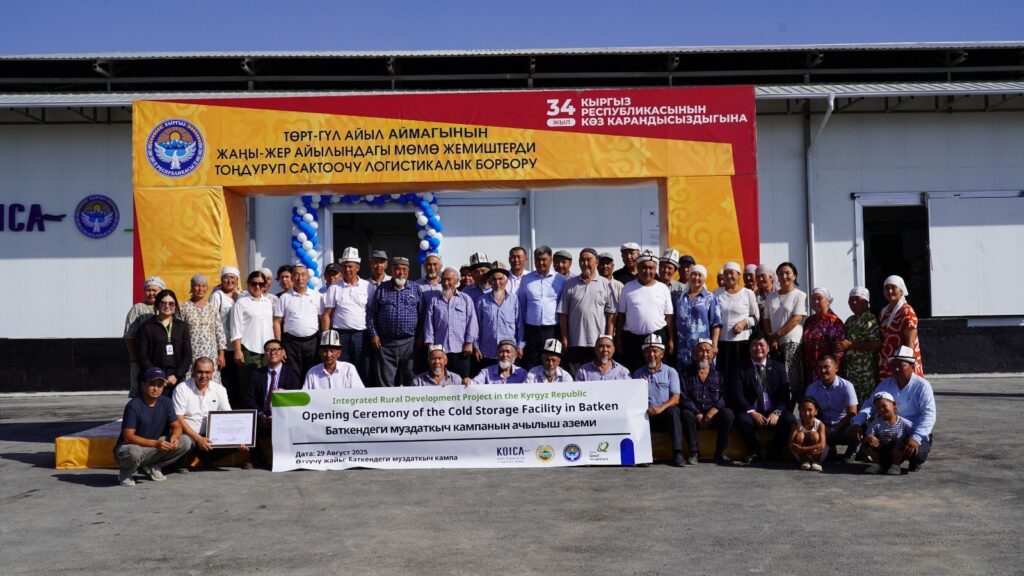
On August 29, a new Fruit and Vegetable Cold Storage and Logistics Center officially opened in the village of Tort-Gul in Kyrgyzstan’s southern Batken Region. The opening ceremony was attended by representatives of the Korea International Cooperation Agency (KOICA) and the NGO Good Neighbors, both of which provided partial financing for the project, as well as by local government officials and residents. According to KOICA’s Kyrgyzstan office, the facility was established through the joint efforts of the Republic of Korea, the Kyrgyz government, and local communities. The project received both financial and administrative support from the Kyrgyz side, with local self-government bodies covering approximately 42 percent of the construction costs. The center was developed as part of the Integrated Rural Development Project, a joint initiative of KOICA and Good Neighbors that is currently being implemented in 30 villages across the Osh and Batken regions. With a storage capacity of up to 500 tons, the facility is equipped with modern refrigeration systems designed to reduce post-harvest losses, extend the shelf life of agricultural products, and ensure a more reliable supply of fruits and vegetables to both domestic and international markets. The logistics center is managed by the Batken Berekelyuu Aimak cooperative, which has already begun commercial operations. The cooperative has signed a supply contract for dried apricots and plans to expand its distribution network in the near future. The facility is expected to improve the livelihoods of farmers in Batken by creating additional income opportunities and strengthening access to larger markets.

Kazakhstan Begins Construction of Major International Logistics Hub in Kostanay

Kazakhstan has officially begun construction of a major transport and logistics complex in the northern city of Kostanay, aiming to establish a critical transit hub linking China, Central Asia, and Europe. The new “Tobyl” Logistics Hub is set to enhance the country's role in regional and global supply chains. Designed to integrate into international transport corridors, including routes to China, Central Asia, Turkey, Iran, Afghanistan, and Europe, the facility is scheduled to be operational by 2027. It is expected to significantly boost transit capacity along the “Northern Kazakhstan, Southern Urals” corridor and facilitate freight movement toward the People's Republic of China. In the first half of 2025, Kazakhstan’s transit freight volume reached 16.8 million tons, marking a 4% year-on-year increase. Strategic Investment for Economic Growth “The complex will reduce logistics costs for businesses, support export-oriented manufacturing, attract investment into processing industries, and stimulate the creation of new industrial enterprises,” said Aydyn Alimov, Director of the new logistics center. “We believe Tobyl will become a business magnet and a driver of regional industrial growth.” The hub will feature advanced infrastructure, including terminals, warehouses, customs clearance facilities, IT zones, and service areas operating under a “one-stop-shop” model. A digital cargo tracking system will provide real-time logistics monitoring. The project is being developed with the participation of JSC Kedentransservice, Kazakhstan’s largest logistics operator, and is backed by the state-owned Industrial Development Fund. Covering an area of 133.6 hectares, the Tobyl complex represents an investment of 64 billion KZT (approximately $122 million). It is designed to process up to 400,000 twenty-foot equivalent units (TEUs), or more than 11 million tons of cargo annually, and will create 500 new jobs in logistics, IT, and service sectors. A Catalyst for Regional and National Development “We are not just building a logistics hub, we are laying the foundation for a new economic geography,” said Deputy Prime Minister Yermek Kosherbayev at the groundbreaking ceremony. “Tobyl will become an intellectual platform where logistics, digitalization, education, and industry converge. This is not just a regional but a national project, a catalyst for growth across the country.” According to the government, the Tobyl hub will also promote sustainable exports from the Kostanay region and foster deeper industrial cooperation within the Eurasian space. Kostanay is already Kazakhstan’s leading automotive manufacturing hub. In 2024, local automaker Allur produced 90,515 vehicles, comprising passenger cars, trucks, and buses, out of a national total of 134,000. In 2025, a new KIA plant with an annual capacity of 70,000 vehicles is expected to launch, along with facilities for producing automotive components and spare parts. Earlier this month, Kazakhstan and China signed an updated strategic agreement to strengthen railway links and increase cargo throughput along the Trans-Caspian International Transport Route (TITR), also known as the Middle Corridor.

Tajikistan’s Irrigation Plans Require Major Upgrades

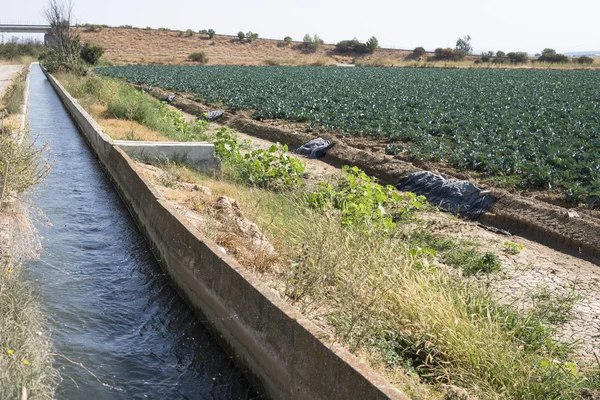
Tajikistan has the potential to become the irrigation center of Central Asia but only if it undergoes extensive modernization. This conclusion comes from a joint report by the Eurasian Development Bank (EDB) and the United Nations Industrial Development Organization (UNIDO). Industrial and Economic Potential The report highlights Tajikistan’s capacity to develop into a regional production and maintenance hub for irrigation equipment. Key advantages include affordable electricity, a readily available labor force, and a strategic geographic location. These factors position the country to play a central role in an emerging regional irrigation cluster. The southern provinces of Khatlon and Sughd are identified as particularly promising for industrial development. Proposed projects include manufacturing facilities for plastic pipes and components for drip and sprinkler systems, alongside service centers for pump repair. Investment requirements for such facilities range from $3-5 million, with a projected payback period of just 2-3 years. However, the report underscores the pressing need to overhaul the existing infrastructure. Approximately 77% of Tajikistan’s irrigation systems require reconstruction. Of the country’s 720,000 hectares of irrigated farmland, nearly 60% must be restored. Additionally, 80% of pumping stations are considered outdated, and water losses due to technical inefficiencies reach 45%. Without significant upgrades, the system will likely struggle to meet growing climatic and demographic pressures. To support the irrigation sector’s long-term viability, the report calls for the annual training of at least 3,000 specialists. Training one professional to international standards costs between $1,200 and $1,800. The authors stress the importance of state investment in vocational education and greater collaboration between educational institutions and industry. Tajikistan as a Regional Logistics Bridge Tajikistan also has the potential to serve as a strategic logistics hub. Its southern regions could facilitate transport between Central Asia, Afghanistan, Iran, and Pakistan, cutting shipping costs and improving equipment access in remote areas. Realizing this vision will require a strong state role, including tax incentives, subsidies, and streamlined investment procedures. International donor participation is equally vital. Currently, nearly 90% of irrigation equipment used in the region is imported, adding up to 30% in logistics costs. While cluster-based industrial development has proven effective in other Central Asian countries, boosting enterprise productivity by 15-20% within two to three years, Tajikistan still trails behind. In contrast to Uzbekistan, which has over 90 cotton and textile clusters, much of Tajikistan’s agricultural output undergoes minimal processing. Regional Water Reform Needs $50 Billion The report concludes by emphasizing that water supply issues extend beyond Tajikistan. Across Central Asia, agriculture accounts for up to 80% of water usage. Losses from open canals reach 50%, and over 30% of irrigated land is affected by salinization. To address these challenges by 2040, the region will require $40-50 billion in investment for infrastructure upgrades, digitization, and a transition to closed irrigation systems. “Without urgent modernization of the irrigation system, the region risks facing serious water shortages, lower crop yields, and increased social instability,” the authors warn.