• KGS/USD = 0.01144 0%
  • KZT/USD = 0.00207 0%
  • TJS/USD = 0.10456 0.19%
  • UZS/USD = 0.00008 0%
  • TMT/USD = 0.28571 0%
  • KGS/USD = 0.01144 0%
  • KZT/USD = 0.00207 0%
  • TJS/USD = 0.10456 0.19%
  • UZS/USD = 0.00008 0%
  • TMT/USD = 0.28571 0%
  • KGS/USD = 0.01144 0%
  • KZT/USD = 0.00207 0%
  • TJS/USD = 0.10456 0.19%
  • UZS/USD = 0.00008 0%
  • TMT/USD = 0.28571 0%
  • KGS/USD = 0.01144 0%
  • KZT/USD = 0.00207 0%
  • TJS/USD = 0.10456 0.19%
  • UZS/USD = 0.00008 0%
  • TMT/USD = 0.28571 0%
  • KGS/USD = 0.01144 0%
  • KZT/USD = 0.00207 0%
  • TJS/USD = 0.10456 0.19%
  • UZS/USD = 0.00008 0%
  • TMT/USD = 0.28571 0%
  • KGS/USD = 0.01144 0%
  • KZT/USD = 0.00207 0%
  • TJS/USD = 0.10456 0.19%
  • UZS/USD = 0.00008 0%
  • TMT/USD = 0.28571 0%
  • KGS/USD = 0.01144 0%
  • KZT/USD = 0.00207 0%
  • TJS/USD = 0.10456 0.19%
  • UZS/USD = 0.00008 0%
  • TMT/USD = 0.28571 0%
  • KGS/USD = 0.01144 0%
  • KZT/USD = 0.00207 0%
  • TJS/USD = 0.10456 0.19%
  • UZS/USD = 0.00008 0%
  • TMT/USD = 0.28571 0%

Viewing results 1 - 6 of 73

UN Rights Body Criticizes Prison Sentences for Kyrgyz Journalists

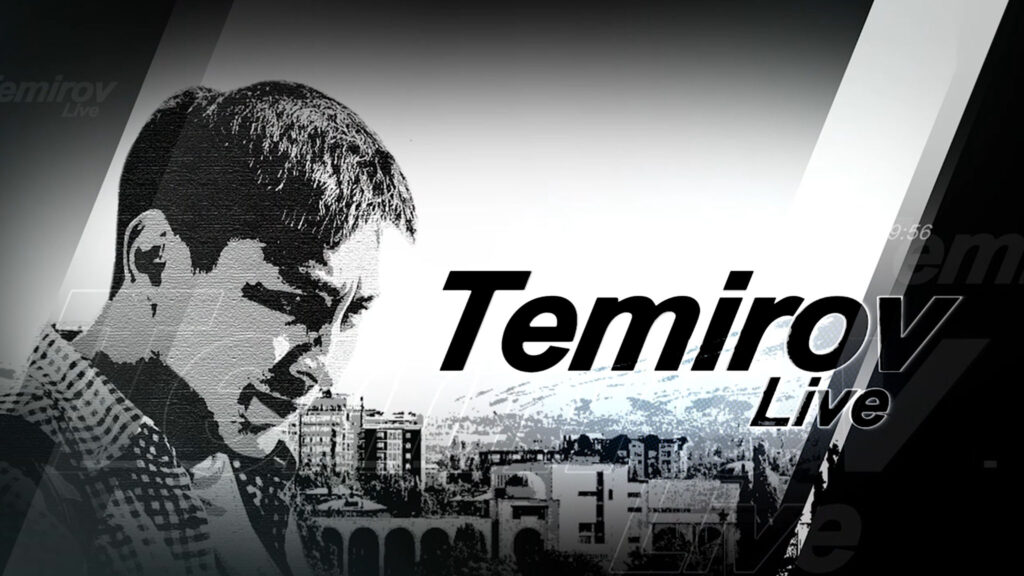
The human rights office of the United Nations and other international groups are expressing concern that two journalists in Kyrgyzstan were convicted of inciting mass unrest and sentenced to years in prison. Journalists Azamat Ishenbekov and Makhabat Tazhibek kyzy of the Temirov Live media outlet were sentenced on Thursday to five and six years in jail respectively and plan to appeal. Two other media workers in the same case were placed on three years’ probation and released. Another seven were acquitted. The investigation and trial were “marred by due process and fair trial concerns” and Kyrgyz authorities should review the cases of those who were sentenced, the Office of the United Nations High Commissioner for Human Rights said in a statement on Friday. “While seven others were acquitted, it is problematic that 11 journalists and media workers, all former or current staff of the investigative outlet Temirov Live, were arbitrarily arrested and detained for simply doing their job,” the U.N. human rights office said. “We urge the authorities to review vague provisions of the Criminal Code that expose journalists and others to potential liability for exercise of their fundamental rights, including freedom of expression.” The New York-based Committee to Protect Journalists said the prison terms amounted to retaliation for reporting on alleged corruption and that “Kyrgyzstan has forfeited its reputation as a relative haven of press freedom in Central Asia.” Top officials in Kyrgyzstan have previously dismissed such international criticism, saying the case against the workers affiliated with Temirov Live was not politically motivated and that the people being prosecuted were masquerading as journalists and publishing false information. Temirov Live is a YouTube-based outlet that has broadcast reports on alleged graft at high levels of government. It was founded in 2020 by Bolot Temirov, who was expelled from Kyrgyzstan in 2022. His wife is Tazhibek kyzy, director of Temirov Live and one of the two journalists who was sentenced to jail last week.
Freedom of Speech in Tajikistan Discussed at OSCE Conference

The deteriorating situation for journalists and freedom of speech in Tajikistan was discussed at the plenary session of the OSCE Human Dimension Conference in Warsaw on October 2. Participants, including human rights defenders and civil society representatives, noted that arrests of journalists have become a common practice in the country. Some face harassment even outside Tajikistan. Gulnoza Said, program coordinator for the Committee to Protect Journalists in Europe and Central Asia, said the situation with human rights and freedom of expression has reached a critical point. She said eight journalists, including Ulfatkhonim Mamadshoeva, Daler Imomali, and Khushruz Dzhumayev, are currently in Tajik prisons. Said also emphasized that the sentences handed down to the journalists are incredibly harsh, ranging from seven to 20 years in prison. Muhammadjon Kabirov, editor-in-chief of Azda TV, broadcasting from Poland, noted that Tajikistan ranks 155th on the World Freedom of Expression Index, and its authorities have created a hostile environment for the media. Kabirov also recalled the transnational repression directed against journalists abroad. In his speech, he cited the conviction of journalists such as Hikmatullo Sayfullozoda and Abdukahor Davlat, who were sentenced to long prison terms in 2015. A recent example of pressure on the independent press was the arrest of the editor-in-chief of Pike, Ahmadi Ibrohim, who has been charged with bribery and is awaiting trial. The conference also raised the issue of Tajik authorities harassing journalists and their relatives to force them to stop their activities. Interestingly, although Tajikistan had previously taken an active part in such discussions, there were no representatives of Tajikistan at this year's event. International organizations have repeatedly criticized the situation with freedom of speech in Tajikistan. Organizations such as Amnesty International and Freedom House report the constant harassment of journalists, independent media, and activists. Opposition media outlets are banned in the country, and journalists face arrests and long prison terms on charges that human rights activists call trumped-up.

Kyrgyzstan Closes Kloop; Media Outlet Says Work Will Go On

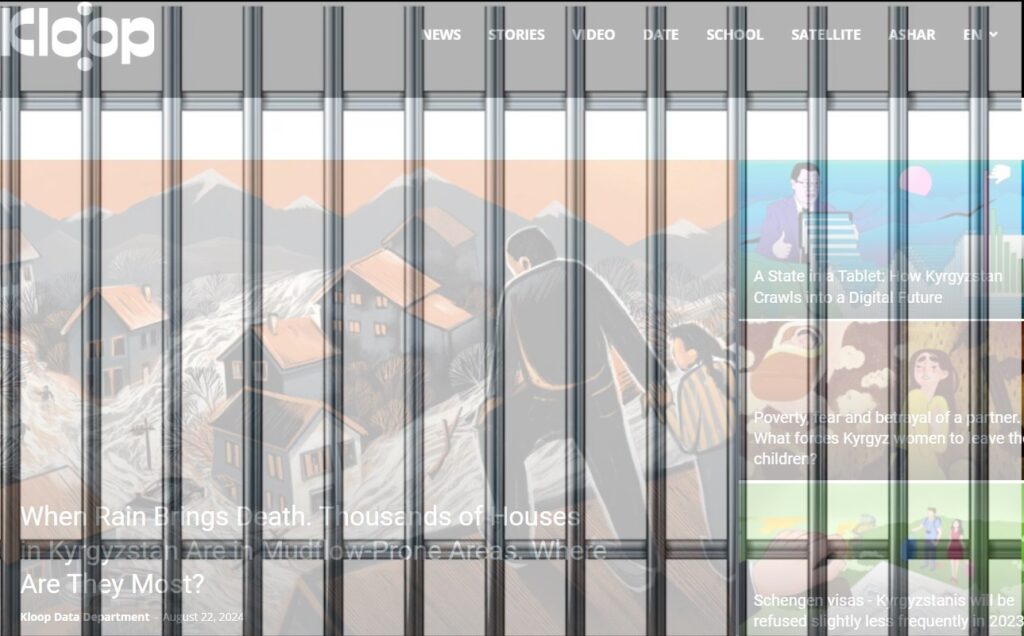
Amid concerns that media freedoms in Kyrgyzstan are shrinking, President Sadyr Japarov has suggested that the closure of Kloop Media, a Kyrgyz foundation that runs an investigative news organization, was a blow against “anarchy” and false information rather than freedom of speech. Japarov offered his contested vision of what constitutes responsible media coverage in an interview published on Tuesday by the state news agency Kabar, which asked for his reaction to a reported ruling by Kyrgyzstan’s Supreme Court that upheld the liquidation of Kloop Media after a yearlong court battle. “Doesn't the closure of this media have a negative impact on the freedom of expression in the country?” Kabar director Mederbek Shermetaliev asked Japarov. “Nothing. For 30 years, we have replaced anarchy with democracy and gossip with freedom of speech. Now the community is recovering from those diseases,” Japarov replied. “We have had and will have freedom of speech. We will support anyone as long as they tell the truth. Anarchy, spreading rumors and false information is not freedom of speech.” The president’s emphasis on stability and regulated expression is a shift from the more freewheeling environment of past years in Kyrgyzstan, which had a reputation as one of the more open – as well as turbulent - societies in Central Asia. Japarov, who came to power during a period of political upheaval in 2020, has dismissed criticism that his government is creeping toward authoritarianism. Last week, Kloop Media said it had learned that the Supreme Court’s panel of judges for civil and economic cases decided on July 16 to uphold the foundation’s liquidation, indicating the court had remained silent about the ruling until foundation lawyers were informed on Aug. 22. It said the closure of Kloop’s bank accounts could begin soon, but said the number of its online visitors had grown and that work would continue to be published on the internet. "And as long as at least one Kyrgyzstani reads us, we will continue to publish the most in-depth investigations, the most balanced news, and the most incisive columns," Kloop co-founder Rinat Tukhvatshin said. Prosecutors had argued that Kloop’s charter did not allow it to engage in journalism, while also drawing attention to reporting that they described as negative. Kloop has won a number of international media awards for investigations into government corruption, election violations and other sensitive topics. The New York-based Committee to Protect Journalists has condemned the moves to shutter Kloop, saying it was a “shameful episode” that showed Kyrgyzstan had lost its reputation “as a haven for press freedom in Central Asia.” In the Kabar interview, Japarov was asked what he thinks about investigative journalism. “We support all those investigating, no matter who they are. The only request is to double-check,” Japarov said. But investigating “with bias, slander, hostility, and personal interest” is not freedom of speech, he said. Kloop published a just-the-facts story about the president’s remarks with the headline: “Sadyr Japarov: Liquidation of Kloop Media will not affect freedom of speech in Kyrgyzstan.”

Kyrgyzstan’s Culture Ministry Wants to Fine People for Spreading “Disinformation” Online

Kyrgyzstan's Ministry of Culture, Information, Sports, and Youth Policy has proposed issuing fines to people who promote 'disinformation' online. According to the proposed amendments to the Code of Administrative Offenses, citizens who are found to have spread false information through media, websites, or social networks could be fined up to 100,000 KGS (about $1,200). For legal entities, the amount will be 200,000 KGS (about $2,400). The ministry emphasized that in recent years there has been an increase in cases where false information on the internet has led to conflicts and a deterioration in public sentiment. However, this has sparked debate in society and among human rights activists, who fear that such measures could limit freedom of expression and lead to the control of journalists and internet users. The ministry had previously proposed other amendments, which would allow fines to be imposed for libel and slander in the media and online.

How Kazakhstan and Kyrgyzstan Have Reacted to Pavel Durov’s Arrest

Pavel Durov, the founder of Telegram, was arrested on August 24 at Le Bourget airport in Paris. He is suspected of illegal activities including enabling drug trafficking, crimes against minors, and fraud. His arrest has been met with shock around the world, especially in countries where censorship and internet control remain pressing. According to various sources, the French authorities suspect Durov of being involved in activities related to the distribution of illegal content through the Telegram messenger. The investigation concerns materials related to extremism, copyright infringement, and alleged assistance to criminal groups. The investigation lasted several months. In response, Telegram said that it has always strictly complied with the law, and is ready to cooperate with French authorities to clarify the situation, expressing hope for a fair investigation and Durov's speedy release. In Kazakhstan, where Durov has long been known for his stance against censorship, his arrest has not gone unnoticed. The Minister of Digital Development, Innovation and Aerospace Industry, Zhaslan Madiev, made a statement that said: “We had a positive experience interacting with the Telegram team. We have often successfully and promptly resolved issues related to the leakage of personal data, the fight against drug trafficking, and the suppression of other illegal activities in the messenger. The Telegram team has always demonstrated a willingness to cooperate to ensure the safety of citizens while remaining true to its principles of protecting privacy and freedom of speech.” He also noted that on his last visit to Kazakhstan, Pavel Durov became one of the trustees of the IQanat project, which aims to support rural children in Kazakhstan. The project has awarded 12 grants worth $365,000. Madiev continued: “He did not just allocate money but personally participated in studying the educational process, selecting children, familiarizing himself with their lives. I am grateful to Pavel's team for caring, and his sincere interest in the development of the children. We hope for a speedy resolution of this situation.” The Union of Journalists of Kazakhstan also expressed support for Durov, calling on the French authorities to ensure respect for his fundamental rights and freedoms, and to conduct an objective investigation into the case. “The detention of Telegram founder Pavel Durov has caused concern among all those who fight for freedom, democracy, and the principles of free speech. It is important to take into account that in several countries where officially registered independent democratic media regularly face persecution or cease to exist at all, where blocking of websites is regularly practiced, Telegram, created by Pavel Durov, is currently almost the only source of bringing to the public objective and reliable information free from censorship,” the statement said. The Union of Journalists of Kazakhstan recalled that in 2018, Pavel Durov received an award from the Union of Journalists of Kazakhstan, precisely for his principled position against censorship. His arrest could negatively affect freedom of speech and human rights in developing countries with fragile democracies. The response in Kyrgyzstan was more restrained than that of the Kazakhstani authorities. None...

New York NGO Calls on Tajik Authorities to Release Journalist Ahmad Ibrohim

The New York-based press freedom NGO the Committee to Protect Journalists (CPJ) has called on the Tajik authorities to release journalist Ahmad Ibrohim. Ibrohim is the founder and editor-in-chief of Paiq, the only independent newspaper in Tajikistan's Khatlon region. According to Radio Ozodi sources, Ibrohim was detained on August 12. CPJ expressed concern that his arrest underscores the dangers journalists in Tajikistan face. CPJ's Program Coordinator for Europe and Central Asia, Gulnoza Said, said Tajik authorities should release Ibrohim and seven other journalists imprisoned for their professional activities, and ensure media freedom. Officials have not yet provided information about Ibrohim's detention, and his relatives refuse to comment. However, a source in the security services said that a criminal case had been opened against him under Article 320 of the Criminal Code (bribery), allegedly for attempting to bribe a government official to extend Paiq's registration. This is not the first instance of government pressure on Paiq. In 2014, the regional prosecutor's office stopped the newspaper from operating, citing problems with renewing its registration. Despite this, Ahmad Ibrohim continued to work, remaining one of the few independent journalists in the region.