• KZT/USD = 0.00219
  • TJS/USD = 0.10860
  • UZS/USD = 0.00008
  • TMT/USD = 0.29850
  • KZT/USD = 0.00219
  • TJS/USD = 0.10860
  • UZS/USD = 0.00008
  • TMT/USD = 0.29850
  • KZT/USD = 0.00219
  • TJS/USD = 0.10860
  • UZS/USD = 0.00008
  • TMT/USD = 0.29850
  • KZT/USD = 0.00219
  • TJS/USD = 0.10860
  • UZS/USD = 0.00008
  • TMT/USD = 0.29850
  • KZT/USD = 0.00219
  • TJS/USD = 0.10860
  • UZS/USD = 0.00008
  • TMT/USD = 0.29850
  • KZT/USD = 0.00219
  • TJS/USD = 0.10860
  • UZS/USD = 0.00008
  • TMT/USD = 0.29850
  • KZT/USD = 0.00219
  • TJS/USD = 0.10860
  • UZS/USD = 0.00008
  • TMT/USD = 0.29850
  • KZT/USD = 0.00219
  • TJS/USD = 0.10860
  • UZS/USD = 0.00008
  • TMT/USD = 0.29850
21 November 2026

Viewing results 1 - 6 of 19

Russia May Impose Stricter Rules on Central Asian Migrants

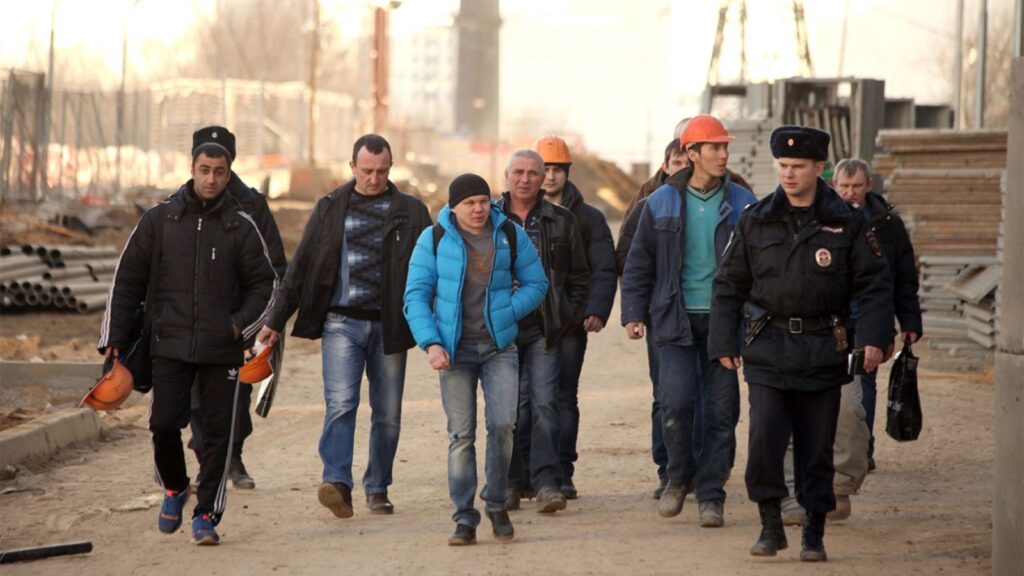
New immigration regulations in Russia could affect millions of Central Asian migrants. A proposed bill from the Russian Ministry of Education would require migrant children to pass a Russian language test. Those who fail would be required to enroll in a three-month language program, funded by their parents. If a child does not attend the required language classes, regional authorities will investigate the family’s living conditions and report the case to the Ministry of Internal Affairs. Parents who fail to ensure their child meets the language requirements could face administrative penalties. As of September 1, 2024, nearly four million Central Asian migrants were officially living in Russia. With tightening immigration policies in Russia, the challenges facing Central Asian migrant workers continue to grow. According to a recent survey by the FOCUS Alliance of Euro-Asian Sociologists, most Kyrgyz citizens believe that working conditions for migrants in Russia will worsen significantly in the near future.

More Than 70,000 Kyrgyz Citizens Violate Russian Migration Laws

The Ministry of Foreign Affairs of Kyrgyzstan has reported that 71,949 Kyrgyz citizens working in Russia are at risk due to potential violations of Russian migration laws. According to the ministry, the individuals at risk are those for whom the Russian Ministry of Internal Affairs’ database lacks information regarding the conclusion of labor or civil law contracts, fingerprint registration, medical examinations, or migration registration. “For citizens with valid documents confirming legal residence in the Russian Federation, it is necessary to visit the territorial migration departments of the Russian Ministry of Internal Affairs and provide these documents to be included in the database and removed from the risk zone,” the Kyrgyz Foreign Ministry explained. To assist its citizens, the Ministry of Labor, Social Security, and Migration of Kyrgyzstan will soon publish a list of migrants at risk on the portal migrant.kg. Citizens can use this portal to check their status and take steps to resolve any legal issues in advance. From February 5, 2025, a new Russian law, “On the Legal Status of Foreign Citizens in the Russian Federation,” will come into force. Under this law, foreign citizens without legal grounds for staying in Russia will be added to the register of controlled persons and face expulsion. Official data indicates that around 500,000 Kyrgyz migrants currently reside in Russia, though unofficial estimates suggest the figure exceeds one million.

Uzbekistan Shares Rehabilitation Model for Returnees at UN Event

On November 11, 2024, a high-level event titled “Effective Rehabilitation and Reintegration of Returnees from North-Eastern Syria – Uzbekistan’s Experience: From Global to Local” took place at the UN Headquarters in Geneva. The event highlighted Uzbekistan’s successful approach to rehabilitating and reintegrating individuals returning from conflict zones, particularly through the work of the Regional Expert Council, established in 2024 at the initiative of President Shavkat Mirziyoyev. Vladimir Voronkov, head of the UN Counter-Terrorism Office, commended Uzbekistan’s efforts. “UN member states urgently need to develop strategies for rehabilitation and reintegration based on the experience of Uzbekistan. The Tashkent model aims to ensure the rights and dignity of the individual, which is important in these processes,” Voronkov stated. Khalid Koser, Director of the Global Community Engagement and Resilience Fund, described Uzbekistan’s model as a roadmap for other nations. He emphasized that the approach has proven to be effective, humane, and respectful of human rights in returning citizens from conflict zones. A focal point of the conference was the Regional Expert Council on Rehabilitation and Reintegration, established under the UN Office of Counter-Terrorism. The Council, based in Tashkent, aims to bring together Central Asian experts to share their knowledge and develop programs to assist reintegrated individuals in rebuilding their lives. “I am convinced that the Council, established in Tashkent at the initiative of the President of Uzbekistan, will contribute to strengthening the exchange of best practices and lessons learned in this area,” said Natalia Gherman, Head of the UN Security Council Counter-Terrorism Committee Executive Directorate. The Times of Central Asia has previously reported that Kazakhstan, Kyrgyzstan, Tajikistan, and Uzbekistan are collectively improving support systems for women and children returning from conflict zones, such as Iraq and Syria.

Deported Tajik Opposition Activist Ikromov Sentenced to 23 Years in Prison

Tajik opposition activist Farrukh Ikromov, who had sought asylum in Europe, was deported from Poland to Tajikistan in April and subsequently sentenced to 23 years in prison in Dushanbe. Opposition sources have now informed Radio Ozodi of Ikromov's sentencing, though the Tajik authorities have not issued any official statement on the matter. According to Abdusattor Boboev, head of the Polish-based Citizens' Committee for the Rescue of Political Prisoners in Tajikistan, Ikromov was transferred from a Dushanbe pre-trial detention center to prison in October. Another activist, Saidiskhok Boboev, corroborated this information, stating that a recently released prisoner saw Ikromov and confirmed his 23-year sentence. Ikromov’s relatives, who reside abroad, lack detailed information about his sentencing. A close family member explained that they receive occasional updates about his status through a relative in Tajikistan. Ikromov’s deportation followed the denial of his asylum request in Poland. After this initial denial, He sought protection in Germany, but he was returned to Poland, where he was placed in a migrant detention center before being deported to Tajikistan. According to Abdusattor Boboev, shortly before his deportation, he reported being unexpectedly photographed, after which all contact with him ceased. Ikromov also participated in protests against Tajik President Emomali Rahmon's visit to Germany in September 2023. Opposition activists had expressed concern that if deported to Tajikistan, Ikromov would face mistreatment and a lengthy prison term. In recent years, several EU countries, including Germany, have complied with Tajikistan’s requests to extradite political activists, many of whom have subsequently received lengthy prison sentences. International human rights organizations have sharply criticized these actions. The Times of Central Asia previously reported on another Tajik activist, Dilmurod Ergashev, whose deportation from Germany was ordered by the Kleve administrative court on October 28, shortly after he was detained. The court ruled that Ergashev should be deported despite his pending application for political asylum before another court. Prior to his anticipated deportation, Ergashev attempted suicide. Ergashev, a member of the opposition Group of 24, has opposed the regime of Rahmon and joined the Reform and Development of Tajikistan movement in 2024. He has resided in Germany for 13 years.

Solidarity Center: Central Asian Migrant Workers Face Low Pay and Unsafe Workplaces

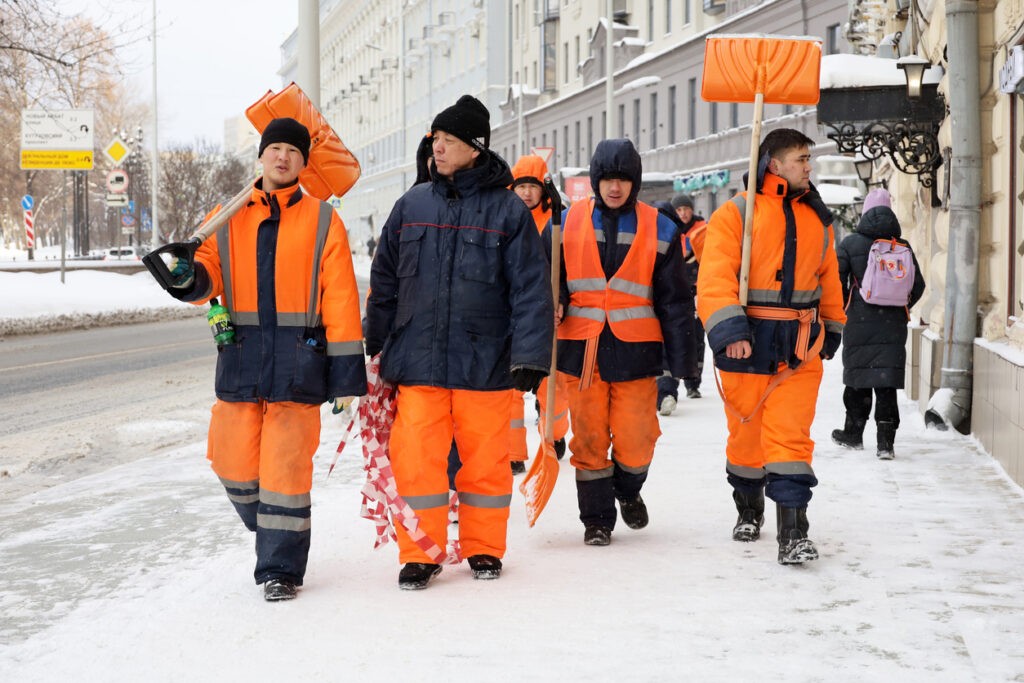
Central Asian migrant workers face new challenges as they look for well-paying jobs, with economic shifts and political instability adding to the uncertainty. More women and young people also choose to migrate, often facing unique risks. Panelists at a recent Solidarity Center webinar highlighted that protecting these workers’ rights is more effective when countries in the region work together on safe migration plans. A Solidarity Center study involving over 1,000 migrant workers from Kazakhstan, Kyrgyzstan, and Uzbekistan found that Kyrgyzstan and Uzbekistan are the primary countries of origin, while Kazakhstan is becoming a growing destination. Most participants (58%) left due to low wages in their home countries, and 31% cited a lack of jobs as their main reason for migrating. Russia, once a top destination for Central Asian workers, has seen a drop in migrant numbers since its economy took a hit following Russia's invasion of Ukraine. A migrant worker from Uzbekistan shared that overtime hours weren’t paid, and medical expenses had to come out of his pocket if he got sick. According to Lola Abdukadyrova, Solidarity Center's regional director in Kyrgyzstan, this story reflects the harsh conditions many migrant workers face—no overtime pay, no sick leave, and frequent discrimination or harassment. Abdukadyrova noted that for nearly 30% of Kyrgyz migrant households, money for food is often a struggle. In Uzbekistan, this rate rises to 45%, as shared by Nodira Karimova, director of the Republican Social Information Center Istiqbolli Avlod. Abdukadyrova added that many migrants earn only enough for basic food, and they face delayed payments, heavier workloads without extra pay, and unsafe working conditions. “Kazakhstan has endorsed the Global Compact for Safe, Orderly and Regular Migration (GCM) and participates in various regional migration dialogues,” said Aleksandr Mukha, director of the Mangistau Regional Branch of the Kazakhstan International Bureau for Human Rights and Rule of Law. In another significant win for migrant worker rights organizations, Kyrgyzstan issued the GCM in August to improve conditions for Kyrgyz citizens who travel abroad to earn their livelihoods. The Times of Central Asia has previously written about how that Russia's ongoing war in Ukraine has increased pressure on Central Asian migrants.

Germany Deports Tajik Political Activist Dilmurod Ergashev

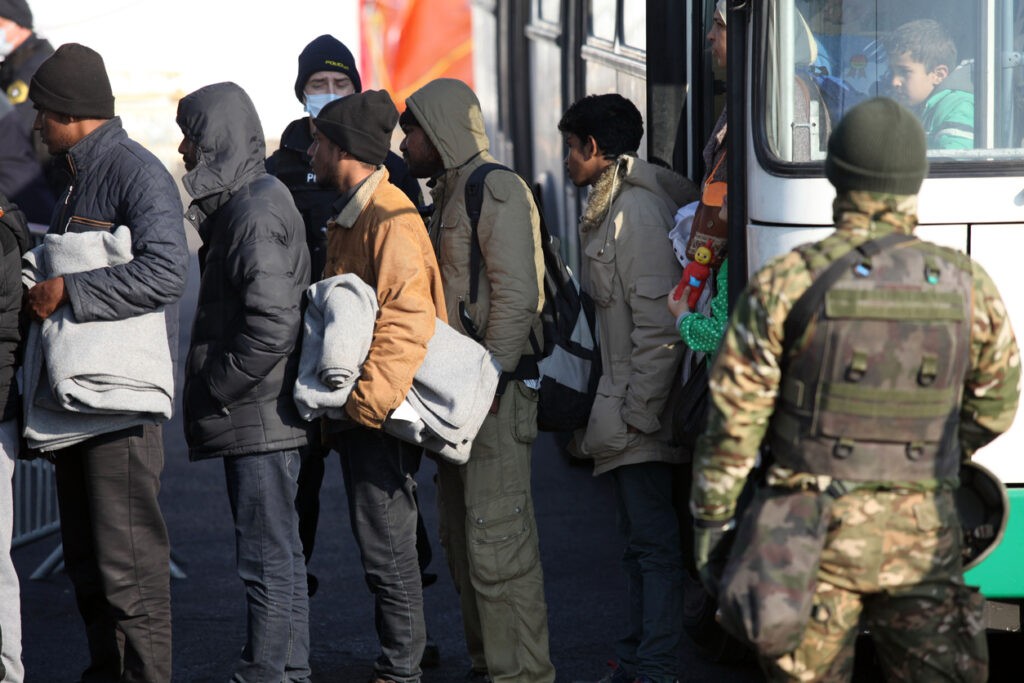
Germany has decided to deport Dilmurod Ergashev, a political activist and member of the Movement for Reforms and Development of Tajikistan, who had applied for asylum in Germany. This is despite requests from international human rights organizations such as Human Rights Watch and the Helsinki Committee not to deport Ergashev because of the risk of him being tortured in Tajikistan. Friends of the activist said Ergashev was told to report to the deportation center and prepare to leave. The activist, who has lived in Germany for the past 13 years, was detained in the town of Kleve on October 28 and taken to the administrative court, where his deportation was ordered. According to associates, the court should have considered that another administrative court was still considering Ergashev's application for political asylum. Sharofiddin Gadoev, leader of the Movement for Reforms and Development, confirmed that the deportation process has already begun. Ergashev is likely to be sent back to Tajikistan on November 6. “The decision to deport Ergashev strengthens the authoritarian system in Tajikistan and increases fear among political activists,” Gadoev said. He said there may be an agreement between Germany and Tajikistan to deport activists forcibly. Ergashev's lawyer has filed an appeal with the Supreme Court but is unavailable for comment. Dozens of Tajik citizens have moved to Europe in recent years, many of whom disagree with their country's policies. Germany has previously deported activists such as Abdullo Shamsiddin and Bilol Kurbonaliev, who were sentenced to long prison terms upon their return home. Also extradited from Austria to Tajikistan in 2020 was Hizbullo Shovalizoda, a member of the banned Islamic Renaissance Party of Tajikistan. He has been sentenced to 20 years in prison.