
• KGS/USD = 0.01144 0%
  • KZT/USD = 0.00215 0%
  • TJS/USD = 0.10599 -0.28%
  • UZS/USD = 0.00008 0%
  • TMT/USD = 0.28571 0%
  • KGS/USD = 0.01144 0%
  • KZT/USD = 0.00215 0%
  • TJS/USD = 0.10599 -0.28%
  • UZS/USD = 0.00008 0%
  • TMT/USD = 0.28571 0%
  • KGS/USD = 0.01144 0%
  • KZT/USD = 0.00215 0%
  • TJS/USD = 0.10599 -0.28%
  • UZS/USD = 0.00008 0%
  • TMT/USD = 0.28571 0%
  • KGS/USD = 0.01144 0%
  • KZT/USD = 0.00215 0%
  • TJS/USD = 0.10599 -0.28%
  • UZS/USD = 0.00008 0%
  • TMT/USD = 0.28571 0%
  • KGS/USD = 0.01144 0%
  • KZT/USD = 0.00215 0%
  • TJS/USD = 0.10599 -0.28%
  • UZS/USD = 0.00008 0%
  • TMT/USD = 0.28571 0%
  • KGS/USD = 0.01144 0%
  • KZT/USD = 0.00215 0%
  • TJS/USD = 0.10599 -0.28%
  • UZS/USD = 0.00008 0%
  • TMT/USD = 0.28571 0%
  • KGS/USD = 0.01144 0%
  • KZT/USD = 0.00215 0%
  • TJS/USD = 0.10599 -0.28%
  • UZS/USD = 0.00008 0%
  • TMT/USD = 0.28571 0%
  • KGS/USD = 0.01144 0%
  • KZT/USD = 0.00215 0%
  • TJS/USD = 0.10599 -0.28%
  • UZS/USD = 0.00008 0%
  • TMT/USD = 0.28571 0%

Viewing results 1 - 6 of 25

Former Kyrgyz Prime Minister Proposes Special Status for Citizens in Russia

At the St. Petersburg International Economic Forum (SPIEF-2025), Temir Sariyev, head of the Kyrgyz Chamber of Commerce and Industry and former prime minister, proposed granting Kyrgyz citizens a special status in Russia. The statement sparked mixed reactions in both Moscow and Bishkek. Speaking at the Kyrgyzstan-Russia business dialogue, Sariyev, who was involved in Kyrgyzstan’s accession negotiations to the Eurasian Economic Union (EAEU), highlighted Bishkek’s consistent political and economic support for Moscow. He drew on historical ties, citing Kyrgyz support during the Great Patriotic War. “If we recall the Great Patriotic War, it was the 28 Panfilov Guardsmen who defended Moscow. It was a turning point. When the special military operation began, the first to extend a helping hand, without fear, was the Kyrgyz Republic,” Sariyev said, referring to the Russian invasion of Ukraine. He proposed exploring the possibility of granting Kyrgyz migrants in Russia a special status, citing longstanding bilateral ties. However, the initiative met resistance in the Russian State Duma. Konstantin Zatulin, First Deputy Chairman of the Duma Committee on CIS Affairs, dismissed the proposal, noting that Kyrgyz citizens already enjoy considerable privileges under the EAEU framework, such as visa-free entry, the right to work without a permit, and exemption from patent requirements. “What additional special status could we be talking about? It is impractical. Kyrgyzstan is already in a more advantageous position than other Central Asian countries that are not members of the Union,” Zatulin said. Pushback also came from within Kyrgyzstan. Deputy Prime Minister Edil Baisalov criticized both Sariyev's proposal and the broader outcomes of Kyrgyzstan's EAEU membership. In a post on X, Baisalov wrote: “Of course, our people have a special status, but not because of their participation in the 1941-1945 war. Special status should come from real membership in the EAEU, which hastily accepted us without sufficient guarantees. In reality, there is neither equal access to the labor market nor full access to our goods.” He urged Kyrgyz authorities not to appeal to “pity” or “sympathy,” but instead to demand the full implementation of EAEU commitments. As of now, Sariyev’s proposal has not been officially introduced. Analysts suggest that amid Russia’s sensitive migration and geopolitical climate, the initiative is unlikely to gain traction in the near term.

Uzbekistan Raises Concerns Over Mistreatment of Citizens During Russian Raids

Uzbekistan has expressed serious concern over the reported mistreatment of its citizens during recent police raids in Russia. On June 10, Uzbekistan’s Ministry of Foreign Affairs held a scheduled meeting with Russian officials to discuss migration issues. A ministry spokesperson stated that the Uzbek side raised alarm over reports of disrespectful and aggressive behavior toward its nationals during identity checks. “In several instances, our citizens have faced unauthorized inspections and mistreatment,” the ministry said. “Such actions do not correspond to the friendly relations between our countries. We believe that concrete measures must be taken to prevent such incidents.” The ministry emphasized that safeguarding the rights and interests of Uzbek citizens abroad remains a priority. It urged Russian authorities to treat migrants with dignity and adhere to international human rights standards. The concerns follow a large-scale raid on June 8 in Moscow’s Strogino district, where Russian law enforcement reportedly targeted a dormitory housing migrants from other Eurasian countries. The building is located near a facility belonging to the Russian Defense Ministry, according to the Russian Telegram channel Baza. During the operation, members of OMON, Russia’s special police forces under the National Guard, were seen using excessive force. Videos, some filmed by the officers themselves, show migrants being forcibly removed from their rooms, insulted, beaten, and in some instances, shocked with electric devices. The nationalities of those affected have not been confirmed. In a separate incident in St. Petersburg, approximately 200 individuals were reportedly left to sleep outdoors overnight following a similar raid. In response to these events, the Uzbek embassy in Moscow submitted an official note to the Russian Ministry of Foreign Affairs, requesting an explanation and a legal assessment of the law enforcement actions. The embassy described the incidents as unacceptable and called on Russian authorities to uphold the dignity of Uzbek nationals. Uzbekistan’s Migration Agency also issued a statement affirming it was closely monitoring the situation. It confirmed that five or six individuals with documentation issues had been detained for further investigation. The Foreign Ministry said it would continue to track developments and take further action if necessary. Uzbek authorities have encouraged citizens affected by these events to contact their nearest consulate or the Migration Agency's office in Russia.

Uzbekistan Raises Concern over Treatment of its Migrants in Russia

Uzbekistan has urged Russia to pay greater attention to reports of mistreatment and rights violations involving Uzbek migrant workers living and working in Russia. The issue was formally raised on May 2 during a meeting in Tashkent between Uzbekistan’s Deputy Foreign Minister Bobur Usmonov and Russian Ambassador to Uzbekistan Oleg Malginov. According to Uzbekistan’s Ministry of Foreign Affairs, Usmonov expressed deep concern over the growing number of reports detailing abuse and harsh treatment of Uzbek migrants. He emphasized that such cases constitute violations of the rights and freedoms of Uzbek citizens, which should be safeguarded under the laws of their host country. The two officials also reviewed priority areas of bilateral cooperation, including upcoming events on both bilateral and multilateral agendas. They confirmed that collaboration in the consular and legal sectors remains strong. Regular consultations are held on consular issues, and a joint working group on labor migration continues to operate, focusing on employment and migration processes. “Protecting the rights and interests of citizens is at the center of our cooperation,” the Uzbek side said in an official statement. Topics discussed included pre-departure language and vocational training, simplifying the work permit application process, and ensuring that migrants comply with Russian legal requirements upon arrival. Meanwhile, on May 3, Uzbek President Shavkat Mirziyoyev and his Russian counterpart Vladimir Putin held a phone call to discuss deepening their strategic partnership. The leaders reviewed cooperation in trade, industry, and regional business, and praised the recent Innoprom. Central Asia exhibition in Tashkent. They also noted expanding ties in education, culture, sports, and tourism. Just days earlier, on April 29, a delegation from Uzbekistan, led by Deputy Prosecutor General Shohrukh Aminov, visited Moscow for the first session of a joint labor migration working group. Both parties agreed to enhance legal migration frameworks and to ensure fair and dignified treatment of migrant workers. The Uzbek government reiterated its expectation that Russian authorities will investigate the reported abuses and keep their Uzbek counterparts informed of the outcomes.

Half a World Away: Central Asian Workers on British Farms

Few countries have more patriotic supermarkets than Britain. Whether it’s a sortie through the sausage section, or browsing the fruit aisle, customers are almost guaranteed to be confronted with the red, white and blue of the Union Jack. In a country not famed for its food, it’s perhaps strange to see the national flag given such prominence. The practice is far less common in continental Europe. Nevertheless, over the past decade there has been a push, propelled by an odd alliance of environmentalists and nationalists, to source homegrown food. Retailers have cottoned onto this and seem glad to leave the customer with the warm, bucolic feeling that they have aided embattled farmers, reduced their carbon footprint, and even helped to correct the country’s balance of payments deficit by buying British. “Supermarkets get more than just the profit margin for the [British] fruit they sell,” says Dr Lydia Medland, a research fellow at Bristol University. “We call it farmwashing: they get publicity, they get kudos; they use this ripe, fresh, local image to sell more products.” There’s only one snag. The people who pick the fruit and vegetables which are then packaged up with British flags, are not exactly local. [caption id="attachment_28497" align="aligncenter" width="1600"] British flags adorn food packaging in the country's supermarkets.Images: Yvonne Mould (left); Elke Morgan (center and right)[/caption] Central Asia and Britain: An Unlikely Match Seasonal workers have been traveling to the island of Britain for over a hundred years. In the nineteenth century, farmers would travel across the Irish Sea to help bring in the harvest. However, in the late 1990s, the number of people arriving on seasonal visas began to rise significantly. This was followed in the 2000s by a spike in workers from Europe, taking advantage of visa-free access to Britain’s labor market under the auspices of the European Union. They served as a pool of flexible, cheap workers for a farming industry that was being increasingly squeezed by the buying power of the country’s major supermarket chains. When Britain voted to leave the EU in 2016, the farming industry panicked at the prospect of losing much of this cut-price labor force. They successfully lobbied the government to relaunch the Seasonal Worker Visa program on a trial basis. Originally designed in the 1940s for European students, the scheme was repackaged to empower private recruitment agencies to hire workers from across the world to work in the fields for six months a year. When the visa debuted in 2018, 2,500 people came. By 2021 – the year that freedom of movement between Britain and the EU officially ended – the government had already raised the quota to 30,000. At the other end of Europe, the collapse in the value of the Russian Ruble since the start of 2023, combined with a crackdown on foreign laborers, has seen a mass exodus of Central Asians from Russia. By October 2024, there were around 30% fewer migrants in the country than there were on the eve of the Covid-19...

Russia May Impose Stricter Rules on Central Asian Migrants

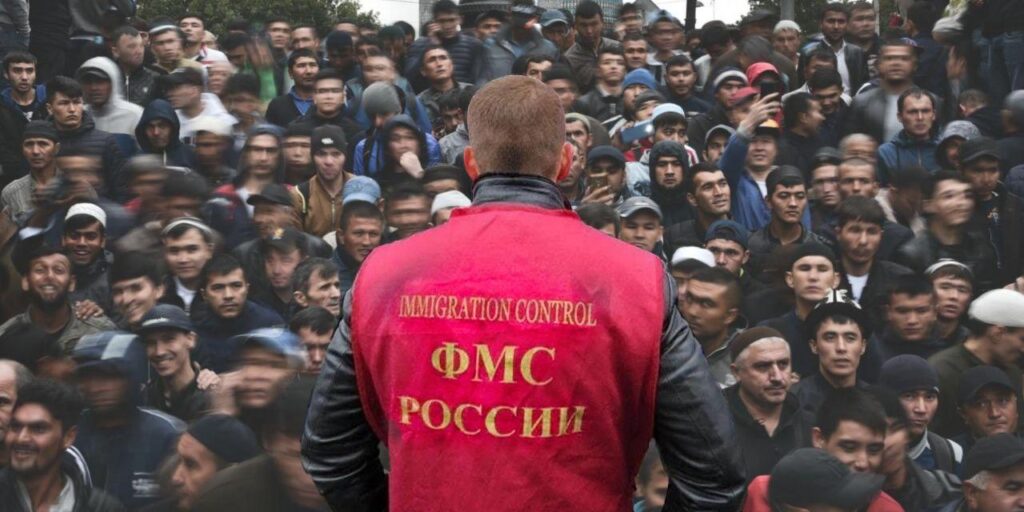
New immigration regulations in Russia could affect millions of Central Asian migrants. A proposed bill from the Russian Ministry of Education would require migrant children to pass a Russian language test. Those who fail would be required to enroll in a three-month language program, funded by their parents. If a child does not attend the required language classes, regional authorities will investigate the family’s living conditions and report the case to the Ministry of Internal Affairs. Parents who fail to ensure their child meets the language requirements could face administrative penalties. As of September 1, 2024, nearly four million Central Asian migrants were officially living in Russia. With tightening immigration policies in Russia, the challenges facing Central Asian migrant workers continue to grow. According to a recent survey by the FOCUS Alliance of Euro-Asian Sociologists, most Kyrgyz citizens believe that working conditions for migrants in Russia will worsen significantly in the near future.

More Than 70,000 Kyrgyz Citizens Violate Russian Migration Laws

The Ministry of Foreign Affairs of Kyrgyzstan has reported that 71,949 Kyrgyz citizens working in Russia are at risk due to potential violations of Russian migration laws. According to the ministry, the individuals at risk are those for whom the Russian Ministry of Internal Affairs’ database lacks information regarding the conclusion of labor or civil law contracts, fingerprint registration, medical examinations, or migration registration. “For citizens with valid documents confirming legal residence in the Russian Federation, it is necessary to visit the territorial migration departments of the Russian Ministry of Internal Affairs and provide these documents to be included in the database and removed from the risk zone,” the Kyrgyz Foreign Ministry explained. To assist its citizens, the Ministry of Labor, Social Security, and Migration of Kyrgyzstan will soon publish a list of migrants at risk on the portal migrant.kg. Citizens can use this portal to check their status and take steps to resolve any legal issues in advance. From February 5, 2025, a new Russian law, “On the Legal Status of Foreign Citizens in the Russian Federation,” will come into force. Under this law, foreign citizens without legal grounds for staying in Russia will be added to the register of controlled persons and face expulsion. Official data indicates that around 500,000 Kyrgyz migrants currently reside in Russia, though unofficial estimates suggest the figure exceeds one million.
