
• KGS/USD = 0.01144 0%
  • KZT/USD = 0.00202 0%
  • TJS/USD = 0.10672 -0.09%
  • UZS/USD = 0.00008 0%
  • TMT/USD = 0.28530 0%
  • KGS/USD = 0.01144 0%
  • KZT/USD = 0.00202 0%
  • TJS/USD = 0.10672 -0.09%
  • UZS/USD = 0.00008 0%
  • TMT/USD = 0.28530 0%
  • KGS/USD = 0.01144 0%
  • KZT/USD = 0.00202 0%
  • TJS/USD = 0.10672 -0.09%
  • UZS/USD = 0.00008 0%
  • TMT/USD = 0.28530 0%
  • KGS/USD = 0.01144 0%
  • KZT/USD = 0.00202 0%
  • TJS/USD = 0.10672 -0.09%
  • UZS/USD = 0.00008 0%
  • TMT/USD = 0.28530 0%
  • KGS/USD = 0.01144 0%
  • KZT/USD = 0.00202 0%
  • TJS/USD = 0.10672 -0.09%
  • UZS/USD = 0.00008 0%
  • TMT/USD = 0.28530 0%
  • KGS/USD = 0.01144 0%
  • KZT/USD = 0.00202 0%
  • TJS/USD = 0.10672 -0.09%
  • UZS/USD = 0.00008 0%
  • TMT/USD = 0.28530 0%
  • KGS/USD = 0.01144 0%
  • KZT/USD = 0.00202 0%
  • TJS/USD = 0.10672 -0.09%
  • UZS/USD = 0.00008 0%
  • TMT/USD = 0.28530 0%
  • KGS/USD = 0.01144 0%
  • KZT/USD = 0.00202 0%
  • TJS/USD = 0.10672 -0.09%
  • UZS/USD = 0.00008 0%
  • TMT/USD = 0.28530 0%
07 February 2026

Viewing results 1 - 6 of 4

Opinion: A Sea of Discord? Intensifying Military Drills Threaten Stability in the Caspian Region

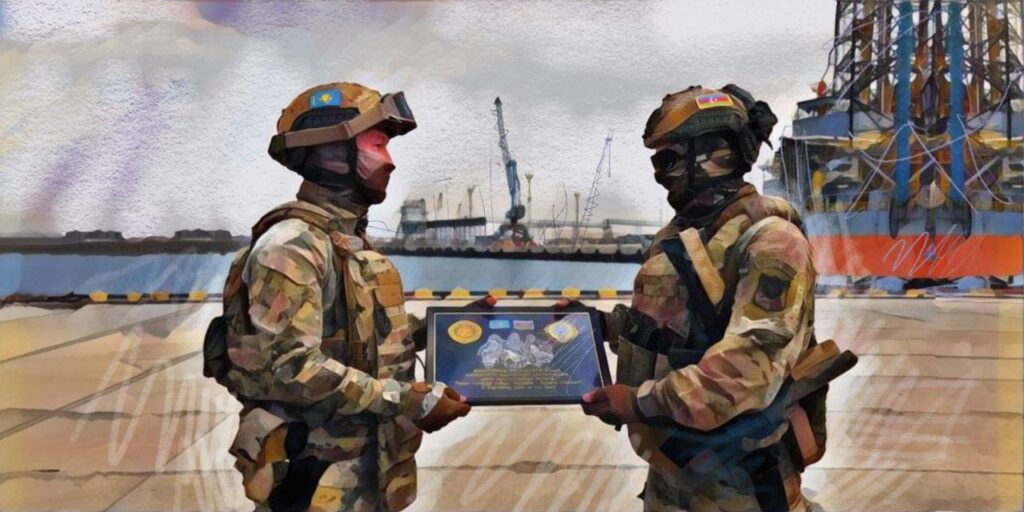
On Monday, Russia and Iran launched joint military exercises in the Caspian Sea under the banner “Together for a Safe and Secure Caspian Sea.” Officially, the drills aim to enhance maritime security and naval cooperation between the two countries and are being coordinated by Iran’s Northern Fleet. While such exercises might once have passed without much notice, their timing and frequency reflect a shifting dynamic: the Caspian region is rapidly emerging as a potential hotspot in global geopolitics. Just one month prior, the same waters hosted joint military exercises between Azerbaijan and Kazakhstan, held in Aktau, western Kazakhstan. These were followed by the “Tarlan-2025” air and tactical drills in Azerbaijan from July 8-10, which focused on enhancing UAV operations and military coordination. Baku’s strategic alliance with Ankara is a key factor here. Azerbaijan, a close Turkish partner, is now engaged in a more strained relationship with Russia. Moscow’s muted reaction to this cooling suggests an awareness that Ankara is increasingly shaping a Turkic military-political bloc, an emerging force in a region of strategic importance to both Russia and China. Earlier this month, Turkey launched its annual Anadolu-2025 special forces exercises. Participants included troops from 33 nations, Kazakhstan, Azerbaijan, Pakistan, Uzbekistan, and others but notably excluded Russia. For the first time, in 2024, military exercises were held in the Caspian without Russian involvement. The Birleistik (Unity) 2024 drills were conducted at Kazakhstan’s Oymasha training ground and Cape Tokmak along the Caspian coast. Troops from Azerbaijan, Kazakhstan, Kyrgyzstan, Tajikistan, and Uzbekistan rehearsed scenarios including conflict zone identification, night maritime operations, and amphibious landings. Previously, regional military cooperation had been limited to bilateral engagements, such as the 2023 UZAZ exercises (Azerbaijan-Uzbekistan), Kanzhar-2023 (Kazakhstan-Uzbekistan), and Hazri-2023 (Azerbaijan-Kazakhstan). The spike in joint drills during 2024-2025 underscores growing rivalries between regional and global powers. These operations are not mere formalities but reveal emerging security alignments and geopolitical signals. Three distinct blocs appear to be coalescing in the Caspian, with implications for Central Asia as well. The first bloc includes Russia, Iran, and China. These nations have held annual “Maritime Security Belt” exercises since 2019, with the most recent in March 2025 off the Iranian coast. The second bloc comprises Turkey, Azerbaijan, and members of the Organization of Turkic States (OTS). Defense ties among these countries are becoming a core element of OTS cooperation. At the 10th OTS Summit in Astana in 2023, Azerbaijani President Ilham Aliyev emphasized defense as the main guarantor of member state security, citing ongoing regional conflicts and violations of international law. The third bloc, more pragmatic and focused, is the Kazakhstan-Azerbaijan partnership. These countries are cooperating on the basis of the 2018 Caspian Convention to secure maritime communications. Azerbaijan contributes military expertise, particularly in UAV and drone warfare developed during the Karabakh conflicts. Kazakhstan brings diplomatic credibility and promotes regional governance and connectivity, offering a stabilizing complement to Azerbaijan’s military strengths. In sum, the Caspian Sea, once colloquially referred to as “Russia’s lake”, is steadily losing that identity. It is transforming into...
Kyrgyzstan Hosts CSTO Exercises

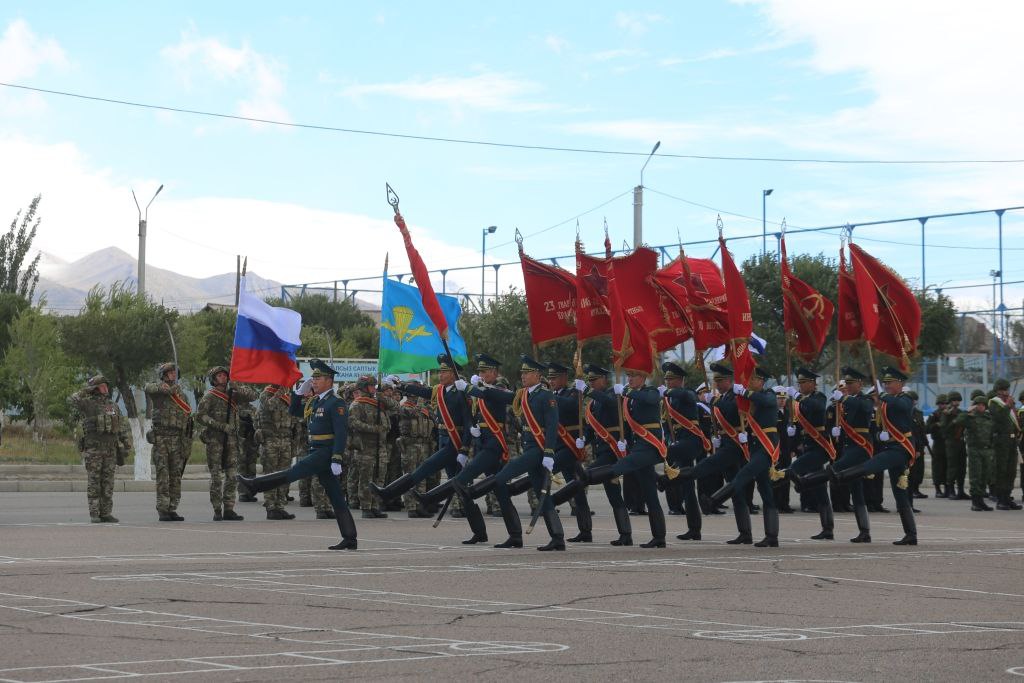
According to a statement from the Collective Security Treaty Organization (CSTO), troops from five of the organization's six member states -- Kyrgyzstan, Russia, Kazakhstan, Belarus, and Tajikistan -- have convened this week at the Edelweiss military training ground in Kyrgyzstan's Issyk-Kul region for training. The joint exercises involve over five thousand people and 900 units of military equipment, with only Armenia not represented. “The tasks of the exercise include improving mechanisms for making and implementing decisions on the use of forces and means, as well as increasing coherence between the armies of the allied countries and the interoperability of military formations in preparing and conducting joint operations,” said Andrei Serdyukov, Chief of the CSTO Joint Staff. The exercises combine various training components. The maneuvers include special exercises with intelligence forces, and logistics exercises. The Interaction-2024 command-staff exercise is aimed at preparing for a joint operation to resolve a potential armed conflict. [caption id="attachment_22933" align="aligncenter" width="300"] @TCA. A.Chipegin[/caption] The CSTO press service said that one of the exercise's priorities this year is to improve the deployment of the collective forces, including managing the transit of military contingents through allied countries. Observers from nine countries are present at the Edelweiss ground: Algeria, China, Egypt, India, Iran, Mongolia, Pakistan, Saudi Arabia, and Uzbekistan. Also observing the exercise are representatives of the UN Secretariat, the SCO Secretariat, the CIS Executive Committee, and the CIS Anti-Terrorism Center. “In our dynamically changing world, security is becoming paramount, and this requires new approaches, effective coordination, and clear solutions... Our countries have become direct participants in the beginning reshuffle of forces in the world,” Lieutenant General Baktybek Bekbolotov, Kyrgyzstan's Minister of Defense, commented at the opening of the exercise. According to Bekbolotov, the main threats to the countries of Central Asia are terrorism, separatism, and extremism, as well as the arrival of radical groups from the Middle East to the region's borders. “With a global threat, the efforts of one country are not enough. There are regional organizations for this purpose; in our case, the main one is the CSTO,” Bekbolotov stressed.

CSTO to Hold Series of Military Exercises in Central Asia

In the coming days, the Collective Security Treaty Organization (CSTO) will hold a series of exercises to protect stability in the Central Asia region. The director of the First Department of the CIS countries, Mikael Agasandyan, told RIA Novosti: “Russia is consistently making efforts to develop the CSTO’s potential as an effective structure responsible for maintaining stability in member states and the vast Eurasian space. In the coming weeks, a series of exercises are planned with various components of the Organization’s Collective Forces on the territory of Kazakhstan, Kyrgyzstan, and Tajikistan, aimed at practicing joint actions in the Central Asian region to protect the stability and collective security, in particular, taking into account the situation in Afghanistan.” He also noted the interest in the CSTO's work on the part of Eurasian states that share the opinion on the importance of creating a single, indivisible, and reliable security space on the continent. The Times of Central Asia has previously written about other CSTO military exercises held in Kazakhstan.

Central Asian Countries and Azerbaijan Begin Military Exercises in Kazakhstan

On July 8, Kazakhstan’s Ministry of Defense announced the start of joint military exercises - 'Birlestik-2024' (Association-2024) - by Azerbaijan, Kazakhstan, Kyrgyzstan, Tajikistan, and Uzbekistan in the country’s Mangystau region. Until July 17, the states’ military contingents will be modelling and practicing a joint operation to localize an armed conflict in manoeuvres at both the Oimasha training ground and a Caspian Sea site two kilometers from Cape Tokmak. Some four thousand military personnel and up to 700 pieces of military equipment will be involved in the exercise. Tactical episodes will be played out with the participation of ground and air reconnaissance groups, naval special forces, army and front-line aviation crews, warships and boats, artillery crews, assault and tank units. In recent years, there has been talk about increasing military cooperation between Turkic-speaking countries. In November 2023, Azerbaijani President Ilham Aliyev called on leaders of Turkic states to strengthen defense cooperation and at a summit of the Organization of Turkic States (OTS) in Astana, Kazakhstan, stated: "Wars and bloody conflicts break out. In this case, the main guarantor of security, first of all, becomes the defense potential. I believe that cooperation between the member states in areas such as security, defense, and the defense industry should be further increased.” Member countries of the OTS, established in 2009, include Turkey, Azerbaijan, Kazakhstan, Kyrgyzstan, and Uzbekistan, while Hungary, Turkmenistan, and the Turkish Republic of Northern Cyprus have observer status.
