• KGS/USD = 0.01143 0%
  • KZT/USD = 0.00202 0%
  • TJS/USD = 0.10433 0%
  • UZS/USD = 0.00008 0%
  • TMT/USD = 0.28575 0%
  • KGS/USD = 0.01143 0%
  • KZT/USD = 0.00202 0%
  • TJS/USD = 0.10433 0%
  • UZS/USD = 0.00008 0%
  • TMT/USD = 0.28575 0%
  • KGS/USD = 0.01143 0%
  • KZT/USD = 0.00202 0%
  • TJS/USD = 0.10433 0%
  • UZS/USD = 0.00008 0%
  • TMT/USD = 0.28575 0%
  • KGS/USD = 0.01143 0%
  • KZT/USD = 0.00202 0%
  • TJS/USD = 0.10433 0%
  • UZS/USD = 0.00008 0%
  • TMT/USD = 0.28575 0%
  • KGS/USD = 0.01143 0%
  • KZT/USD = 0.00202 0%
  • TJS/USD = 0.10433 0%
  • UZS/USD = 0.00008 0%
  • TMT/USD = 0.28575 0%
  • KGS/USD = 0.01143 0%
  • KZT/USD = 0.00202 0%
  • TJS/USD = 0.10433 0%
  • UZS/USD = 0.00008 0%
  • TMT/USD = 0.28575 0%
  • KGS/USD = 0.01143 0%
  • KZT/USD = 0.00202 0%
  • TJS/USD = 0.10433 0%
  • UZS/USD = 0.00008 0%
  • TMT/USD = 0.28575 0%
  • KGS/USD = 0.01143 0%
  • KZT/USD = 0.00202 0%
  • TJS/USD = 0.10433 0%
  • UZS/USD = 0.00008 0%
  • TMT/USD = 0.28575 0%

Viewing results 1 - 6 of 6

Central Asia Rethinks Trade Routes Amid Middle East Crisis

The escalating conflict between Iran and Israel is threatening to disrupt Central Asia’s southern trade and transport corridors, prompting governments in the region to reassess their export strategies. According to the Russian outlet Nezavisimaya Gazeta, Kazakhstan and Uzbekistan are exploring alternative routes to mitigate risks associated with instability in the Persian Gulf. A major concern is the potential closure of the Strait of Hormuz, a critical chokepoint for global trade. This poses a significant challenge for Kazakhstan, which relies on Iran as its sole southern railway outlet. Kazakhstan Seeks Alternative Kazakhstan’s Minister of National Economy, Serik Zhumangarin, emphasized the importance of maintaining uninterrupted cargo movement. “If rail service through Iran is disrupted, and this is our only southern route, the state is prepared to redirect cargo through alternative paths,” he said. Though exports via Iran remain relatively limited, about $350 million in 2024 and $120 million from January to May 2025, Kazakhstan had planned to expand its use of the Iranian corridor. In early June, Astana and Tehran agreed to boost wheat and barley shipments to three million tons annually. Alternatives under consideration include multimodal routes incorporating rail and ferry links across the Caspian Sea via Turkmenistan and Azerbaijan, as well as the Trans-Caspian or “Middle Corridor” connecting China to Georgia via the Caspian. Air freight is also being considered for select goods. While these alternatives involve added logistical challenges, the government has pledged support to businesses should the conflict persist. Zhumangarin reassured that rerouting exports is unlikely to significantly affect prices, noting that most of Kazakhstan’s exports are globally traded commodities whose prices are shaped by international markets. As previously reported by The Times of Central Asia, Kazakh officials had already warned of risks to southern routes. Nonetheless, Zhumangarin emphasized that contingency plans are in place and that “it’s too early to say how the situation will evolve.” Uzbekistan Focuses on Diversification Uzbek President Shavkat Mirziyoyev has likewise responded swiftly, ordering an immediate assessment of the crisis's impact on trade and transportation, and calling for urgent diversification of export routes. According to the presidential press service, transport costs could rise by as much as 30%. “The need to redirect cargo flows to safer ports and negotiate alternative trade corridors with partner countries was emphasized,” the statement said. Authorities have been instructed to support export-oriented businesses and identify new markets to help stabilize domestic prices. Until recently, Uzbekistan had been expanding trade ties with Iran, aiming to increase bilateral trade to $2 billion annually. However, these plans are now under review due to the regional instability. Experts: Southern Routes Not Yet Critical Despite the growing concerns, experts say Uzbekistan is not heavily dependent on southern corridors. Grigory Mikhailov, editor-in-chief of the logistics portal LogiStan.info, noted that most of Uzbekistan’s trade continues through Russian ports (St. Petersburg, Vladivostok, Novorossiysk) and China. “These routes are well-established, reliable, and offer predictable delivery times. Sanctions have had little to no impact on cargo passing through Russia,” Mikhailov said. He added that the Iranian route...

Kazakhstan and Russia Strengthen Cooperation on North-South Transport Corridor

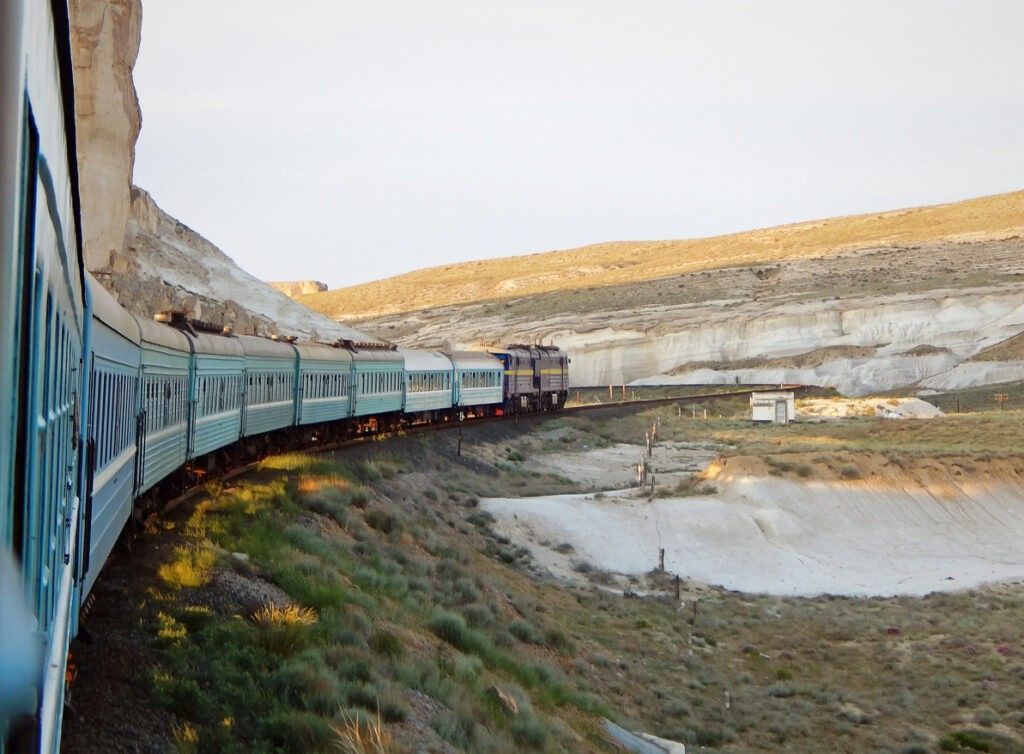
Kazakhstan Temir Zholy (KTZ), the country’s national railway company, and Russian Railways have signed a landmark agreement aimed at modernizing railway infrastructure at nine border stations, increasing capacity, and developing a unified digital system for transportation and cross-border operations. The agreement was signed on November 27 during Russian President Vladimir Putin's state visit to Kazakhstan. Enhancing Key Trade Corridors This cooperation seeks to boost the efficiency of trans-Eurasian transport corridors, with a particular focus on increasing cargo volumes along the East-West and North-South routes. The North-South corridor, connecting Kazakhstan, Russia, Turkmenistan, and Iran, has an annual capacity of 10 million tons of cargo. So far, 1.8 million tons have been transported along this route in 2024, and plans are underway to double its capacity to 20 million tons annually. On November 26, Kazakhstan’s Minister of Transport, Marat Karabayev, emphasized the strategic importance of the North-South corridor. In July, Kazakhstan agreed on a roadmap with Iran, Turkmenistan, and Russia for the synchronized development of this corridor. To attract cargo flow, Kazakhstan has introduced special transit tariff discounts of 50%. New Agreements and Digital Connectivity During Putin’s visit, another significant agreement was signed between KTZ, Xi'an Free Trade Port Construction and Operation Co., Ltd. (China), and JSC Slavtrans-Service (Russia). The deal focuses on constructing the CRK Terminal, a transport and logistics hub at the Selyatino railway station in the Moscow region. Additionally, the three parties agreed to jointly use the Unified Digital Platform along the Xi'an (China) - Dostyk/Altynkol (Kazakhstan) - Selyatino (Russia) route. The CRK Terminal and Digital Platform are expected to enhance cargo transportation efficiency and e-commerce between China, Kazakhstan, and Russia. Boosting Regional Logistics Kazakhstan Temir Zholy also signed a memorandum with the Russian transport and logistics group FinInvest LLC to construct a multimodal transport and logistics center in Astana. This center aims to increase the transit of Russian goods through Kazakhstan, further solidifying the country’s position as a regional logistics hub.

The Future of Transit in Kazakhstan

Increasing the volume of transit cargo through Kazakhstan is a strategic priority for the nation as it aims to become a transportation and logistics hub in Central Asia and the Caspian region, with its railways at the forefront of this effort. TCA spoke with Asem Mukhamedieva, Managing Director for New Projects at KTZ Express JSC, about the company’s current capabilities, prospects, and new projects in this direction.   Kazakhstan’s Role in Transit Cargo TCA: Kazakhstan, has become a vital land transportation corridor between Asia and Europe. How does Kazakhstan Temir Zholy (KTZ) contribute to further increasing transit cargo, and what trends have you observed? Mukhamedieva-  The volume of transit handled by KTZ Express in the first eight months of this year reached approximately 350,000 twenty-foot equivalent units (TEU). The China-Europe-China route saw a 36% increase, while the China to Central Asia route grew by 17%. Notably, the Trans-Caspian International Transport Route (TITR) dispatched 220 container trains, a twenty-fold increase from last year. TCA: What new routes have been launched, and what is KTZ doing to increase them? - KTZ is continuously expanding its transportation network and logistics services. One significant development is the Trans-Afghan route, which was launched this May. Under a pilot project, containers with aluminosilicate hollow microspheres were shipped from Pavlodar to Jebel Ali Port via Uzbekistan, Afghanistan, Pakistan, and the UAE. Offering competitive terms and tariffs has encouraged more cargo traffic along this route. In July, we cut delivery times in half — down to just five days — on the Xi’an-Altynkol-Tashkent route, compared to the previous 10-12 days. This success is largely due to the new terminal in Xi’an, built by KTZ and its Chinese partners. The terminal consolidates cargo from various Chinese provinces, streamlining logistics processes and significantly improving efficiency. We also launched several new logistics services to boost cargo traffic and strengthen international links. For example, in June, we introduced a regular South Korea-China-Kazakhstan-Central Asia route. We also reopened a previously unprofitable route from China to Iran and back, reducing costs by collaborating with Chinese partners.   The Growing Importance of the Trans-Caspian Route TCA: You mentioned the growth of the TITR. Could you elaborate on the regions of China involved, the types of cargo, and what steps are being taken to attract more shipments? -  The Trans-Caspian International Transport Route (TITR) has become a critical link in Eurasian logistics. This year, the route achieved remarkable growth. In September, we welcomed the 200th train dispatched via TITR at the Port of Aktau. Transit volumes for the first eight months of this year surpassed annual totals from previous years. Xi'an province leads in shipments, accounting for 57% of the total volume on this route. Other key provinces include Yiwu, Chongqing, Sanping, and Henan. Major markets for these shipments are Azerbaijan (62%), Georgia (23%), Turkey (7%), and EU countries (9%). Over 200 different commodity items were transported, with automobiles, components, textiles, and electronics making up 56% of the total. To maintain this momentum, we are working...

Kazakhstan and China to Build Container Hub in the Port of Aktau

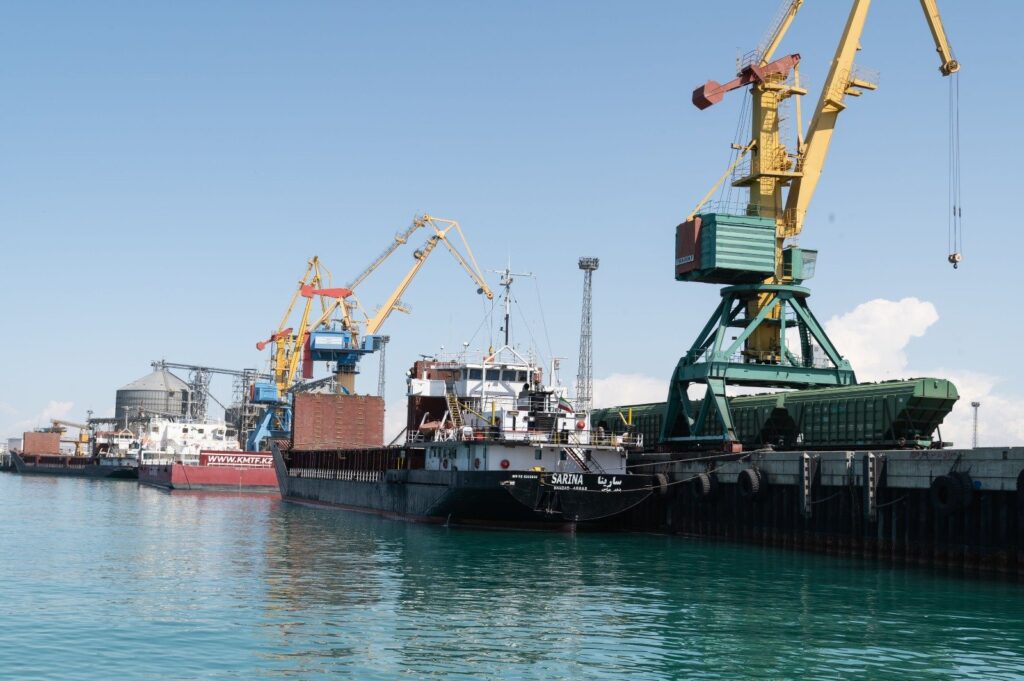
Kazakhstan’s national railways company, Kazakhstan Temir Zholy (KTZ), has announced that KTZ Express (a subsidiary of KTZ), China’s Lianyungang Port, and Kazakhstan’s Aktau Sea Trade Port have signed the founding documents of a joint venture to construct a container hub in the port of Aktau. The documents were signed on September 20 in the Chinese city of Xi'an. The project has received support from the governments of Kazakhstan and China as part of China’s Belt and Road initiative. The project will strengthen Kazakhstan's position in the international logistics system. The planned container hub's location on the Trans-Caspian International Transport Route (TITR), or the Middle Corridor, will further increase the route's attractiveness and the volume of transit traffic. The Lianyungang Port is a longstanding partner of KTZ Express. Over the past ten years, they have implemented two joint projects: the Kazakh-Chinese terminal in the Port of Lianyungang and Khorgos Gateway, the largest dry port in Central Asia located on the Kazakh-Chinese border. Also on September 20, a container train departed along the TITR from Xi'an on the route Altynkol—Aktau (Kazakhstan)—Baku (Azerbaijan)—Poti (Georgia)—Burgas (Bulgaria)—Belgrade (Serbia)—Hamburg/Duisburg/Budapest. The heads of the railway administrations of China, Kazakhstan, Azerbaijan, and Georgia attended the departure ceremony. The train, consisting of 55 40-foot containers, was assembled at the Kazakh-Chinese Xi'an terminal. It will travel about 7,000 km to Baku in 8-11 days and then reach its final destination in Budapest in 25 days. The reduced delivery time was made possible by the cooperation of the railway and port administrations of the TITR member countries. The Kazakh-Chinese terminal in the dry port of Xi'an was opened in early 2024. Today, 30% of all container trains from China to Europe via Kazakhstan are formed in the dry port. According to KTZ, thanks to the terminal in Xi'an, cargo transit along the TITR increased 20-fold in the first eight months of this year compared to last year. The delivery time to Azerbaijan has been reduced to 11 days and to Georgia to 14 days.

Pakistan Joins Transport Corridor Between Indian Ocean and Eastern Europe

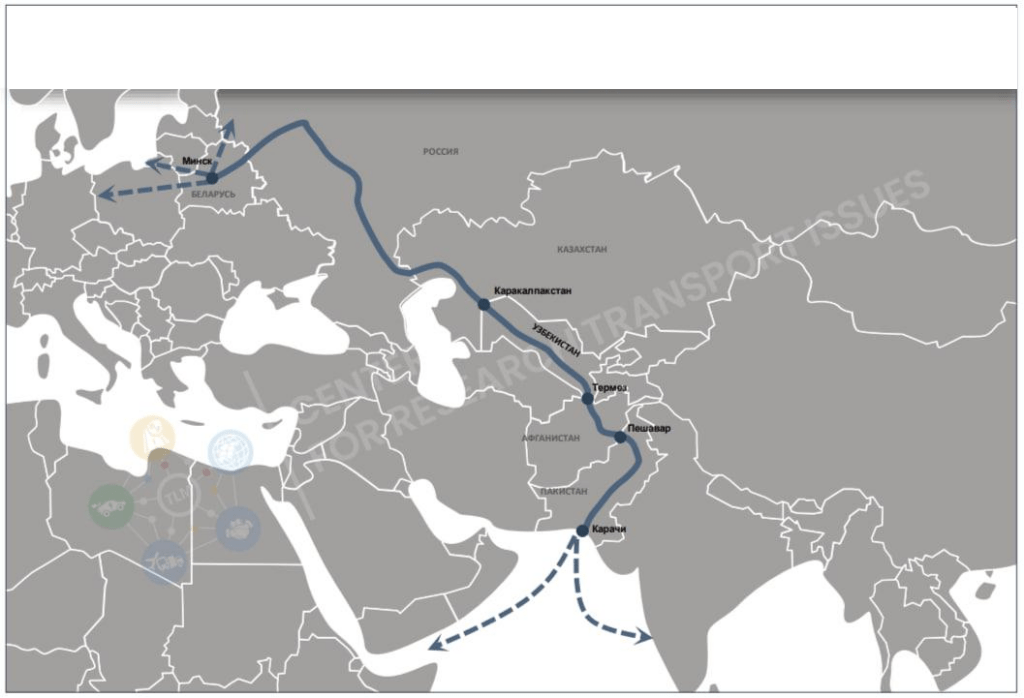
Uzbekistan’s Ministry of Transport has announced that Pakistan has officially joined the memorandum of understanding on establishing and developing the international transport corridor "Belarus–Russia–Kazakhstan–Uzbekistan–Afghanistan–Pakistan–Indian Ocean." The Pakistani Ministry of Communications signed this memorandum on September 18. The process of creating this multimodal transport corridor began in August 2022, at a meeting between the Uzbek government and the Eurasian Economic Commission – the governing body of the Russian-led Eurasian Economic Union that also includes Armenia, Belarus, Kazakhstan, and Kyrgyzstan. In November 2023, the transport ministries of Russia, Kazakhstan, and Uzbekistan signed a memorandum of understanding, launching the project's active phase of work. The group's first meeting on developing the proposed multimodal transport corridor was held in April 2024 in Termez, Uzbekistan. During that meeting, Belarus joined the memorandum, while Afghanistan and Pakistan announced the beginning of internal procedures for joining the project. At that meeting, a roadmap was signed, including specific plans for the development of cargo transportation, analysis of cargo flows, introduction of electronic digital documents, and optimization of customs procedures. The participating countries expect that the new corridor will become an important link in Eurasia's transport system, providing convenient and efficient routes for the transit of goods and strengthening economic cooperation.

Middle Corridor Container Transit Through Kazakhstan Showing Dramatic Growth

Kazakhstan’s national railways company Kazakhstan Temir Zholy (KTZ) has announced that the volume of container transportation through the country is growing rapidly. In the first seven months of this year, rail container transportation from China to Europe through Kazakhstan along the Trans-Caspian International Transport Route (TITR) grew 14-fold compared to the same period last year, The TITR is a multimodal transport corridor connecting China and Europe by bypassing Russia, also known as the Middle Corridor. To develop it, Kazakhstan Temir Zholy, together with other stakeholders, is working to increase transportation volumes, improve services, and speed up cargo delivery. To date, the transportation time from Altynkol railway station on the Kazakh-Chinese border to Absheron (Azerbaijan) has been reduced to 9 days, to Poti/Batumi (Georgia) to 12 days, and to Constanta (Romania) via Poti/Batumi to 20–22 days. In 2023, KTZ and the railway administrations of Azerbaijan and Georgia established the Middle Corridor Multimodal Ltd. Joint Venture to improve multimodal services along the route. The joint venture provides a 'one-stop shop' service and guarantees delivery times and costs. KTZ is developing Kazakh port infrastructure in the Caspian Sea with the involvement of large international logistics companies.