• KGS/USD = 0.01144 0%
  • KZT/USD = 0.00206 0%
  • TJS/USD = 0.10833 -0.09%
  • UZS/USD = 0.00008 0%
  • TMT/USD = 0.28490 0%
  • KGS/USD = 0.01144 0%
  • KZT/USD = 0.00206 0%
  • TJS/USD = 0.10833 -0.09%
  • UZS/USD = 0.00008 0%
  • TMT/USD = 0.28490 0%
  • KGS/USD = 0.01144 0%
  • KZT/USD = 0.00206 0%
  • TJS/USD = 0.10833 -0.09%
  • UZS/USD = 0.00008 0%
  • TMT/USD = 0.28490 0%
  • KGS/USD = 0.01144 0%
  • KZT/USD = 0.00206 0%
  • TJS/USD = 0.10833 -0.09%
  • UZS/USD = 0.00008 0%
  • TMT/USD = 0.28490 0%
  • KGS/USD = 0.01144 0%
  • KZT/USD = 0.00206 0%
  • TJS/USD = 0.10833 -0.09%
  • UZS/USD = 0.00008 0%
  • TMT/USD = 0.28490 0%
  • KGS/USD = 0.01144 0%
  • KZT/USD = 0.00206 0%
  • TJS/USD = 0.10833 -0.09%
  • UZS/USD = 0.00008 0%
  • TMT/USD = 0.28490 0%
  • KGS/USD = 0.01144 0%
  • KZT/USD = 0.00206 0%
  • TJS/USD = 0.10833 -0.09%
  • UZS/USD = 0.00008 0%
  • TMT/USD = 0.28490 0%
  • KGS/USD = 0.01144 0%
  • KZT/USD = 0.00206 0%
  • TJS/USD = 0.10833 -0.09%
  • UZS/USD = 0.00008 0%
  • TMT/USD = 0.28490 0%

Viewing results 1 - 6 of 12

Welcome to Turkmenistan? President Says He Wants International Tourists to Visit

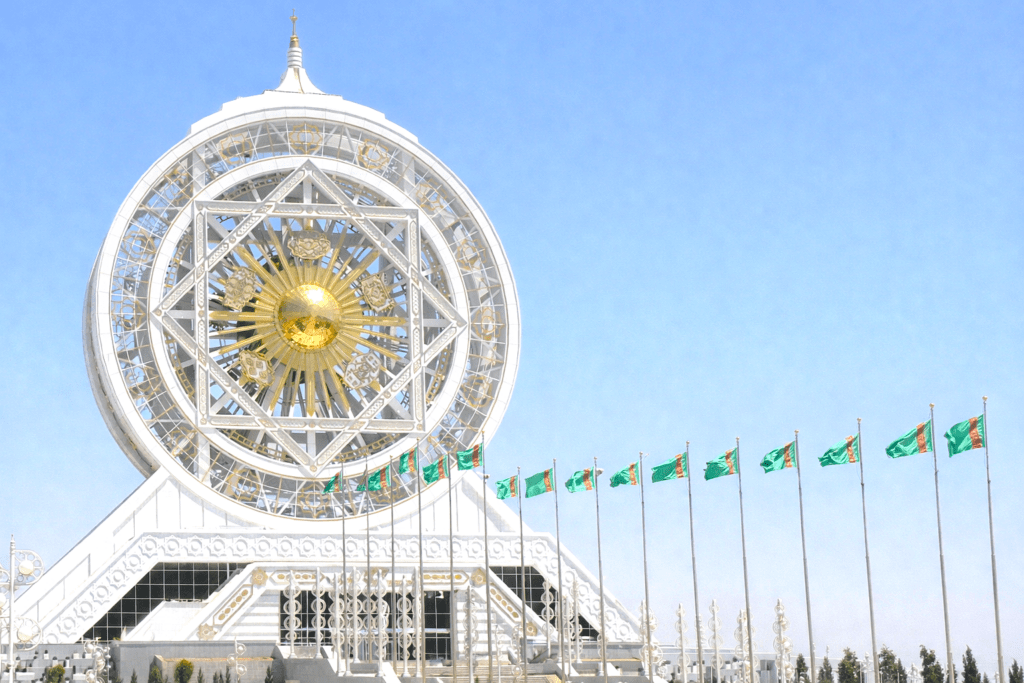
Turkmenistan, one of the world’s most closed countries, is hosting an international tourism conference this week. The “TurkmenTravel – 2026” event in the capital of Ashgabat aims to attract foreign visitors to a country that is generally difficult to visit because of tight controls, including required letters of invitation and the need to have licensed guides. While some travel agencies aim to address those challenges for tourists, Turkmenistan remains a little-understood country and lags far behind regional countries such as neighboring Uzbekistan in terms of infrastructure and accessibility for travelers. But the three-day tourism conference, which ends on Thursday, could be a tentative sign that Turkmenistan wants to open up, selectively, and within the limits of a tightly controlled system that restricts the internet and other sources of information for its citizens. [caption id="attachment_13432" align="aligncenter" width="1920"] Ashgabat Arch of Neutrality; image: Stephen M. Bland[/caption] Across Central Asia, governments increasingly treat tourism as both an economic sector and a tool of international image-building. Turkmenistan now appears to want some of that attention, but on its own carefully managed terms. The event was a priority for Turkmenistan’s government. President Serdar Berdimuhamedov delivered a message of encouragement to the participants and said tourism was growing in the Central Asian country whose stated policy is one of neutrality in international affairs. Statistics on tourism growth and other metrics are hard to come by in Turkmenistan, however. That makes the message from Ashgabat especially striking: a state known less for openness than for control is publicly promoting tourism growth while offering little transparent data to show how far that growth has actually come. [caption id="attachment_47157" align="aligncenter" width="2560"] Kunya-Urgench- The ancient Nejameddin Kubra and Sultan Ali Mausoleums; image: Stephen M. Bland[/caption] “Permanently neutral, Turkmenistan places great importance on expanding international cooperation in this area,” the president said. He noted collaboration with the U.N. World Tourism Organization and other international institutions. For years, Turkmenistan’s image abroad has rested less on mass tourism than on mystery: the white-marble capital, vast desert landscapes, major Silk Road sites, and a political system that has often kept outsiders at a distance. In Ashgabat, that mystery is part of the experience from the start. White marble towers rise in regimented lines, fountains splash into largely empty spaces, and broad avenues can feel strangely still. The city is visually extravagant but tightly controlled, with an atmosphere that can leave visitors unsure whether they are in a showcase capital, a stage set, or both. Berdimuhamedov listed some of Turkmenistan’s attractions: Ancient Merv, Nisa, and Kunya-Urgench, the Bereketli Garagum and Gaplaňgyr nature reserves, desert ecosystems, and the elaborate architecture in Ashgabat. [caption id="attachment_27727" align="aligncenter" width="2560"] Ashgabat - A row of marble towers in the Berzengi district; image: Stephen M. Bland[/caption] Cordula Wohlmuther, regional director for Europe of U.N. Tourism, was one of the listed speakers at the tourism conference. The agenda for the event included a session titled “How to promote Central Asian culture on the world stage.” One company, Asia Odyssey Travel, portrays Turkmenistan...

Behind Turkmenistan’s Neutrality, Quiet U.S. Military Ties Endure

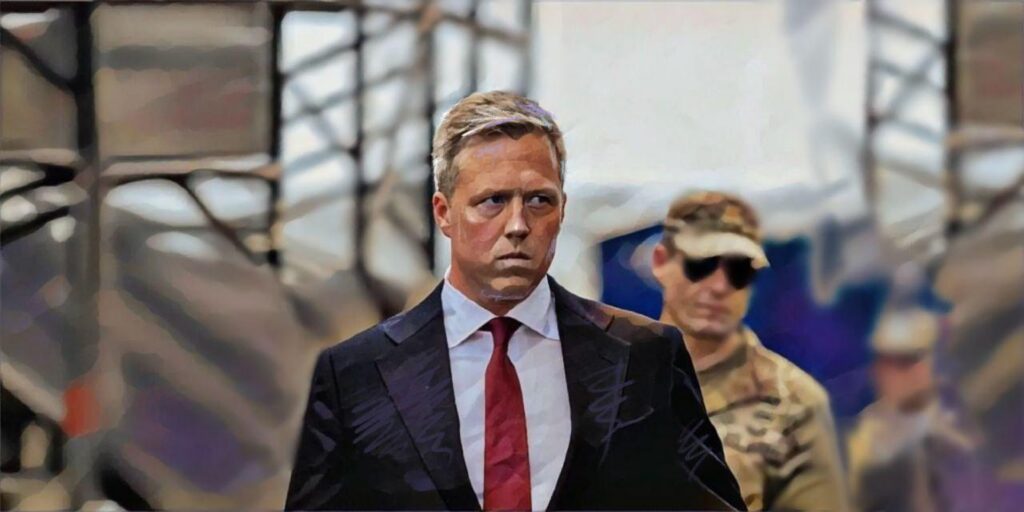
In late January, U.S. Special Envoy for South and Central Asia, Sergio Gor visited Turkmenistan. Accompanying Gor was U.S. Secretary of the Army Daniel Driscoll. Driscoll’s presence in Turkmenistan, a country with a roughly 1,150-kilometer border with Iran, sparked some speculation that his visit was related to escalating tensions between Washington and Tehran. But while it is unusual for any top foreign military officials to visit Turkmenistan, U.S. military officials have stopped by Turkmenistan relatively often over the course of the last 30 years. Neutral Turkmenistan A good trivia question about Central Asia is, which country was the first to join NATO’s Partnership for Peace (PfP) program? The answer is Turkmenistan, in May 1994, and NATO had just created the PfP program in January of that year. However, in December 1995, the UN approved giving Turkmenistan official status as a neutral country. Turkmenistan’s president at the time, Saparmurat Niyazov, said as part of that neutral status, Turkmenistan would not join any military blocs or join in aggression against another country. Then came the September 11, 2001, terrorist attacks on the United States and U.S. President George Bush Jr’s remark that “you’re either with us or against us.” Central Asia, with its nearly 2,400-kilometer border with Afghanistan, suddenly became a frontline in Washington’s campaign against terrorist groups inside Afghanistan. The other Central Asian countries, which had watched with dread as the Taliban advanced toward Central Asian borders, quickly expressed their support. Kyrgyzstan, Tajikistan, and Uzbekistan offered the use of military bases to the U.S. and NATO forces that were rapidly being assembled. Turkmenistan took a different position on events in Afghanistan. Remaining true to its UN-recognized neutrality status, Turkmenistan engaged with the Taliban and with the government of Burhanuddin Rabbani, whom the Taliban had ousted from power. A round of peace talks between the two Afghan parties was held in the Turkmen capital, Ashgabat, in March 1999. After 9/11, Turkmenistan agreed to allow U.S. planes carrying non-lethal cargo to transit through Turkmen airspace and to refuel at Ashgabat airport. But officially, that was as far as the Turkmen government was willing to become involved. The U.S. had already established a military connection with Turkmenistan. The head of the U.S. Central Command, General Tommy Franks, visited Turkmenistan in September 2000 and again in May 2001. U.S. Secretary of State Donald Rumsfeld visited Turkmenistan in April 2002. General Franks followed in August that year, promising to help Turkmenistan fight the illegal narcotics trade. The United States gave Turkmenistan two small naval patrol boats for use in the Caspian Sea in 2002, and in 2003, gave 40 Russian-made off-road vehicles to Turkmenistan’s border guards. Reports started to appear stating that Turkmenistan’s military cooperation with the United States was quietly deepening. The Turkmen government had said when agreeing to allow overflights and refueling that no foreign troops would be stationed in Turkmenistan. But it turned out that a small U.S. Air Force team, only about seven servicemen, was stationed in Ashgabat to help refuel U.S....

Ashgabat Hosts Forum Marking International Year of Peace and Trust

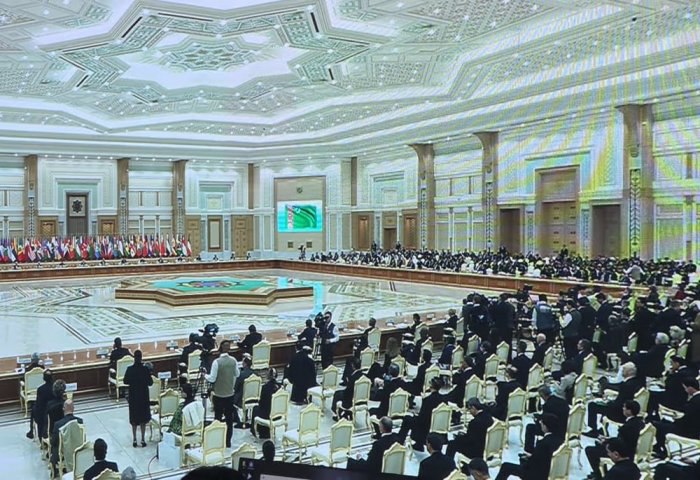
An international forum marking the 30th anniversary of Turkmenistan’s permanent neutrality has opened at the Maslahat Köşgi Palace in Ashgabat. The event has drawn high-level delegations and representatives of international organizations. Among those attending are President of Turkmenistan Serdar Berdimuhamedov, President of Russia Vladimir Putin, and the presidents of Turkey and Iran, Recep Tayyip Erdogan and Masoud Pezeshkian. The forum has also brought together the presidents of the Central Asian states, including President of Kazakhstan Kassym-Jomart Tokayev, President of Kyrgyzstan Sadyr Japarov, President of Uzbekistan Shavkat Mirziyoyev, and President of Tajikistan Emomali Rahmon. Other participants include Prime Minister of Pakistan Mian Muhammad Shehbaz Sharif, Prime Minister of Georgia Irakli Kobakhidze, and Prime Minister of Azerbaijan Ali Asadov, along with other heads of state and government. In his opening address, President Berdimuhamedov said neutrality has provided a strong foundation for Turkmenistan’s sustainable development. He noted that the country’s foreign policy is guided by principles of peace, trust, and mutual respect, and that Turkmenistan’s approach to neutrality reflects long-standing traditions of good neighborliness and harmony. The forum is being held as a broad international dialogue and is expected to open new opportunities for promoting global peace and expanding international cooperation. Ahead of the forum’s opening, President Berdimuhamedov and visiting foreign leaders took part in a ceremonial flower-laying at the Monument of Neutrality in Ashgabat as part of the official events commemorating the country’s neutral status. Turkmenistan’s permanent neutrality was formally recognized by a United Nations General Assembly resolution on December 12, 1995. In 2017, at Ashgabat’s initiative, the General Assembly designated December 12 as International Neutrality Day. In 2025, the United Nations declared the International Year of Peace and Trust. In this context, the Peace and Trust forum is being held on December 12 in Ashgabat with the participation of leaders from member states of the Organization of Turkic States.

Turkmenistan Marks 30 Years of Neutrality

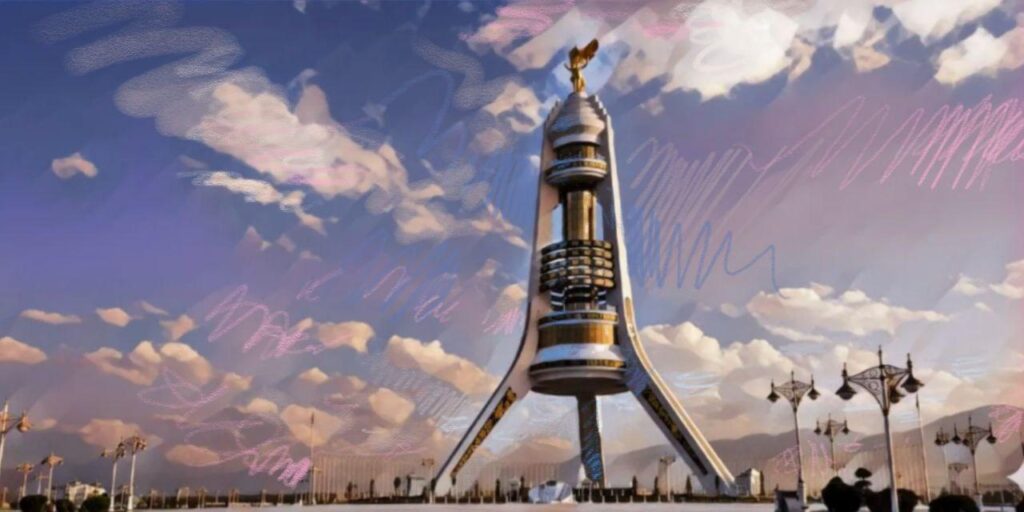
On December 12, 2025, Turkmenistan marks the 30th anniversary of a UN decision granting Turkmenistan the status of a neutral country. Defining what “permanent neutrality” means for Turkmenistan is impossible, as it is a flexible term used to justify a range of policies, both domestic and foreign. This vague special status has not provided many benefits, but has helped Turkmenistan’s leadership isolate the country and create one of the most bizarre and repressive forms of government in the world today.   Last Item on the Day’s Agenda On Tuesday, December 12, 1995, the UN General Assembly’s (UNGA) 90th plenary meeting reconvened at 15:20 to consider items 57 to 81 on its agenda. Item 81 was the draft resolution on “permanent neutrality of Turkmenistan.” The UNGA president at that time, Freitas do Amaral, noted to the Assembly that the draft resolution “was adopted by the First Committee without a vote,” and asked if the Assembly wished “to do likewise.” The Assembly did, and after a few brief remarks about the next Assembly meeting on December 14, the session ended at 18:05. That is how the UN officially granted Turkmenistan the status of neutrality. A Great Event The passing of the resolution on Turkmenistan’s neutrality status might have been a case of going through the motions at the UN, but it was a huge event in Turkmenistan. Turkmenistan’s first president, Saparmurat Niyazov, had been campaigning internationally for his country to have “positive” neutrality status since 1992. After this was accomplished, Niyazov often proclaimed this special UN recognition as a great achievement for the country and for himself personally. [caption id="attachment_40725" align="aligncenter" width="2560"] Ashgabat’s Independence Square, previously known as Neutrality Square and originally as Karl Marx Square; image: TCA, Stephen M. Bland[/caption] December 12 was quickly announced as a national holiday. On the first anniversary of the UN decision in 1996, the former Karl Marx Square in Ashgabat was renamed “Neutrality Square.” Shortly after, an olive branch motif was added to Turkmenistan’s national flag, symbolizing the country’s neutral status. In 1998, on the third anniversary of UN-recognized neutrality, the 75-meter-high Arch of Neutrality was unveiled in Ashgabat. A 12-meter gold statue of Niyazov that rotated to face the direction of the sun crowned the structure. Niyazov died in December 2006, and in 2010, the Arch of Neutrality was moved from the city center to the outskirts of the Turkmen capital and unveiled again on December 12, 2011. It has been undergoing renovation and will be unveiled yet again on the 30th anniversary of neutrality. [caption id="attachment_40726" align="aligncenter" width="2099"] Former-President Niyazov's likeness atop the Arch of Neutrality; image: TCA, Stephen M. Bland[/caption] In 2002, Niyazov pushed through a law changing the names of the months of the year and days of the week. December became “Bitaraplyk,” the Turkmen word for neutrality, and continued to officially be called that until 2008, when Niyazov’s successor finally revoked the changes and restored the traditional names. That successor, Gurbanguly Berdimuhamedov, embraced the special permanent neutrality status and, in...