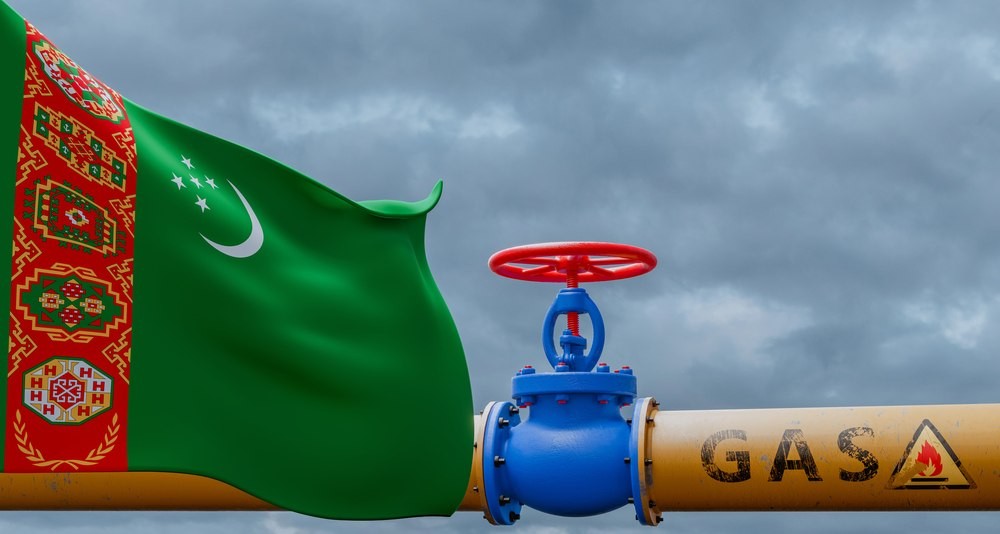
Permanent neutrality has shaped Turkmenistan’s foreign policy for more than three decades. It has given Ashgabat a distinct diplomatic identity and helped it maintain relations with competing regional powers. Its economic benefits, however, have been more limited.
On December 12, 1995, the UN General Assembly adopted a resolution without a vote that recognized and supported Turkmenistan’s declared permanent neutrality. The Assembly adopted a further resolution in 2015 and reaffirmed its support for a third time on March 21, 2025. The UN reinforced a policy declared by Ashgabat. It did not create the status or guarantee Turkmenistan influence beyond its borders.
The strongest evidence of neutrality’s diplomatic value came during the civil war in Tajikistan. Turkmenistan hosted UN-sponsored inter-Tajik peace talks in Ashgabat during the 1990s. The negotiations contributed to the process that produced the 1997 peace agreement. Hosting those talks did not make Turkmenistan the principal mediator. The UN and regional governments played larger roles. Ashgabat nevertheless provided a venue considered acceptable by the opposing sides.
Turkmenistan has followed a similar policy toward Afghanistan. It has maintained contacts with successive authorities in Kabul while supplying electricity and pursuing transport and energy projects across the border. Since the Taliban returned to power in 2021, Ashgabat has continued its economic engagement without making its relationship dependent on formal political alignment.
Neutrality helps Turkmenistan keep diplomatic channels open, but it is not the only explanation for this policy. The two countries share a long border, and Afghanistan is central to several planned export and transit routes.
Energy provides a clearer measure of what neutrality can and cannot deliver. Turkmenistan has sought buyers in Russia, China, Iran, Türkiye, South Asia, and Europe. Its ability to reach those markets has depended mainly on pipelines, financing, and relations with transit countries.
China became Turkmenistan’s main gas customer after the Central Asia-China pipeline opened in 2009. By 2026, Turkmenistan was exporting around 30 billion cubic meters of gas to China each year. A new agreement signed in April 2026 to expand the Galkynysh gas field could support another 10 billion cubic meters of annual production, further deepening the energy relationship with Beijing.
Turkmenistan’s experience with other buyers has been less stable. Russia’s Gazprom stopped purchasing Turkmen gas in 2016 before resuming much smaller imports in 2019. Supplies to Iran ended in 2017 during a dispute over unpaid bills.
Ashgabat secured a modest new outlet in March 2025, when Turkmen gas began flowing to Türkiye under a swap arrangement through Iran. The one-year agreement covered about 1.3 billion cubic meters, with officials discussing possible annual supplies of up to 2 billion cubic meters. The Türkiye deal showed that Ashgabat could find new customers, but the volume remained small beside exports to China. The route also depended on Iranian infrastructure.
Turkmenistan’s larger diversification projects remain incomplete. Construction has advanced on the Afghan section of the Turkmenistan-Afghanistan-Pakistan-India pipeline, known as TAPI. Turkmen officials expect the first Afghan section to reach Herat by the end of 2026, but plans for extending the pipeline toward Pakistan and India remain uncertain.
The proposed Trans-Caspian Gas Pipeline has made even less progress. It would carry Turkmen gas across the Caspian Sea to Azerbaijan and then connect with routes through Türkiye to Europe. As of 2026, work had not begun, and Turkmen officials acknowledged that questions involving the Caspian seabed still had to be resolved.
These projects show the limits of neutrality as an economic instrument. The policy allows Ashgabat to negotiate with governments that have conflicting interests. It cannot provide the pipelines or financing needed to turn proposed routes into commercial projects.
Neutrality has also brought little change to Turkmenistan’s domestic economic system. The World Bank describes the country as a state-dominated economy driven by natural gas exports. State-owned companies retain control over major industries, while limited access to reliable economic data continues to deter many foreign investors.
After three decades, neutrality remains Turkmenistan’s most recognizable diplomatic asset. It has supported continuity in foreign relations and provided room for engagement with competing powers. Its economic results have been narrower.
Further export diversification will depend on infrastructure and viable commercial terms. It will also require enough openness to attract outside investment. Neutrality can support those efforts, but it cannot deliver them on its own.