Turkmenistan, one of the world’s most closed countries, is hosting an international tourism conference this week.
The “TurkmenTravel – 2026” event in the capital of Ashgabat aims to attract foreign visitors to a country that is generally difficult to visit because of tight controls, including required letters of invitation and the need to have licensed guides. While some travel agencies aim to address those challenges for tourists, Turkmenistan remains a little-understood country and lags far behind regional countries such as neighboring Uzbekistan in terms of infrastructure and accessibility for travelers.
But the three-day tourism conference, which ends on Thursday, could be a tentative sign that Turkmenistan wants to open up, selectively, and within the limits of a tightly controlled system that restricts the internet and other sources of information for its citizens.
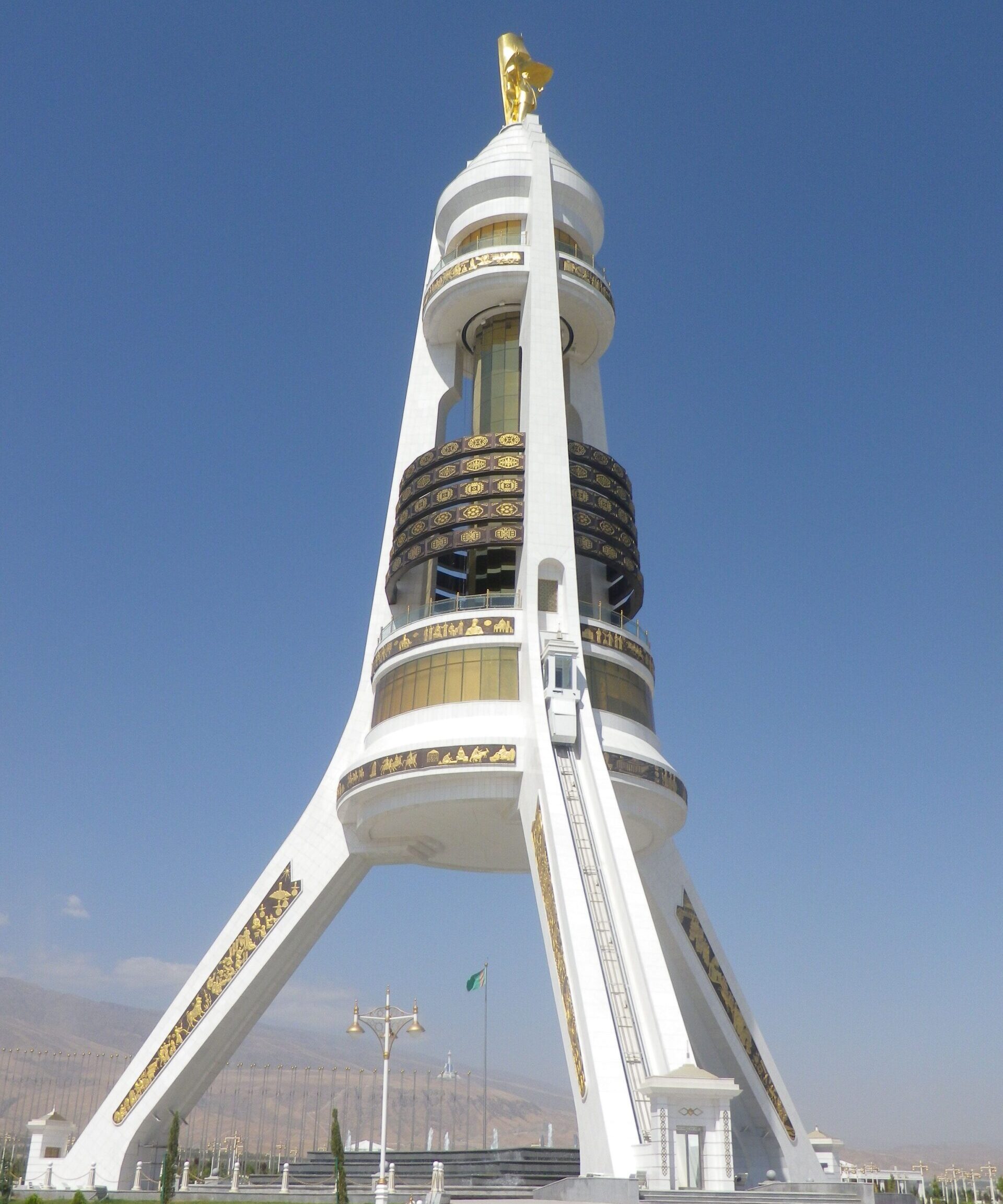
Ashgabat Arch of Neutrality; image: Stephen M. Bland
Across Central Asia, governments increasingly treat tourism as both an economic sector and a tool of international image-building. Turkmenistan now appears to want some of that attention, but on its own carefully managed terms.
The event was a priority for Turkmenistan’s government. President Serdar Berdimuhamedov delivered a message of encouragement to the participants and said tourism was growing in the Central Asian country whose stated policy is one of neutrality in international affairs. Statistics on tourism growth and other metrics are hard to come by in Turkmenistan, however.
That makes the message from Ashgabat especially striking: a state known less for openness than for control is publicly promoting tourism growth while offering little transparent data to show how far that growth has actually come.
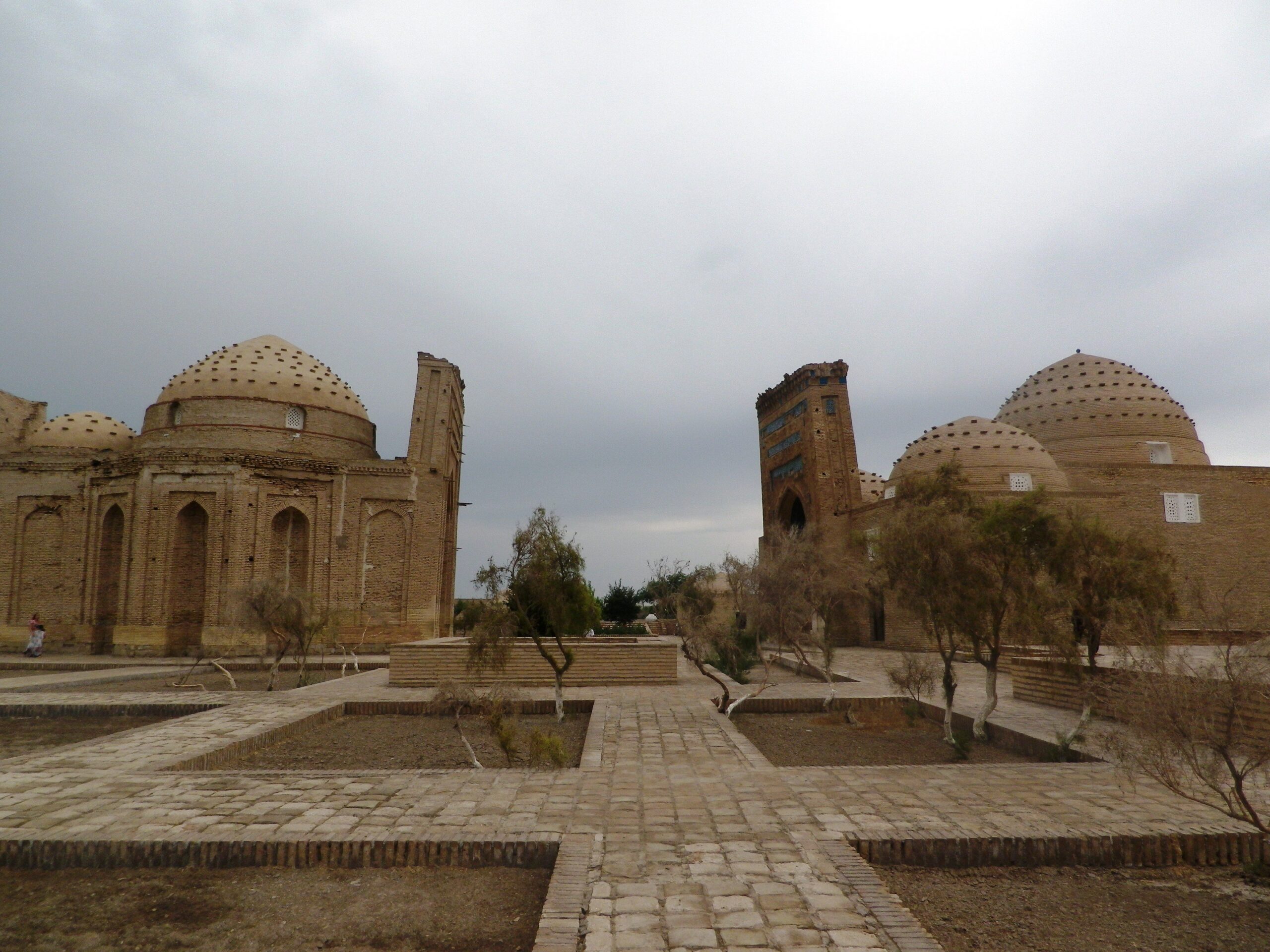
Kunya-Urgench- The ancient Nejameddin Kubra and Sultan Ali Mausoleums; image: Stephen M. Bland
“Permanently neutral, Turkmenistan places great importance on expanding international cooperation in this area,” the president said. He noted collaboration with the U.N. World Tourism Organization and other international institutions.
For years, Turkmenistan’s image abroad has rested less on mass tourism than on mystery: the white-marble capital, vast desert landscapes, major Silk Road sites, and a political system that has often kept outsiders at a distance.
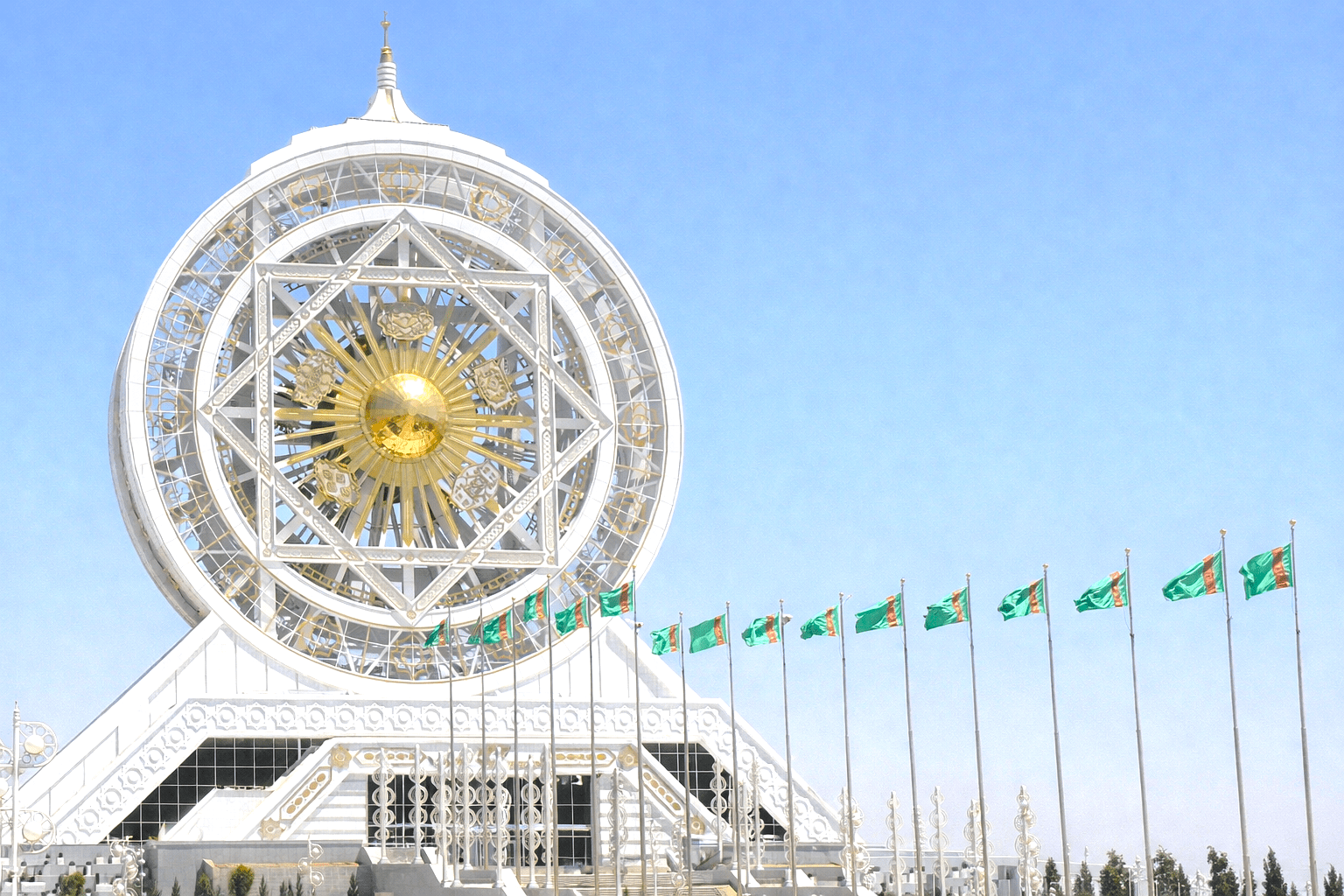
In Ashgabat, that mystery is part of the experience from the start. White marble towers rise in regimented lines, fountains splash into largely empty spaces, and broad avenues can feel strangely still. The city is visually extravagant but tightly controlled, with an atmosphere that can leave visitors unsure whether they are in a showcase capital, a stage set, or both.
Berdimuhamedov listed some of Turkmenistan’s attractions: Ancient Merv, Nisa, and Kunya-Urgench, the Bereketli Garagum and Gaplaňgyr nature reserves, desert ecosystems, and the elaborate architecture in Ashgabat.
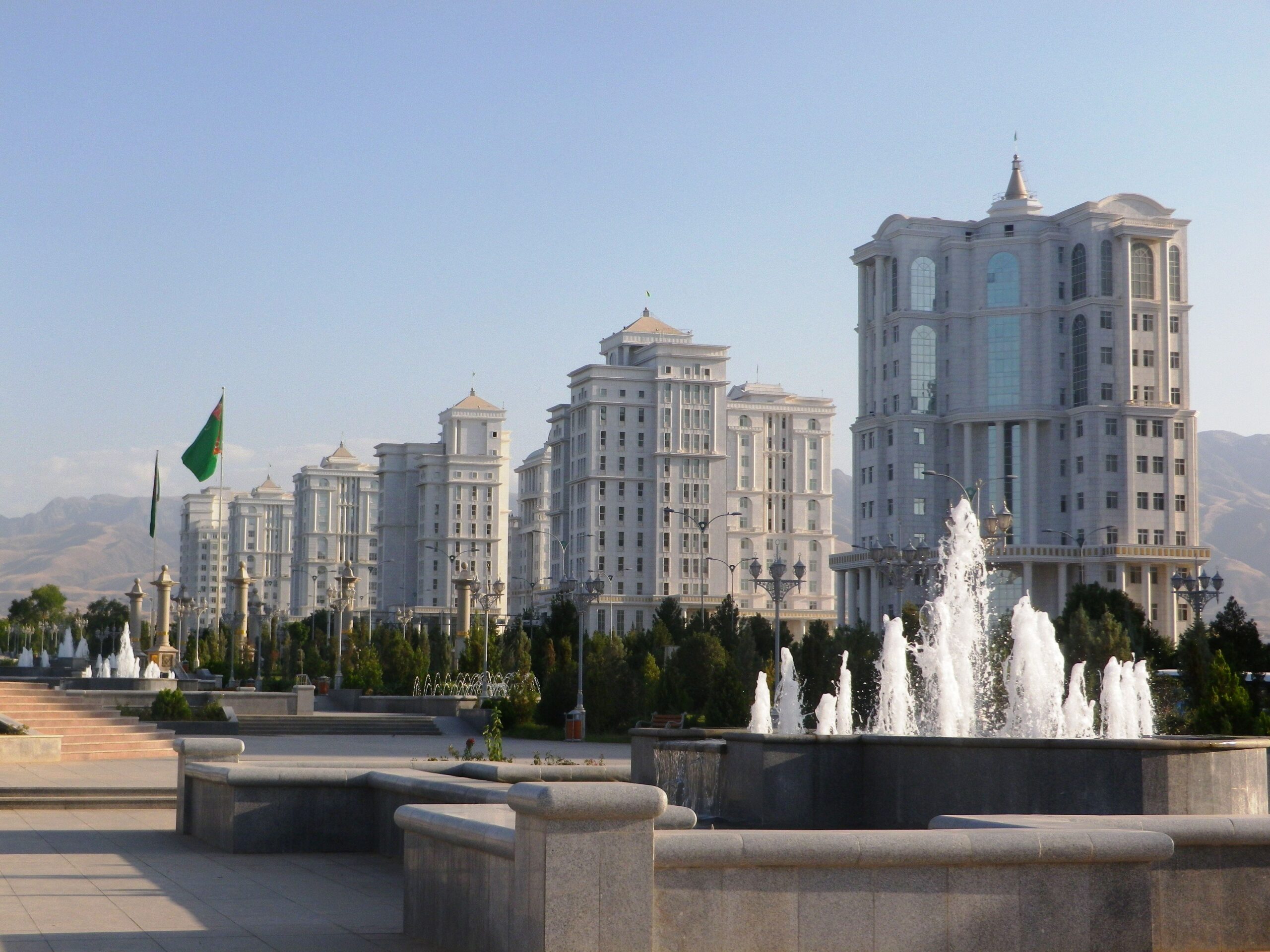
Ashgabat – A row of marble towers in the Berzengi district; image: Stephen M. Bland
Cordula Wohlmuther, regional director for Europe of U.N. Tourism, was one of the listed speakers at the tourism conference. The agenda for the event included a session titled “How to promote Central Asian culture on the world stage.”
One company, Asia Odyssey Travel, portrays Turkmenistan as a destination that hasn’t been explored by tourists in the way many other countries have. Among the adjectives it uses to describe the country is “surreal.”
The real test, though, is not conference branding but whether Turkmenistan becomes easier to enter, easier to navigate, and easier to understand from the outside. Until then, any tourism push will look selective rather than transformative.